English
 Español
 Português (Brasil)
 Français
 Deutsch
 Italiano
 Nederlands
 Polski
 Türkçe
 Русский
 日本語
日本語 한국어
한국어 简体中文
简体中文 Tiếng Việt
 Bahasa Indonesia
 繁體中文
繁體中文 Čeština
 Dansk
Dansk Norsk (bokmål)
 Suomi
Suomi Ελληνικά
 Română
 Magyar
 Українська
 ไทย
ไทย हिन्दी
 العربية
 עברית
עבריתMGID Annonskostnad 2026: CPC-priser per Geo & Minsta Insättning
MGID har inget priskort — ditt CPC sätts på auktion, geo och kreativ CTR. Här är de intervall medieinköpare vanligtvis rapporterar per nivå, insättningsmekaniken och hur man dimensionerar en testbudget som faktiskt ger ett beslut.


MGID är ett av de billigaste sätten att köpa native-trafik i meningsfull skala. Nätverket kör en CPC-auktion utan offentligt priskort; medieinköpare rapporterar vanligtvis klick från under en cent i Tier-3-geografier upp till ungefär $0.10–$0.40 för konkurrensutsatta Tier-1-datorplacements, och minsta insättning för självbetjäning anges vanligtvis kring $100-marken. Ingen av dessa siffror är officiell — MGID prissätter via auktion, så din vertikal, kreativ CTR och geo avgör vad du faktiskt betalar. Denna guide går igenom hur MGID-prissättning fungerar, de CPC-intervall praktiker rapporterar per geonivå, insättnings- och budgetmekanismer, de kostnader ingen specificerar och hur man dimensionerar ett test som ger ett riktigt beslut istället för en dyr ryckning på axlarna.
Hur MGID-prissättning fungerar#
MGID säljer klick. Du sätter ett CPC-bud per kampanj — justerbart per geo och placement — och nätverket rankar dina teasers mot konkurrerande annonser baserat på effektiv intäkt för utgivaren, vilket i praktiken innebär ditt bud multiplicerat med din klickfrekvens. Två konsekvenser följer:
CTR är pengar. En teaser som får dubbelt så hög CTR kan vinna samma placement till ett betydligt lägre bud. Kreativ testning är inte en 'nice-to-have' på MGID; det är prissättningsmekanismen.
Konkurrens sätter din verkliga kostnad, inte ett priskort. Det finns inget priskort. Golvet i en sömnig Tier-3-geo och det gängse priset för amerikansk hälsoledgenerering skiljer sig med två storleksordningar.
MGID erbjuder också automatiserade budfunktioner som justerar CPC:n mot ett konverteringsmål när din spårning matar tillbaka data till plattformen. De kan hjälpa i skala, men de behöver riktig konverteringsvolym att lära av — på ett nytt konto med tunn data är manuell CPC-budgivning med medvetna placementsregler vanligtvis mer läsbar. Funktionsnamn och mekanismer ändras; kolla MGID:s aktuella dokumentation innan du bygger en strategi kring någon specifik budprodukt.
Om du är ny på nätverket täcker Hur MGID fungerar format, målgruppsanpassning och kontouppsättning. Den här artikeln håller sig till kostnad.
MGID CPC-priser per geonivå (vanligt rapporterade)#
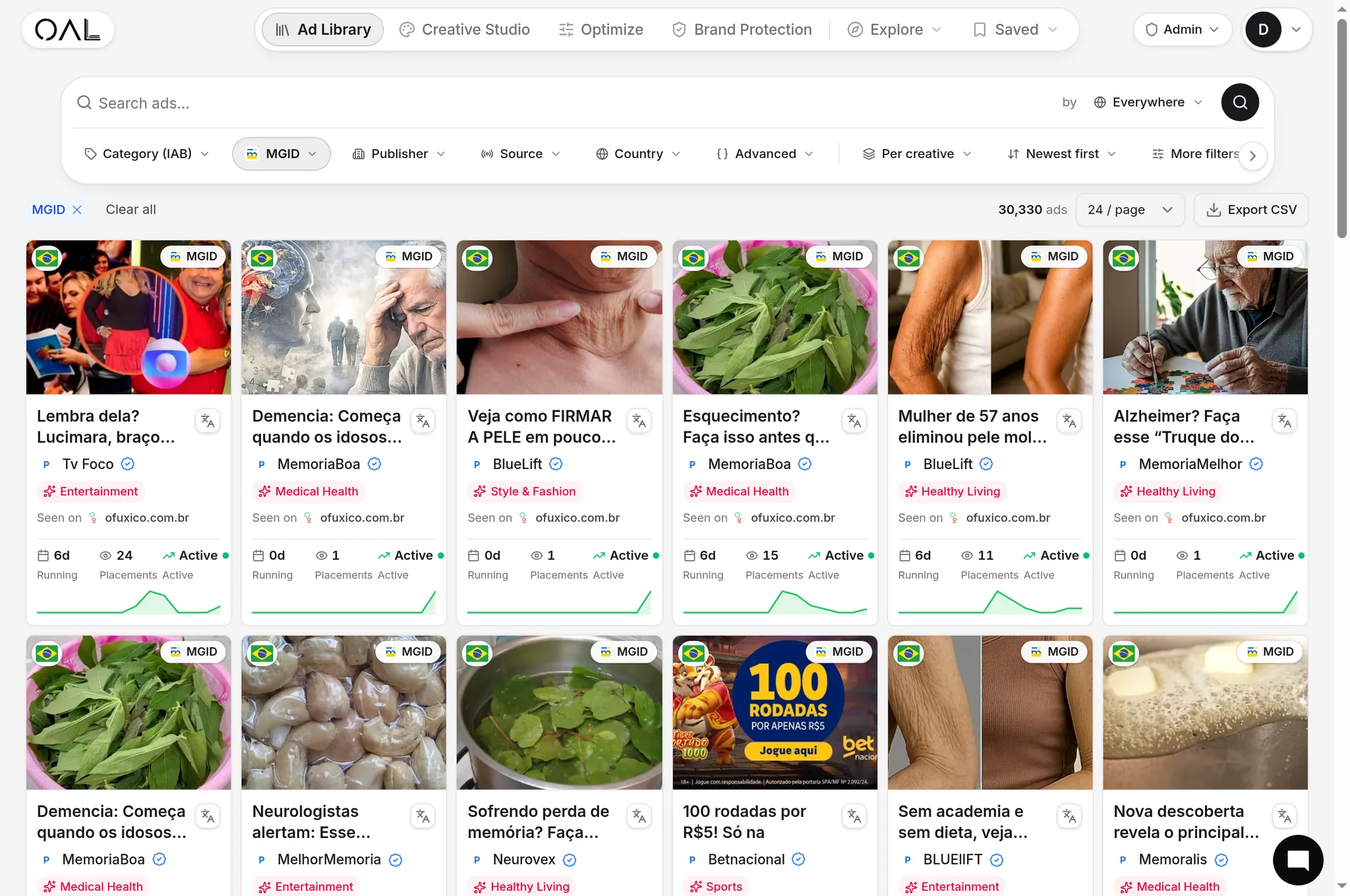
MGID:s räckvidd är ovanligt global — de levande MGID-kreativen i OpenAdLibrary:s index inkluderar annonser som körs på grekiska och en lång svans av icke-engelska marknader — och Tier-2/Tier-3-räckvidd är en av nätverkets genuina styrkor. Praktikerrapporterade CPC-intervall klustrar så här:
| Geonivå | Vanligt rapporterat CPC-intervall |
|---|---|
| Tier-1 dator (US, UK, CA, AU, DE…) | ~$0.10 – $0.40 |
| Tier-1 mobil | ~$0.04 – $0.20 |
| Tier-2 (Östeuropa, LATAM, SEA…) | ~$0.01 – $0.10 |
| Tier-3 | ~$0.003 – $0.03 |
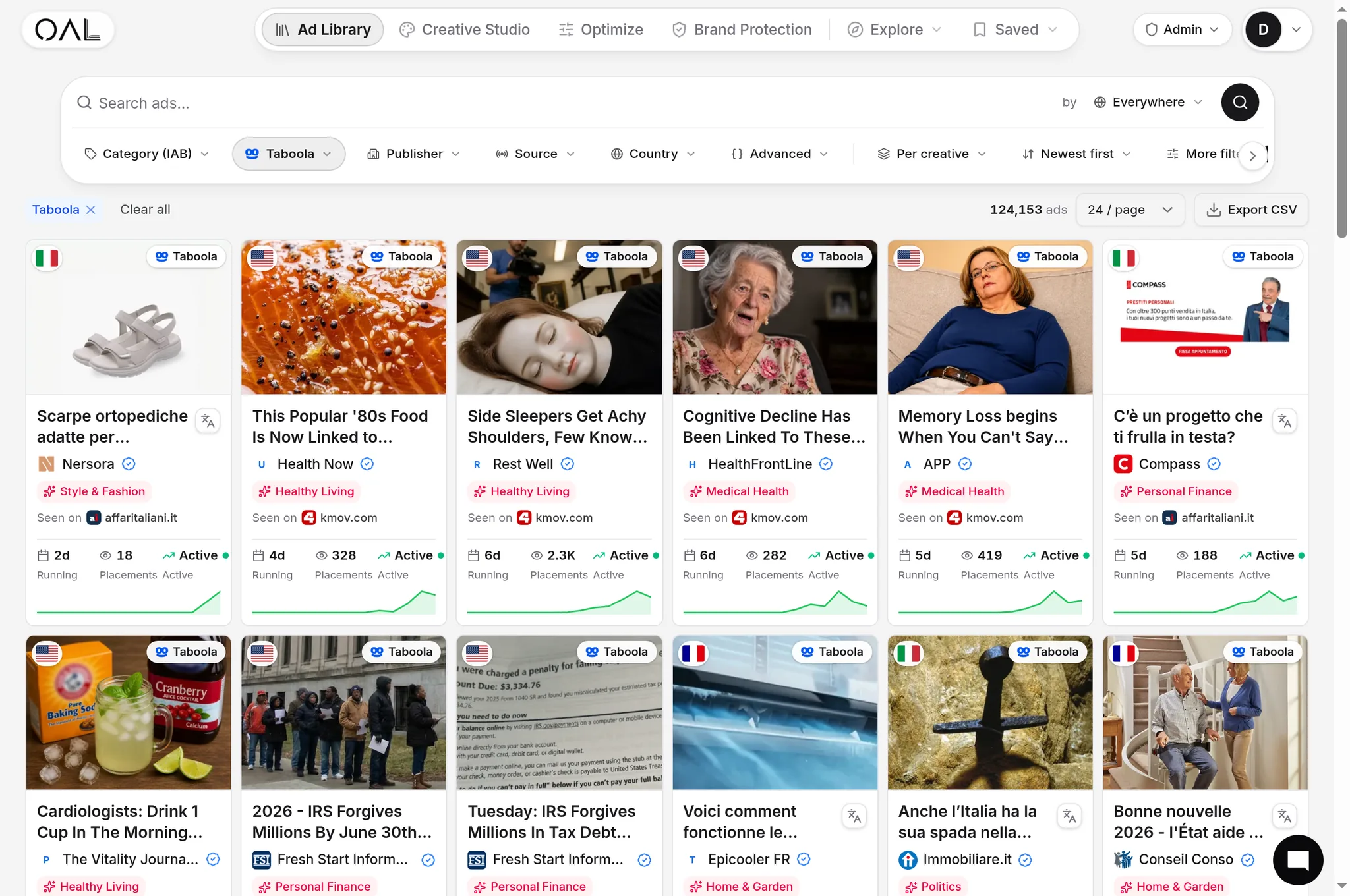
Behandla denna tabell som heuristik, inte citat: det här är intervall medieinköpare vanligtvis rapporterar, de glider över tid och heta vertikalar spränger genom toppen av dem. Vad nivåerna betyder — och varför inköpare strukturerar kampanjer kring dem — täcks i Tier 1 / Tier 2 / Tier 3 geografier. För hur MGID:s prissättning står mot Taboola, Teads och Revcontent, se native-annonsers CPC-riktmärken.
Minsta insättning och dagliga budgetar#
MGID:s inträdesbarriär är bland de lägsta inom native-annonsering. Minsta insättning för självbetjäning har länge angivits till cirka $100, och dagliga kampanjbudgetar kan börja tillräckligt lågt för att ett enkel-geo-test inte kräver ett stort åtagande. Bekräfta de aktuella siffrorna vid registrering — de varierar per region, valuta och kontotyp, och hanterade konton (som kommer med en dedikerad kontaktperson) har högre utgiftsförväntningar.
Den praktiska varningen: en låg inträdeskostnad gör disciplinerad budgetering viktigare, inte mindre. Det är lätt att vandra in underkapitaliserad, sprida $100 över fem geografier och tio teasers, samla fyrtio klick per cell och inte lära sig någonting alls. Billig trafik kräver fortfarande statistiskt meningsfull volym.
Vad som faktiskt påverkar ditt MGID-CPC#
Fyra spakar dominerar:
- Geo och vertikal konkurrens. Av de 62 765 levande MGID-kreativen i OpenAdLibrary:s index (juli 2026) är underhållningsinnehåll den klart största klassificerade vertikalen med cirka 14 000 kreativ — men de direktsäljande pengavertikalerna (hälsa, försäkring, finans) är där auktionerna faktiskt hettar till, för det är där annonsörer med beprövade funnels fortsätter att höja bud.
- Teasers CTR. Eftersom auktionen effektivt prissätter på bud × CTR betalar en gammal eller svag teaser en stigande effektiv avgift. När ditt CPC kryper uppåt med konstant bud är kreativ utmattning den första misstänkta.
- Placementskvalitet: whitelist vs run-of-network. RON-klick är billiga delvis för att de inkluderar svaga placements. Standardspelboken är att starta RON för att samla placementsdata, sedan whitelista de webbplatser som konverterar — ditt genomsnittliga CPC stiger, men din kostnad per konvertering sjunker.
- Enhet och trafiktyp. Mobilinventariet är mer tillgängligt och billigare; datorklick kostar mer men konverterar ofta bättre för övervägda erbjudanden. Testa dem som separata kampanjer, aldrig blandade.
Kostnaderna CPC-tabellen aldrig visar#
Att bara budgetera för media är det klassiska MGID-misstaget. Riktiga testbudgetar tar också upp:
- Kreativ produktionsvolym. MGID belönar 10–20 teasers per kampanj, uppdaterade när de tröttnar. Oavsett om det är designtid eller AI-verktyg är det en riktig kostnadsrad.
- Spårning. En tracker eller postback-uppsättning är icke-förhandlingsbar för placementsnivårensning; budgetera för verktygen och installationsarbetet.
- Upptäcktsutgifter. RON-fasen — att betala för klick från placements du senare blacklistar — är 'tuition'. Whitelist-disciplin minskar den; inget eliminerar den.
- Förlorande vinklar. De flesta vinklar förlorar. Vinnarna måste betala tillbaka för kyrkogården, vilket är varför budget per vinkel och klick är viktigt.
- Tid. Placementgranskningar, teaseruppdateringar och budjusteringar är en återkommande operativ belastning. MGID-trafik är billig delvis för att optimeringsarbetet är ditt.
Budgetering av ett realistiskt MGID-test#
Ett test som kan ge ett beslut ser ut så här:
- En geo i taget. Blandade geo-statistik är oläsbar; välj en marknad och låt den avslutas.
- 2–3 vinklar, 5–7 teasers vardera. Tillräcklig kreativ variation för att auktionen ska hitta något den gillar.
- Några hundra klick per överlevande vinkel innan dess CPA bedöms — som aritmetik är 400 klick till ett $0.05 mobilt CPC cirka $20 i media; samma klick till ett $0.30 Tier-1-dator-CPC är $120.
- En utrensningscykel. Granska placements varannan dag; blacklista icke-konverterare, läs sedan om siffrorna.
Sammantaget landar ett enkel-geo Tier-2-test med tre vinklar vanligtvis i de låga hundratalen dollar; samma testform på Tier-1-dator går på fyrsiffrigt. Om MGID:s billiga klick konverterar är sedan en landningssida- och erbjudandefråga, inte en trafikfråga — Media Buying för Native Ads täcker hela teststrukturen.
Betala inte auktionspriser för offentlig information#
Hälften av en typisk MGID-testbudget går till att återupptäcka saker som nätverkets levande utdata redan visar: vilka vinklar som dominerar en vertikal, vilka teasers som överlever i veckor, hur konkurrenters funnels ser ut bakom klicket. OpenAdLibrary indexerar 62 765 levande MGID-kreativ med annonsörer, observerade körtider, geodata och spårade landningssidor — bläddra bland dem i MGID annonsbiblioteket eller via /spy/mgid. Det högst värdefulla filtret är livslängd: en annons som har kört 30+ dagar är förmodligen lönsam, och att modellera beprövade vinklar före din första insättning minskar upptäcktsutgifterna som dominerar de flesta misslyckade tester.
Hur MGID-kostnader jämförs med andra native-nätverk#
MGID:s klick är billigare än premiumnätverken (Taboola, Outbrain/Teads) och konkurrenskraftiga med resten av mellannivån. Det är inte automatiskt en fördel: billigare trafik bär med sig större variation i placementskvalitet, så effektiv CPA — inte CPC — är siffran att jämföra mellan nätverk. MGID vs Taboola och MGID vs Revcontent jämför nätverken direkt, och Hur mycket kostar native-annonser? sätter budgetberäkningen för alla större nätverk sida vid sida.
Slutsatsen: MGID-annonseringskostnader är låga, kontrollerbara och ovanligt känsliga för kreativ kvalitet. Inköpare som anländer med teaservolym, en utrensningsrutin och geo-disciplin får vanligtvis Tier-1-klick för tiotals cent och Tier-2/3-klick för ören. Inköpare som inte gör det kommer att upptäcka att även billiga klick snabbt blir många.