English
 Español
 Português (Brasil)
 Français
 Deutsch
 Italiano
 Polski
 Svenska
 Türkçe
 Русский
 日本語
日本語 한국어
한국어 简体中文
简体中文 Tiếng Việt
 Bahasa Indonesia
 繁體中文
繁體中文 Čeština
 Dansk
Dansk Norsk (bokmål)
 Suomi
Suomi Ελληνικά
 Română
 Magyar
 Українська
 ไทย
ไทย हिन्दी
 العربية
 עברית
עבריתMedia Buying voor Native Ads: Een Beginnersgids (2026)
Native media buying is een vierdelige cyclus (offer, creative, bid, schaal), en dit 2026-playbook loopt elke stap door met concrete instellingen, live cross-network voorbeelden en de metrics die daadwerkelijk geld opleveren.

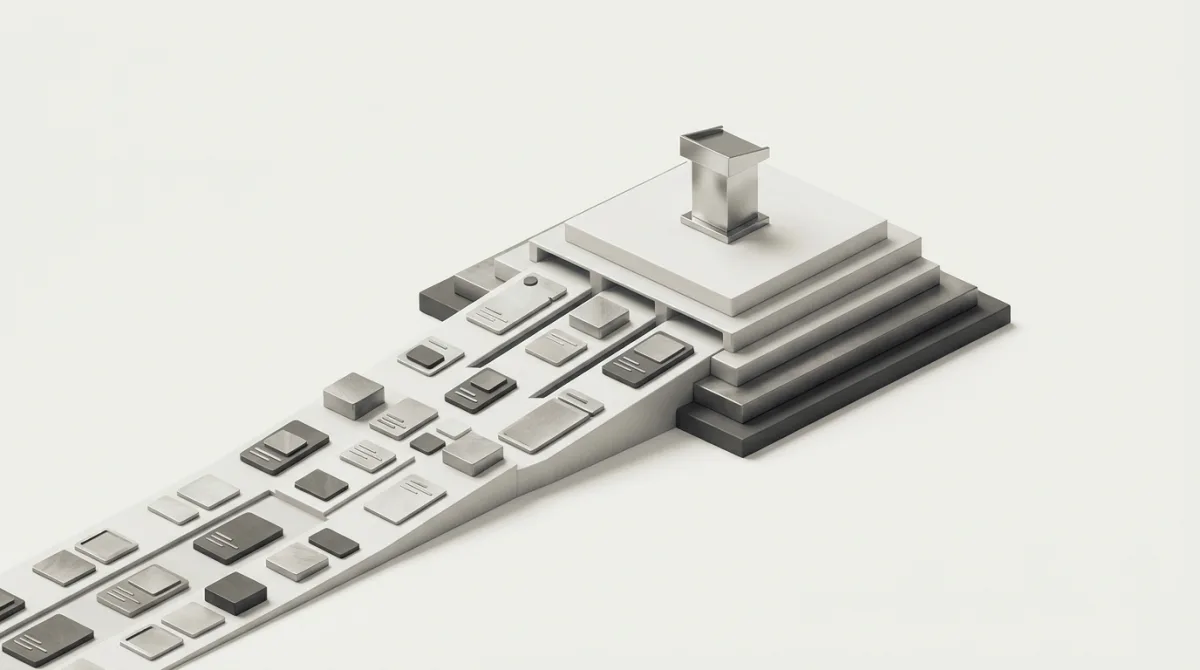
Native media buying is één strakke cyclus die steeds opnieuw wordt doorlopen: kies een offer, bouw een creative die de klik verdient, stel een bid in die het algoritme laat leren, schaal wat werkt en stop wat niet werkt. Netwerken, pixels, dashboards: dat is allemaal infrastructuur rond die vier stappen. Deze gids loopt de volledige cyclus door zoals een werkende buyer die in 2026 uitvoert, met concrete instellingen en live cross-network voorbeelden die je zelf kunt verifiëren.
Nieuw in dit kanaal? Lees eerst het 2026 native advertising playbook voor het strategische overzicht. Deze pagina is de praktische begeleider: de daadwerkelijke volgorde van beslissingen, in volgorde.
Wat media buying voor native ads daadwerkelijk betekent#
Media buying voor native ads is de praktijk van het kopen van in-feed, content-style plaatsingen (de "aanbevolen voor jou" widgets en gesponsorde verhalen die je onder artikelen ziet) en deze optimaliseren naar een winstgevende cost per acquisition. Het verschil met zoeken en social is de temperatuur van het publiek. Niemand op een nieuwssite was op zoek naar jouw product. Dus de creative en de landingspagina dragen de volledige campagne, en je echte taak is om één winnende offer-angle-funnel combinatie te vinden en vervolgens het bid-algoritme van het netwerk genoeg schone conversiedata te voeren om het te kunnen schalen.
Die inventory wordt verkocht via programmatische native advertising veilingen op een handvol grote supply-netwerken. De grootste structurele verschuiving richting 2026: het lang geruchte Taboola-Outbrain fusieplan stortte in, en in plaats daarvan kocht Outbrain Teads in februari 2025 voor ongeveer $900 miljoen, en hernoemde het hele bedrijf in juni 2025 naar Teads. Dus het praktische landschap bestaat uit Taboola, het Outbrain-nu-Teads platform, MGID en Revcontent, plus een lange staart zoals MediaGo, Yahoo en MSN. Weten wie elke marktplaats controleert is belangrijk wanneer je concurrentieactiviteit leest, omdat dezelfde adverteerder meestal dezelfde angle tegelijkertijd op meerdere van hen draait.
Hoe groot is "dezelfde angle, overal"? Onze index geeft je een idee van de schaal. Per juni 2026 heeft OpenAdLibrary 589.036 creatives vastgelegd van 25.933 adverteerders over 42 netwerken, getraceerd naar 926.259 landingspagina's, met 5,4 miljoen advertentie-observaties achter die cijfers. Taboola alleen al is goed voor 157.727 van die creatives, meer dan enig ander individueel netwerk dat we volgen. Dat is de hooiberg waarin je concurreert, en het is ook waar de winnende naalden in het volle zicht verborgen liggen.
Stap 1: Kies een offer dat bij het kanaal past#
Native verkeer is koud, nieuwsgierig gedreven en neigt naar ouder en mobiel. Dat sluit sommige offers uit en laat andere toe voordat je een cent uitgeeft. De offers die werken op native delen drie kenmerken: massamarkt-appeal zodat de angle werkt op een algemeen nieuwspubliek, ruimte voor een verhaal (supplementen, financiële producten, verzekeringen, huishoudelijke diensten, discovery e-commerce ondersteunen allemaal een advertorial), en een uitbetaling die een klik van $0,30 tot $0,90 overleeft. Je gemiddelde orderwaarde of commissie moet tientallen clicks per conversie kunnen absorberen.
De verticals die native dragen in 2026 zijn geen mysterie, want je kunt ze tellen. Kijkend over onze volledige index, voert finance met 17.232 actieve creatives, verzekeringen volgt direct met 15.629, gezondheid met 14.895 en e-commerce met 13.872 (OpenAdLibrary index, juni 2026). Die vier zijn de geldbanen. Zij hebben de uitbetalingen, de urgentie met een regelgevingssmaak en de demografische fit die native beloont. Entertainment (11.784), software (10.825) en reizen (10.692) vormen de volgende laag.
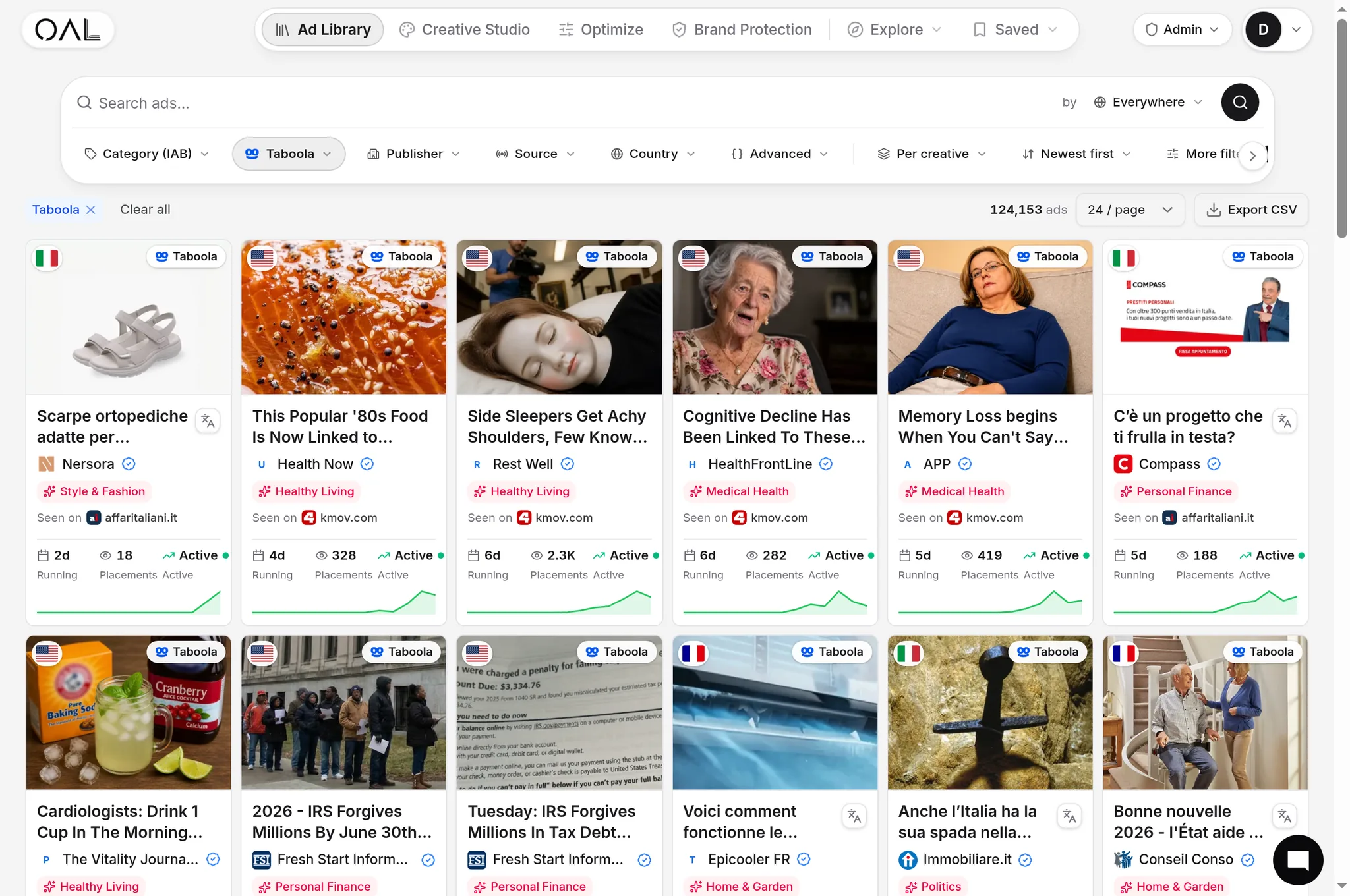
Zo ziet een live finance offer er daadwerkelijk uit in de feed. Tax-relief angles zijn nu overal, meeliften op een echte deadline:

Let op de zetten: een jaartal, een harde datum, een dollarbedrag en een vage autoriteit ("Fresh Start Information"). Dat is een schoolvoorbeeld van een native finance hook, en deze liep al 13 dagen toen we hem vastlegden. Zulke levensduur is het goedkoopste signaal dat je kunt kopen. Als een offer wekenlang live is geweest over meerdere netwerken, verdient iemand er geld aan. Een native ad spy tool stelt je in staat live advertenties te filteren op vertical en de adverteerders die uitgaven volhouden te scheiden van degenen die binnen enkele dagen uitdoofden. Voor een datagestuurde shortlist van waar het geld zit, zie de beste affiliate verticals voor native ads in 2026.
De allergrootste beginnersfout is geen slechte bid of een zwakke headline. Het is het draaien van een low-ticket, impuls-offer op koud native verkeer dat een pre-lander nodig heeft om te converteren. Het kanaal straft offers af die een warm publiek verwachten.
Stap 2: Bouw de creative die de klik verdient#
Bij native advertising is de creative een headline plus een thumbnail die in een publisher feed leeft. Het moet lezen als redactioneel, niet als een advertentie. Twee hendels doen bijna al het werk.
De thumbnail komt eerst. Nieuwsgierigheid opwekkende, licht imperfecte, "echte" beeldtaal verslaat gepolijste studiofoto's. Gezichten, voor-en-na framing en gewone objecten in een alledaagse context overtreffen logo's elke keer. De headline doet de rest: specifiek, voordeel- of nieuwsgierigheid-gedreven, vaak met een getal of een locatie-token. "Why Texas Drivers Are Switching Insurers in 2026" verslaat "Save on Car Insurance" met ruime marge.
Gezondheids- en supplementen-creatives zijn een masterclass hierin. Kijk naar het patroon over twee live captures:


Zelfde DNA: een autoriteits-cue ("MDs Identify"), een open loop ("See the List," "Do You Eat It?"), en een vage maar alarmerende gezondheidsclaim gericht op een oudere lezer. Gezondheid is de op twee na grootste vertical in onze volledige index met een reden. Beide waren recent vastgelegd (elk 3 dagen actief), wat precies het soort signaal is dat je wilt volgen: nieuwe spelers die testen in een bewezen angle.
Gok niet naar angles vanaf een lege pagina. De snelste manier om te leren wat een feed beloont, is door creatives te bestuderen die al winnen. Omdat OpenAdLibrary de echte creative-afbeelding in volledige kwaliteit vastlegt en bijhoudt hoe lang elke advertentie heeft gelopen, kun je echte winnaars (langlopend, multi-publisher) scheiden van ruis (een eendaagse test die nooit is opgeschaald). Haal de top thumbnails in jouw vertical op, vind de terugkerende patronen (framing, kleur, headline structuur) en bouw je eigen variaties in plaats van te kopiëren. Copy DNA en Creative Studio binnen het platform bestaan precies hiervoor: ontleed het patroon en genereer vervolgens nieuwe uitvoeringen.
Eén lanceerregel: lever volume aan de creative kant. Vijf tot tien beeld- en headline combinaties per ad set op dag één. Native algoritmes hebben opties nodig om tussen te optimaliseren, en creative is waar het grootste deel van je vroege winsten vandaan komt.
Stap 3: Stel de bid in en laat het algoritme leren#
Bieden is waar nieuwe buyers in paniek raken en hun eigen campagnes breken. Het kernidee is simpel: native netwerken houden een native ad veiling voor elke impressie, en jouw bid plus de voorspelde klik- en conversieratio bepaalt of je wint. Je koopt niet alleen clicks. Je leert een algoritme hoe een conversie eruit ziet.
Een verstandige lanceervolgorde op een conversie-geoptimaliseerd netwerk zoals Taboola:
| Fase | Bid strategie | Doel | Waarop te letten |
|---|---|---|---|
| Lancering (week 1) | Maximize Conversions / Smart Bid | Snel data verzamelen, het algoritme voeden | Clicks, click-through rate, vroege conversies |
| Leren (weken 1-2) | Zelfde, laat het met rust | Laat het de leerfase verlaten | Cost per conversion stabiliseert |
| Controle (week 2+) | Schakel over naar Target CPA | Bescherm winstgevendheid | CPA vs. break-even, schaalruimte |
Taboola's eigen richtlijn behandelt Maximize Conversions en Target CPA als opeenvolgend, niet als concurrerend. Je lanceert breed om signaal te verzamelen, en verstrakt dan naar een CPA-doel zodra de engine data heeft. Dezelfde logica geldt op MGID en Teads met andere knopnamen.
Twee regels houden je uit de problemen. Ten eerste, raak de bids niet aan tijdens de leerfase. Elke betekenisvolle wijziging reset deze. Geef een campagne 3 tot 5 dagen en een paar honderd clicks voordat je hem beoordeelt. Ten tweede, bied voor plaatsingen, niet voor het hele netwerk. De kwaliteit van native supply varieert sterk per publisher. Je rapportage zal laten zien dat sommige sites converteren tegen 3x het gemiddelde en anderen stilletjes budget verbranden. Blokkeer de verspillers, bied hoger op de winnaars. Die ene gewoonte is het grootste deel van native optimalisatie.
Een opmerking over targeting in 2026: Google heeft eind 2025 de meeste Privacy Sandbox advertising API's afgeschaft, maar native netwerken hebben nooit geleund op third-party cookies. Zij bieden op contextuele en publisher-side signalen plus je conversie pixel. Dat maakt een correct geïnstalleerde pixel en schone conversiegebeurtenissen de echte basis van optimalisatie, meer dan welke audience-instelling dan ook. Dit is dezelfde media buying discipline die je op elk programmatisch advertising kanaal zou toepassen. Native draagt het alleen open en bloot.
Voor de platform-specifieke walkthrough (accountstructuur, conversie-instellingen, de eerste campagne klik voor klik) volg hoe te adverteren op Taboola.
Stap 4: Volg de klik voorbij de thumbnail#
Dit is wat de meeste beginnersgidsen overslaan. De advertentie is slechts de top van de funnel. Na de klik komt de pre-lander (een advertorial die het verhaal opbouwt) en dan de offerpagina. Een geweldige creative gericht op een zwakke funnel verliest geld. Een middelmatige creative op een afgestemde funnel kan winnen. Concurrenten alleen op creatief niveau bestuderen is een half beeld.
Je moet het hele pad zien. OpenAdLibrary traceert elke vastgelegde advertentie naar zijn bestemming, de pre-lander en de landingspagina, zonder ooit op de live advertentie te klikken, zodat je de complete funnel van een concurrent kunt bestuderen: de advertorial angle, de offer presentatie, de call to action. Zo hebben we tot nu toe 926.259 landingspagina-captures getraceerd. Combineer de funnel met het levensduursignaal en je gokt niet of iets werkt. Je kunt zien dat het wekenlang live en verspreid is geweest.
Over dat levensduursignaal, en een eerlijke waarschuwing. Affiliate-lore heeft het graag over "90-day winners," en als algemene industrie-heuristiek is dat prima. Maar dat is niet onze meting. Ons continu-observatievenster beslaat momenteel tot ongeveer 28 dagen per creative, en de advertenties die dat plafond vasthouden vertellen een duidelijk verhaal. SmartAsset draait al 28 dagen achtereen "Ask a Pro: How Can I Avoid Paying Taxes on IRA Withdrawals?" op Outbrain. Hidden Hearing houdt twee aparte hoortoestel-creatives 28 dagen vast op het Microsoft Audience Network. "My IQ" draait een half dozijn IQ-quiz varianten, allemaal vastgepind op ons 28-dagen plafond (OpenAdLibrary index, juni 2026). Wanneer een enkele adverteerder dezelfde hook zo lang in leven houdt en deze overspoelt met varianten, dan vertelt de markt je dat de funnel erachter converteert.
De home en finance verticals tonen dezelfde volharding. Deze solar-battery angle was 27 dagen live toen we hem logden:

Wanneer je een funnel reverse-engineert, map hem dan van begin tot eind. De ad creative is de hook die de klik verdient. De pre-lander is het verhaal dat het probleem van de lezer herformuleert. De offerpagina is waar de conversiemechanica leeft: prijsankering, schaarste, formulierlengte. Bouw de structuur opnieuw op, niet de copy. Originaliteit is een ethische en compliance-vereiste, en steeds meer een performance-vereiste, aangezien duplicaat-funnels sneller worden gemarkeerd en vermoeid raken.
Stap 5: Schaal zonder ROI te doden#
Zodra een campagne winstgevend is en uit de leerfase is, is schalen een discipline, geen knop. Er zijn twee verschillende assen, en ze verwarren is hoe buyers een winnaar opblazen.
Verticale schaling betekent meer budget door dezelfde bewezen campagne duwen. Doe het in stappen van ongeveer 20 tot 30% elke twee tot drie dagen. Grotere sprongen activeren de leerfase opnieuw en doen je CPA pieken terwijl het algoritme opnieuw kalibreert. Je betaalt een belasting voor ongeduld.
Horizontale schaling betekent de winnaar dupliceren naar nieuwe oppervlakken: nieuwe plaatsingen, nieuwe apparaten, extra geo's of een zusternetwerk. Omdat elke duplicaat zijn eigen leerproces start, groeit horizontale expansie volume zonder de originele campagne te destabiliseren, en daarom vertrouwen ervaren buyers erop. De diepgaande uitleg over de keuze tussen hen is horizontale vs. verticale schaling in native media buying, en het bredere winstbeschermingskader staat in hoe affiliate campagnes te schalen zonder ROI te doden.
Een praktische schaalvolgorde voor een bewezen winnaar:
- Verhoog het budget op de bestaande campagne met ~25%. Wacht 72 uur. Herhaal zolang de CPA stabiel blijft.
- Dupliceer naar nieuwe apparaten. Een desktop winnaar is vaak ongetest op mobiel, en vice versa.
- Dupliceer hetzelfde offer naar een tweede netwerk. Als het won op MGID, is de bewezen angle een sterke gok op Taboola's premium supply.
- Breid uit naar aangrenzende geo's. De goedkoopste groei zit vaak verborgen in Tier-2 en Tier-3 markten waar concurrentie (en CPC's) lager zijn. Schaal naar nieuwe geo's behandelt hoe je ze vindt.
Geo-expansie is geen theorie. We zien dezelfde angle constant grenzen oversteken: een "Real" levensverzekeringsadvertentie gelokaliseerd voor Australië ("Australians looking for life insurance should read this"), een Honda City auto-creative die in India draait, UK card-machine offers vastgepind op 28 dagen op het Microsoft Audience Network. De bewezen hook reist; de lokalisatie is het werk.
Houd ondertussen door met snoeien. Schalen en snoeien gebeuren tegelijkertijd. Blokkeer elke paar dagen onderpresterende plaatsingen, pauzeer dode creatives en heralloceer naar de overlevenden. Een opgeschaalde campagne is een constant gewiedde tuin, geen set-and-forget machine.
De cyclus samenvoegen#
Voer de vier stappen uit als een cyclus, niet als een checklist.
- Offer: massamarkt, verhaal-vriendelijk, uitbetaling die de klik overleeft. Valideer met levensduurdata voordat je uitgeeft.
- Creative: 5 tot 10 native-voelende combinaties bij lancering, gebaseerd op bewezen winnaars, origineel uitgevoerd.
- Bid: lanceer op Maximize Conversions, houd vast door de leerfase, schakel over naar Target CPA, optimaliseer op plaatsingsniveau.
- Schaal: verticaal in ~25% stappen, horizontaal over apparaten, netwerken en geo's, snoei genadeloos.
De buyers die winnen met native gokken niet. Zij lezen de markt. Live concurrentiedata vertelt je welke offers potentie hebben, welke creatives uitgaven volhouden en hoe de volledige funnel achter een winnende advertentie er daadwerkelijk uitziet. Dat is het hele uitgangspunt van OpenAdLibrary: een open, betaalbaar zicht op live native advertising over Taboola, Outbrain/Teads, MGID, Revcontent en meer. De echte adverteerder achter elke advertentie, de creative in volledige kwaliteit en de klik getraceerd naar de landingspagina, voor $29,99/maand in plaats van de $80 tot $400/maand die de legacy spy tools vragen. Start gratis en bekijk 200 advertenties zonder kaart om te zien wat er nu werkt in jouw vertical.