English
 Español
 Português (Brasil)
 Français
 Deutsch
 Italiano
 Polski
 Svenska
 Türkçe
 Русский
 日本語
日本語 한국어
한국어 简体中文
简体中文 Tiếng Việt
 Bahasa Indonesia
 繁體中文
繁體中文 Čeština
 Dansk
Dansk Norsk (bokmål)
 Suomi
Suomi Ελληνικά
 Română
 Magyar
 Українська
 ไทย
ไทย हिन्दी
 العربية
 עברית
עבריתHorizontaal versus verticaal opschalen bij native media buying
Verticaal opschalen pompt meer budget in een bewezen ad set, terwijl horizontaal opschalen de winnaar kloont over nieuwe regio's, netwerken en invalshoeken. Het lezen van concurrentie-uitbreidingspatronen vertelt je de exacte volgorde om dit te doen.


De meeste native campagnes sterven op één van twee manieren. De koper vindt een winnaar, pompt het budget omhoog en ziet de CPA oplopen tot de rekensom niet meer klopt. Of ze vinden een winnaar en laten hem daarna met rust, waardoor het grootste deel van het beschikbare volume onbenut blijft omdat ze bang waren om een winstgevende ad set aan te raken. Beide doodsoorzaken komen voort uit hetzelfde misverstand: 'opschalen' behandelen als één ding, terwijl het er eigenlijk twee zijn. Verticaal opschalen haalt meer uit dezelfde omstandigheden. Horizontaal opschalen herbouwt die winnende omstandigheden ergens nieuw. Door ze door elkaar te halen, verbrand je budget. De juiste volgorde aanhouden is het hele spel in media buying.
Deze gids scheidt de twee assen, laat je het exacte moment zien waarop elke as stopt met werken en doet vervolgens het deel dat de meeste artikelen overslaan: het gebruikt echte concurrentie-uitbreidingspatronen uit native advertising om je een geteste volgorde te geven voor de horizontale stap. Als je nog bezig bent met het opzetten van je eerste campagnes, begin dan met het native advertising playbook voor affiliates. Dit is het hoofdstuk dat je leest nadat je een winnaar hebt en deze groter moet maken zonder hem te breken.
Horizontaal versus verticaal opschalen, gedefinieerd#
Verticaal opschalen betekent het budget of bod verhogen op een campagne die al converteert, om meer volume uit hetzelfde aanbod, dezelfde regio, hetzelfde netwerk en dezelfde doelgroep te persen. Horizontaal opschalen betekent die bewezen winnaar klonen naar nieuwe omstandigheden: meer regio's, meer netwerken, meer apparaten, meer plaatsingen, meer invalshoeken. Eén verzadigde ad set wordt vele parallelle verdieners. Verticaal verdiept. Horizontaal verbreedt.
De twee hebben volledig verschillende risicoprofielen, plafonds en faalmodi. De verkeerde as op het verkeerde moment pushen is precies hoe ROI instort.
| Verticaal opschalen | Horizontaal opschalen | |
|---|---|---|
| Wat verandert | Budget / bod op de bestaande ad set | Nieuwe regio, netwerk, apparaat, plaatsing of invalshoek |
| Wat blijft gelijk | Aanbod, creative, targeting | Het winnende aanbod en de creative (gedupliceerd) |
| Snelheid | Snel, dezelfde dag | Langzamer, vereist nieuwe accounts en goedkeuringen |
| Hoofdrisico | CPA-inflatie naarmate goede inventory opraakt | Elke kloon gaat opnieuw de leerfase in |
| Plafond | Hard, bepaald door beschikbare high-intent traffic | Zacht, vermenigvuldigd met het aantal nieuwe omstandigheden |
| Wanneer het uitblinkt | Vroeg, op een verse, stabiele winnaar | Nadat verticaal zijn plafond heeft bereikt |
Een verticaal opgeschaalde campagne heeft één plafond. Een horizontaal opgeschaald aanbod heeft evenveel plafonds als het omstandigheden heeft. Daarom zien de grootste native spenders er breed en ondiep uit, niet hoog en smal.
Verticaal opschalen: extraheer voordat je repliceert#
Wanneer een ad set lang genoeg winstgevend heeft gedraaid om de leerfase te doorlopen en de data stabiel is, is verticaal opschalen de goedkoopste groei die je ooit zult kopen. Geen nieuwe creative om te maken. Geen nieuw account om op te warmen. Geen nieuwe goedkeuringswachtrij. Je vraagt de veiling gewoon om meer van wat al werkt.
De discipline zit hem volledig in de stappen. Native algoritmes optimaliseren opnieuw zodra je budgetten wijzigt, of je nu op Taboola draait, waar de opzet een specifieke campagnestructuur volgt, of ergens anders. Te hard gaan en je reset de levering. Te zacht gaan en je laat geld onbenut. Een ritme dat werkt:
- Bevestig stabiliteit. De ad set moet netto-positief zijn over een periode die je echt kunt vertrouwen: enkele honderden conversies of meerdere dagen van stabiele CPA, niet één goede dinsdagmiddag.
- Verhoog het budget met 20 tot 50% per keer. Wacht een volledige optimalisatiecyclus, vaak 24 tot 48 uur op native, voordat je de volgende stap zet. Kleine, frequente verhogingen winnen het elke keer van één grote sprong.
- Volg de marginale CPA, niet de gemiddelde. De gemiddelde CPA verbergt het probleem. De echte vraag is of de extra uitgave tegen een acceptabel tempo converteerde, niet of de campagne als geheel nog steeds groen staat.
- Vind het plafond en respecteer het. Wanneer elke verhoging slechtere conversies oplevert dan de vorige, en het terugdraaien van het budget de efficiëntie herstelt, heb je de high-intent inventory voor dat aanbod in die regio op dat netwerk leeggezogen.
Dat plafond is fysiek, niet psychologisch. Er zijn maar zoveel mensen in één land, op één native ad network, die één native ad widget zien, die deze week in de markt zijn voor jouw aanbod. Zodra je die hebt, doet meer budget je alleen maar tegen jezelf bieden in de native ad auction. Dit is precies de muur die wordt behandeld in hoe je affiliate campagnes kunt opschalen zonder ROI te doden, en het is je signaal om van as te wisselen.
Financiën is waar je deze muur als eerste zult raken, omdat het de drukst bezette ruimte is in native. Financiën is de grootste vertical in onze index met 17.232 vastgelegde creatives, voor verzekeringen (15.629) en gezondheid (14.895) (OpenAdLibrary index, juni 2026). Alleen al op Taboola hebben we 5.558 financiële creatives en 4.303 verzekeringscreatives gelogd. Wanneer zoveel adverteerders dezelfde intentie kopen, raakt de high-value inventory in elke regio snel verzadigd, en voel je het verticale plafond sneller dan in een dunnere vertical.

Horizontaal opschalen: repliceer de winnaar naar nieuwe omstandigheden#
Zodra verticaal is uitgeput, heeft je winnaar precies één plek over om te groeien: naar buiten. Horizontaal opschalen neemt de precieze combinatie van aanbod en creative die de markt al heeft beloond en voert deze opnieuw uit waar die combinatie nog nooit is verschenen. Vier praktische richtingen, ruwweg van goedkoopst naar duurst om eerst te testen:
- Nieuwe netwerken. Het aanbod dat op één supply source werkt, heeft ongebruikte inventory op de volgende. We volgen in totaal 42 netwerken, en de drie grote native bronnen alleen al bevatten enorme aparte pools: Taboola (157.727 creatives), Outbrain (84.252) en MGID (49.689) (OpenAdLibrary index, juni 2026). Een creative die op één widget is gevalideerd, wordt vaak met kleine aanpassingen overgezet naar een zusternetwerk, omdat de doelgroepen minder overlappen dan kopers aannemen.
- Nieuwe regio's. Een winnaar in één Tier-1 land werkt vaak in aangrenzende Tier-1 markten, en vervolgens in Tier-2 en Tier-3 markten waar CPM's een fractie kosten. Dit is de hoogste leverage horizontale stap voor de meeste affiliates en verdient zijn eigen playbook: zie opschalen naar nieuwe regio's.
- Nieuwe apparaten en plaatsingen. Het splitsen van een geünificeerde winnaar in apparaatspecifieke klonen, en het isoleren van top publisher widgets in hun eigen ad sets, laat elk op zijn eigen merites optimaliseren in plaats van meegetrokken te worden door een gemiddelde.
- Nieuwe invalshoeken. Hetzelfde aanbod herkaderd voor een andere motivatie (angst versus aspiratie, probleem versus resultaat) opent een nieuw segment van hetzelfde publiek zonder nieuw product.
De kosten van horizontaal opschalen zijn reëel: elke kloon gaat opnieuw de leerfase in en verbrandt testbudget voordat hij stabiliseert. Dus je kloont niet blindelings. Je kloont in de volgorde met de hoogste voorafkans op succes, en die volgorde wordt je precies aangereikt door concurrentiedata.
Lees concurrentie-uitbreidingspatronen als een routekaart#
Dit is waar intelligentie intuïtie verslaat. Wanneer een serieuze adverteerder horizontaal opschaalt, laat hij een spoor achter: dezelfde creative die een maand later in een nieuw land opduikt, dezelfde pre-lander die verschijnt achter een ander native ad network, hetzelfde aanbod dat migreert van desktop-heavy widgets naar mobile inventory. Lees genoeg van die sporen en je hoeft niet meer te gokken in welke richting je moet uitbreiden. Je volgt een route die iemand anders al heeft betaald om te valideren.
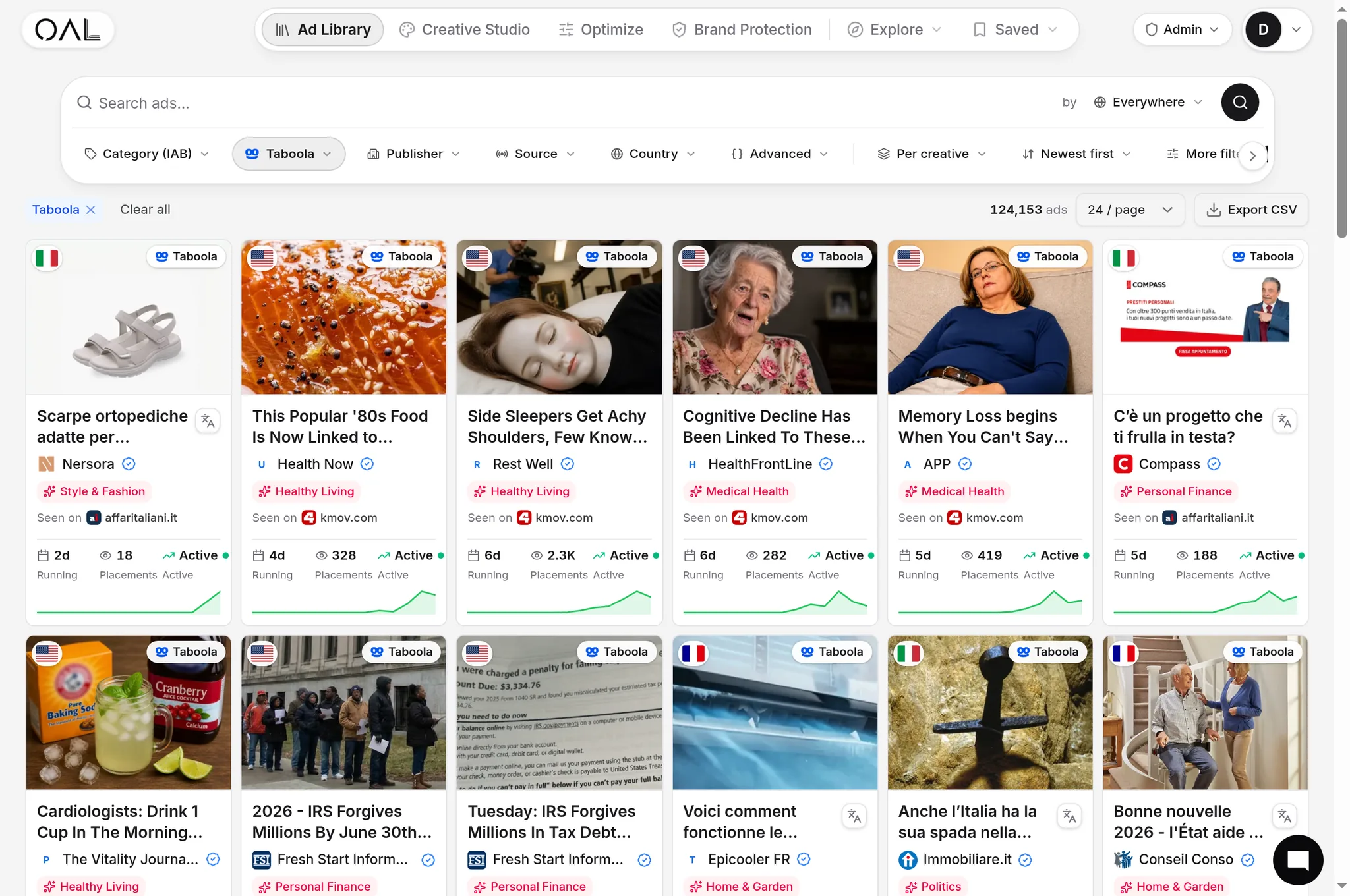
OpenAdLibrary bestaat om dat spoor leesbaar te maken. We leggen live publieke native ads vast over Taboola, Outbrain, MGID, Revcontent, Teads, MediaGo, Yahoo en MSN, en we volgen elke klik door naar de landingspagina van de adverteerder (zonder op live ads te klikken). Zo kun je één aanbod vingerafdrukken en de beweging volgen. Over de 589.036 creatives en 5,4 miljoen advertentie-observaties die we hebben vastgelegd, zijn de patronen duidelijk:
- Verspreiding vertelt je de bewezen volgorde. Wanneer één creative op zes netwerken verschijnt, is de volgorde waarin dat gebeurde (welk netwerk eerst, welk daarna) een getest uitbreidingspad. Voer je eigen aanbod door hetzelfde raster in plaats van er zelf een te bedenken.
- Geo-footprint vertelt je welke markten overdraagbaar zijn. Het zien van dezelfde ad gelokaliseerd in drie nieuwe landen is direct bewijs dat die regio's die invalshoek accepteren. Die shortlist bespaart weken koud testen.
- Langdurigheid vertelt je wat je kunt vertrouwen. Onze index beslaat momenteel tot ongeveer 28 dagen aan continue observatie per creative, en de ads die aan dat plafond zijn vastgepind, zijn veelzeggend. Hidden Hearing's "Try next-gen hearing aids," SmartAsset's "How Can I Avoid Paying Taxes on IRA Withdrawals?", en een cluster van "My IQ" quiz ads hebben allemaal continu gedraaid gedurende de volledige 28 dagen dat we ze hebben gevolgd. (Afzonderlijk: het industrie-verhaal over 90-dagen winnaars is precies dat, een verhaal. Onze harde waargenomen cijfers houden op bij 28 dagen.) Hoe dan ook, duur is de goedkoopste kwaliteitsfilter die je hebt: een aanbod dat weken overleeft op meerdere plaatsingen is het modelleren waard; eentje die drie dagen opvlamde en verdween is ruis.
- De echte adverteerder achter de ad stelt je in staat om het volledige opschalingsgedrag van één concurrent te bestuderen, elke regio, netwerk en invalshoek waar ze naartoe zijn uitgebreid, in plaats van te reageren op één geïsoleerde creative.

Dat is verkenning, geen plagiaat. Je kopieert de structuur van de uitbreiding (de regio's, de netwerken, de volgorde, het tempo) en voert je eigen aanbod en je eigen originele creatives erdoorheen. Om deze patronen snel te vinden, verandert een native ad spy tool die creatives in volledige kwaliteit vastlegt en klikken naar de bestemming traceert, verspreide observaties in een gerangschikte kloonlijst. Van daaruit haalt Copy DNA de terugkerende hooks achter de langlopende ads naar boven, en Creative Studio helpt je je eigen originelen te bouwen voordat je ze live zet.
Een uitgewerkt voorbeeld van de routekaart in de praktijk#
Stel, je weight-management aanbod is verticaal gemaximaliseerd in de VS op één netwerk. In plaats van te gokken wat je volgende stap is, haal je de verspreiding van vergelijkbare langlopende aanbiedingen in dezelfde vertical op, het soort analyse dat wordt behandeld in de beste affiliate verticals voor native ads. Gezondheid is vruchtbare grond hiervoor: 14.895 gezondheidscreatives staan in onze index, en de langstlopende die we volgen worden gedomineerd door hoortoestel- en supplementenaanbiedingen die duidelijk zijn gevalideerd over meerdere plaatsingen voordat ze uitbreidden.

De data toont een dominant patroon: VS desktop, dan VS mobile, dan Canada en het VK, dan een tweede netwerk, dan Tier-2 markten. Die volgorde wordt je kloonwachtrij. Je repliceert je winnaar in die volgorde, geeft elke kloon zijn eigen budget en een schone leerfase, en past dezelfde verticale opschalingsdiscipline toe op elk ervan zodra het stabiliseert. De twee assen versterken elkaar: elke horizontale kloon wordt een nieuw verticaal plafond om naartoe te pushen.
Beide assen op één tijdlijn plaatsen#
Opschalen is geen splitsing in de weg tussen de twee operaties. Het is een lus. Het volwassen patroon ziet er als volgt uit:
- Valideer een winnaar en laat hem de leerfase doorlopen.
- Schaal verticaal in stappen van 20 tot 50% totdat de marginale CPA verslechtert.
- Kloon horizontaal naar de volgende omstandigheid met de hoogste kans van slagen, gebruikmakend van concurrentieverspreiding als je prioriteitsvolgorde.
- Schaal elke kloon verticaal naar zijn eigen plafond.
- Herhaal, verbreed de footprint terwijl je elke plaatsing verdiept.
Goed uitgevoerd, wordt één bewezen aanbod een raster van tientallen onafhankelijk geoptimaliseerde ad sets, elk dicht bij zijn eigen plafond, met nieuwe omstandigheden die sneller worden toegevoegd dan oude verzadigd raken. Dat raster is hoe duurzame native winst er eigenlijk uitziet, niet één heroïsche high-budget campagne. Als je de fundamentele mechanica wilt van het draaien van de plaatsingen die hieronder liggen, behandelt de beginnersgids voor media buying voor native ads de dagelijkse operatie.
De kopers die het opschalingsspel winnen, zijn niet degenen die het hardst bieden. Het zijn degenen die weten welke as ze moeten pushen, precies wanneer ze dat moeten doen, en die echte marktbewijzen gebruiken om te beslissen waar ze vervolgens moeten verbreden.
Start gratis: blader door 200 live native ads zonder kaart, en volg vervolgens één aanbod over elke regio en elk netwerk waar het draait om je eigen opschalingsroutekaart te bouwen.