English
 Español
 Français
 Deutsch
 Italiano
 Nederlands
 Polski
 Svenska
 Türkçe
 Русский
 日本語
日本語 한국어
한국어 简体中文
简体中文 Tiếng Việt
 Bahasa Indonesia
 繁體中文
繁體中文 Čeština
 Dansk
Dansk Norsk (bokmål)
 Suomi
Suomi Ελληνικά
 Română
 Magyar
 Українська
 ไทย
ไทย हिन्दी
 العربية
 עברית
עבריתMedia Buying para Anúncios Nativos: Um Guia para Iniciantes (2026)
O media buying nativo é um ciclo de quatro partes (oferta, criativo, lance, escala), e este playbook de 2026 percorre cada etapa com configurações concretas, exemplos reais em várias redes e as métricas que realmente movimentam dinheiro.

O media buying nativo é um ciclo apertado executado repetidamente: escolha uma oferta, crie um criativo que conquiste o clique, defina um lance que permita ao algoritmo aprender, depois escale o que funciona e corte o que não funciona. Redes, pixels, dashboards: tudo isso é infraestrutura em torno desses quatro movimentos. Este guia percorre o ciclo completo da forma como um comprador ativo o executa em 2026, com configurações concretas e exemplos reais em várias redes que você pode verificar por conta própria.
Novato no canal? Leia primeiro o playbook de publicidade nativa para 2026 para ter uma visão estratégica geral. Esta página é o acompanhamento prático: a sequência real de decisões, em ordem.
O que media buying para anúncios nativos realmente significa#
Media buying para anúncios nativos é a prática de comprar placements no feed, no estilo de conteúdo (os widgets "recomendado para você" e histórias patrocinadas que você vê abaixo dos artigos) e otimizá-los para um custo por aquisição lucrativo. A diferença para busca e redes sociais é a temperatura do público. Ninguém em um site de notícias estava procurando pelo seu produto. Então, o criativo e a landing page carregam toda a campanha, e seu trabalho real é encontrar uma combinação vencedora de oferta-ângulo-funil, depois alimentar o algoritmo de lances da rede com dados de conversão limpos o suficiente para escalá-la.
Esse inventário é vendido por meio de leilões de publicidade nativa programática em um punhado de grandes redes de supply. A maior mudança estrutural rumo a 2026: a tão comentada fusão Taboola-Outbrain desmoronou, e em vez disso a Outbrain comprou a Teads em fevereiro de 2025 por cerca de US$ 900 milhões, depois renomeou toda a empresa para Teads em junho de 2025. Então, o cenário prático é Taboola, a plataforma Outbrain-agora-Teads, MGID e Revcontent, além de uma longa cauda como MediaGo, Yahoo e MSN. Saber quem controla cada marketplace importa quando você analisa a atividade dos concorrentes, porque o mesmo anunciante geralmente executa o mesmo ângulo em várias delas ao mesmo tempo.
Quão grande é "o mesmo ângulo, em todo lugar"? Nosso índice dá uma ideia da escala. Em junho de 2026, o OpenAdLibrary capturou 589.036 criativos de 25.933 anunciantes em 42 redes, rastreados até 926.259 landing pages, com 5,4 milhões de observações de anúncios por trás desses números. Só o Taboola responde por 157.727 desses criativos, mais do que qualquer outra rede individual que rastreamos. Esse é o palheiro onde você está competindo, e também é onde as agulhas vencedoras estão escondidas à vista de todos.
Etapa 1: Escolha uma oferta que se encaixe no canal#
O tráfego nativo é frio, movido por curiosidade e tende a ser mais velho e móvel. Isso descarta algumas ofertas e inclui outras antes de você gastar um centavo. As ofertas que dão lucro em nativos compartilham três características: apelo de massa para que o ângulo funcione em um público geral de notícias, espaço para uma história (suplementos, produtos financeiros, seguros, serviços domésticos, e-commerce de descoberta, todos suportam um advertorial) e um payout que sobreviva a um clique de US$ 0,30 a US$ 0,90. Seu valor médio do pedido ou comissão precisa absorver dezenas de cliques por conversão.
Os verticais que movimentam os nativos em 2026 não são um mistério, porque você pode contá-los. Olhando para todo o nosso índice, finanças lidera com 17.232 criativos ativos, seguros vem logo atrás com 15.629, saúde com 14.895 e e-commerce com 13.872 (índice OpenAdLibrary, junho de 2026). Esses quatro são as faixas lucrativas. Eles têm os payouts, a urgência de sabor regulatório e o ajuste demográfico que os nativos recompensam. Entretenimento (11.784), software (10.825) e viagens (10.692) completam o próximo nível.
Veja como uma oferta de finanças real realmente se parece no feed. Ângulos de alívio fiscal estão por toda parte agora, aproveitando um prazo real:

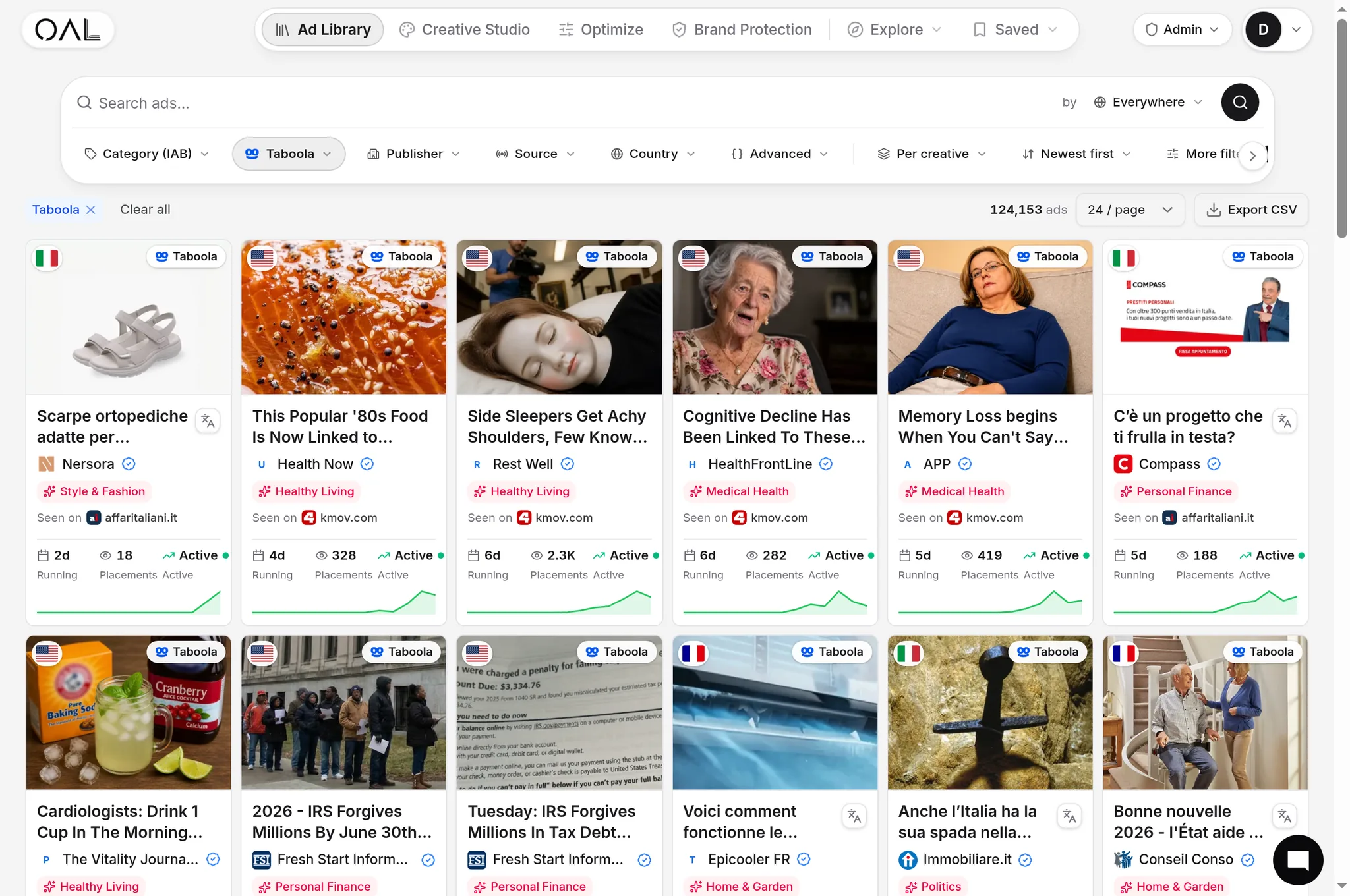
Observe os movimentos: um carimbo de ano, uma data dura, uma magnitude em dólares e uma autoridade vaga ("Fresh Start Information"). Esse é um gancho de finanças nativo clássico, e ele estava rodando há 13 dias quando o capturamos. Longevidade assim é o sinal mais barato que você pode comprar. Se uma oferta está ao vivo em várias redes há semanas, alguém está lucrando com ela. Uma ferramenta de espionagem de anúncios nativos permite filtrar anúncios ao vivo por vertical e separar os anunciantes que sustentam gastos daqueles que desapareceram em dias. Para uma lista curta baseada em dados de onde o dinheiro está, veja os melhores verticais de afiliados para anúncios nativos em 2026.
O maior erro de iniciante não é um lance ruim ou um título fraco. É rodar uma oferta de ticket baixo e impulso em tráfego nativo frio que precisa de um pre-lander para converter. O canal pune ofertas que esperam um público aquecido.
Etapa 2: Crie o criativo que conquista o clique#
Na publicidade nativa, o criativo é um título mais uma miniatura dentro de um feed de publisher. Ele precisa parecer editorial, não um anúncio. Duas alavancas fazem quase todo o trabalho.
A miniatura vem primeiro. Imagens que provocam curiosidade, levemente imperfeitas, "reais" superam fotos de estúdio polidas. Rostos, enquadramento de antes e depois e objetos comuns em contexto cotidiano superam logotipos sempre. O título faz o resto: específico, orientado por benefício ou curiosidade, muitas vezes com um número ou um token de localização. "Por Que Motoristas do Texas Estão Mudando de Seguradoras em 2026" supera "Economize no Seguro de Carro" por uma margem ampla.
Criativos de saúde e suplementos são uma aula sobre isso. Veja o padrão em duas capturas ao vivo:


Mesmo DNA: um sinal de autoridade ("MDs Identify"), um loop aberto ("See the List," "Do You Eat It?") e uma alegação de saúde vaga, mas alarmante, mirando diretamente um leitor mais velho. Saúde é o terceiro maior vertical em todo o nosso índice por um motivo. Ambos foram capturados recentemente (rodando 3 dias cada), que é exatamente o tipo de sinal que você quer observar: novos entrantes testando um ângulo comprovado.
Não adivinhe ângulos a partir de uma página em branco. A maneira mais rápida de aprender o que um feed recompensa é estudar criativos que já estão vencendo. Como o OpenAdLibrary captura a imagem real do criativo em qualidade total e registra quanto tempo cada anúncio rodou, você pode separar vencedores genuínos (de longa duração, multi-publisher) de ruído (um teste de um dia que nunca escalou). Puxe as miniaturas principais do seu vertical, encontre os padrões recorrentes (enquadramento, cor, estrutura do título) e construa suas próprias variações em vez de copiar. Copy DNA e Creative Studio dentro da plataforma existem exatamente para isso: desconstruir o padrão e gerar execuções novas.
Uma regra de lançamento: envie volume no lado criativo. Cinco a dez combinações de imagem e título por conjunto de anúncios no primeiro dia. Algoritmos nativos precisam de opções para otimizar entre si, e o criativo é de onde vêm a maioria das suas primeiras vitórias.
Etapa 3: Defina o lance e deixe o algoritmo aprender#
Os lances são onde novos compradores entram em pânico e quebram suas próprias campanhas. A ideia central é simples: redes nativas executam um leilão de anúncio nativo para cada impressão, e seu lance mais a taxa prevista de clique e conversão decidem se você vence. Você não está apenas comprando cliques. Você está ensinando a um algoritmo como uma conversão se parece.
Uma sequência de lançamento sensata em uma rede otimizada para conversão como o Taboola:
| Fase | Estratégia de lance | Objetivo | O que observar |
|---|---|---|---|
| Lançamento (semana 1) | Maximizar Conversões / Smart Bid | Coletar dados rápido, alimentar o algoritmo | Cliques, taxa de cliques, primeiras conversões |
| Aprendizado (semanas 1-2) | Mesma, deixe em paz | Deixar sair da fase de aprendizado | Custo por conversão estabilizando |
| Controle (semana 2+) | Mudar para CPA Alvo | Defender a lucratividade | CPA vs. ponto de equilíbrio, margem para escalar |
A própria orientação do Taboola trata Maximizar Conversões e CPA Alvo como sequenciais, não concorrentes. Você lança amplo para coletar sinal, depois aperta para uma meta de CPA uma vez que o motor tem dados. A mesma lógica se aplica no MGID e no Teads com nomes de botões diferentes.
Duas regras o mantêm fora de problemas. Primeiro, não mexa nos lances durante a fase de aprendizado. Toda mudança significativa a reinicia. Dê a uma campanha de 3 a 5 dias e algumas centenas de cliques antes de julgá-la. Segundo, lance por placements, não pela rede inteira. A qualidade do supply nativo varia muito por publisher. Seus relatórios mostrarão alguns sites convertendo a 3x a média e outros queimando orçamento silenciosamente. Bloqueie os desperdiçadores, aumente o lance nos vencedores. Esse único hábito é a maior parte da otimização nativa.
Uma nota sobre targeting em 2026: o Google descontinuou a maioria das APIs de publicidade do Privacy Sandbox no final de 2025, mas redes nativas nunca dependeram de cookies de terceiros. Elas licitam com base em sinais contextuais e do lado do publisher, além do seu pixel de conversão. Isso torna um pixel instalado corretamente e eventos de conversão limpos o verdadeiro alicerce da otimização, mais do que qualquer configuração de público-alvo. Esta é a mesma disciplina de media buying que você aplicaria em qualquer canal de publicidade programática. Os nativos apenas a exibem claramente.
Para o passo a passo específico da plataforma (estrutura da conta, configuração de conversão, a primeira campanha clique a clique) siga como anunciar no Taboola.
Etapa 4: Siga o clique além da miniatura#
Aqui está o que a maioria dos guias para iniciantes omite. O anúncio é apenas o topo do funil. Depois do clique vem o pre-lander (um advertorial que constrói o caso) e depois a página da oferta. Um ótimo criativo apontado para um funil fraco perde dinheiro. Um criativo medíocre em um funil ajustado pode vencer. Estudar concorrentes apenas no nível criativo é metade da imagem.
Você precisa ver o caminho completo. O OpenAdLibrary rastreia cada anúncio capturado até seu destino, o pre-lander e a landing page, sem nunca clicar no anúncio ao vivo, para que você possa estudar o funil completo de um concorrente: o ângulo do advertorial, a apresentação da oferta, a call to action. É assim que rastreamos 926.259 capturas de landing até agora. Combine o funil com o sinal de longevidade e você não está adivinhando se algo funciona. Você pode ver que está ao vivo e se espalhando há semanas.
Sobre esse sinal de longevidade, e uma ressalva honesta. O folclore de afiliados adora falar sobre "vencedores de 90 dias", e como heurística geral da indústria, tudo bem. Mas essa não é a nossa medição. Nossa janela de observação contínua atualmente abrange até cerca de 28 dias por criativo, e os anúncios que atingem esse limite contam uma história clara. A SmartAsset está rodando "Ask a Pro: How Can I Avoid Paying Taxes on IRA Withdrawals?" no Outbrain há 28 dias seguidos. A Hidden Hearing manteve dois criativos separados de aparelhos auditivos por 28 dias no Microsoft Audience Network. "My IQ" está rodando meia dúzia de variantes de quiz de QI, todas no nosso limite de 28 dias (índice OpenAdLibrary, junho de 2026). Quando um único anunciante mantém o mesmo gancho vivo por tanto tempo e o inunda com variantes, é o mercado dizendo que o funil por trás converte.
Os verticais de casa e finanças mostram a mesma persistência. Este ângulo de bateria solar estava ao vivo há 27 dias quando o registramos:

Quando você faz engenharia reversa de um funil, mapeie-o de ponta a ponta. O criativo do anúncio é o gancho que conquista o clique. O pre-lander é a história que reformula o problema do leitor. A página da oferta é onde vivem as mecânicas de conversão: ancoragem de preço, escassez, tamanho do formulário. Reconstrua a estrutura, não a cópia. Originalidade é um requisito de ética e conformidade, e cada vez mais de desempenho, já que funis duplicados são sinalizados e perdem força mais rápido.
Etapa 5: Escale sem matar o ROI#
Uma vez que uma campanha é lucrativa e saiu da fase de aprendizado, escalar é uma disciplina, não um botão. Existem dois eixos distintos, e confundi-los é como os compradores destroem um vencedor.
Escalonamento vertical significa direcionar mais orçamento através da mesma campanha comprovada. Faça isso em passos de cerca de 20 a 30% a cada dois ou três dias. Saltos maiores disparam novamente a fase de aprendizado e disparam seu CPA enquanto o algoritmo se recalibra. Você paga um imposto pela impaciência.
Escalonamento horizontal significa duplicar o vencedor em novas superfícies: novos placements, novos dispositivos, geografias adicionais ou uma rede irmã. Como cada duplicata inicia seu próprio aprendizado, a expansão horizontal aumenta o volume sem desestabilizar a campanha original, por isso compradores experientes contam com ela. O mergulho profundo na escolha entre eles é escalonamento horizontal vs. vertical em media buying nativo, e a estrutura mais ampla de proteção de lucro está em como escalar campanhas de afiliados sem matar o ROI.
Uma ordem prática de escalonamento para um vencedor comprovado:
- Aumente o orçamento na campanha existente em ~25%. Aguarde 72 horas. Repita enquanto o CPA se mantiver.
- Duplique para novos dispositivos. Um vencedor em desktop muitas vezes não foi testado em mobile, e vice-versa.
- Duplique a mesma oferta em uma segunda rede. Se venceu no MGID, o ângulo comprovado é uma aposta forte no supply premium do Taboola.
- Expanda para geografias adjacentes. O crescimento mais barato muitas vezes se esconde em mercados de Tier-2 e Tier-3 onde a competição (e os CPCs) são menores. Escalando para novas geos aborda como encontrá-las.
Expansão geográfica não é teoria. Vemos o mesmo ângulo pular fronteiras constantemente: um anúncio de seguro de vida "Real" localizado para a Austrália ("Australians looking for life insurance should read this"), um criativo de automóvel Honda City rodando na Índia, ofertas de máquinas de cartão do Reino Unido fixadas em 28 dias no Microsoft Audience Network. O gancho comprovado viaja; a localização é o trabalho.
Durante todo o processo, continue cortando. Escalar e podar acontecem ao mesmo tempo. A cada poucos dias, bloqueie placements com baixo desempenho, pause criativos mortos e realoque para os sobreviventes. Uma campanha escalada é um jardim constantemente capinado, não uma máquina configurada e esquecida.
Juntando o ciclo#
Execute as quatro etapas como um ciclo, não uma lista de verificação.
- Oferta: apelo de massa, amigável a histórias, payout que sobrevive ao clique. Valide com dados de longevidade antes de gastar.
- Criativo: 5 a 10 combinações de sensação nativa no lançamento, baseadas em vencedores comprovados, executadas originalmente.
- Lance: lance em Maximizar Conversões, mantenha durante o aprendizado, mude para CPA Alvo, otimize no nível do placement.
- Escala: vertical em passos de ~25%, horizontal entre dispositivos, redes e geografias, poda implacavelmente.
Os compradores que vencem em nativos não estão adivinhando. Eles estão lendo o mercado. Dados competitivos ao vivo mostram quais ofertas têm pernas, quais criativos estão sustentando gastos e como é o funil completo por trás de um anúncio vencedor. Essa é toda a premissa do OpenAdLibrary: uma visão aberta e acessível da publicidade nativa ao vivo no Taboola, Outbrain/Teads, MGID, Revcontent e mais. O anunciante real por trás de cada anúncio, o criativo em qualidade total e o clique rastreado até a landing page, por US$ 29,99/mês em vez dos US$ 80 a US$ 400/mês que as ferramentas de espionagem legadas cobram. Comece grátis e navegue por 200 anúncios sem cartão para ver o que está funcionando no seu vertical agora mesmo.