 English
 Español
 Português (Brasil)
 Français
 Deutsch
 Italiano
 Nederlands
 Polski
 Svenska
 Türkçe
 Русский
 日本語
日本語 한국어
한국어 简体中文
简体中文 Bahasa Indonesia
 繁體中文
繁體中文 Čeština
 Dansk
Dansk Norsk (bokmål)
 Suomi
Suomi Ελληνικά
 Română
 Magyar
 Українська
 ไทย
ไทย हिन्दी
 العربية
 עברית
עבריתMở rộng theo chiều ngang so với chiều dọc trong Mua bán Truyền thông Native
Mở rộng theo chiều dọc đẩy thêm ngân sách vào một nhóm quảng cáo đã được chứng minh, trong khi mở rộng theo chiều ngang nhân bản chiến dịch chiến thắng đó qua các khu vực địa lý, mạng lưới và góc độ tiếp cận mới; và việc đọc các mẫu hình mở rộng của đối thủ cho bạn biết thứ tự chính xác để thực hiện.


Hầu hết các chiến dịch native chết theo một trong hai cách. Người mua tìm thấy một chiến dịch chiến thắng, đẩy ngân sách lên cao và xem CPA phình to cho đến khi phép tính đổ vỡ. Hoặc họ tìm thấy một chiến dịch chiến thắng và không bao giờ chạm vào nó nữa, để phần lớn khối lượng có sẵn nằm trên bàn vì họ sợ chọc vào một nhóm quảng cáo có lợi nhuận. Cả hai cái chết đều đến từ cùng một sự hiểu lầm: coi "mở rộng" là một thứ duy nhất trong khi thực tế nó là hai. Mở rộng theo chiều dọc khai thác nhiều hơn từ cùng các điều kiện. Mở rộng theo chiều ngang xây dựng lại các điều kiện chiến thắng đó ở một nơi mới. Trộn lẫn chúng và bạn sẽ đốt cháy ngân sách. Việc sắp xếp đúng thứ tự là toàn bộ cuộc chơi trong mua bán truyền thông.
Hướng dẫn này tách biệt hai trục, cho bạn thấy thời điểm chính xác mỗi trục ngừng hoạt động, và sau đó làm phần mà hầu hết các bài viết bỏ qua: nó sử dụng các mẫu hình mở rộng thực tế của đối thủ từ quảng cáo native để cung cấp cho bạn một thứ tự đã được kiểm chứng cho bước di chuyển theo chiều ngang. Nếu bạn vẫn đang lắp ráp các chiến dịch đầu tiên của mình, hãy bắt đầu với sách lược quảng cáo native cho affiliate. Đây là chương bạn đọc sau khi đã có một chiến dịch chiến thắng và cần làm cho nó lớn hơn mà không phá vỡ nó.
Mở rộng theo chiều ngang so với chiều dọc, định nghĩa#
Mở rộng theo chiều dọc có nghĩa là tăng ngân sách hoặc giá thầu trên một chiến dịch đã chuyển đổi, vắt thêm khối lượng từ cùng một offer, khu vực địa lý, mạng lưới và đối tượng. Mở rộng theo chiều ngang có nghĩa là nhân bản chiến dịch chiến thắng đã được chứng minh đó vào các điều kiện mới: nhiều khu vực địa lý hơn, nhiều mạng lưới hơn, nhiều thiết bị hơn, nhiều vị trí đặt quảng cáo hơn, nhiều góc độ tiếp cận hơn. Một nhóm quảng cáo đã bão hòa trở thành nhiều nguồn thu song song. Chiều dọc làm sâu. Chiều ngang làm rộng.
Hai trục có hồ sơ rủi ro, điểm trần và chế độ thất bại hoàn toàn khác nhau. Đẩy sai trục vào sai thời điểm chính xác là cách ROI sụp đổ.
| Mở rộng theo chiều dọc | Mở rộng theo chiều ngang | |
|---|---|---|
| Thay đổi gì | Ngân sách / giá thầu trên nhóm quảng cáo hiện có | Khu vực địa lý, mạng lưới, thiết bị, vị trí đặt quảng cáo hoặc góc độ tiếp cận mới |
| Giữ nguyên gì | Offer, ý tưởng sáng tạo, nhắm mục tiêu | Offer và ý tưởng sáng tạo chiến thắng (được sao chép) |
| Tốc độ | Nhanh, trong ngày | Chậm hơn, cần tài khoản mới và phê duyệt |
| Rủi ro chính | Lạm phát CPA khi lượng truy cập tốt cạn kiệt | Mỗi bản sao lại bước vào giai đoạn học tập mới |
| Điểm trần | Cứng, được thiết lập bởi lượng truy cập có ý định cao có sẵn | Mềm, nhân lên theo số lượng điều kiện mới |
| Khi nào phát huy | Sớm, trên một chiến dịch chiến thắng mới ổn định | Sau khi chiều dọc chạm trần |
Một chiến dịch mở rộng theo chiều dọc có một điểm trần. Một offer mở rộng theo chiều ngang có nhiều điểm trần như số điều kiện nó có. Đó là lý do tại sao những người chi tiêu native lớn nhất trông rộng và nông, không cao và hẹp.
Mở rộng theo chiều dọc: khai thác trước khi nhân bản#
Khi một nhóm quảng cáo đã chạy có lợi nhuận đủ lâu để vượt qua giai đoạn học tập và dữ liệu ổn định, mở rộng theo chiều dọc là sự tăng trưởng rẻ nhất bạn từng mua. Không cần tạo ý tưởng sáng tạo mới. Không cần làm ấm tài khoản mới. Không có hàng đợi phê duyệt mới. Bạn chỉ đang yêu cầu phiên đấu giá cung cấp thêm những gì đã hoạt động.
Kỷ luật nằm hoàn toàn ở các bước tăng. Thuật toán native tối ưu hóa lại ngay khi bạn thay đổi ngân sách, cho dù bạn đang chạy trên Taboola, nơi thiết lập tuân theo cấu trúc chiến dịch cụ thể, hay bất kỳ nơi nào khác. Di chuyển quá mạnh và bạn đặt lại việc phân phối. Di chuyển quá nhẹ và bạn để tiền nhàn rỗi. Một nhịp điệu hiệu quả:
- Xác nhận tính ổn định. Nhóm quảng cáo phải có lợi nhuận ròng trong một khoảng thời gian bạn thực sự có thể tin tưởng: vài trăm chuyển đổi hoặc vài ngày CPA ổn định, không phải một buổi chiều thứ Ba tốt đẹp.
- Tăng ngân sách 20 đến 50% mỗi lần. Chờ một chu kỳ tối ưu hóa đầy đủ, thường là 24 đến 48 giờ trên native, trước lần tăng tiếp theo. Tăng nhỏ thường xuyên luôn đánh bại một bước nhảy lớn.
- Theo dõi CPA biên, không phải CPA trung bình. CPA trung bình che giấu vấn đề. Câu hỏi thực sự là liệu khoản chi tiêu thêm có chuyển đổi ở mức chấp nhận được hay không, không phải liệu chiến dịch tổng thể có còn xanh hay không.
- Tìm điểm trần và tôn trọng nó. Khi mỗi lần tăng mua được các chuyển đổi tệ hơn lần trước và việc giảm ngân sách trở lại khôi phục hiệu quả, bạn đã rút cạn lượng truy cập có ý định cao cho offer đó trong khu vực địa lý đó trên mạng lưới đó.
Điểm trần đó là vật lý, không phải tâm lý. Chỉ có nhiêu đó người trong một quốc gia, trên một mạng lưới quảng cáo native, nhìn thấy một widget quảng cáo native, có nhu cầu cho offer của bạn trong tuần này. Một khi bạn đã có họ, thêm ngân sách chỉ khiến bạn tự đấu giá với chính mình trong phiên đấu giá quảng cáo native. Đây chính là bức tường được đề cập trong cách mở rộng chiến dịch affiliate mà không giết chết ROI, và đó là tín hiệu để bạn chuyển trục.
Lĩnh vực tài chính là nơi bạn sẽ chạm vào bức tường này đầu tiên, vì đây là phòng đông đúc nhất trong native. Tài chính là lĩnh vực dọc lớn nhất trong chỉ mục của chúng tôi với 17.232 ý tưởng sáng tạo được thu thập, vượt trước bảo hiểm (15.629) và sức khỏe (14.895) (Chỉ mục OpenAdLibrary, tháng 6 năm 2026). Chỉ riêng trên Taboola, chúng tôi đã ghi nhận 5.558 ý tưởng sáng tạo tài chính và 4.303 ý tưởng sáng tạo bảo hiểm. Khi có nhiều nhà quảng cáo như vậy mua cùng một ý định, lượng truy cập có giá trị cao trong bất kỳ khu vực địa lý nào cũng bão hòa nhanh chóng, và bạn cảm nhận được điểm trần theo chiều dọc sớm hơn so với một lĩnh vực dọc mỏng hơn.

Mở rộng theo chiều ngang: nhân bản chiến dịch chiến thắng vào các điều kiện mới#
Một khi chiều dọc đã cạn kiệt, chiến dịch chiến thắng của bạn chỉ còn đúng một chỗ để phát triển: mở rộng ra ngoài. Mở rộng theo chiều ngang lấy tổ hợp offer-và-ý-tưởng-sáng-tạo chính xác mà thị trường đã thưởng và chạy lại nó ở nơi tổ hợp đó chưa từng xuất hiện. Bốn hướng thực tế, xếp theo thứ tự từ rẻ nhất để thử nghiệm trước:
- Mạng lưới mới. Offer in tiền trên một nguồn cung có lượng truy cập chưa được khai thác trên nguồn tiếp theo. Chúng tôi theo dõi tổng cộng 42 mạng lưới, và riêng ba nguồn native lớn đã nắm giữ các nhóm riêng biệt khổng lồ: Taboola (157.727 ý tưởng sáng tạo), Outbrain (84.252) và MGID (49.689) (Chỉ mục OpenAdLibrary, tháng 6 năm 2026). Một ý tưởng sáng tạo được xác thực trên một widget thường chuyển sang một mạng lưới anh em với vài chỉnh sửa nhỏ, vì đối tượng khách hàng chồng lấp ít hơn người mua giả định.
- Khu vực địa lý mới. Một chiến dịch chiến thắng ở một quốc gia Tier-1 thường hoạt động ở các thị trường Tier-1 lân cận, sau đó ở các thị trường Tier-2 và Tier-3 nơi CPM chỉ bằng một phần. Đây là bước di chuyển theo chiều ngang có đòn bẩy cao nhất cho hầu hết các affiliate và có sách lược riêng: xem mở rộng sang các khu vực địa lý mới.
- Thiết bị và vị trí đặt quảng cáo mới. Tách một chiến dịch chiến thắng thống nhất thành các bản sao dành riêng cho thiết bị, và kéo các widget nhà xuất bản hàng đầu vào nhóm quảng cáo riêng của chúng, cho phép mỗi cái tự tối ưu hóa theo ưu điểm riêng thay vì bị kéo bởi mức trung bình.
- Góc độ tiếp cận mới. Cùng một offer được định khung lại cho một động lực khác (sợ hãi so với khát vọng, vấn đề so với kết quả) mở ra một lát cắt mới của cùng một đối tượng mà không cần sản phẩm mới.
Chi phí của việc mở rộng theo chiều ngang là có thật: mỗi bản sao lại bước vào giai đoạn học tập và đốt ngân sách thử nghiệm trước khi nó ổn định. Vì vậy, bạn không nhân bản một cách mù quáng. Bạn nhân bản theo thứ tự có xác suất thành công cao nhất trước đó, và thứ tự đó chính xác là thứ dữ liệu đối thủ trao cho bạn.
Đọc các mẫu hình mở rộng của đối thủ như một lộ trình#
Đây là nơi trí thông minh đánh bại trực giác. Khi một nhà quảng cáo nghiêm túc mở rộng theo chiều ngang, họ để lại một dấu vết: cùng một ý tưởng sáng tạo xuất hiện ở một quốc gia mới một tháng sau, cùng một pre-lander xuất hiện phía sau một mạng lưới quảng cáo native khác, cùng một offer di chuyển từ các widget nặng về desktop sang lượng truy cập mobile. Đọc đủ những dấu vết đó và bạn sẽ ngừng đoán xem nên mở rộng theo hướng nào. Bạn đang đi theo một tuyến đường mà người khác đã trả tiền để xác thực.
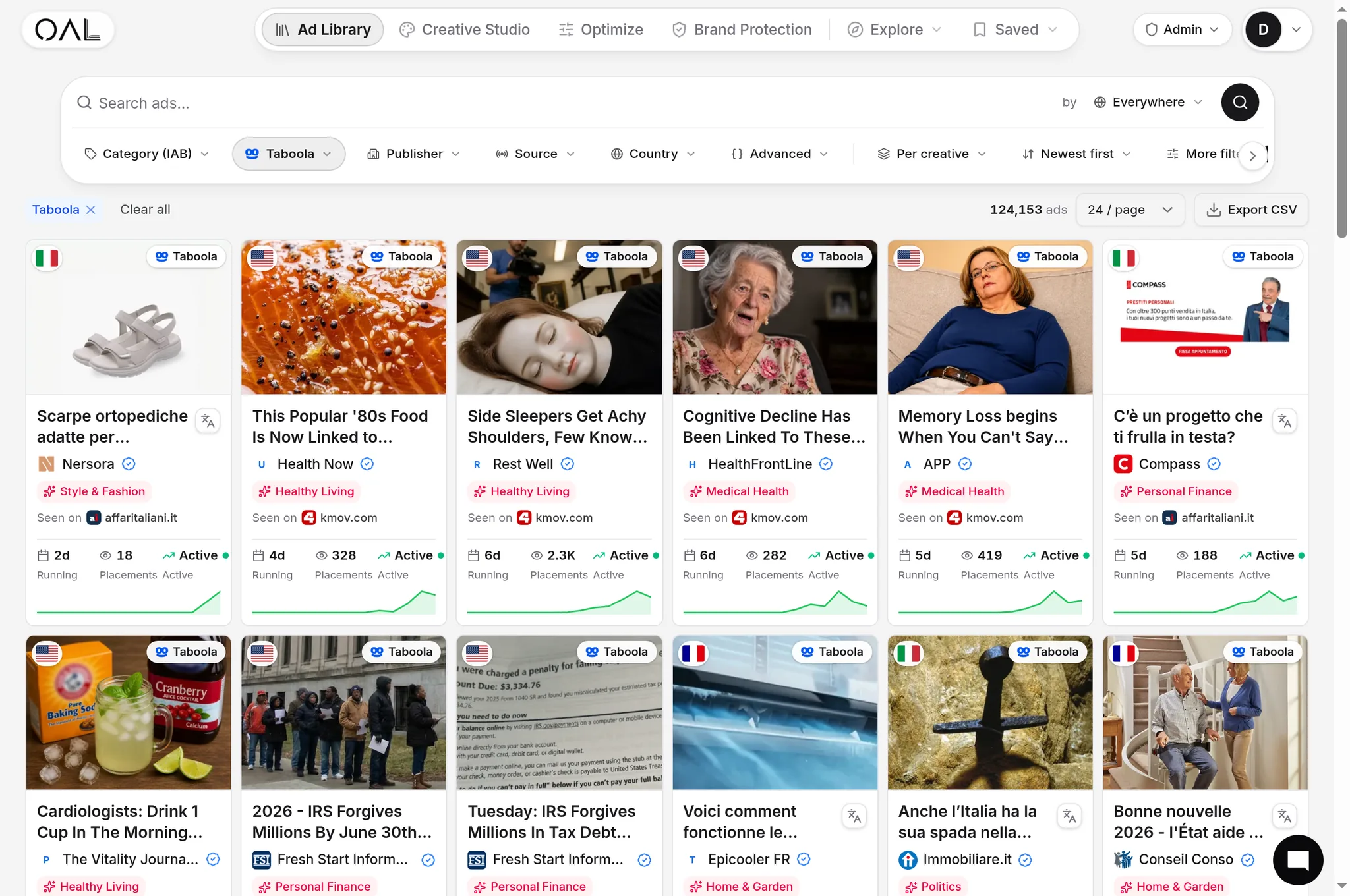
OpenAdLibrary tồn tại để làm cho dấu vết đó dễ đọc. Chúng tôi thu thập các quảng cáo native công khai đang chạy trên Taboola, Outbrain, MGID, Revcontent, Teads, MediaGo, Yahoo và MSN, và chúng tôi theo dõi mỗi cú nhấp chuột đến trang đích của nhà quảng cáo (mà không nhấp vào quảng cáo đang chạy). Điều đó cho phép bạn lấy dấu vân tay một offer duy nhất và theo dõi nó di chuyển. Trong số 589.036 ý tưởng sáng tạo và 5,4 triệu quan sát quảng cáo chúng tôi đã thu thập, các mẫu hình rất rõ ràng:
- Sự lan truyền cho bạn biết thứ tự đã được chứng minh. Khi một ý tưởng sáng tạo xuất hiện trên sáu mạng lưới, trình tự nó lan truyền (mạng lưới nào trước, mạng lưới nào tiếp theo) là một con đường mở rộng đã được kiểm chứng. Chạy offer của riêng bạn qua cùng một cấu trúc thay vì tự nghĩ ra một cái.
- Dấu chân địa lý cho bạn biết thị trường nào chuyển giao được. Việc nhìn thấy cùng một quảng cáo được bản địa hóa sang ba quốc gia mới là bằng chứng trực tiếp cho thấy các khu vực địa lý đó chấp nhận góc độ tiếp cận đó. Danh sách rút gọn đó tiết kiệm hàng tuần thử nghiệm lạnh.
- Độ dài thời gian cho bạn biết cái gì đáng tin cậy. Chỉ mục của chúng tôi hiện bao phủ tối đa khoảng 28 ngày quan sát liên tục cho mỗi ý tưởng sáng tạo, và các quảng cáo ghim ở điểm trần đó rất đáng chú ý. "Thử thiết bị trợ thính thế hệ tiếp theo" của Hidden Hearing, "Làm thế nào tôi có thể tránh nộp thuế khi rút tiền từ IRA?" của SmartAsset, và một cụm quảng cáo câu đố "Chỉ số IQ của tôi" đều được giữ liên tục trong suốt 28 ngày chúng tôi theo dõi chúng. (Riêng biệt, truyền thuyết ngành về những chiến dịch chiến thắng 90 ngày chỉ là truyền thuyết. Số liệu quan sát cứng của chúng tôi giới hạn ở 28 ngày.) Dù sao đi nữa, thời lượng là bộ lọc chất lượng rẻ nhất bạn có: một offer tồn tại hàng tuần trên nhiều vị trí đặt quảng cáo đáng để mô hình hóa; một offer bùng lên trong ba ngày rồi biến mất chỉ là nhiễu.
- Nhà quảng cáo thực sự đằng sau quảng cáo cho phép bạn nghiên cứu toàn bộ hành vi mở rộng của một đối thủ, mọi khu vực địa lý, mạng lưới và góc độ tiếp cận họ đã mở rộng sang, thay vì phản ứng với một ý tưởng sáng tạo đơn lẻ.

Đó là hoạt động trinh sát, không phải đạo văn. Bạn sao chép cấu trúc của việc mở rộng (các khu vực địa lý, các mạng lưới, thứ tự, nhịp độ) và chạy offer của riêng bạn và các ý tưởng sáng tạo gốc của bạn qua nó. Để tìm các mẫu hình này nhanh chóng, một công cụ gián điệp quảng cáo native thu thập các ý tưởng sáng tạo chất lượng đầy đủ và theo dõi các cú nhấp chuột đến điểm đến biến các quan sát rải rác thành một danh sách nhân bản được xếp hạng. Từ đó, Copy DNA làm nổi bật các điểm móc lặp lại đằng sau những chiến dịch chạy dài, và Creative Studio giúp bạn xây dựng các ý tưởng gốc của riêng mình trước khi đẩy chúng lên chạy.
Một ví dụ thực tế về lộ trình trong thực tiễn#
Giả sử offer quản lý cân nặng của bạn đã mở rộng tối đa theo chiều dọc ở Mỹ trên một mạng lưới. Thay vì đoán bước đi tiếp theo của mình, hãy kéo sự lan truyền của các offer chạy dài tương đương trong cùng lĩnh vực dọc, loại phân tích được đề cập trong các lĩnh vực dọc affiliate tốt nhất cho quảng cáo native. Lĩnh vực sức khỏe là mảnh đất màu mỡ cho việc này: 14.895 ý tưởng sáng tạo sức khỏe nằm trong chỉ mục của chúng tôi, và những ý tưởng chạy dài nhất chúng tôi theo dõi bị chi phối bởi các offer thiết bị trợ thính và thực phẩm chức năng rõ ràng đã được xác thực trên nhiều vị trí đặt quảng cáo trước khi mở rộng.

Dữ liệu cho thấy một mẫu hình chi phối: desktop Mỹ, sau đó mobile Mỹ, sau đó Canada và Anh, sau đó một mạng lưới thứ hai, sau đó các thị trường Tier-2. Trình tự đó trở thành hàng đợi nhân bản của bạn. Bạn sao chép chiến dịch chiến thắng của mình theo thứ tự đó, cung cấp cho mỗi bản sao ngân sách riêng và một giai đoạn học tập sạch, và áp dụng cùng kỷ luật mở rộng theo chiều dọc cho mỗi cái khi nó ổn định. Hai trục kết hợp: mỗi bản sao theo chiều ngang trở thành một điểm trần theo chiều dọc mới để đẩy tới.
Đặt cả hai trục trên một dòng thời gian#
Mở rộng không phải là một ngã rẽ giữa hai hoạt động. Nó là một vòng lặp. Mẫu hình trưởng thành trông như thế này:
- Xác thực một chiến dịch chiến thắng và để nó vượt qua giai đoạn học tập.
- Mở rộng theo chiều dọc theo các bước 20 đến 50% cho đến khi CPA biên suy giảm.
- Nhân bản theo chiều ngang vào điều kiện tiếp theo có xác suất cao nhất, sử dụng sự lan truyền của đối thủ làm thứ tự ưu tiên của bạn.
- Mở rộng từng bản sao theo chiều dọc đến điểm trần riêng của nó.
- Lặp lại, mở rộng phạm vi trong khi làm sâu từng vị trí đặt quảng cáo.
Thực hiện tốt, một offer đã được chứng minh duy nhất trở thành một lưới gồm hàng chục nhóm quảng cáo được tối ưu hóa độc lập, mỗi nhóm gần điểm trần riêng, với các điều kiện mới được thêm vào nhanh hơn các điều kiện cũ bão hòa. Lưới đó là thứ lợi nhuận native bền vững thực sự trông như thế nào, không phải một chiến dịch ngân sách cao anh hùng. Nếu bạn muốn cơ chế nền tảng của việc chạy các vị trí đặt quảng cáo bên dưới tất cả điều này, hướng dẫn cho người mới bắt đầu về mua bán truyền thông cho quảng cáo native bao gồm hoạt động hàng ngày.
Những người mua thắng cuộc chơi mở rộng không phải là những người đấu giá mạnh nhất. Họ là những người biết nên đẩy trục nào, chính xác khi nào nên đẩy nó, và sử dụng bằng chứng thị trường thực tế để quyết định nơi nào sẽ mở rộng tiếp theo.
Bắt đầu miễn phí: duyệt 200 quảng cáo native đang chạy mà không cần thẻ, sau đó theo dõi một offer duy nhất trên mọi khu vực địa lý và mạng lưới nó chạy để xây dựng lộ trình mở rộng của riêng bạn.