English
 Español
 Português (Brasil)
 Français
 Deutsch
 Italiano
 Nederlands
 Polski
 Svenska
 Türkçe
 日本語
日本語 한국어
한국어 简体中文
简体中文 Tiếng Việt
 Bahasa Indonesia
 繁體中文
繁體中文 Čeština
 Dansk
Dansk Norsk (bokmål)
 Suomi
Suomi Ελληνικά
 Română
 Magyar
 Українська
 ไทย
ไทย हिन्दी
 العربية
 עברית
עבריתГоризонтальное и вертикальное масштабирование в нативной медиапокупке
Вертикальное масштабирование направляет больше бюджета в проверенную рекламную группу, а горизонтальное — клонирует победителя в новые гео, сети и ракурсы; анализ паттернов расширения конкурентов подсказывает точный порядок действий.


Большинство нативных кампаний умирают одним из двух способов. Покупатель находит победителя, резко увеличивает бюджет и наблюдает, как CPA взлетает, пока экономика не рухнет. Или он находит победителя и больше к нему не прикасается, оставляя большую часть доступного объёма неиспользованной из-за страха тронуть прибыльную рекламную группу. Обе смерти происходят из одного непонимания: считать «масштабирование» одной вещью, хотя на самом деле их две. Вертикальное масштабирование выжимает больше из тех же условий. Горизонтальное масштабирование воссоздаёт эти выигрышные условия в новом месте. Перепутаете их — сожжёте бюджет. Правильный порядок действий — это и есть вся игра в медиапокупке.
Это руководство разделяет две оси, показывает точный момент, когда каждая перестаёт работать, а затем делает то, что пропускают большинство статей: использует реальные паттерны расширения конкурентов из нативной рекламы, чтобы дать вам проверенный порядок для горизонтального хода. Если вы всё ещё собираете свои первые кампании, начните с плейбука по нативной рекламе для аффилиатов. Это глава, которую вы читаете после того, как у вас появился победитель и нужно сделать его больше, не сломав.
Горизонтальное и вертикальное масштабирование: определения#
Вертикальное масштабирование означает увеличение бюджета или ставок в кампании, которая уже конвертирует, выжимая больший объём из того же оффера, гео, сети и аудитории. Горизонтальное масштабирование означает клонирование этого проверенного победителя в новые условия: больше гео, больше сетей, больше устройств, больше размещений, больше ракурсов. Одна насыщенная рекламная группа превращается во множество параллельных источников дохода. Вертикальное углубляет. Горизонтальное расширяет.
У этих двух подходов совершенно разные профили риска, потолки и модели провала. Давить не на ту ось в неподходящее время — это именно то, как рушится ROI.
| Вертикальное масштабирование | Горизонтальное масштабирование | |
|---|---|---|
| Что меняется | Бюджет / ставка в существующей рекламной группе | Новое гео, сеть, устройство, размещение или ракурс |
| Что остаётся неизменным | Оффер, креатив, таргетинг | Выигрышный оффер и креатив (дублируются) |
| Скорость | Быстрая, в тот же день | Медленнее, требуются новые аккаунты и аппрувы |
| Основной риск | Рост CPA по мере исчерпания качественного инвентаря | Каждый клон заново проходит фазу обучения |
| Потолок | Жёсткий, определяется доступным высокоинтенциональным трафиком | Мягкий, умножается на количество новых условий |
| Когда эффективно | Ранний этап, на свежем стабильном победителе | После того, как вертикальное достигло своего потолка |
У вертикально масштабированной кампании один потолок. У горизонтально масштабированного оффера столько потолков, сколько у него условий. Поэтому самые крупные нативные рекламодатели выглядят широкими и мелкими, а не высокими и узкими.
Вертикальное масштабирование: извлеките максимум перед клонированием#
Когда рекламная группа стабильно работает с прибылью достаточно долго, чтобы пройти фазу обучения, и данные стабильны, вертикальное масштабирование — это самый дешёвый рост, который вы когда-либо купите. Не нужно делать новый креатив. Не нужно греть новый аккаунт. Не нужно проходить новую очередь на аппрув. Вы просто просите аукцион дать вам больше того, что уже работает.
Вся дисциплина — в шагах. Нативные алгоритмы переоптимизируются в момент изменения бюджета, независимо от того, работаете ли вы на Taboola, где настройка следует определённой структуре кампании, или где-либо ещё. Сделаете слишком резкий шаг — сбросите доставку. Сделаете слишком мягкий — оставите деньги без дела. Рабочий ритм:
- Подтвердите стабильность. Рекламная группа должна быть чисто прибыльной за период, которому вы действительно можете доверять: несколько сотен конверсий или несколько дней стабильного CPA, а не один удачный вторник после обеда.
- Увеличивайте бюджет на 20–50% за раз. Ждите полный цикл оптимизации, часто 24–48 часов в нативной рекламе, перед следующим шагом. Частые небольшие увеличения каждый раз побеждают один большой скачок.
- Отслеживайте маржинальный CPA, а не усреднённый. Усреднённый CPA скрывает проблему. Реальный вопрос в том, конвертировались ли дополнительные траты по приемлемой ставке, а не в том, остаётся ли кампания в целом в плюсе.
- Найдите потолок и уважайте его. Когда каждое увеличение покупает конверсии хуже, чем предыдущее, а снижение бюджета восстанавливает эффективность, — вы исчерпали высокоинтенциональный инвентарь для этого оффера в этой гео в этой сети.
Этот потолок физический, а не психологический. Существует лишь ограниченное количество людей в одной стране, в одной нативной рекламной сети, видящих один нативный рекламный виджет, которые на этой неделе заинтересованы в вашем оффере. Как только вы их получили, дополнительный бюджет просто заставляет вас торговаться с самим собой на нативном рекламном аукционе. Это именно та стена, о которой говорится в статье как масштабировать аффилиатные кампании, не убивая ROI, и это ваш сигнал сменить ось.
В финансах вы столкнётесь с этой стеной первыми, потому что это самая переполненная комната в нативной рекламе. Финансы — крупнейшая вертикаль в нашем индексе: 17 232 захваченных креатива, опережая страхование (15 629) и здоровье (14 895) (индекс OpenAdLibrary, июнь 2026). Только на Taboola мы зафиксировали 5 558 финансовых креативов и 4 303 креатива по страхованию. Когда столько рекламодателей покупают один и тот же интент, высокоценный инвентарь в любой одной гео насыщается быстро, и вы чувствуете вертикальный потолок раньше, чем в менее плотной вертикали.

Горизонтальное масштабирование: клонируйте победителя в новые условия#
Как только вертикальный потенциал исчерпан, у вашего победителя остаётся ровно одно место для роста: вовне. Горизонтальное масштабирование берёт точную комбинацию оффера и креатива, которую рынок уже вознаградил, и запускает её там, где эта комбинация никогда не появлялась. Четыре практических направления, примерно от самого дешёвого для тестирования:
- Новые сети. Оффер, который приносит прибыль на одном источнике трафика, имеет нетронутый инвентарь на следующем. Мы отслеживаем 42 сети в общей сложности, и только три крупнейших нативных источника содержат огромные отдельные пулы: Taboola (157 727 креативов), Outbrain (84 252) и MGID (49 689) (индекс OpenAdLibrary, июнь 2026). Креатив, проверенный на одном виджете, часто переносится на родственную сеть с небольшими изменениями, потому что аудитории пересекаются меньше, чем предполагают покупатели.
- Новые гео. Победитель в одной стране Tier-1 часто работает на соседних рынках Tier-1, затем на рынках Tier-2 и Tier-3, где CPM стоят в разы дешевле. Это ход горизонтального масштабирования с наибольшим рычагом для большинства аффилиатов, и у него есть свой плейбук: см. масштабирование в новые гео.
- Новые устройства и размещения. Разделение унифицированного победителя на клоны под конкретные устройства и выделение топовых виджетов издателей в отдельные рекламные группы позволяет каждому из них оптимизироваться по своим собственным заслугам, а не тащиться за средним показателем.
- Новые ракурсы. Тот же оффер, переосмысленный для другой мотивации (страх vs стремление, проблема vs результат), открывает новый срез той же аудитории без нового продукта.
Стоимость горизонтального масштабирования реальна: каждый клон заново входит в фазу обучения и сжигает тестовый бюджет до стабилизации. Поэтому вы не клонируете вслепую. Вы клонируете в порядке с наивысшей априорной вероятностью успеха, и этот порядок вам как раз и дают данные конкурентов.
Читайте паттерны расширения конкурентов как дорожную карту#
Здесь разведка побеждает интуицию. Когда серьёзный рекламодатель масштабируется горизонтально, он оставляет след: тот же креатив появляется в новой стране месяц спустя, тот же прелендинг открывается за другой нативной рекламной сетью, тот же оффер мигрирует с десктопных виджетов на мобильный инвентарь. Прочитав достаточно таких следов, вы перестанете гадать, в каком направлении расширяться. Вы следуете по маршруту, который кто-то уже оплатил для проверки.
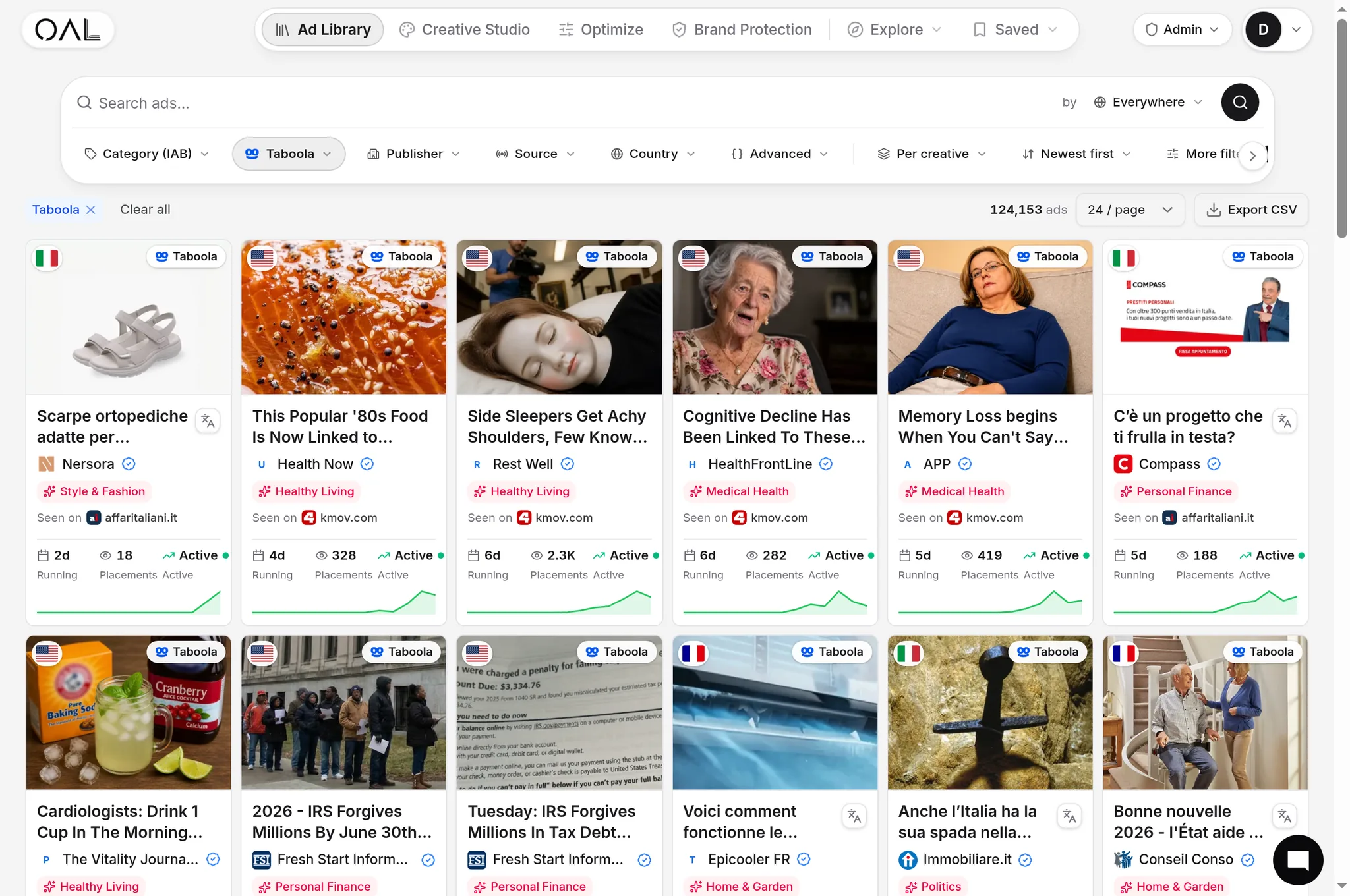
OpenAdLibrary существует, чтобы сделать этот след читаемым. Мы захватываем живую публичную нативную рекламу на Taboola, Outbrain, MGID, Revcontent, Teads, MediaGo, Yahoo и MSN и отслеживаем каждый клик до целевой страницы рекламодателя (без кликов по живым объявлениям). Это позволяет вам идентифицировать один оффер и наблюдать за его перемещением. Среди 589 036 креативов и 5,4 миллиона наблюдений за рекламой, которые мы захватили, паттерны очевидны:
- Распространение показывает проверенный порядок. Когда один креатив появляется в шести сетях, последовательность его распространения (какая сеть первой, какая следующей) — это протестированный путь расширения. Запускайте свой собственный оффер по той же схеме, вместо того чтобы изобретать свою.
- Географический след показывает, на какие рынки происходит перенос. Видеть ту же рекламу, локализованную для трёх новых стран, — прямое доказательство того, что эти гео принимают данный ракурс. Этот шортлист экономит недели холодного тестирования.
- Долговечность показывает, чему можно доверять. Наш индекс в настоящее время охватывает до ~28 дней непрерывного наблюдения за креативом, и объявления, достигшие этого потолка, показательны. "Try next-gen hearing aids" от Hidden Hearing, "How Can I Avoid Paying Taxes on IRA Withdrawals?" от SmartAsset и кластер рекламных объявлений с викторинами "My IQ" — все они непрерывно работали все 28 дней, что мы за ними наблюдали. (Отдельно: отраслевые легенды о 90-дневных победителях — это всего лишь легенды. Наши жёсткие наблюдаемые цифры ограничены 28 днями.) В любом случае, длительность — самый дешёвый фильтр качества: оффер, который выживает неделями на нескольких размещениях, стоит того, чтобы его моделировать; тот, что вспыхнул на три дня и исчез, — это шум.
- Настоящий рекламодатель за рекламой позволяет изучить всё поведение одного конкурента по масштабированию, каждую гео, сеть и ракурс, в которые он расширялся, вместо того чтобы реагировать на один изолированный креатив.

Это разведка, а не плагиат. Вы копируете структуру расширения (гео, сети, порядок, темп) и запускаете через неё свой собственный оффер и свои оригинальные креативы. Чтобы быстро находить эти паттерны, инструмент для разведки нативной рекламы, который захватывает креативы в полном качестве и отслеживает клики до цели, превращает разрозненные наблюдения в ранжированный список для клонирования. Оттуда Copy DNA выявляет повторяющиеся хуки, стоящие за долгоиграющими объявлениями, а Creative Studio помогает создавать свои оригиналы перед запуском.
Рабочий пример применения дорожной карты на практике#
Допустим, ваш оффер по управлению весом достиг вертикального потолка в США в одной сети. Вместо того чтобы гадать о следующем шаге, изучите распространение сопоставимых долгоиграющих офферов в той же вертикали — такой анализ рассматривается в статье лучшие аффилиатные вертикали для нативной рекламы. Здоровье — благодатная почва для этого: в нашем индексе 14 895 креативов по здоровью, и среди самых долгоиграющих, которые мы отслеживаем, доминируют офферы слуховых аппаратов и БАДов, которые явно были проверены на нескольких размещениях перед расширением.

Данные показывают доминирующий паттерн: США, десктоп → США, мобильные → Канада и Великобритания → вторая сеть → рынки Tier-2. Эта последовательность становится вашей очередью для клонирования. Вы воспроизводите своего победителя в этом порядке, даёте каждому клону свой бюджет и чистую фазу обучения и применяете ту же дисциплину вертикального масштабирования к каждому из них по мере стабилизации. Две оси сочетаются: каждый горизонтальный клон становится новым вертикальным потолком, к которому нужно стремиться.
Совмещение обеих осей на одной временной шкале#
Масштабирование — это не развилка между двумя операциями. Это цикл. Зрелый паттерн выглядит так:
- Валидируйте победителя и дайте ему пройти фазу обучения.
- Масштабируйте вертикально шагами по 20–50%, пока маржинальный CPA не ухудшится.
- Клонируйте горизонтально в следующее условие с наивысшей вероятностью успеха, используя распространение конкурентов как приоритетный порядок.
- Масштабируйте каждый клон вертикально до его собственного потолка.
- Повторяйте, расширяя охват, одновременно углубляя каждое размещение.
При грамотном выполнении один проверенный оффер превращается в сеть из десятков независимо оптимизированных рекламных групп, каждая из которых близка к своему потолку, причём новые условия добавляются быстрее, чем старые насыщаются. Эта сеть — вот как на самом деле выглядит стабильная прибыль от нативной рекламы, а не одна героическая кампания с большим бюджетом. Если вам нужны базовые механики работы с размещениями, лежащими в основе всего этого, руководство для начинающих по медиапокупке для нативной рекламы охватывает повседневные операции.
Покупатели, которые выигрывают в игре масштабирования, — не те, кто больше всех повышает ставки. Это те, кто знает, на какую ось давить, когда именно это делать, и кто использует реальные рыночные данные, чтобы решить, куда расширяться дальше.
Начните бесплатно: просмотрите 200 живых нативных объявлений без карты, а затем отслеживайте один оффер во всех гео и сетях, где он работает, чтобы построить свою собственную дорожную карту масштабирования.