English
 Español
 Português (Brasil)
 Deutsch
 Italiano
 Nederlands
 Polski
 Svenska
 Türkçe
 Русский
 日本語
日本語 한국어
한국어 简体中文
简体中文 Tiếng Việt
 Bahasa Indonesia
 繁體中文
繁體中文 Čeština
 Dansk
Dansk Norsk (bokmål)
 Suomi
Suomi Ελληνικά
 Română
 Magyar
 Українська
 ไทย
ไทย हिन्दी
 العربية
 עברית
עבריתRétro-ingénierie de l'entonnoir natif d'un concurrent (de la création à la page de destination)
Une publicité native n'est que la porte d'entrée ; voici comment parcourir toute la chaîne derrière elle, de la création au SSP, au tracker de clics, au pré-lander et à la page d'offre, et lire ce que chaque lien révèle sur la stratégie d'un concurrent.

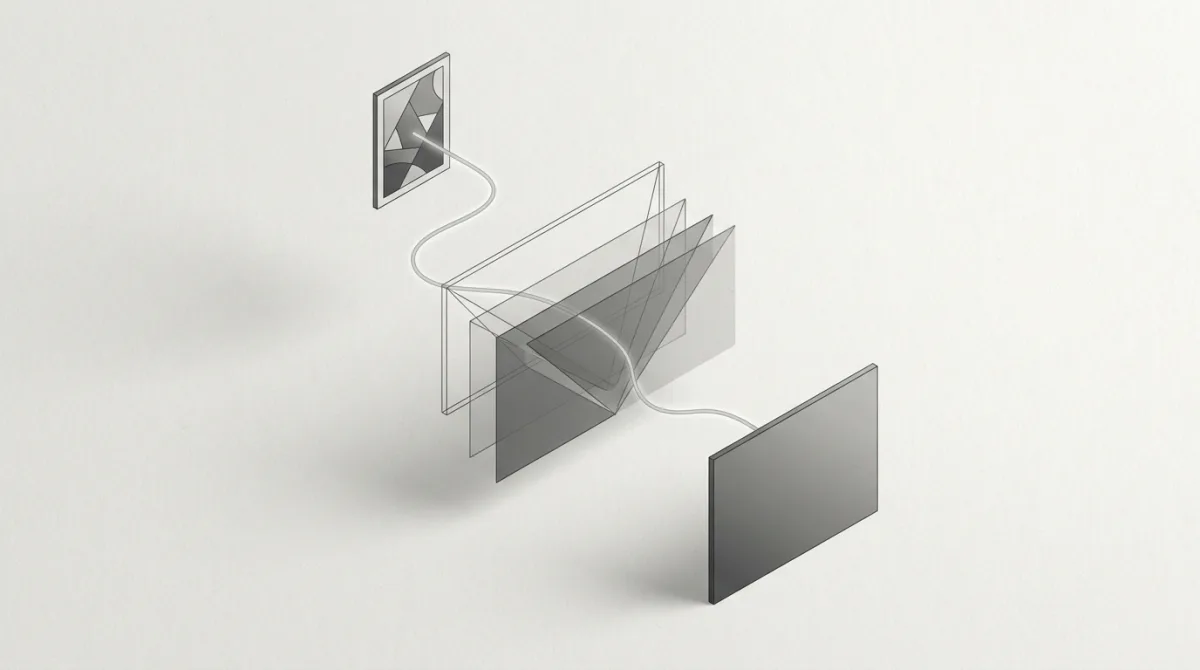
Une publicité native n'est pas la stratégie. C'est la porte d'entrée. La stratégie vit dans la chaîne derrière cette porte : le chemin d'approvisionnement que parcourt l'impression, le tracker de clics qui achemine le visiteur, le pré-lander qui le réchauffe, et la page d'offre qui conclut la vente. Capturez l'écran de la création et vous avez étudié la couverture et sauté le livre.
Ce guide parcourt toute la chaîne. Vous prenez une unité native (un titre Taboola, une miniature Outbrain, une carte MGID) et vous la démontez lien par lien jusqu'à comprendre non seulement ce qu'un concurrent diffuse, mais comment tout l'entonnoir est câblé pour convertir. C'est la différence entre les personnes qui copient des titres et perdent, et celles qui rétro-ingénient des entonnoirs et gagnent. Cela se situe un niveau plus profond qu'un flux de travail général d'espionnage des publicités concurrentes, et c'est la partie que la plupart des outils passent sous silence.
Pour donner une idée de l'échelle : dans l'index OpenAdLibrary (juin 2026), nous avons capturé 589 036 créations natives de 25 933 annonceurs sur 42 réseaux, et résolu 926 259 captures de pages de destination derrière elles. Ce dernier nombre est celui qui compte ici. Presque aucun autre outil ne conserve la page derrière le clic.
Ce que signifie réellement rétro-ingénier un entonnoir natif#
Rétro-ingénier un entonnoir natif signifie tracer une publicité en arrière et en avant à travers sa chaîne de diffusion complète : la création et le titre, le réseau qui l'a diffusée, la redirection de tracking de clics qui achemine le clic, et la page de destination (généralement un pré-lander, puis une page d'offre) vers laquelle l'annonceur envoie le trafic. L'objectif est de reconstituer le parcours de conversion complet du concurrent, pas seulement la publicité qu'il vous a montrée.
La plupart des marketeurs s'arrêtent au premier lien parce que la plupart des outils s'arrêtent là. La chaîne comporte cinq maillons, et chacun répond à une question différente.
| Maillon de la chaîne | Ce que c'est | Ce qu'il vous apprend |
|---|---|---|
| Création + titre | L'image et le texte que l'utilisateur voit | L'angle, l'accroche, l'audience |
| Widget natif / SSP | Le widget de publicité native et le chemin d'approvisionnement | Quel réseau et quels éditeurs ils achètent |
| Tracker de clics | L'URL de redirection (ex. un identifiant de clic tblci ou un paramètre Outbrain) |
Le véritable annonceur, le tracker, la configuration d'attribution |
| Pré-lander / page de pont | L'advertorial ou le quiz entre la publicité et l'offre | La logique de persuasion et la posture de conformité |
| Offre / page de destination | La page de conversion finale | Le produit, le prix et l'appel à l'action |
La création vous dit ce qu'un concurrent dit. La page de destination vous dit ce qu'il vend. La chaîne entre les deux vous dit comment il connecte les deux. Sauter le milieu, c'est rétro-ingénier un slogan.
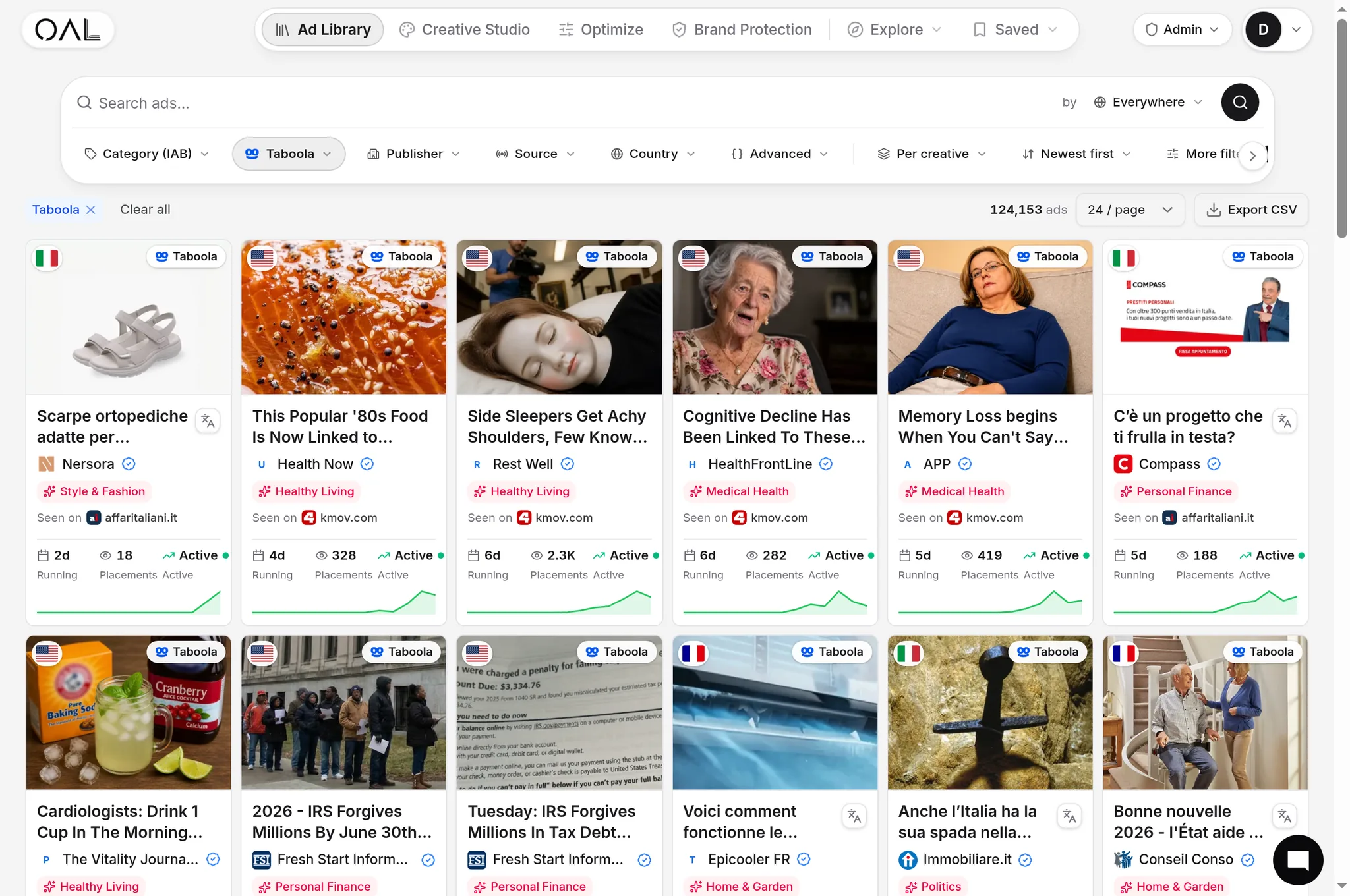
Voici à quoi ressemble une création capturée réelle au sommet d'une de ces chaînes. Notez la construction du titre : un chiffre en dollars, une échéance, une accroche sur le "pardon". Chaque mot a un rôle.

Pourquoi le natif est plus difficile à tracer que Meta, et pourquoi c'est l'opportunité#
N'importe qui peut ouvrir la bibliothèque d'annonces de Meta et voir les créations sociales d'une marque. Cette transparence est une commodité. Tout le monde a la même vue. La publicité native est l'opposé. Il n'y a pas de bibliothèque publique unique pour Taboola, Outbrain, MGID, Revcontent, Teads ou MSN. Les publicités sont dispersées sur des milliers de pages d'éditeurs, diffusées de manière programmatique, et la destination est enfouie derrière des redirections.
Cette opacité est exactement la raison pour laquelle les entonnoirs natifs restent rentables plus longtemps, et exactement la raison pour laquelle ce travail paie. Plus une chose est difficile à voir, plus il y a d'avantage à la voir clairement. Le piège : les deux maillons les plus difficiles à récupérer, le tracker de clics et la page de destination, sont les deux que les outils d'espionnage uniquement pour Meta ne peuvent pas vous montrer pour l'inventaire natif. Ils indexent les images des publicités. Ils ne suivent pas le clic.
C'est l'écart qui définit le reste du guide. Une plateforme construite spécifiquement pour le natif, comme OpenAdLibrary, capture l'unité publique en direct, suit le clic dans un environnement contrôlé, et stocke la page de destination résolue comme preuve, sans jamais cliquer sur la publicité en direct d'une manière qui coûte à l'annonceur ou vous signale. Cette chaîne stockée, de bout en bout, est la différence entre deviner un entonnoir et l'auditer.
Étape 1 : Capturez la création comme preuve, pas comme souvenir#
Commencez par l'unité, mais capturez-la correctement. Un enregistrement réel de démontage comprend :
- L'image de création en pleine qualité, pas une miniature recompressée en bouillie
- Le titre exact et tout texte de description
- L'éditeur et le placement où elle est apparue
- Le réseau qui l'a diffusée
- Les dates de première et dernière apparition
Cette dernière paire est la donnée la plus sous-estimée dans le natif. Les annonceurs coupent rapidement les entonnoirs perdants, donc une création qui est restée en ligne et inchangée pendant des semaines diffuse qu'elle est rentable. Notre index couvre actuellement jusqu'à environ 28 jours d'observation continue par création, et les publicités atteignant ce plafond sont une liste de surveillance utile en elles-mêmes. Un exemple tenant à 28 jours est une publicité finance SmartAsset sur Outbrain ("Ask a Pro: How Can I Avoid Paying Taxes on IRA Withdrawals?"), et un autre est une publicité appareil auditif Hidden Hearing sur le Microsoft Audience Network. Quand une marque garde la même chaîne en ligne aussi longtemps, elle ne teste plus. Elle a trouvé un gagnant.
Une note rapide d'honnêteté, car la différence compte : ce chiffre d'environ 28 jours est ce que nous avons observé, pas une loi de l'industrie. Vous entendrez encore des media buyers parler de "gagnants de 90 jours" comme règle générale. Traitez cela comme un savoir général, pas nos données. Ce que nous pouvons vous montrer, c'est la durée de diffusion observée sur un entonnoir spécifique, qui est le nombre sur lequel vous devriez réellement agir.
Pour la partie découverte de ceci (trouver quelles publicités un rival diffuse même), associez cela avec le guide étape par étape pour trouver les publicités des concurrents.
Étape 2 : Identifiez le chemin d'approvisionnement, qui a diffusé cela et où#
Le maillon suivant est le réseau et l'ensemble d'éditeurs. Un seul annonceur diffuse la même création sur des dizaines de widgets natifs sur différents éditeurs, et la diffusion vous indique son niveau de confiance. Un placement est un test. Le même entonnoir sur quarante éditeurs et cinq zones géographiques est un gagnant à grande échelle.
Ce qu'il faut enregistrer à cette étape :
- Réseau : Taboola, Outbrain, MGID, Revcontent, Yahoo/MediaGo, MSN, Teads
- Éditeurs : quels sites portent le widget
- Zones géographiques : quels pays l'unité dessert
- Répartition par appareil : de nombreux entonnoirs natifs sont conçus uniquement pour mobile ou desktop
L'échelle penche lourdement vers deux réseaux. Dans notre index, Taboola représente 157 727 créations capturées et Outbrain 84 252, c'est pourquoi la plupart des démontages que vous ferez commenceront sur l'un de ces deux. Le mix vertical est tout aussi révélateur. La finance mène tout avec 17 232 créations, suivie par l'Assurance (15 629) et la Santé (14 895). Si vous achetez dans ces espaces, vous vous battez pour l'attention contre les angles les plus travaillés sur le web ouvert.
Voici à quoi ressemble cette pression finance et assurance en tant que placement réel. Il s'agit d'une unité d'assurance-vie australienne diffusée sur Taboola, le type de publicité de génération de leads ciblée géographiquement qui remplit la catégorie Assurance :

C'est là qu'un outil structuré d'espionnage de publicités natives prouve sa valeur. Au lieu de parcourir des sites d'éditeurs en espérant attraper un widget, vous interrogez par annonceur, réseau ou angle et voyez l'empreinte complète d'un coup. Les mécaniques de capture pour chaque réseau, et leurs particularités, sont couvertes dans le guide dédié à l'espionnage des publicités natives Taboola, Outbrain et MGID.
Étape 3 : Suivez le clic, le lien qui révèle le véritable annonceur#
C'est là que la plupart des recherches meurent et où la vraie intelligence commence.
Quand un utilisateur clique sur une publicité native, il ne va pas directement chez l'annonceur. Il passe par un tracker de clics. Sur Taboola, l'URL de destination porte un identifiant de clic tblci qui encode à la fois l'utilisateur et le compte de l'annonceur. Outbrain utilise son propre paramètre de clic. Les entonnoirs d'affiliation empilent souvent un tracker tiers (Voluum, RedTrack, Binom) par-dessus. La "marque" visible sur le widget est fréquemment juste une étiquette de contenu générique ou l'éditeur, pas l'entreprise qui paie réellement pour le trafic.
Vous pouvez le voir dans les données capturées elles-mêmes. Regardez les noms de marque attachés à ces unités : "Consumer World," "Vital Guardian," "The Vitality Report," "Fresh Start Information." Ce ne sont pas les entreprises qui vous vendent quelque chose. Ce sont des étiquettes de style contenu choisies pour ressembler à une signature d'éditeur. Le véritable annonceur se trouve à la fin de la chaîne de redirection, dans les paramètres du tracker et le domaine de la page de destination que vous résolvez.

C'est aussi l'étape la plus dangereuse à faire manuellement. Cliquer sur une publicité native en direct :
- Coûte de l'argent à l'annonceur (vous venez de dépenser son CPC)
- Peut polluer ses analytics et son attribution
- Peut signaler votre IP ou empreinte digitale comme concurrent
- Vous montre souvent une page cloaked ou avec un mauvais ciblage géo, pas ce que voient ses vrais prospects
L'approche professionnelle est de ne jamais déclencher le clic en direct vous-même. Comptez sur un système qui a déjà suivi le clic dans un environnement contrôlé, conscient de la géolocalisation, et stocké la destination résolue, le saut du tracker et l'URL finale, comme un enregistrement que vous lisez après coup. C'est le cœur du traçage de clics d'OpenAdLibrary, et c'est pourquoi ces 926 259 captures de pages de destination stockées existent : chacune est un clic que quelqu'un a suivi dans un environnement contrôlé pour que vous n'ayez pas à toucher l'unité en direct. C'est la seule capacité qui transforme "J'ai vu leur publicité" en "Je peux attribuer leur publicité à l'annonceur et au tracker exacts derrière elle."
Étape 4 : Lisez le pré-lander, là où la persuasion se produit réellement#
La redirection atterrit rarement sur l'offre. Dans le natif, elle atterrit sur un pré-lander, aussi appelé page de pont. C'est l'advertorial, le quiz, l'histoire "J'ai essayé ceci pendant 30 jours", le listicle qui classe cinq produits. Le pré-lander a un seul travail : transformer un clic natif froid, motivé par la curiosité, en un visiteur chaud, chargé d'intention avant de le remettre à l'offre.
C'est la page la plus précieuse de l'entonnoir à rétro-ingénier, car elle porte l'architecture de persuasion réelle du concurrent. Quand vous en démontez un, documentez :
- L'angle : peur santé, anxiété financière, avant/après, endorsement d'autorité, écart de curiosité
- Le format : article advertorial, quiz ou sondage, listicle, vidéo de vente, article de style news
- Les éléments de preuve : témoignages, sections de commentaires (réels ou faux), logos "vu sur", affirmations de données
- La posture de conformité : avertissements, "résultats non typiques", étiquettes advertorial (vous indique à quel point le vertical est agressif)
- Les mécaniques du CTA : comment et quand la page pousse vers l'offre (minuteur, bouton déclenché au scroll, porte de résultat de quiz)
Le titre sur la création annonce généralement l'angle du pré-lander avant même que vous ne résolviez la page. Prenez celui-ci, un classique écart de curiosité santé sur une "collation du soir courante". Le pré-lander derrière est presque certainement un advertorial qui distille la réponse pour vous faire scroller :

Un pré-lander qui tourne inchangé pendant des semaines est un actif testé, optimisé. Vous regardez le résultat du budget de split-testing de quelqu'un d'autre. La structure, pas le texte littéral, est ce que vous adaptez.
Étape 5 : Résolvez la page d'offre et bouclez la boucle#
Le dernier maillon est la page d'offre : le formulaire de commande, la capture de leads, le checkout, la fiche d'application sur l'app store. Cette page de destination vous dit la réalité commerciale concrète, le produit, le prix, la garantie, le chemin d'upsell si vous pouvez le voir. Combinée avec le pré-lander, vous avez maintenant la chaîne complète :
Création vers SSP/éditeur vers tracker de clics vers pré-lander vers page d'offre.
Maintenant vous pouvez répondre aux questions qui guident vos propres décisions d'achat. Est-ce un high-ticket ou low-ticket ? Génération de leads ou vente directe ? La marge est-elle sur le front end ou un upsell ? L'angle est-il assez conforme pour tourner sur les mêmes réseaux ? Et la grande question : cet entonnoir est-il nouveau, ou a-t-il imprimé de l'argent discrètement pendant un mois pendant que vous ne regardiez pas ?
Une note éthique et stratégique. Rétro-ingénier un entonnoir signifie apprendre sa structure et sa logique, pas cloner ses pages. Une copie en bloc est une page de destination copiée, un risque légal, un risque de marque, et généralement un moins bon performer car elle ne porte aucune de votre propre positionnement. Utilisez le démontage pour comprendre pourquoi l'entonnoir fonctionne, puis construisez une version plus forte. Étudier des publicités publiques et les pages publiques vers lesquelles elles pointent est une recherche standard et légitime. Des régulations comme le Digital Services Act de l'UE ont poussé toute l'industrie vers plus de divulgation publique des publicités, pas moins.
Transformer un démontage en un système reproductible#
Un seul démontage d'entonnoir est utile. Un système de démontage reproductible est un avantage concurrentiel. Le flux de travail qui se compose ressemble à ceci :
- Construisez une liste de surveillance des annonceurs et angles dans votre vertical, pour que les nouveaux entonnoirs apparaissent automatiquement au lieu de par chance. (Commencez avec le guide de liste de surveillance concurrentielle.)
- Démontez chaque nouveau gagnant dès que la longévité le confirme, chaîne complète, documenté dans un modèle cohérent.
- Suivez les deltas. Quand un concurrent change un pré-lander, modifie un prix d'offre, ou s'étend à une nouvelle zone géographique, ce changement est un signal sur lequel il faut agir.
- Nourrissez les découvertes en actions. Votre prochain test de création, votre prochain angle, votre prochaine construction de page de destination.
Cette boucle (capture, traçage, documentation, action) est au cœur d'un flux de travail mature d'intelligence publicitaire concurrentielle, et elle fonctionne mieux sur un rythme hebdomadaire plutôt qu'un bousculade ponctuelle frénétique. Si vous gérez des achats pour vivre, formalisez cela dans une routine de recherche hebdomadaire pour que l'intelligence reste fraîche et qu'aucune chose rentable ne vous échappe.
La conclusion#
Rétro-ingénier l'entonnoir natif d'un concurrent ne consiste pas à voler un titre. Il s'agit de reconstituer la chaîne complète et auditable, de la création à l'argent : le chemin d'approvisionnement, le tracker de clics qui révèle le véritable annonceur, le pré-lander qui fait la persuasion, et la page d'offre qui conclut. Puis lire ce que chaque maillon vous dit sur une stratégie que vous ne pouvez pas voir autrement. La création est publique. L'entonnoir derrière elle est là où l'avantage concurrentiel vit.
La raison pour laquelle c'est difficile est la raison pour laquelle cela vaut la peine d'être fait. Le natif cache ses destinations derrière des redirections, et les outils que la plupart des gens utilisent ne suivent jamais le clic. Une plateforme qui capture des publicités natives en direct, suit le clic dans un environnement contrôlé, et stocke la preuve de la page de destination vous remet les deux maillons qu'aucun outil uniquement pour Meta ne peut : le véritable annonceur, et la véritable page que voient ses prospects.
Commencez gratuitement et tracez votre premier entonnoir concurrentiel de bout en bout. Parcourez 200 publicités natives en direct sans carte, puis suivez le clic vers la page de destination derrière n'importe laquelle d'entre elles.