
 English
 Português (Brasil)
 Français
 Deutsch
 Italiano
 Nederlands
 Polski
 Svenska
 Türkçe
 Русский
 日本語
日本語 한국어
한국어 简体中文
简体中文 Tiếng Việt
 Bahasa Indonesia
 繁體中文
繁體中文 Čeština
 Dansk
Dansk Norsk (bokmål)
 Suomi
Suomi Ελληνικά
 Română
 Magyar
 Українська
 ไทย
ไทย हिन्दी
 العربية
 עברית
עבריתDesmontar el Embudo de Publicidad Nativa de un Competidor (Del Creative a la Landing Page)
Un anuncio nativo es solo la puerta de entrada; aquí te mostramos cómo recorrer toda la cadena detrás de él, desde el creative hasta el SSP, el click tracker, el pre-lander y la página de oferta, y leer lo que cada eslabón revela sobre la estrategia del competidor.

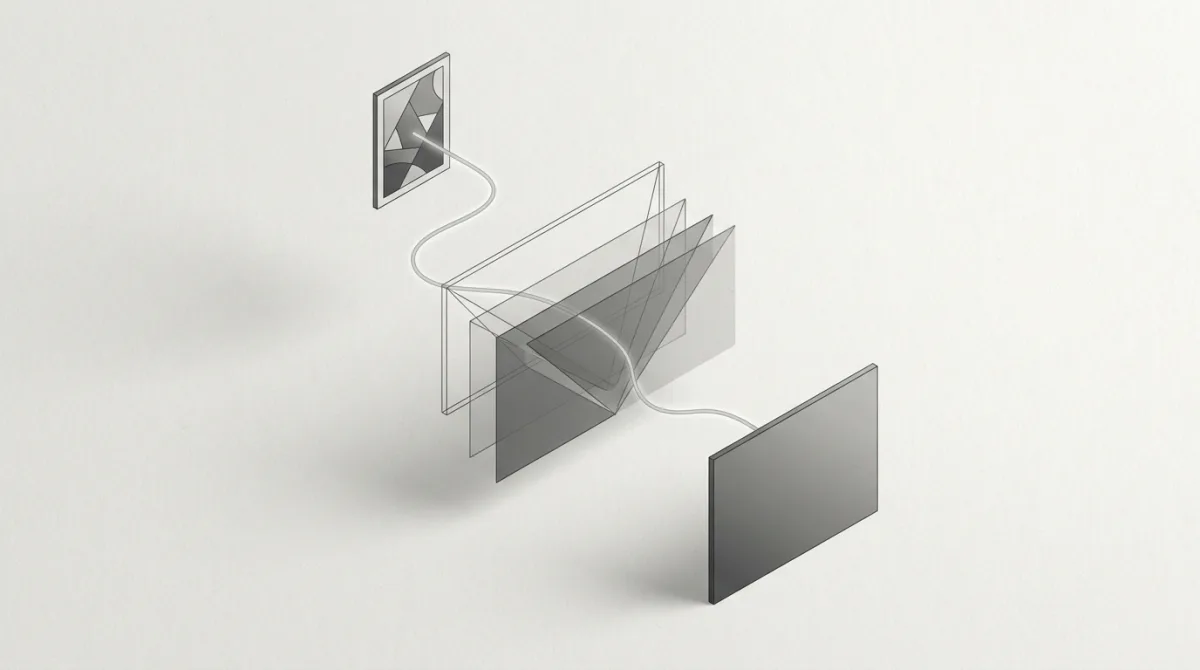
Un anuncio nativo no es la estrategia. Es la puerta de entrada. La estrategia vive en la cadena detrás de esa puerta: la ruta de suministro que recorre la impresión, el click tracker que dirige al visitante, el pre-lander que lo prepara y la página de oferta que cierra la venta. Hacer una captura de pantalla del creative es como estudiar la portada y saltarte el libro.
Esta guía recorre toda la cadena. Tomas una unidad nativa (un titular de Taboola, una miniatura de Outbrain, una tarjeta de MGID) y la desmontas eslabón por eslabón hasta entender no solo qué está ejecutando un competidor, sino cómo está cableado todo el embudo para convertir. Esa es la diferencia entre las personas que copian titulares y pierden, y las personas que desmontan embudos y ganan. Se sitúa un nivel más profundo que un flujo de trabajo general de espionaje de anuncios de competidores, y es la parte que la mayoría de las herramientas omiten silenciosamente.
Para dar escala: en el índice de OpenAdLibrary (junio de 2026) hemos capturado 589,036 creativos nativos de 25,933 anunciantes en 42 redes, y resuelto 926,259 capturas de landing pages detrás de ellos. Este último número es el que importa aquí. Casi ninguna otra herramienta conserva la página detrás del clic.
Qué significa realmente desmontar un embudo de anuncio nativo#
Desmontar un embudo de anuncio nativo significa rastrear un anuncio hacia atrás y hacia adelante a través de su cadena de entrega completa: el creative y el titular, la red que lo sirvió, el redireccionamiento del click tracker que dirige el clic y la landing page (normalmente un pre-lander, luego una página de oferta) a la que el anunciante envía el tráfico. El objetivo es recuperar la ruta de conversión completa del competidor, no solo el anuncio que te mostró.
La mayoría de los marketers se detienen en el primer eslabón porque la mayoría de las herramientas se detienen ahí. La cadena tiene cinco eslabones, y cada uno responde a una pregunta diferente.
| Eslabón en la cadena | Qué es | Qué te dice |
|---|---|---|
| Creative + titular | La imagen y el copy que ve el usuario | El ángulo, el gancho, la audiencia |
| Widget nativo / SSP | El widget de anuncio nativo y la ruta de suministro | Qué red y publishers compran |
| Click tracker | La URL de redireccionamiento (ej. un identificador de clic tblci o parámetro de clic de Outbrain) |
El anunciante real, el tracker, la configuración de atribución |
| Pre-lander / página puente | El advertorial o quiz entre el anuncio y la oferta | La lógica de persuasión y la postura de cumplimiento |
| Oferta / landing page | La página de conversión final | El producto, el precio y la llamada a la acción |
El creative te dice qué está diciendo un competidor. La landing page te dice qué está vendiendo. La cadena intermedia te dice cómo conectan las dos. Saltarte el medio es como desmontar un eslogan.
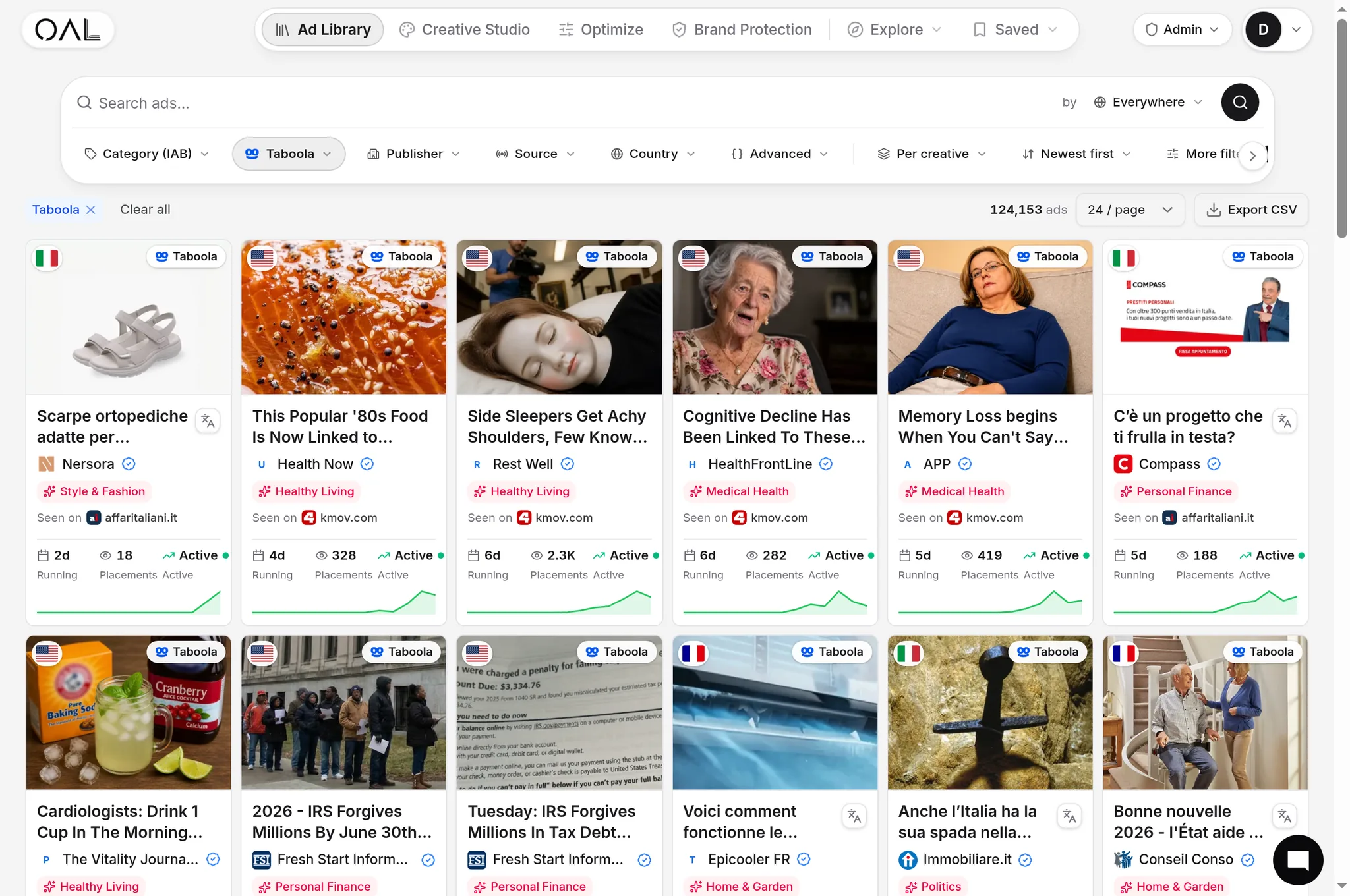
Así es como se ve un creative capturado real en la parte superior de una de estas cadenas. Observa la construcción del titular: una cifra en dólares, una fecha límite, un gancho de "perdón". Cada palabra tiene una función.

Por qué el nativo es más difícil de rastrear que Meta, y por qué esa es la oportunidad#
Cualquiera puede abrir la Biblioteca de Anuncios de Meta y ver los creativos sociales de una marca. Esa transparencia es una mercancía. Todos tienen la misma vista. La publicidad nativa es lo contrario. No hay una única biblioteca pública para Taboola, Outbrain, MGID, Revcontent, Teads o MSN. Los anuncios están dispersos en miles de páginas de publishers, servidos de forma programática, y el destino está enterrado detrás de redireccionamientos.
Esa opacidad es exactamente por qué los embudos nativos se mantienen rentables por más tiempo, y exactamente por qué este trabajo vale la pena. Cuanto más difícil es ver algo, más ventaja hay en verlo claramente. El problema: los dos eslabones más difíciles de recuperar, el click tracker y la landing page, son los dos que las herramientas de espionaje solo para Meta no pueden mostrarte para el inventario nativo. Indexan imágenes de anuncios. No siguen el clic.
Esta es la brecha que define el resto de la guía. Una plataforma construida específicamente para nativo, como OpenAdLibrary, captura la unidad pública en vivo, sigue el clic en un entorno controlado y almacena la landing page resuelta como evidencia, sin hacer nunca clic en el anuncio en vivo de una manera que le cueste al anunciante o te marque. Esa cadena almacenada de extremo a extremo es la diferencia entre adivinar un embudo y auditarlo.
Paso 1: Captura el creative como evidencia, no como un recuerdo#
Comienza con la unidad, pero captúrala correctamente. Un registro real de desmontaje incluye:
- La imagen del creative en calidad completa, no una miniatura re-comprimida hasta perder calidad
- El titular exacto y cualquier texto de descripción
- El publisher y la ubicación donde apareció
- La red que lo sirvió
- Las fechas de primera y última vista
Este último par es el dato más subestimado en nativo. Los anunciantes cortan los embudos perdedores rápido, por lo que un creative que ha estado activo y sin cambios durante semanas está transmitiendo que es rentable. Nuestro índice abarca actualmente hasta unos 28 días de observación continua por creative, y los anuncios que llegan a ese límite son una lista de vigilancia útil por sí sola. Un ejemplo que se mantiene en 28 días es un anuncio de finanzas de SmartAsset en Outbrain ("Ask a Pro: How Can I Avoid Paying Taxes on IRA Withdrawals?"), y otro es un anuncio de audífonos Hidden Hearing en Microsoft Audience Network. Cuando una marca mantiene la misma cadena activa tanto tiempo, ya no está probando. Encontró un ganador.
Una nota rápida de honestidad, porque la diferencia importa: esa cifra de ~28 días es lo que hemos observado, no una ley de la industria. Aún escucharás a media buyers hablar de "ganadores de 90 días" como regla general. Trátalo como un saber popular, no como nuestros datos. Lo que podemos mostrarte es la duración de ejecución observada en un embudo específico, que es el número sobre el que realmente deberías actuar.
Para la mitad de descubrimiento de esto (encontrar qué anuncios está ejecutando un rival), combínalo con la guía paso a paso para encontrar anuncios de competidores.
Paso 2: Identifica la ruta de suministro, quién sirvió esto y dónde#
El siguiente eslabón es la red y el conjunto de publishers. Un solo anunciante ejecuta el mismo creative en docenas de widgets nativos en diferentes publishers, y la distribución te dice cuán seguros están. Una ubicación es una prueba. El mismo embudo en cuarenta publishers y cinco geos es un ganador escalado.
Qué registrar en este paso:
- Red: Taboola, Outbrain, MGID, Revcontent, Yahoo/MediaGo, MSN, Teads
- Publishers: qué sitios llevan el widget
- Geos: en qué países se sirve la unidad
- División por dispositivo: muchos embudos nativos son solo móvil o solo escritorio por diseño
La escala se inclina fuertemente hacia dos redes. En nuestro índice, Taboola representa 157,727 creativos capturados y Outbrain 84,252, por eso la mayoría de los desmontajes que hagas comenzarán en una de esas dos. La mezcla vertical es igual de reveladora. Finanzas lidera todo con 17,232 creativos, seguido de Seguros (15,629) y Salud (14,895). Si compras en esos espacios, estás luchando por la atención contra los ángulos más trabajados en la web abierta.
Así es como se ve esa presión de finanzas y seguros como una ubicación real. Esta es una unidad de seguros de vida australiana ejecutándose en Taboola, el tipo de anuncio de generación de leads geo-dirigido que llena la categoría de Seguros:

Aquí es donde una herramienta estructurada de espionaje de anuncios nativos demuestra su valor. En lugar de navegar por sitios de publishers con la esperanza de atrapar un widget, consultas por anunciante, red o ángulo y ves la huella completa a la vez. La mecánica de capturar cada red, y sus peculiaridades, se cubren en la guía dedicada a espiar anuncios nativos de Taboola, Outbrain y MGID.
Paso 3: Sigue el clic, el enlace que revela al anunciante real#
Aquí es donde muere la mayoría de las investigaciones y donde comienza la inteligencia real.
Cuando un usuario hace clic en un anuncio nativo, no va directamente al anunciante. Pasa por un click tracker. En Taboola, la URL de destino lleva un identificador de clic tblci que codifica tanto al usuario como a la cuenta del anunciante. Outbrain usa su propio parámetro de clic. Los embudos de afiliados a menudo apilan un tracker de terceros (Voluum, RedTrack, Binom) encima de eso. La "marca" visible en el widget es frecuentemente solo una etiqueta de contenido genérica o el publisher, no el negocio que realmente paga por el tráfico.
Puedes ver esto en los datos capturados mismos. Mira los nombres de marca adjuntos a estas unidades: "Consumer World," "Vital Guardian," "The Vitality Report," "Fresh Start Information." Esas no son las empresas que te venden algo. Son etiquetas de estilo de contenido elegidas para parecer una firma de publisher. El anunciante real está al final de la cadena de redireccionamiento, en los parámetros del tracker y el dominio de la landing page al que llegas.

Este también es el paso más peligroso de hacer manualmente. Hacer clic en un anuncio nativo en vivo:
- Le cuesta dinero al anunciante (acabas de gastar su CPC)
- Puede contaminar sus analíticas y atribución
- Puede marcar tu IP o huella digital como competidor
- A menudo te muestra una página cloqueada o con geolocalización incorrecta, no lo que ven sus prospectos reales
El enfoque profesional es nunca activar el clic en vivo tú mismo. Confía en un sistema que ya haya seguido el clic en un entorno controlado y consciente de la geolocalización, y haya almacenado el destino resuelto, el salto del tracker y la URL final, como un registro que lees después del hecho. Eso es el núcleo del seguimiento de clics de OpenAdLibrary, y es por eso que existen esas 926,259 capturas de landing almacenadas: cada una es un clic que alguien siguió en un entorno controlado para que tú no tengas que tocar la unidad en vivo. Es la única capacidad que convierte "vi su anuncio" en "puedo atribuir su anuncio al anunciante y tracker exactos detrás de él".
Paso 4: Lee el pre-lander, donde realmente ocurre la persuasión#
El redireccionamiento rara vez aterriza en la oferta. En nativo, aterriza en un pre-lander, también llamado página puente. Este es el advertorial, el quiz, la historia de "probé esto durante 30 días", el listicle que clasifica cinco productos. El pre-lander tiene un trabajo: convertir un clic nativo frío y guiado por la curiosidad en un visitante cálido y cargado de intención antes de entregarlo a la oferta.
Esta es la página más valiosa del embudo para desmontar, porque contiene la arquitectura de persuasión real del competidor. Cuando desmontes uno, documenta:
- El ángulo: alarma de salud, ansiedad financiera, antes/después, respaldo de autoridad, brecha de curiosidad
- El formato: artículo advertorial, quiz o encuesta, listicle, video carta de ventas, historia estilo noticia
- Los elementos de prueba: testimonios, secciones de comentarios (reales o falsos), logos de "visto en", afirmaciones de datos
- La postura de cumplimiento: descargos de responsabilidad, "resultados no típicos", etiquetas de advertorial (te dice cuán agresivo es el vertical)
- La mecánica de la CTA: cómo y cuándo la página empuja hacia la oferta (temporizador, botón activado al desplazar, puerta de resultados del quiz)
El titular del creative suele telegrafiar el ángulo del pre-lander incluso antes de resolver la página. Toma este, un clásico gancho de salud de brecha de curiosidad sobre "snack nocturno común". El pre-lander detrás de él es casi seguro un advertorial que gotea la respuesta para mantenerte desplazando:

Un pre-lander que ha estado ejecutándose sin cambios durante semanas es un activo probado y optimizado. Estás viendo el resultado del presupuesto de pruebas A/B de otra persona. La estructura, no el copy literal, es lo que adaptas.
Paso 5: Resuelve la página de oferta y cierra el ciclo#
El último eslabón es la página de oferta: el formulario de pedido, la captura de leads, el checkout, la lista en la tienda de aplicaciones. Esta landing page te dice la realidad comercial concreta, el producto, el precio, la garantía, la ruta de upsell si puedes verla. Combinada con el pre-lander, ahora tienes la cadena completa:
Creative a SSP/publisher a click tracker a pre-lander a página de oferta.
Ahora puedes responder las preguntas que impulsan tus propias decisiones de compra. ¿Es de alto ticket o bajo ticket? ¿Generación de leads o venta directa? ¿El margen está en el front end o en un upsell? ¿El ángulo es lo suficientemente cumplidor para ejecutarse en las mismas redes? Y la grande: ¿este embudo es nuevo, o ha estado imprimiendo dinero silenciosamente durante un mes mientras no mirabas?
Una nota ética y estratégica. Desmontar un embudo significa aprender su estructura y lógica, no clonar sus páginas. Una copia al por mayor es una landing page copia, un riesgo legal, un riesgo de marca y usualmente un rendimiento peor porque no lleva tu propio posicionamiento. Usa el desmontaje para entender por qué funciona el embudo, luego construye una versión más fuerte. Estudiar anuncios públicos y las páginas públicas a las que apuntan es una investigación estándar y legítima. Regulaciones como la Ley de Servicios Digitales de la UE han empujado a toda la industria hacia una mayor divulgación pública de anuncios, no menos.
Convertir un desmontaje en un sistema repetible#
Un solo desmontaje de embudo es útil. Un sistema de desmontaje repetible es una ventaja competitiva. El flujo de trabajo que se acumula se ve así:
- Construye una lista de vigilancia de los anunciantes y ángulos en tu vertical, para que los nuevos embudos surjan automáticamente en lugar de por suerte. (Comienza con la guía de lista de vigilancia de competidores.)
- Desmonta cada nuevo ganador en el momento en que la longevidad lo confirme, cadena completa, documentado en una plantilla consistente.
- Rastrea los cambios. Cuando un competidor cambia un pre-lander, modifica un precio de oferta o se expande a un nuevo geo, ese cambio es una señal en la que vale la pena actuar.
- Alimenta los hallazgos en la acción. Tu próxima prueba de creative, tu próximo ángulo, tu próxima construcción de landing page.
Ese ciclo (capturar, rastrear, documentar, actuar) es el corazón de un flujo de trabajo de inteligencia competitiva de anuncios maduro, y funciona mejor con un ritmo semanal en lugar de una búsqueda frenética de una sola vez. Si ejecutas compras para vivir, formalízalo en una rutina de investigación semanal para que la inteligencia se mantenga fresca y nada rentable se te escape.
Conclusión#
Desmontar el embudo nativo de un competidor no se trata de robar un titular. Se trata de recuperar la cadena completa y auditable desde el creative hasta el dinero: la ruta de suministro, el click tracker que revela al anunciante real, el pre-lander que hace la persuasión y la página de oferta que cierra. Luego leer lo que cada eslabón te dice sobre una estrategia que no puedes ver de otra manera. El creative es público. El embudo detrás de él es donde vive la ventaja.
La razón por la que esto es difícil es la razón por la que vale la pena hacerlo. El nativo esconde sus destinos detrás de redireccionamientos, y las herramientas que usa la mayoría de la gente nunca siguen el clic. Una plataforma que captura anuncios nativos en vivo, sigue el clic en un entorno controlado y almacena la evidencia de la landing page te entrega los dos eslabones que ninguna herramienta solo para Meta puede: el anunciante real y la página real que ven sus prospectos.
Comienza gratis y rastrea tu primer embudo de competidor de extremo a extremo. Navega por 200 anuncios nativos en vivo sin tarjeta, luego sigue el clic a la landing page detrás de cualquiera de ellos.