Español
 Português (Brasil)
 Français
 Deutsch
 Italiano
 Nederlands
 Polski
 Svenska
 Türkçe
 Русский
 日本語
日本語 한국어
한국어 简体中文
简体中文 Tiếng Việt
 Bahasa Indonesia
 繁體中文
繁體中文 Čeština
 Dansk
Dansk Suomi
Suomi Ελληνικά
 Română
 Magyar
 Українська
 ไทย
ไทย हिन्दी
 العربية
 עברית
עבריתAre Native Ads Getting More Expensive? CPC Trend Data
Native costs have generally risen, but the pressure concentrates heavily in a few verticals and Tier-1 geos. Here's what's actually driving the trend and how to check if it applies to you.


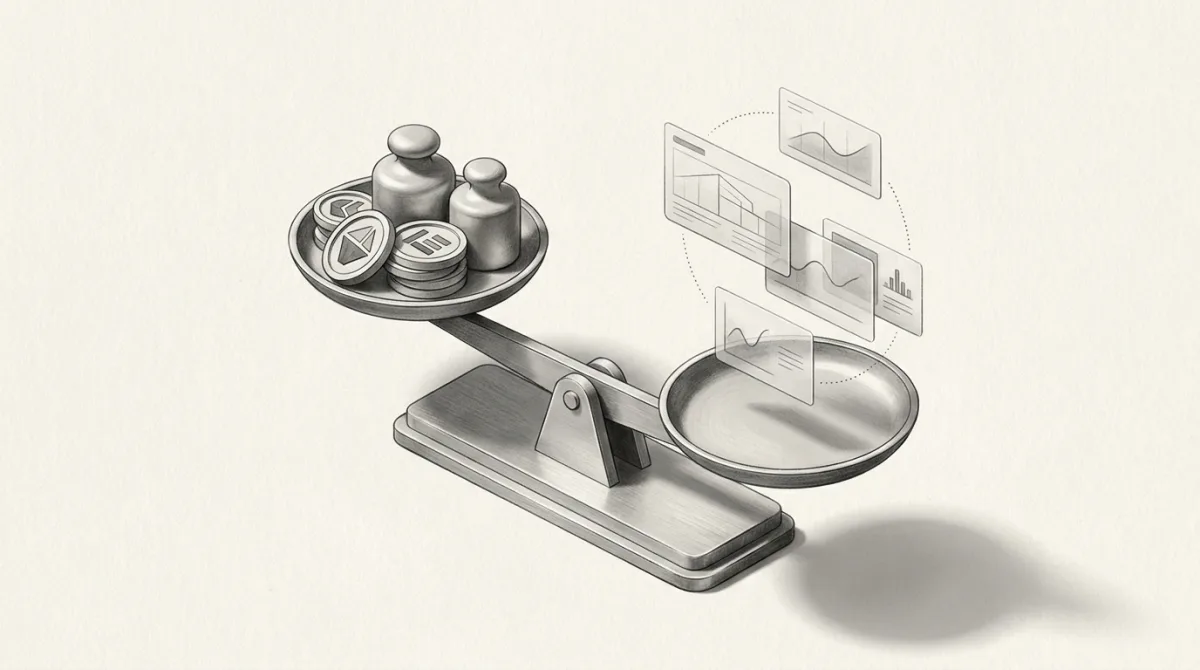
Native ad costs have generally trended upward over the past several years, driven mostly by more advertiser demand competing for a relatively fixed pool of premium publisher inventory, not by any single network policy change. Whether costs feel "rising" for you specifically depends heavily on vertical and geo: competitive verticals like finance and insurance have seen the steepest pressure, while less-contested niches have held steadier.
What's actually driving the trend#
Native inventory hasn't grown as fast as advertiser demand for it. The set of premium publisher sites willing to run sponsored-content widgets is relatively stable; what's changed is how many advertisers, particularly from verticals that used to lean harder on Meta and Google, have shifted budget into native as those channels got more expensive and policy-restrictive. That's straightforward supply and demand: more bidders chasing the same placements pushes the auction-clearing price up.
There's also a compositional effect worth separating from a true price increase. As more advertisers with bigger budgets enter competitive verticals, the average price across the network rises even if the price for any individual advertiser's specific niche hasn't moved much. If you're in a less-contested category, you may not feel the increase that shows up in vertical-wide averages.
Where the pressure concentrates#
Health, finance and insurance carry the heaviest creative volume across the OpenAdLibrary index (over 725,000 native creatives across 49 networks as of July 2026), and that concentration of advertiser demand is exactly where cost pressure shows up hardest. If your offer sits in one of the top native ad verticals, you're bidding against the deepest pool of competing advertisers on the network, and rising costs there are a real, structural dynamic, not a temporary blip.
Less-competitive verticals, home and garden, niche ecommerce, certain B2B categories, have generally not seen the same pressure, because advertiser count hasn't grown as fast relative to available inventory.
Geo matters as much as vertical#
Tier-1 geo costs (US, UK, Canada, Australia) have absorbed most of the demand growth, since that's where advertiser budgets and average order values are highest. Tier-2 and Tier-3 geos have generally held more stable, which is part of why scaling into new geos has become a more common playbook for buyers looking for headroom rather than just accepting rising Tier-1 costs. This isn't a loophole so much as where the actual competitive pressure hasn't caught up yet.
What buyers actually report, qualitatively#
Rather than quoting precise industry-wide figures, which vary too much by source methodology to trust at face value, it's more useful to describe the pattern buyers consistently report: CPCs in the most contested verticals have felt like a steady grind upward over the past couple of years, with occasional plateaus rather than a smooth continuous line. Buyers who've been in the channel since it was less saturated describe needing meaningfully higher budgets today to reach the same volume of profitable conversions they got a few years ago in the same vertical. That's consistent with a maturing channel absorbing more competent competition, which is a normal life cycle for any advertising channel that starts cheap and gets discovered.
It's also consistent with what happened to search and social CPCs a decade earlier: early advantage compresses as more advertisers arrive and get better at bidding. Native is simply a few years behind that curve, and buyers who got in early are now competing with buyers who've had time to build sophisticated bidding and creative operations of their own.
Is it the networks or the market?#
It's worth separating two different things buyers sometimes conflate:
Network-side changes: minimum bid floors, new ad formats, policy shifts. These do happen and can move your specific cost, but they're occasional and network-specific, not a continuous trend.
Market-side changes: more advertisers, bigger budgets, more sophisticated bidding, including publisher-level and device/geo bid modifiers squeezing more value out of the same inventory, which indirectly pushes clearing prices up as competitors get better at bidding. This is the bigger driver of any long-run cost trend, and it's structural, not something any single network controls.
Most of what buyers describe as "native is getting more expensive" is the second kind: more competent competition, not a policy change.
What this means for your budgeting#
A few practical adjustments follow from this:
- Benchmark against your own vertical and geo, not a network-wide average. A network-wide CPM trend tells you little if your niche isn't where the pressure concentrates; read rate ranges by vertical rather than treating the network as a monolith.
- Expect your CPA target to need periodic revisiting, not because the network moved the goalposts, but because your competitive set is more sophisticated than it was a year or two ago.
- Don't assume a rising cost means a worse channel. Native CPMs rising alongside more competition is often a sign the channel is proving out for more advertisers, not that it's degrading. Compare against what search and social CPCs have done over the same period before concluding native has gotten relatively worse.
- Check whether the pressure is coming from a specific network before writing off the whole channel; cost trends aren't uniform across Taboola, Outbrain, MGID and Revcontent.
What rising costs mean for creative strategy#
When a channel's baseline auction price rises, the lever that still fully belongs to you is creative quality, because every network's auction weighs predicted engagement alongside raw bid. A stronger hook effectively buys you a lower price for the same placement, which is why buyers in the most contested verticals tend to invest more in creative iteration as competition rises, not less. Sitting on a single creative for months while costs climb around it is the fastest way to feel a market-wide trend as a personal one; refreshing angles regularly, informed by what's actually working across the vertical right now, is a direct offset against rising baseline costs rather than a nice-to-have.
The same logic applies to landing pages and offers. If the cost to acquire a click is rising, the return on improving what happens after the click, conversion rate, average order value, follow-up monetization, goes up correspondingly. Buyers who've kept the same funnel unchanged for a year while costs crept up are leaving the more controllable half of the equation unexamined.
How to verify the trend for your own niche#
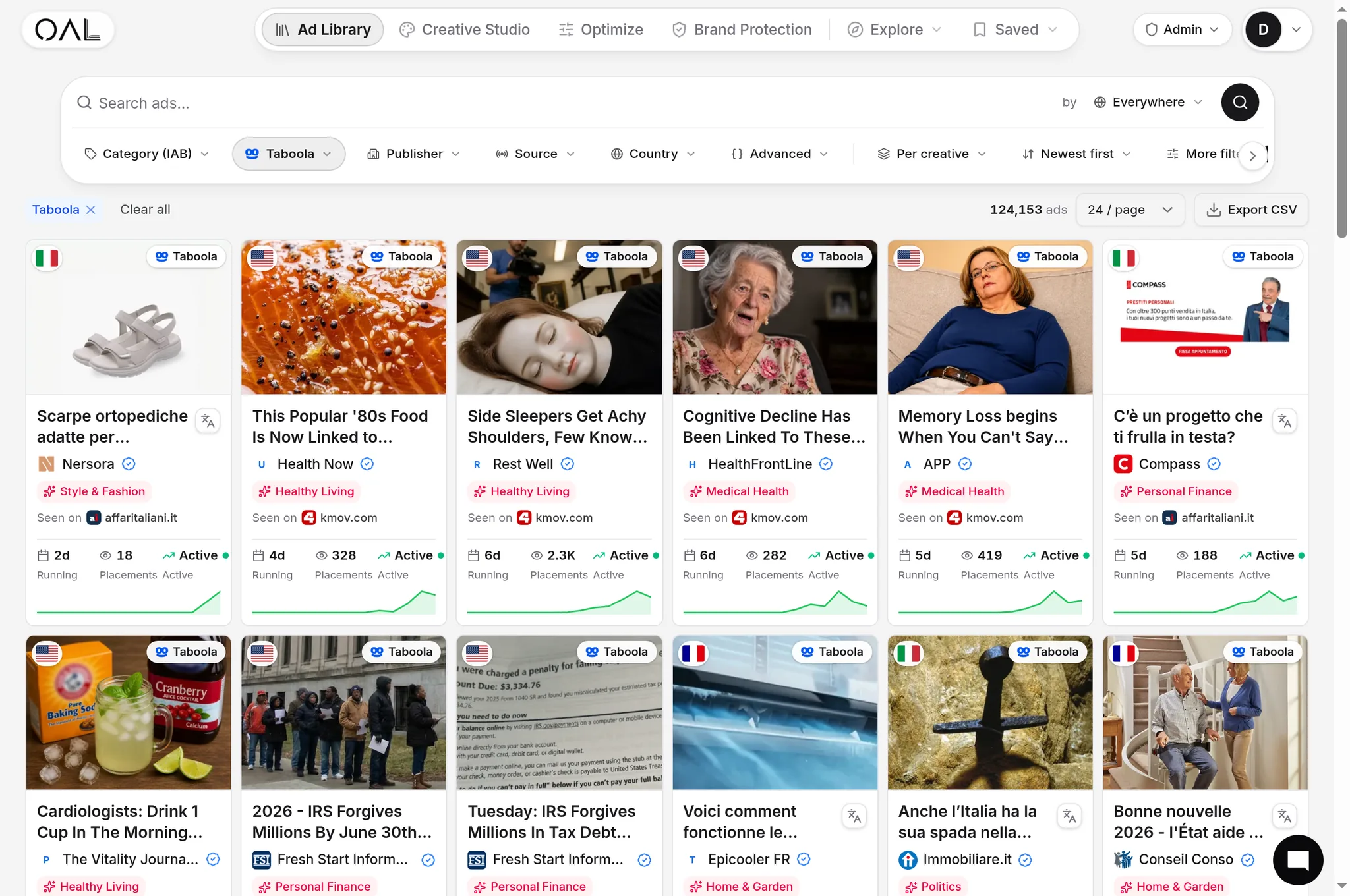
Rather than relying on generalized cost commentary, the more reliable check is direct: look at whether advertisers in your specific vertical and geo are still running creative profitably right now. Ad longevity, how long competing creative stays live, is a better real-time signal of whether costs in your specific corner of native have gotten prohibitive, because advertisers stop paying for placements that no longer clear a profitable price. You can check this directly against live, currently-running creative through OpenAdLibrary's ad intelligence tool instead of relying on a generalized trend that may not apply to your niche or geo.
A reasonable expectation going forward#
Barring a major shift in advertiser demand away from native, the structural drivers behind rising costs, more advertisers, more sophisticated bidding, a relatively fixed premium inventory pool, aren't going away. That doesn't mean every vertical or geo will keep climbing at the same rate; competitive pressure tends to plateau once a category matures and the advertisers who can't sustain the higher cost drop out, leaving a smaller, better-capitalized pool bidding at a more stable equilibrium. Buyers planning multi-year budgets should expect gradual upward pressure in contested categories rather than either a sudden spike or a return to earlier, cheaper pricing.
The bottom line#
Native ad costs have trended up overall, mostly because more, better-funded, more sophisticated advertisers are bidding into a relatively fixed pool of premium inventory. That pressure concentrates heavily in a handful of verticals and Tier-1 geos. If you're outside those, the "rising costs" narrative may not describe your actual experience, and the more useful question isn't whether native in general got pricier, but whether your specific vertical, geo and network combination still clears a profitable CPA today.