
 English
 Español
 Français
 Deutsch
 Italiano
 Nederlands
 Polski
 Svenska
 Türkçe
 Русский
 日本語
日本語 한국어
한국어 简体中文
简体中文 Tiếng Việt
 Bahasa Indonesia
 繁體中文
繁體中文 Čeština
 Dansk
Dansk Norsk (bokmål)
 Suomi
Suomi Ελληνικά
 Română
 Magyar
 Українська
 ไทย
ไทย हिन्दी
 العربية
 עברית
עבריתComo o Revcontent Funciona: Guia da Rede de Anúncios Nativos para Anunciantes
O Revcontent veicula anúncios nativos por meio de widgets de publishers nos quais você dá lances um a um, e aqui está como sua entrega, segmentação por site, lances CPC e alavancas de otimização realmente funcionam, com anúncios reais capturados.

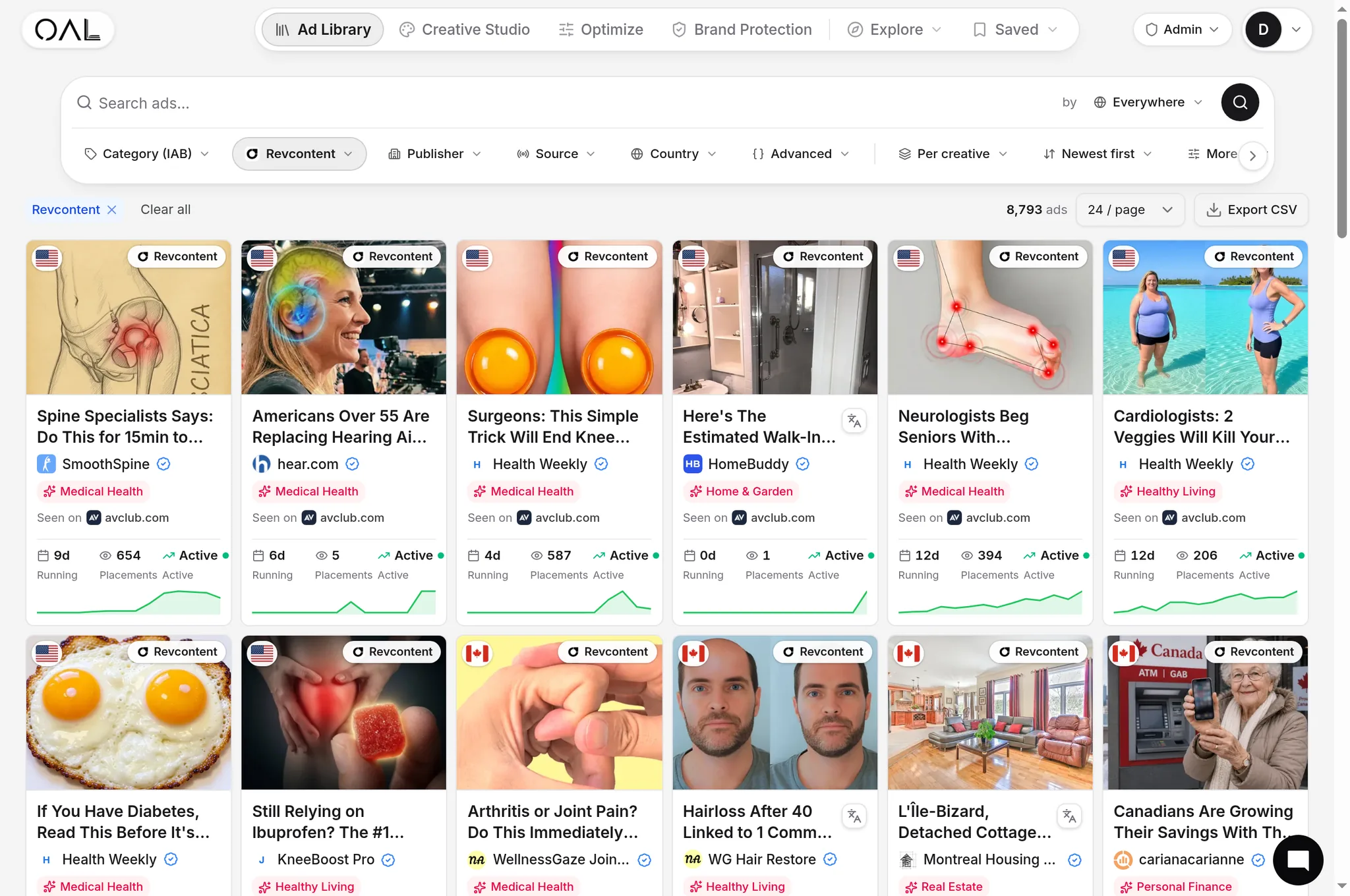
O Revcontent é uma rede de anúncios nativos. Ele insere unidades de recomendação patrocinadas dentro de páginas de publishers, geralmente sob rótulos como "Around the Web" ou "You May Also Like", e encaminha os cliques resultantes para anunciantes com base em custo por clique. Se você já rolou a página passando por uma grade de títulos com lacunas de curiosidade no final de um artigo de notícias, você já viu seu inventário.
O que realmente define o Revcontent para um comprador não é o formato. É a unidade de controle. A maioria das redes quer que você otimize um público ou uma categoria. O Revcontent entrega o widget como a alavanca principal: cada posicionamento em um publisher é sua própria fonte de inventário licitável e bloqueável. Entenda essa ideia e o resto da plataforma se encaixa.
Este guia aborda como o Revcontent entrega anúncios, como funcionam os lances e bloqueios no nível do site, quais alavancas de segmentação realmente fazem diferença e como estudar campanhas reais antes de gastar um dólar. Para a categoria mais ampla, consulte nosso guia de anúncios nativos. Aqui estamos dando zoom total em uma rede específica.
Como o Revcontent funciona?#
O Revcontent funciona incorporando widgets de anúncio nativo em sites de publishers e depois leiloando cada impressão para anunciantes que dão lances de custo por clique. Você cria uma campanha com segmentação por geografia, dispositivo e interesse, define um CPC padrão e então otimiza aumentando ou diminuindo lances em widgets individuais ou bloqueando aqueles que desperdiçam dinheiro. Você paga apenas quando um leitor clica e vai para sua página de destino.
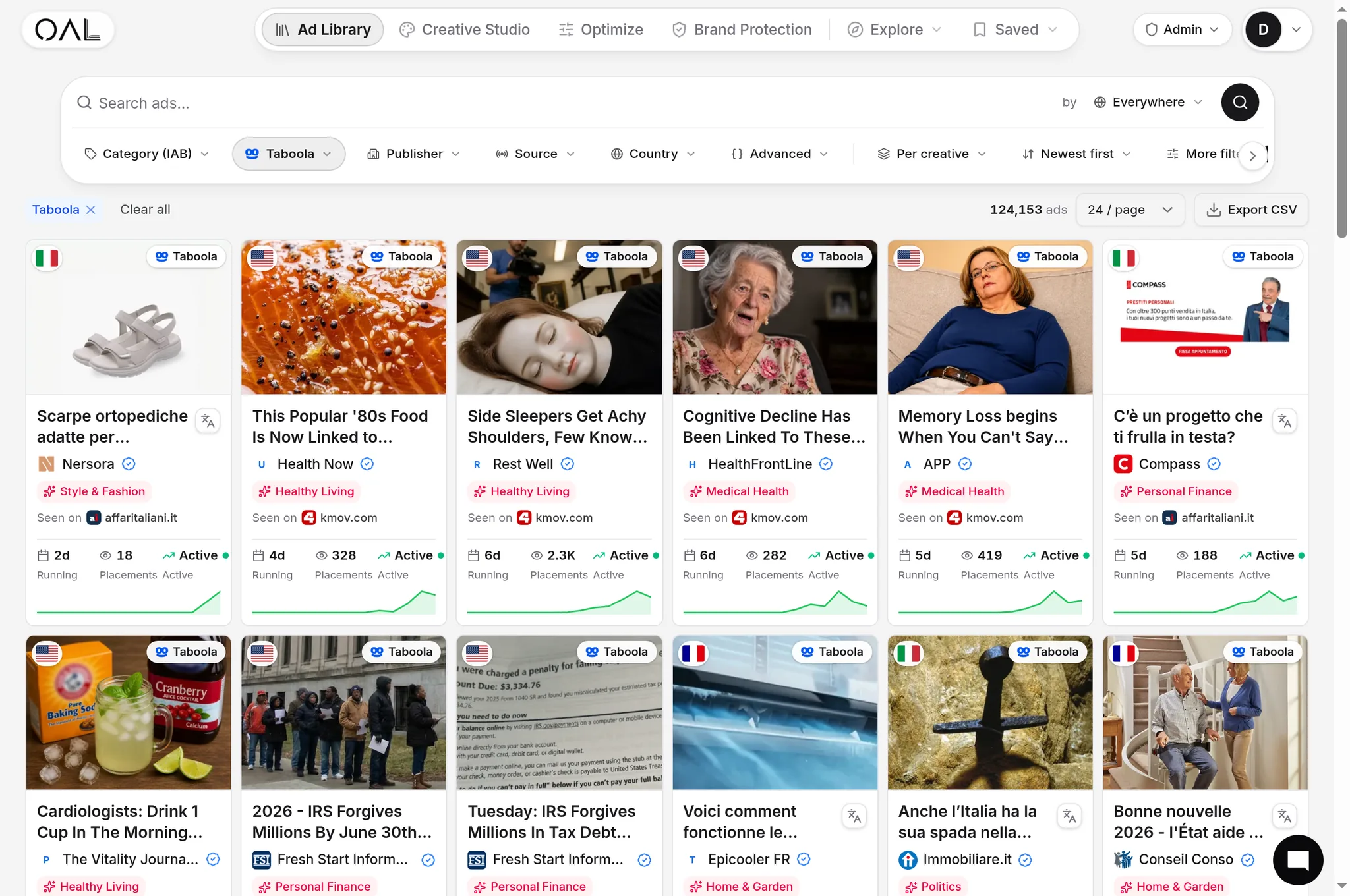
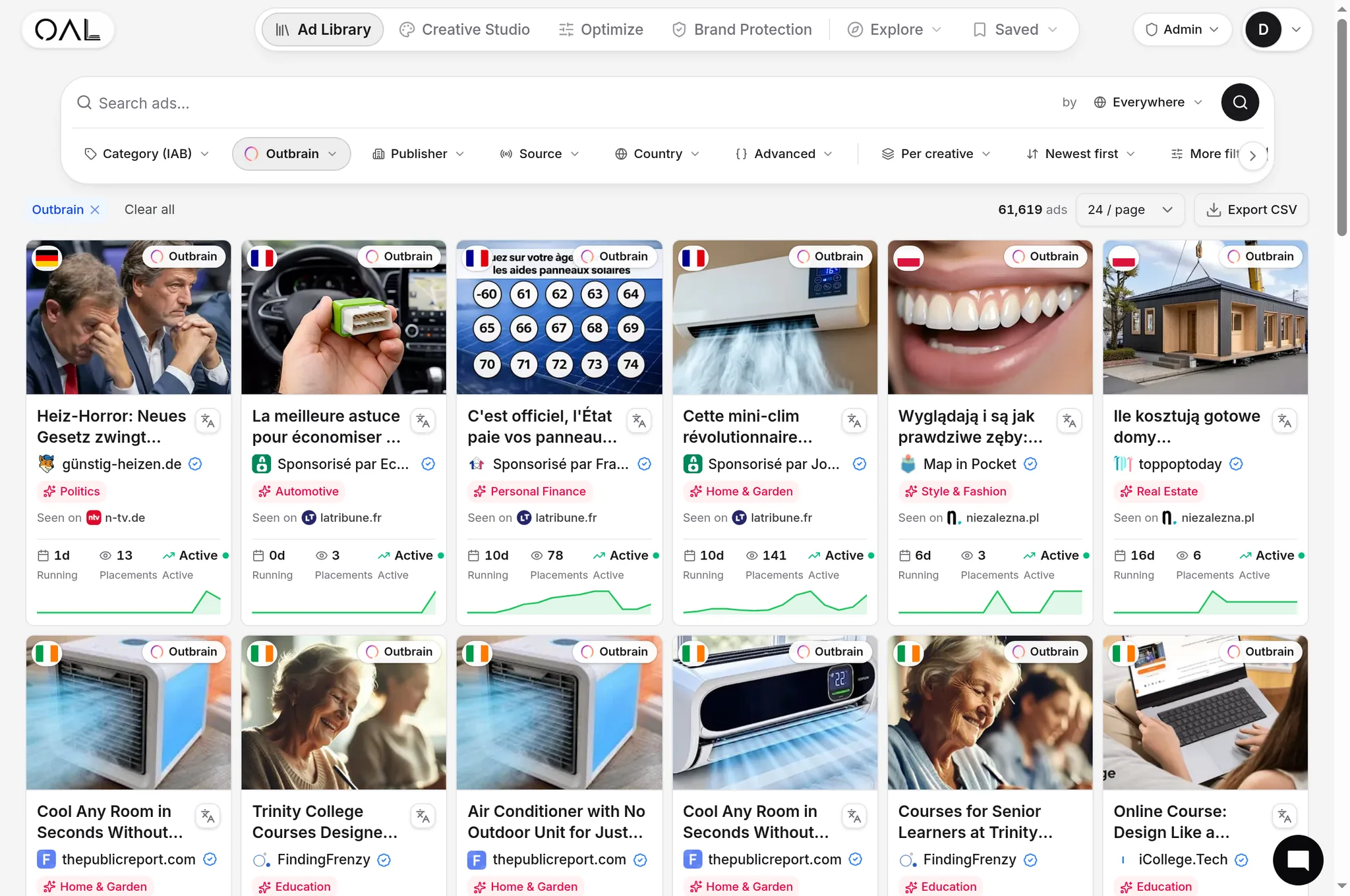
Isso coloca o Revcontent na tradição das redes de anúncios nativos pioneiras como Taboola e Outbrain, mas com uma base de publishers menor e mais enxuta e uma reputação como uma compra amigável a performance e afiliados. O Revcontent relata uma rede de aproximadamente 9.000+ sites de publishers alcançando bem mais de 100 milhões de usuários diários, com posicionamentos exclusivos em um punhado de grandes publishers mainstream.
Para contexto de escala a partir de nossos próprios dados: indexamos 11.478 criativas do Revcontent ao vivo no índice do OpenAdLibrary (junho de 2026), uma pequena fatia das 589.000+ criativas que capturamos em 42 redes. O Revcontent é mais enxuto que os gigantes. O Taboola sozinho responde por 157.727 dessas criativas. Então, quando as pessoas chamam o Revcontent de uma rede "menor", o volume de anúncios capturados confirma isso.
Widgets são a unidade atômica#
Na maioria das plataformas, você pensa em campanhas e conjuntos de anúncios. No Revcontent, você também precisa pensar em widgets. Um widget é um posicionamento específico de recomendação na página de um publisher, efetivamente um slot de anúncio e fonte de inventário únicos. O publisher instala o código do widget de recomendação de conteúdo do Revcontent, estiliza-o para combinar com seu design editorial, e o Revcontent preenche os slots com recomendações pagas de anunciantes como você.
Duas coisas decorrem disso, e elas moldam tudo o que você faz como comprador.
Primeiro, cada widget se comporta como um alvo no nível do site. Você vê a performance por widget, define um lance separado por widget e pode bloquear qualquer widget completamente. Este é o análogo mais próximo da segmentação "site/posicionamento" que outras redes expõem, e é onde a maior parte do seu tempo de otimização vai.
Segundo, o volume é distribuído, não concentrado. Uma nova campanha é limitada em qualquer widget único até que você sinalize, através de lances mais altos, que quer mais dessa fonte. Isso impede que um anunciante domine o feed de um publisher e força você a conquistar escala posicionamento por posicionamento.
A maior mudança mental no Revcontent: você não otimiza um público, você otimiza um portfólio de widgets. Os vencedores recebem lances mais altos. Os perdedores recebem lances mais baixos ou são bloqueados. A campanha é a soma dessas decisões.
O Revcontent também apresenta seus widgets como de carregamento rápido, o que importa mais do que parece. Um módulo de recomendação lento prejudica os Core Web Vitals de um publisher e suprime silenciosamente as impressões visíveis às quais os anunciantes realmente prestam atenção.
O anúncio é um título e uma miniatura. Só isso.#
Um anúncio nativo vive ou morre por uma imagem e uma linha de texto. Veja como são os reais, extraídos diretamente do nosso índice. Nenhum destes é uma simulação.

O padrão é implacável: um prazo, um número, uma isca de "descubra". Finanças é o maior vertical nativo em todo o nosso índice, com 17.232 criativas (junho de 2026), e no Revcontent especificamente é a segunda maior categoria, atrás de saúde. Seguros e saúde completam o topo da tabela geral com 15.629 e 14.895 criativas. Se você está se perguntando quais verticais os anunciantes nativos acham que funcionam, essa classificação é sua resposta.
Criativas de saúde são um gênero à parte. A isca é quase sempre uma lista, um aviso ou uma estrutura do tipo "médicos não querem que você saiba".

Saúde é o principal vertical do Revcontent, com 1.459 das 11.478 criativas do Revcontent que indexamos nessa categoria (junho de 2026). NUTRA também aparece entre os cinco principais da rede, o que diz muito sobre quem compra aqui. Se você roda ofertas de suplementos ou saúde, este é o seu bairro.
Lances: CPC por padrão, vCPM quando você quer alcance#
O Revcontent suporta dois tipos de lance.
| Tipo de lance | Você paga por | Melhor para |
|---|---|---|
| CPC (custo por clique) | Cada clique na sua página de destino | Performance, afiliados, geração de leads, a maioria dos anunciantes |
| vCPM (custo por mil impressões visíveis) | Impressões visíveis, não cliques | Conscientização, alcance, branding |
A maioria dos compradores de performance roda CPC, então o gasto acompanha o engajamento em vez da exposição bruta. Você define um lance padrão no lançamento e depois o substitui por widget conforme os dados chegam. A tela de "Segmentação por Widget" do Revcontent oferece quatro maneiras de gerenciar essas substituições:
- Individual. Digite um novo CPC para um widget.
- Em massa. Aplique um lance em muitos widgets de uma vez.
- Percentual. Aumente ou diminua todos os lances atuais em uma porcentagem, o que mantém a granularidade relativa que você já ajustou.
- CSV. Faça upload de mudanças de lances em massa para contas grandes.
Não há gasto mínimo, o que é um diferenciador genuíno em relação às redes de nível empresarial. A orientação do próprio Revcontent é deixar as criativas acumularem aproximadamente $300 a $500 em gasto antes de tirar conclusões. É um conselho sensato, porque os dados por widget são ruidosos até que você tenha cliques suficientes para confiar neles. Os CPCs nativos geralmente ficam bem abaixo dos de busca e redes sociais, o que é exatamente por que uma oferta de afiliado de baixa margem pode ser viável aqui quando nunca sobreviveria no Google.
Segmentação e alavancas de A/B que realmente movem a performance#
A segmentação do Revcontent é baseada em geografia, dispositivo e contexto, em vez de identidade profunda. As alavancas que valem a pena conhecer:
- Geografia. Inclusão e exclusão de país, refinamento de região e segmentação por CEP (com upload de CSV e listas de exclusão) para ofertas hiper-regionais.
- Dispositivo e SO. Desktop, celular e tablet, com seleção de SO (Android, iOS, Windows) e até segmentação no nível do navegador em desktop.
- Segmentação por interesse. Uma grande taxonomia de interesses que o Revcontent comercializa com milhares de opções, usada para direcionar a entrega para ambientes de conteúdo relevantes.
- Lances e bloqueios por widget. A superfície de otimização real, abordada acima.
Onde o Revcontent recompensa a disciplina é testando a criativa e a camada de widget ao mesmo tempo. O par título-mais-miniatura é o anúncio inteiro, então uma pequena mudança impacta fortemente a taxa de cliques. Um loop viável:
- Lance 5 a 10 variantes criativas (mesma oferta, título e imagem diferentes) com um lance padrão competitivo para comprar distribuição ampla e rápida.
- Deixe o gasto atingir o limite de $300 a $500 para que os números por widget se estabilizem.
- Corte as criativas perdedoras. Concentre o orçamento nos 1 ou 2 vencedores.
- Passe para o portfólio de widgets: aumente os lances nos widgets que convertem abaixo do seu custo por aquisição alvo, diminua os lances nos marginais e bloqueie os widgets que queimam gasto sem converter mesmo com lances baixos.
- Teste novas criativas contra o vencedor sobrevivente para combater a fadiga.
Os relatórios são atualizados quase em tempo real, os cliques geralmente são registrados em minutos, então o ciclo de feedback sobre essas decisões permanece ágil.
Por quanto tempo os anúncios nativos realmente rodam?#
Aqui está um número que vale a pena internalizar antes de você se obcecar com a fadiga criativa. Em nosso índice, as criativas observadas continuamente por mais tempo rodaram por 28 dias seguidos (OpenAdLibrary, junho de 2026). Esse é o limite da nossa janela de observação atual, não um limite rígido para o anúncio. A questão é que os sobreviventes estão por aí por semanas, silenciosamente lucrativos.

Você verá o folclore do setor sobre "vencedores de 90 dias" sendo citado. Trate isso como folclore, não como dados: é uma heurística útil de que uma criativa ainda gastando após três meses é quase certamente lucrativa, mas não é algo que medimos. O que medimos é que um anúncio ainda em rotação em muitos posicionamentos semanas depois é o sinal mais forte de "isso funciona" em anúncios nativos. Longevidade mais dispersão supera qualquer métrica de vaidade.
Como um anúncio e uma página de destino do Revcontent realmente se parecem#
A teoria só leva você até certo ponto. A maneira mais rápida de aprender a rede é estudar anúncios ao vivo: quais anunciantes estão comprando, quais combinações de título-e-imagem eles rodam, quanto tempo uma criativa sobrevive e, a parte que a maioria das pessoas ignora, para onde o clique realmente vai.
Essa última parte é onde a maioria das "pesquisas" falha. O anúncio visível é apenas metade do funil. A pré-landing page e a página de oferta são onde o dinheiro é ganho ou perdido.

O OpenAdLibrary captura criativas Revcontent públicas ao vivo em qualidade total de imagem, classifica a cadeia de suprimentos de ad-tech por trás de cada posicionamento e, sem clicar em anúncios ao vivo, segue o caminho do clique de cada criativa até o destino para que você possa ver a página de destino real ou a pré-landing page que um anunciante usa. Como rastreamos criativas ao longo do tempo, você pode ler sinais de longevidade e dispersão diretamente. Você pode navegar por tudo isso em nossa página de espionagem de anúncios do Revcontent.
Ao inspecionar um anúncio do Revcontent capturado, você geralmente pode responder a quatro perguntas:
- Quem é o anunciante real? Resolvido após o redirecionamento de afiliado.
- Qual é a criativa exata? Título mais miniatura, capturada na qualidade da fonte.
- Há quanto tempo ela roda e quão amplamente? Longevidade mais dispersão por widget.
- O que a página de destino vende e como é estruturada? O modelo da pré-landing page.
Como o Revcontent se compara ao resto do campo nativo#
O Revcontent está na mesma categoria de produto das maiores redes de recomendação, com compensações que valem a pena pesar antes de alocar orçamento.
| Rede | Posicionamento | Notável para anunciantes |
|---|---|---|
| Revcontent | Enxuto, voltado para performance | Sem gasto mínimo, lances granulares por widget, amigável a afiliados |
| Taboola | Maior em escala | Maior alcance e dados; veja como os anúncios do Taboola funcionam |
| Outbrain (Teads) | Publishers premium | Agora fundido com o Teads; veja como o Outbrain funciona |
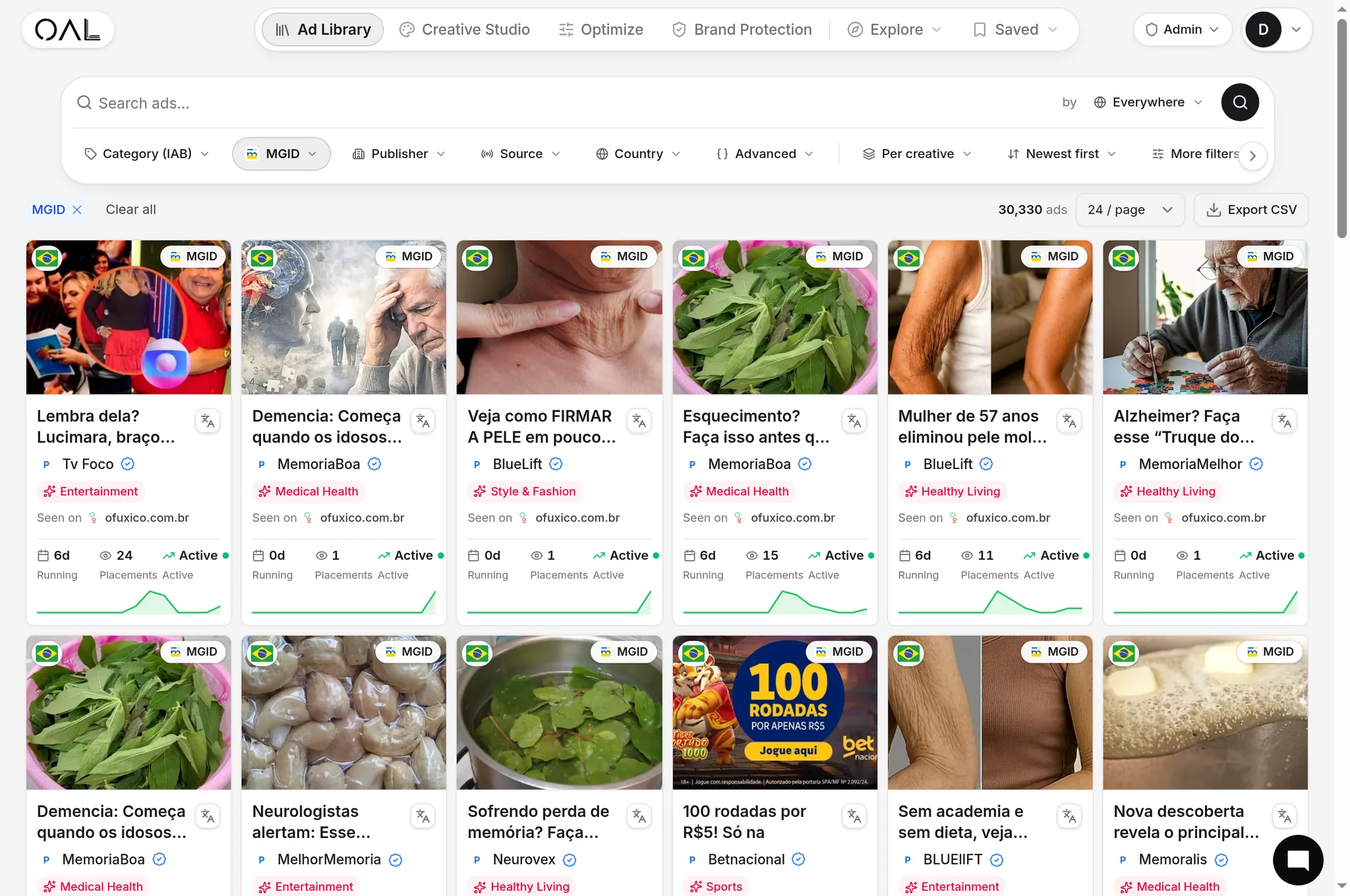
| MGID | Mercado médio, global | Forte em geografias de mercados emergentes; veja como os anúncios nativos do MGID funcionam |
A diferença de escala é real e você pode vê-la em nossas contagens de captura: 157.727 criativas do Taboola versus 11.478 no Revcontent (junho de 2026). Isso não torna o Revcontent pior. Torna-o diferente. Menos pressão de leilão em um posicionamento pode significar cliques mais baratos para a mesma oferta.
Compradores nativos sérios rodam várias dessas redes em paralelo e arbitram as diferenças. Uma criativa que fadiga no Taboola frequentemente ganha vida nova no Revcontent ou MGID, e o inverso também acontece. Estudar todas elas através de uma única lente de rede de anúncios, em vez de aprender cada uma isoladamente, é como compradores de mídia experientes comprimem sua curva de aprendizado.

Um playbook prático para começar#
Lançando no Revcontent pela primeira vez:
- Escolha uma oferta bem definida e uma geografia. Não dilua os dados iniciais entre mercados.
- Envie 5 a 10 variantes criativas com um CPC padrão competitivo para conquistar distribuição ampla rapidamente.
- Gaste até o marcador de $300 a $500 antes de qualquer corte maior. Otimização prematura com dados escassos é o erro mais comum no Revcontent.
- Otimize o portfólio de widgets, não apenas as criativas. Aumente os lances nos conversores, diminua ou bloqueie o resto.
- Pesquise antes e durante, não depois. Extraia as criativas e páginas de destino vencedoras já rodando no seu vertical para que você esteja testando contra o melhor do mercado em vez de adivinhar.
O Revcontent não é um canal de configurar e esquecer. Sua força é o controle granular que ele oferece, e esse controle só compensa com gerenciamento ativo. Acerte a disciplina no nível do widget, alimente-a com inteligência sobre o que já está funcionando, e ele se torna um dos lugares mais custo-eficientes para escalar uma oferta nativa comprovada.
Quer ver anúncios do Revcontent ao vivo, seus anunciantes reais e suas páginas de destino? Comece de graça e navegue por 200 anúncios, sem cartão necessário.