English
 Español
 Português (Brasil)
 Français
 Deutsch
 Italiano
 Nederlands
 Svenska
 Türkçe
 Русский
 日本語
日本語 한국어
한국어 简体中文
简体中文 Tiếng Việt
 Bahasa Indonesia
 繁體中文
繁體中文 Čeština
 Dansk
Dansk Norsk (bokmål)
 Suomi
Suomi Ελληνικά
 Română
 Magyar
 Українська
 ไทย
ไทย हिन्दी
 العربية
 עברית
עבריתJak działa Revcontent: Przewodnik po sieci reklam natywnych dla reklamodawców
Revcontent wyświetla reklamy natywne poprzez widgety wydawców, na które licytujesz jeden po drugim. Oto jak faktycznie działają jego dostarczanie, targetowanie na poziomie witryny, licytacja CPC i dźwignie optymalizacji, z rzeczywistymi przechwyconymi reklamami.


Revcontent to sieć reklam natywnych. Umieszcza sponsorowane jednostki rekomendacji wewnątrz stron wydawców, zwykle pod etykietami takimi jak "Around the Web" lub "You May Also Like", i kieruje powstałe kliknięcia do reklamodawców w modelu kosztu za kliknięcie. Jeśli kiedykolwiek przewinąłeś siatkę nagłówków z luką ciekawości na dole artykułu informacyjnego, widziałeś jego zasoby.
To, co faktycznie definiuje Revcontent dla kupującego, to nie format. To jednostka kontroli. Większość sieci chce, abyś optymalizował odbiorców lub kategorię. Revcontent oddaje Ci widget jako główną dźwignię: każde miejsce u wydawcy jest własnym źródłem zasobów, na które można licytować i które można blokować. Ogarnij tę jedną ideę, a reszta platformy staje się jasna.
Ten przewodnik obejmuje, jak Revcontent dostarcza reklamy, jak działają licytacja i blokowanie na poziomie witryny, które dźwignie targetowania mają znaczenie i jak studiować prawdziwe kampanie, zanim wydasz dolara. Dla szerszej kategorii zobacz nasz przewodnik po reklamach natywnych. Tutaj skupiamy się całkowicie na jednej sieci.
Jak działa Revcontent?#
Revcontent działa poprzez osadzanie natywnych widgetów reklamowych na stronach wydawców, a następnie aukcjonowanie każdej impresji reklamodawcom, którzy licytują koszt za kliknięcie. Tworzysz kampanię z targetowaniem geograficznym, urządzeniowym i zainteresowań, ustawiasz domyślny CPC, a następnie optymalizujesz, podnosząc lub obniżając stawki na poszczególnych widgetach lub blokując te, które marnują pieniądze. Płacisz tylko wtedy, gdy czytelnik kliknie i przejdzie na Twoją stronę docelową.
To stawia Revcontent w tradycji sieci reklam natywnych zapoczątkowanej przez Taboola i Outbrain, ale z mniejszym, bardziej zwinny zbiorem wydawców i reputacją przyjaznej dla performance i afiliacji. Revcontent raportuje sieć około 9 000+ witryn wydawców, docierającą do ponad 100 milionów użytkowników dziennie, z ekskluzywnymi miejscami na kilku dużych mainstreamowych wydawcach.
Dla kontekstu skali z naszych własnych danych: zindeksowaliśmy 11 478 żywych kreacji Revcontent w indeksie OpenAdLibrary (czerwiec 2026), mały wycinek z ponad 589 000 kreacji, które przechwyciliśmy w 42 sieciach. Revcontent jest szczuplejszy niż giganci. Sam Taboola odpowiada za 157 727 tych kreacji. Więc kiedy ludzie nazywają Revcontent "mniejszą" siecią, przechwycona liczba reklam to potwierdza.
Widgety są jednostką atomową#
Na większości platform myślisz w kategoriach kampanii i zestawów reklam. Na Revcontent musisz też myśleć w kategoriach widgetów. Widget to konkretne miejsce rekomendacji na stronie wydawcy, efektywnie unikalna jednostka reklamowa i źródło zasobów. Wydawca instaluje kod widgeta rekomendacji treści Revcontent, stylizuje go tak, aby pasował do projektu redakcyjnego, a Revcontent wypełnia miejsca płatnymi rekomendacjami od reklamodawców takich jak Ty.
Z tego wynikają dwie rzeczy, które kształtują wszystko, co robisz jako kupujący.
Po pierwsze, każdy widget zachowuje się jak target na poziomie witryny. Widzisz wydajność na widget, ustawiasz oddzielną stawkę na widget i możesz zablokować dowolny widget całkowicie. To najbliższy odpowiednik targetowania "witryna/miejsce", które udostępniają inne sieci, i tam spędzasz większość czasu na optymalizacji.
Po drugie, wolumen jest rozproszony, a nie skoncentrowany. Nowa kampania jest ograniczana na pojedynczym widgecie, dopóki nie zasygnalizujesz, poprzez wyższe stawki, że chcesz więcej z tego źródła. To powstrzymuje jednego reklamodawcę przed zdominowaniem feedu wydawcy i zmusza Cię do zdobywania skali miejsce po miejscu.
Największa zmiana mentalna na Revcontent: nie optymalizujesz odbiorców, optymalizujesz portfel widgetów. Zwycięzcy dostają podbicie stawek. Przegrani dostają obniżkę stawek lub blokadę. Kampania jest sumą tych decyzji.
Revcontent również przedstawia swoje widgety jako szybko ładujące się, co ma większe znaczenie, niż się wydaje. Wolny moduł rekomendacji obniża Core Web Vitals wydawcy i cicho tłumi widoczne impresje, na które reklamodawcy faktycznie zwracają uwagę.
Reklama to nagłówek i miniaturka. To wszystko.#
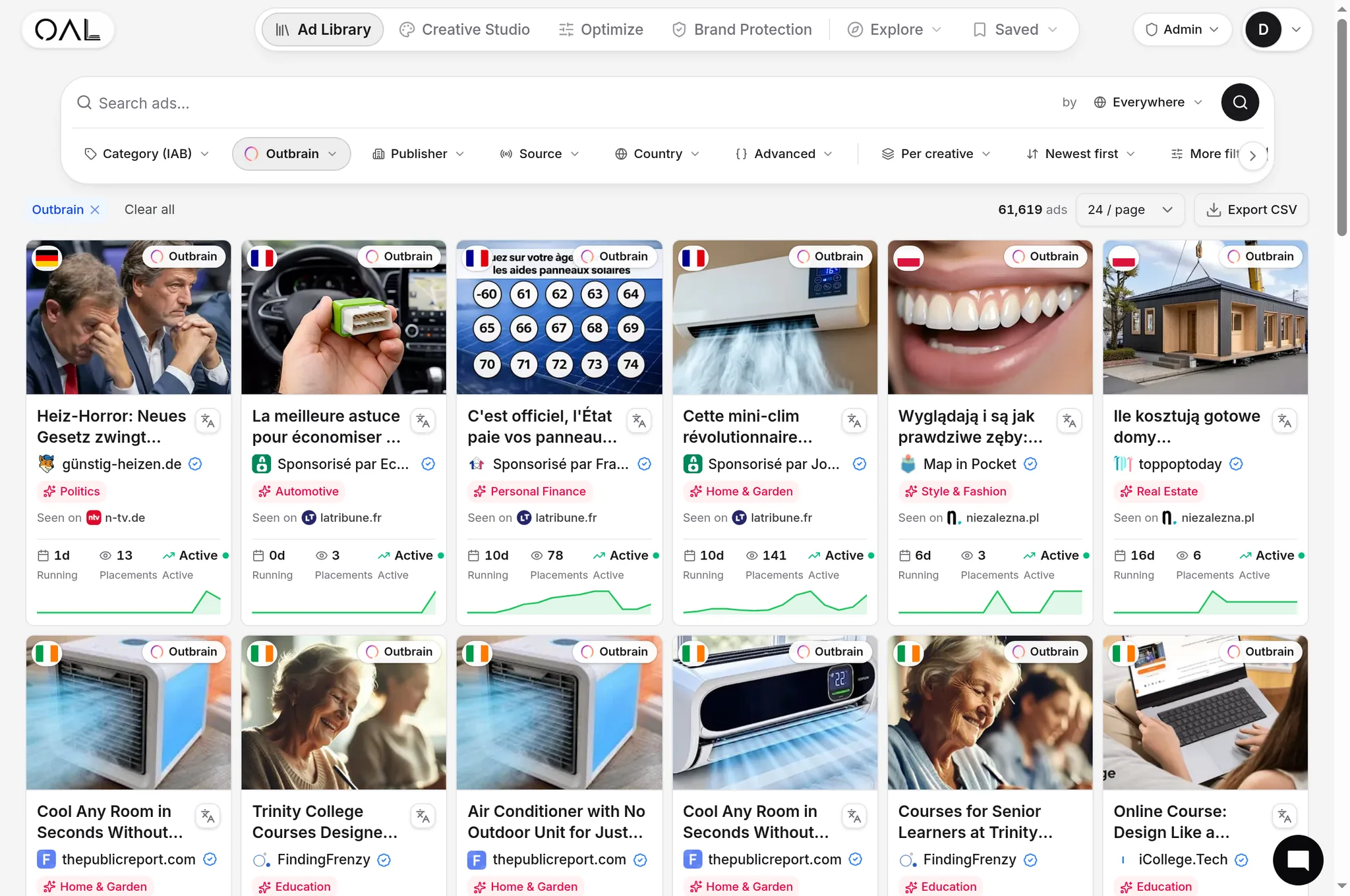
Reklama natywna żyje lub umiera na jednym obrazie i jednej linii tekstu. Oto jak wyglądają prawdziwe, wyciągnięte prosto z naszego indeksu. Żadna z nich nie jest makietą.

Wzorzec jest nieubłagany: termin, liczba, haczyk "dowiedz się". Finanse to pojedynczy największy wertykał natywny w całym naszym indeksie z 17 232 kreacjami (czerwiec 2026), a na Revcontent konkretnie jest to druga co do wielkości kategoria po zdrowiu. Ubezpieczenia i zdrowie dopełniają szczytu ogólnej tabeli z 15 629 i 14 895 kreacjami. Jeśli zastanawiasz się, które wertykały reklamodawcy natywni uważają za działające, ta ranking jest Twoją odpowiedzią.
Kreacje zdrowotne to osobny gatunek. Haczyk to prawie zawsze lista, ostrzeżenie lub rama "lekarze nie chcą, żebyś wiedział".

Zdrowie to wertykał numer jeden Revcontent, z 1 459 z 11 478 kreacji Revcontent, które zindeksowaliśmy, znajdujących się w tym koszyku (czerwiec 2026). NUTRA również pojawia się w pierwszej piątce sieci, co wiele mówi o tym, kto tu kupuje. Jeśli prowadzisz oferty suplementów lub zdrowia, to Twoja okolica.
Licytacja: CPC domyślnie, vCPM gdy chcesz zasięg#
Revcontent obsługuje dwa typy stawek.
| Typ stawki | Płacisz za | Najlepsze dla |
|---|---|---|
| CPC (koszt za kliknięcie) | Każde kliknięcie na Twoją stronę docelową | Performance, afiliacja, lead-gen, większość reklamodawców |
| vCPM (koszt za tysiąc widocznych impresji) | Widoczne impresje, nie kliknięcia | Świadomość, zasięg, branding |
W większości kupujący performance używają CPC, więc wydatek śledzi zaangażowanie zamiast suchej ekspozycji. Ustawiasz jedną domyślną stawkę przy uruchomieniu, a następnie nadpisujesz ją na widgecie, gdy pojawią się dane. Ekran "Widget Targeting" Revcontent daje Ci cztery sposoby zarządzania tymi nadpisami:
- Indywidualnie. Wpisz nowy CPC dla jednego widgeta.
- Zbiorczo. Zastosuj jedną stawkę na wielu widgetach naraz.
- Procentowo. Skaluj wszystkie bieżące stawki w górę lub w dół o procent, co zachowuje względną szczegółowość, którą już dostroiłeś.
- CSV. Wgraj masowe zmiany stawek dla dużych kont.
Nie ma minimalnego wydatku, co jest prawdziwym wyróżnikiem w porównaniu z sieciami klasy enterprise. Wskazówka Revcontent jest taka, aby pozwolić kreacjom zgromadzić wydatek rzędu około 300 do 500 dolarów, zanim wyciągniesz wnioski. To trzeźwa rada, ponieważ dane na widget są zakłócone, dopóki nie masz wystarczającej liczby kliknięć, aby im ufać. Natywne stawki CPC zazwyczaj są znacznie niższe niż w wyszukiwarkach i mediach społecznościowych, dlatego właśnie oferta afiliacyjna o niskiej marży może się tu opłacać, gdy nigdy by nie przetrwała na Google.
Targetowanie i dźwignie A/B, które faktycznie wpływają na wydajność#
Targetowanie Revcontent jest geograficzne, urządzeniowe i oparte na kontekście, a nie głęboko oparte na tożsamości. Dźwignie, które warto znać:
- Geograficzne. Uwzględnianie i wykluczanie krajów, doprecyzowanie regionu i targetowanie kodów pocztowych (z wgrywaniem CSV i listami wykluczeń) dla ofert hiperregionalnych.
- Urządzenie i OS. Desktop, mobile i tablet, z wyborem systemu operacyjnego (Android, iOS, Windows), a nawet targetowanie na poziomie przeglądarki na desktopie.
- Targetowanie zainteresowań. Duża taksonomia zainteresowań, którą Revcontent oferuje w tysiącach opcji, używana do ukierunkowania dostarczania na odpowiednie środowiska treści.
- Licytacja i blokowanie na poziomie widgeta. Prawdziwa powierzchnia optymalizacji, opisana powyżej.
Tam, gdzie Revcontent nagradza dyscyplinę, to testowanie kreacji i warstwy widgetów jednocześnie. Para nagłówek-plus-miniaturka to cała reklama, więc mała zmiana mocno wpływa na CTR. Praktyczna pętla:
- Uruchom 5 do 10 wariantów kreacji (ta sama oferta, inny nagłówek i obraz) z konkurencyjną domyślną stawką, aby szybko kupić szeroką dystrybucję.
- Pozwól, aby wydatek osiągnął próg 300 do 500 dolarów, aby dane na widget się ustabilizowały.
- Wytnij przegrane kreacje. Skoncentruj budżet na 1 lub 2 zwycięzcach.
- Przejdź do portfela widgetów: podbij stawki na widgetach konwertujących poniżej docelowego kosztu pozyskania, obniż stawki na marginalnych i zablokuj widgety, które spalają wydatek bez konwersji nawet przy niskich stawkach.
- Ponownie przetestuj świeżą kreację przeciwko przetrwałemu zwycięzcy, aby walczyć ze zmęczeniem.
Raportowanie odświeża się niemal w czasie rzeczywistym, kliknięcia zwykle rejestrują się w ciągu minut, więc pętla sprzężenia zwrotnego dla tych decyzji pozostaje ciasna.
Jak długo faktycznie działają reklamy natywne?#
Oto liczba, którą warto przyswoić, zanim zaczniesz obsesyjnie myśleć o zmęczeniu kreacji. W naszym indeksie najdłużej nieprzerwanie obserwowane kreacje działały przez 28 dni z rzędu (OpenAdLibrary, czerwiec 2026). To sufit naszego obecnego okna obserwacji, a nie twardy limit dla reklamy. Chodzi o to, że przetrwałe reklamy są tam przez tygodnie, cicho dochodowe.

Usłyszysz branżowe opowieści o "zwycięzcach 90-dniowych". Traktuj to jako folklor, a nie dane: to użyteczna heurystyka, że kreacja, która nadal wydaje po trzech miesiącach, jest prawie na pewno dochodowa, ale nie jest to coś, co zmierzyliśmy. To, co zmierzyliśmy, to fakt, że reklama nadal w rotacji na wielu miejscach tygodnie później jest najsilniejszym sygnałem "to działa" w natywach. Długowieczność plus rozprzestrzenienie biją każdą miernikową próżność.
Jak faktycznie wygląda reklama i strona docelowa Revcontent#
Teoria tylko Cię zaprowadzi. Najszybszy sposób nauki sieci to studiowanie żywych reklam: którzy reklamodawcy kupują, jakie kombinacje nagłówków i obrazów uruchamiają, jak długo kreacja przetrwa i, część, którą większość pomija, gdzie kliknięcie faktycznie prowadzi.
Ta ostatnia część to miejsce, gdzie większość "badań" się rozpada. Widoczna reklama to tylko połowa lejka. Pre-lander i strona oferty to miejsce, gdzie pieniądze są zarabiane lub tracone.

OpenAdLibrary przechwytuje żywe publiczne kreacje Revcontent w pełnej jakości obrazu, klasyfikuje łańcuch dostaw ad-tech za każdym miejscem i, bez klikania w żywe reklamy, podąża ścieżką kliknięcia każdej kreacji do celu, dzięki czemu możesz zobaczyć rzeczywistą stronę docelową lub pre-lander, którego używa reklamodawca. Ponieważ śledzimy kreacje w czasie, możesz odczytać sygnały długowieczności i rozprzestrzenienia bezpośrednio. Możesz przeglądać to wszystko na naszej stronie szpiega reklam Revcontent.
Kiedy sprawdzasz przechwyconą reklamę Revcontent, zwykle możesz odpowiedzieć na cztery pytania:
- Kim jest prawdziwy reklamodawca? Rozwiązany za przekierowaniem afiliacyjnym.
- Jaka jest dokładna kreacja? Nagłówek plus miniaturka, przechwycone w jakości źródłowej.
- Jak długo działała i jak szeroko? Długowieczność plus rozprzestrzenienie widgetów.
- Co sprzedaje strona docelowa i jak jest sformułowana? Szablon pre-landera.
Jak Revcontent wypada na tle reszty pola natywnego#
Revcontent znajduje się w tej samej kategorii produktowej co większe sieci rekomendacji, z kompromisami wartymi rozważenia przed przydzieleniem budżetu.
| Sieć | Pozycja | Znaczące dla reklamodawców |
|---|---|---|
| Revcontent | Szczupła, zorientowana na performance | Brak minimalnego wydatku, szczegółowa licytacja na widget, przyjazna dla afiliacji |
| Taboola | Największa pod względem skali | Najgłębszy zasięg i dane; zobacz jak działają reklamy Taboola |
| Outbrain (Teads) | Premium wydawcy | Teraz połączona z Teads; zobacz jak działa Outbrain |
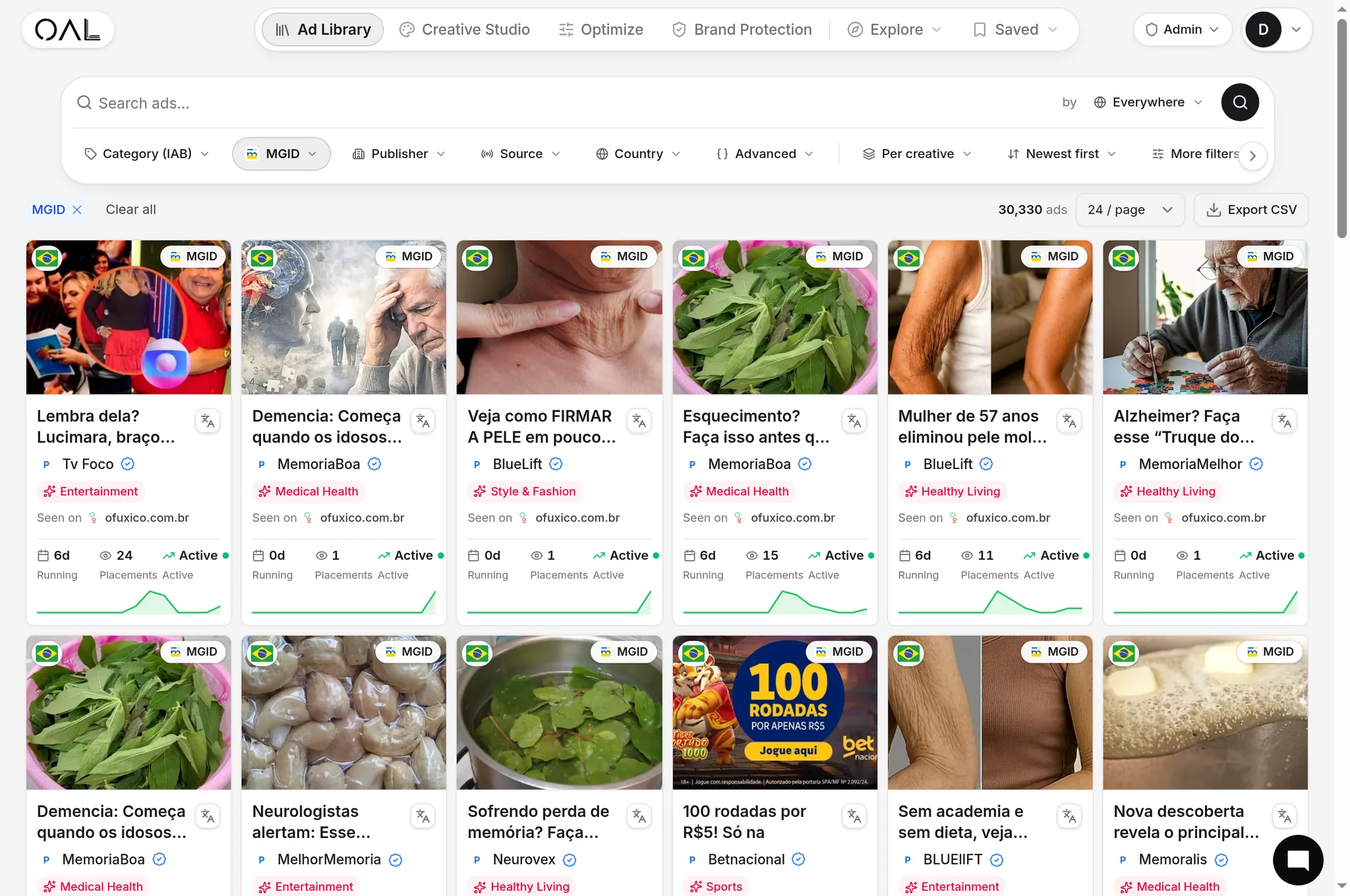
| MGID | Mid-market, globalna | Silna w geografiach rynków wschodzących; zobacz jak działają reklamy natywne MGID |
Luka skali jest realna i widać ją w naszych liczbach przechwyceń: 157 727 kreacji Taboola versus 11 478 na Revcontent (czerwiec 2026). To nie czyni Revcontent gorszym. To czyni go innym. Mniejsza presja aukcyjna na miejscu może oznaczać tańsze kliknięcia dla tej samej oferty.
Poważni kupujący natywni uruchamiają kilka z tych sieci równolegle i arbitrażują różnice. Kreacja, która się męczy na Taboola, często dostaje nowe życie na Revcontent lub MGID, i odwrotnie też się zdarza. Studiowanie ich wszystkich przez pryzmat jednej sieci reklamowej, zamiast uczenia się każdej w izolacji, to sposób, w jaki doświadczeni media buyerzy kompresują swoją krzywą uczenia się.

Praktyczny playbook na start#
Uruchamianie na Revcontent po raz pierwszy:
- Wybierz jedną konkretną ofertę i jedną geografię. Nie rozcieńczaj wczesnych danych między rynkami.
- Wyślij 5 do 10 wariantów kreacji z konkurencyjnym domyślnym CPC, aby szybko wygrać szeroką dystrybucję.
- Wydaj do poziomu 300 do 500 dolarów przed jakimikolwiek dużymi cięciami. Przedwczesna optymalizacja na cienkich danych to najczęstszy błąd na Revcontent.
- Optymalizuj portfel widgetów, nie tylko kreacje. Podbij stawki na konwertujących, obniż lub zablokuj resztę.
- Badaj przed i w trakcie, nie po. Wyciągnij zwycięskie kreacje i strony docelowe już działające w Twoim wertykale, aby testować przeciwko najlepszym na rynku, zamiast zgadywać.
Revcontent nie jest kanałem typu ustaw i zapomnij. Jego siłą jest szczegółowa kontrola, którą Ci daje, a ta kontrola opłaca się tylko przy aktywnym zarządzaniu. Opanuj dyscyplinę na poziomie widgetów, zasil ją inteligencją o tym, co już działa, a stanie się jednym z bardziej opłacalnych miejsc do skalowania sprawdzonej oferty natywnej.
Chcesz zobaczyć żywe reklamy Revcontent, ich prawdziwych reklamodawców i ich strony docelowe? Zacznij za darmo i przeglądaj 200 reklam, bez karty.