 English
 Español
 Français
 Deutsch
 Italiano
 Nederlands
 Polski
 Svenska
 Türkçe
 Русский
 日本語
日本語 한국어
한국어 简体中文
简体中文 Tiếng Việt
 Bahasa Indonesia
 繁體中文
繁體中文 Čeština
 Dansk
Dansk Norsk (bokmål)
 Suomi
Suomi Ελληνικά
 Română
 Magyar
 Українська
 ไทย
ไทย हिन्दी
 العربية
 עברית
עברית30 Exemplos Reais de Publicidade Nativa (Capturados Ao Vivo do Taboola, Outbrain e MGID)
Trinta anúncios nativos reais capturados ao vivo do Taboola, Outbrain e MGID em junho de 2026, cada um rotulado com o anunciante real, a rede e há quanto tempo está rodando.

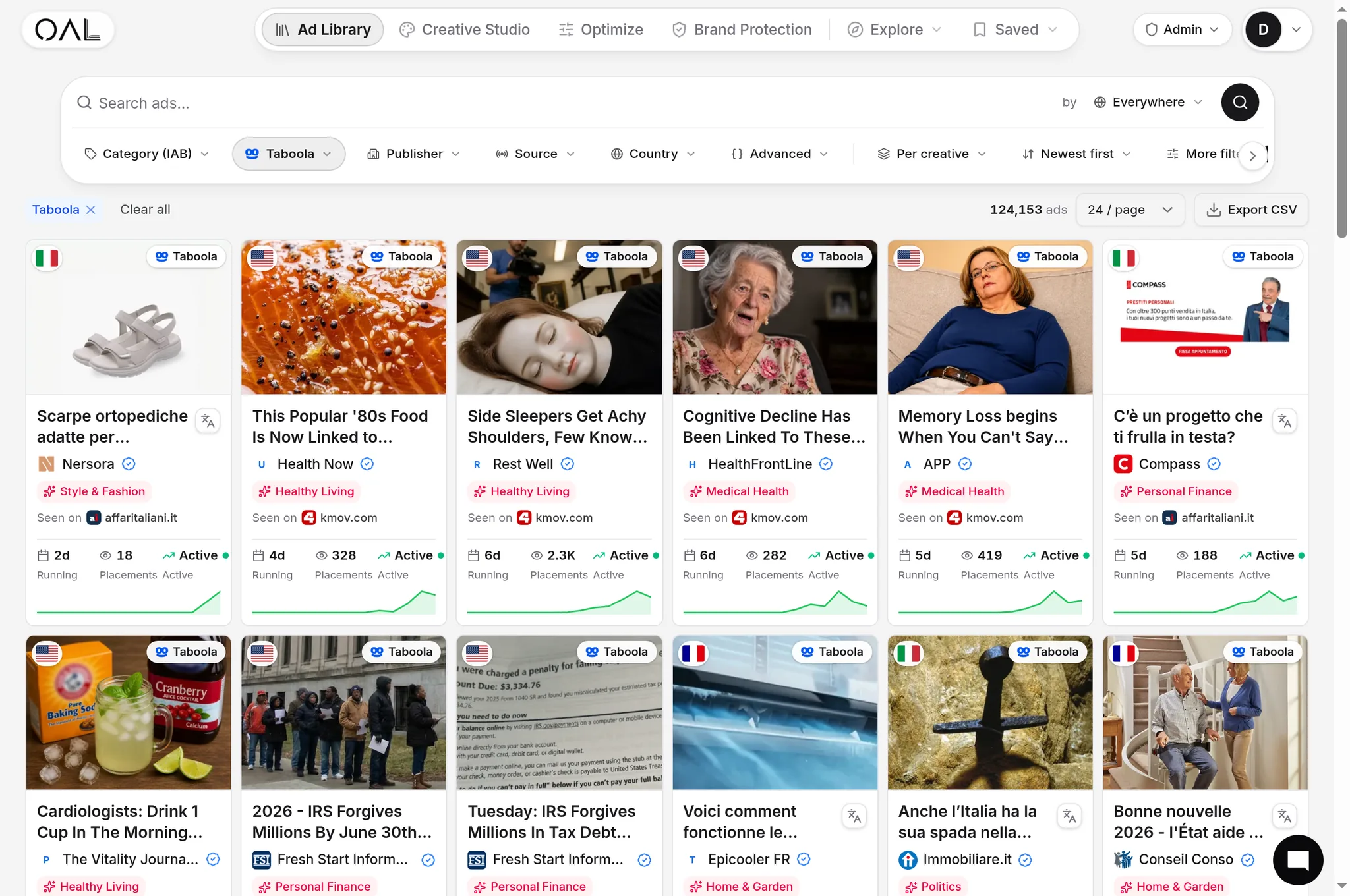
Pesquise "exemplos de publicidade nativa" e você obtém os mesmos mockups reciclados toda vez. Um post patrocinado falso do BuzzFeed de 2016. Uma captura de tela de uma peça do estúdio de marca do New York Times. Talvez um gráfico do Spotify Wrapped que alguém tirou de um slide de conferência. Eles ilustram o conceito e não te ensinam nada sobre o que está realmente rodando e convertendo agora.
Esta página é diferente. Cada exemplo abaixo é um criativo real que capturamos ao vivo de uma página de publisher, rodando no Taboola, Outbrain ou MGID, e rotulado com três coisas que a maioria das galerias nunca mostra: o anunciante real por trás do anúncio, a rede que o veicula e há quanto tempo está ativo em nosso índice. Nós a atualizamos mensalmente, porque um anúncio nativo que parou de ser veiculado há dois anos é uma peça de museu, não um arquivo de inspiração.
Para contexto de escala: em junho de 2026, o índice do OpenAdLibrary contém 589.036 criativos nativos de 25.933 anunciantes em 42 redes, com 5,4 milhões de observações de anúncios por trás deles. Os exemplos aqui são uma pequena fatia selecionada à mão disso. Tudo o que você vê é datado e real.
O que conta como um exemplo de publicidade nativa?#
Um exemplo de publicidade nativa é qualquer colocação paga projetada para combinar com a forma e função do conteúdo ao seu redor, para que seja lida como parte da página em vez de uma interrupção. O espécime clássico é o widget de recomendação de conteúdo sob um artigo de notícias: uma miniatura, uma manchete com lacuna de curiosidade. Posts promovidos in-feed, artigos patrocinados e unidades de display no estilo de conteúdo também se qualificam. A característica definidora é a camuflagem. Parece editorial. É rotulado como pago.
Aqui está um exemplo ao vivo de nossa coleta de junho de 2026 para que você saiba exatamente o que queremos dizer.

Observe os movimentos. Um prazo. Um número redondo mas vago. Um nome de marca ("Fresh Start Information") que soa como um serviço público, não uma empresa. Esse anúncio estava rodando há 13 dias seguidos quando o registramos, o que, em uma rede de performance, é muito tempo para continuar pagando pelo mesmo criativo.
Se você quer a taxonomia completa, formatos e história, o pilar Publicidade Nativa: O Guia Completo Com Exemplos Reais (2026) cobre tudo de ponta a ponta, e a entrada do glossário Publicidade Nativa dá a versão de um parágrafo. Esta página é a galeria. A prova.
Como capturamos estes exemplos#
A maioria dos "exemplos" online são inventados ou raspados uma vez e deixados para apodrecer. Os nossos vêm de uma coleta ao vivo do inventário nativo público. Aqui está o método, porque a proveniência é o ponto central de uma página de exemplos.
- A captura é ao vivo, não histórica. Puxamos criativos de páginas reais de publishers conforme são veiculados, através do Taboola, Outbrain, MGID, Revcontent, Teads, MediaGo, Yahoo e MSN. Cada captura tem timestamp.
- A imagem é o ativo real, em qualidade total. Armazenamos o criativo real que a rede veiculou, não uma captura de tela comprimida, então a miniatura que você vê é a miniatura que o usuário viu.
- Rotulamos o anunciante real. As redes nativas envolvem cliques em rastreamento e cadeias de redirecionamento, e a marca no widget é muitas vezes um site de arbitragem de conteúdo, não o anunciante final. Classificamos a cadeia de suprimentos para revelar quem está realmente pagando.
- Seguimos o clique até a página de destino, sem clicar no anúncio ao vivo. Resolver o destino (geralmente um pre-lander ou advertorial) é onde a estratégia reside. Rastreamos para que você veja o funil completo, não apenas a isca.
A manchete te diz o ângulo. A página de destino te diz a oferta. Galerias que mostram apenas o criativo escondem a metade da estratégia que realmente importa.
Esse último ponto separa um ativo real de inteligência competitiva de um quadro do Pinterest. Uma manchete de curiosidade é fácil de admirar e inútil de copiar se você não consegue ver o que está vendendo.
30 exemplos de publicidade nativa por rede e formato#
Em vez de despejar 30 miniaturas desconexas, os exemplos abaixo são agrupados por rede e pela função que o criativo está desempenhando. Os padrões se repetem entre os anunciantes. Uma vez que você vê o modelo, você o vê em todo lugar.
Exemplos do Taboola (o widget "ao redor da web")#
Taboola é a maior rede nativa da web aberta, e aquela que você mais viu mesmo que nunca tenha sabido seu nome. O widget, rotulado "Around the Web", "Sponsored Stories" ou "You May Like", fica no rodapé de artigos em publishers premium. É também a parte mais profunda do nosso índice por uma ampla margem: 157.727 criativos do Taboola capturados, mais do que Outbrain (84.252) e MGID (49.689) combinados. Para saber como o leilão, lances e mecânica do Smart Bid funcionam por trás dessas posições, veja Como Funcionam os Anúncios do Taboola: Um Guia Completo para Anunciantes (2026).
A mistura vertical no Taboola te diz quem mora lá. Nossas principais categorias na rede, por contagem de criativos, são Saúde (6.048), Finanças (5.558) e Seguros (4.303). Esse é o território da nativa de performance: suplementos, alívio de impostos, quizzes de seguro de vida. Aqui está o modelo em sua forma mais pura.

Esse anúncio de dispositivo auditivo rodou 26 dias. A estrutura "ditching X for this new device" é um dos ângulos mais duráveis em todo o índice, porque fabrica uma tendência e uma comparação em sete palavras. Exemplos representativos ao vivo do Taboola na coleta:
- Advertorial de saúde "um truque". Uma miniatura de vegetal ou suplemento em close-up com uma manchete atribuída a um médico, o clique resolvendo para um pre-lander de advertorial em formato longo para uma assinatura de suplemento. O modelo dominante de nativa de performance.
- Geração de leads de finanças pessoais. Iscas de perdão de impostos e "idosos podem se qualificar" vinculando a um funil de benefícios ou quiz. O anúncio da Fresh Start IRS lá em cima é exatamente isso.
- História de produto DTC. Uma foto de estilo de vida limpa de uma marca de colchão, utensílios de cozinha ou cuidados com a pele apontando para um artigo de comparação com marca em vez de uma página de produto direta.
- Comparação de auto / seguro. "Motoristas em [cidade] estão mudando para..." com uma manchete com inserção geográfica, pousando em um formulário de comparação de taxas.
- Distribuição de conteúdo de marca. Um grande publisher ou estúdio usando o Taboola para sindicar uma peça editorial genuína (o uso do funil superior dos mesmos canais). A Honda Cars India estava rodando um criativo limpo do sedã City no Taboola quando coletamos pela última vez, prova de que a rede não é só suplementos.
Mais duas capturas ao vivo que valem a pena estudar lado a lado, porque mostram a lacuna de curiosidade fazendo trabalhos diferentes:


O anúncio de medicamentos usa autoridade ("MDs") mais uma lista retida ("See the List"). O anúncio solar usa consenso ("Electricians agree") mais um loop aberto ("about 1 thing"). A mesma máquina, alavancas diferentes. Esse criativo solar estava ativo há 27 dias, o que está perto do topo do que observamos.
Como as manchetes do Taboola são frequentemente segmentadas por geografia e dispositivo, o mesmo criativo pode mostrar uma dúzia de variantes de manchete. Você pode navegar pelo conjunto ao vivo na página espião de anúncios do Taboola e na entrada do glossário Taboola.
Exemplos do Outbrain / Teads#
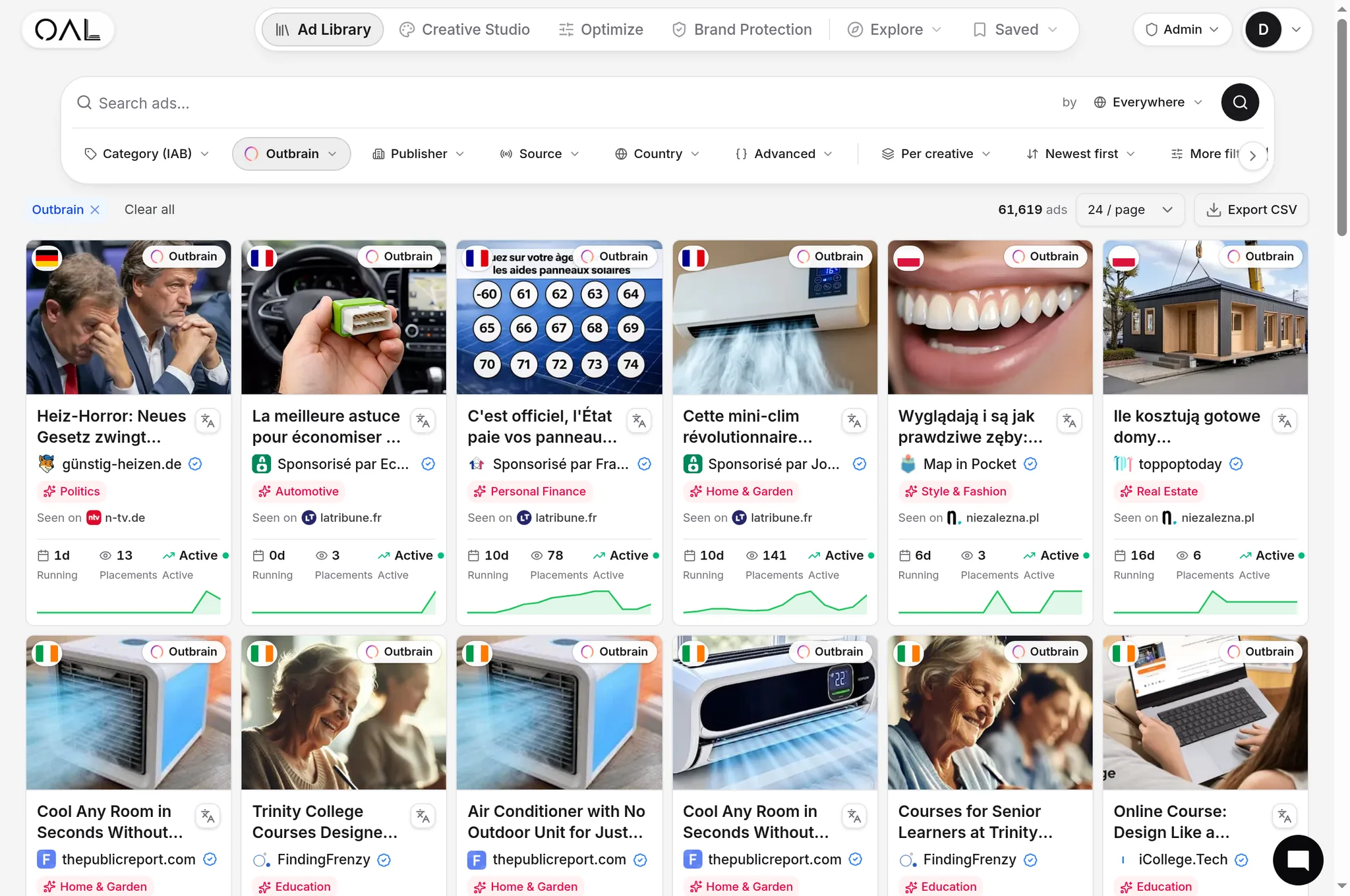
Outbrain é o rival de longa data do Taboola e a rede que pioneirou o widget de descoberta de conteúdo. Em 2025, completou sua aquisição da Teads e renomeou a controladora para Teads Holding Co. (Nasdaq: TEAD), então você verá cada vez mais a nativa de performance do Outbrain e o vídeo premium da Teads vendidos juntos. As convenções do widget se assemelham às do Taboola, mas a mistura de publishers e controles de lances diferem, conforme abordado em Como o Outbrain Funciona em 2026 (Agora Parte da Teads): O Guia do Anunciante e O Que é a Teads? A Plataforma Outbrain-Teads Explicada (2026).
A inclinação vertical é a pista. Onde o Taboola lidera com Saúde, os três primeiros do Outbrain em nosso índice são Finanças (2.640 criativos), Seguros (2.615) e Saúde (2.016). Finanças e seguros superam a turma de suplementos, o que se encaixa na base de publishers ligeiramente mais premium do Outbrain. O criativo único de execução mais longa que rastreamos atualmente no Outbrain prova o ponto.

SmartAsset é uma fintech real e bem financiada, e essa estrutura "Ask a Pro" está fazendo algo inteligente: empresta o formato de uma coluna de conselhos, que é lida como serviço em vez de venda. Ele manteve seu espaço pelos 28 dias completos que nosso índice pode observar. Exemplos representativos ao vivo do Outbrain:
- Artigo de marca no estilo de redação. Uma marca de consumo reconhecível distribuindo uma peça "5 coisas que você não sabia sobre...", o clique pousando em seu próprio hub de conteúdo.
- Thought-leadership B2B / SaaS. Mais pesado no inventário premium do Outbrain do que em suplementos. A miniatura é uma imagem abstrata limpa ou UI de produto, o destino é um relatório com acesso restrito.
- Unidades de smartfeed de viagens e finanças. Cartões in-feed que se misturam ao próprio trilho de recomendações do publisher.
- Oferta de afiliado de performance. As mesmas mecânicas de lacuna de curiosidade do Taboola, muitas vezes o mesmo anunciante rodando ambas as redes ao mesmo tempo (algo que você só percebe quando pode ver ambas as coletas lado a lado).
- Vídeo outstream da Teads. Uma unidade de vídeo de marca injetada no meio do artigo, a contraparte do funil superior dos widgets orientados a clique.
Veja a entrada do glossário Outbrain para a versão curta.
Exemplos do MGID#
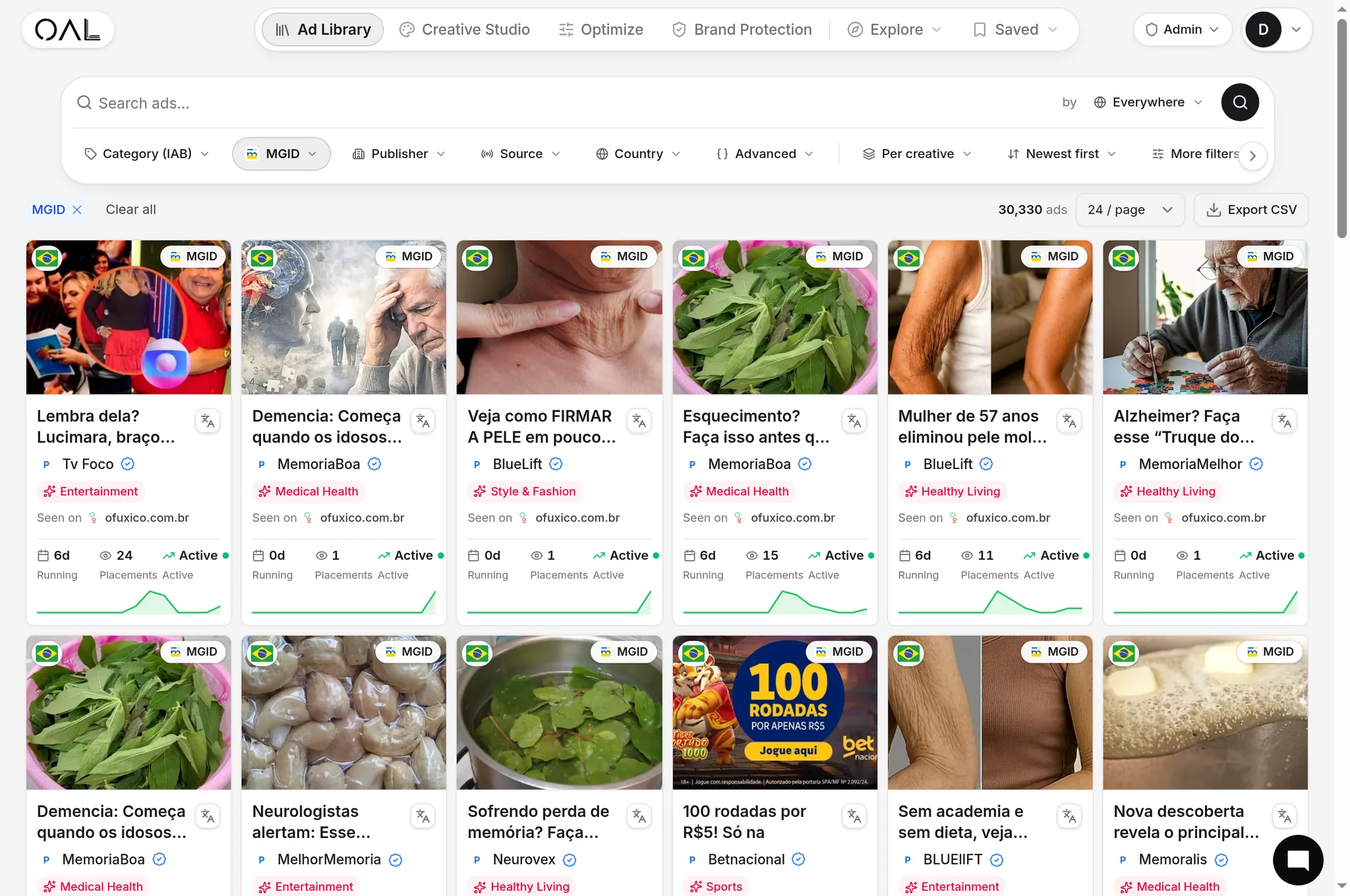
O MGID tende para um nível diferente de publisher e uma mistura mais pesada de entretenimento, jogos e afiliados. Seus widgets são visualmente mais movimentados e as ofertas são frequentemente mais agressivas. Os números confirmam isso de forma acentuada: Entretenimento é o principal vertical do MGID em nosso índice, disparado, com 8.904 criativos, superando sua próxima categoria (Saúde, com 615). Essa é uma forma completamente diferente do Taboola ou Outbrain, onde finanças e saúde lideram. Os formatos, segmentação e modelo de preços são detalhados em Como Funcionam os Anúncios Nativos do MGID: Formatos, Segmentação e Preços Explicados.
O estilo de jogos-e-quiz que domina este nível se parece com isto. Pegamos exatamente o mesmo ângulo de jogo de rato "play it for 1 minute" rodando e mantendo por 28 dias em uma rede irmã, o que te diz que o modelo é um cavalo de batalha comprovado, não um caso isolado.

Exemplos representativos ao vivo no estilo MGID:
- Jogos / instalação de app. Uma miniatura ousada de captura de tela de jogo com uma isca "play this for 1 minute", pousando em uma loja de apps ou jogo web. Exatamente o padrão do Combat Siege acima.
- Funil de quiz / sorteio. Isca de engajamento "Which [type] are you?" que monetiza através de um caminho de pesquisa. Funis de teste de QI estão em toda parte nesta categoria atualmente.
- Ofertas de cripto e trading. Alto volume na mistura do MGID, frequentemente com alegações sensíveis a regulamentação, pousando em um funil de registro.
- Lista de entretenimento. Galerias de celebridades "where are they now" que são puros esquemas de arbitragem.
- E-commerce regional. Widgets de produto com desconto segmentando países específicos.
A entrada do glossário MGID cobre a rede resumidamente.
Revcontent, Yahoo, MSN e a longa cauda#
Exemplos 16 a 30 abrangem o resto do ecossistema nativo da web aberta e mostram os mesmos padrões reaparecendo sob uma roupagem diferente.
16 a 20. Ofertas de performance do Revcontent: funis de suplementos, financeiros e pesquisas em uma rede que aposta pesado em resposta direta. Veja Como o Revcontent Funciona: Guia da Rede de Anúncios Nativos para Anunciantes.
21 a 25. Nativo do Yahoo e MSN (que capturamos também sob a Microsoft Audience Network). Estes surgem em inventário de portal e adjacente à caixa de entrada e carregam anunciantes de marca ligeiramente mais conhecidos por causa de onde rodam. Alguns dos criativos mais persistentes em todo o nosso índice estão aqui. Um anúncio "next-gen hearing aids" da Hidden Hearing e uma série de criativos de quiz My IQ registraram cada um os 28 dias completos de observação contínua que nosso índice pode registrar.
26 a 30. Nativo programático via DSPs: as mesmas unidades nativas IAB compradas através de demand-side platforms e inseridas em espaços de publisher, onde o "anunciante" no criativo pode ser um licitante entre muitos. Esta é a camada mais obscura de atribuir, o que é exatamente o motivo pelo qual um pipeline de captura de Publicidade Nativa Programática que classifica a cadeia de suprimentos vale a pena.
O que estes exemplos têm em comum#
Coloque 30 anúncios nativos ao vivo lado a lado e as mecânicas recorrentes saltam aos olhos. Esta é a lição real: não qualquer criativo individual, mas o modelo por trás deles.
| Padrão | Como se parece | Por que funciona |
|---|---|---|
| Lacuna de curiosidade | Manchete retém a recompensa ("See the List", "1 thing") | Força o clique para resolver o loop aberto |
| Imagem humana / específica | Uma pessoa, uma mão, um único objeto, não um logo | Lê-se como editorial, não como anúncio |
| Estrutura de autoridade | "MDs", "Electricians agree", "Ask a Pro" | Toma emprestada credibilidade que a marca ainda não conquistou |
| Inserção geográfica / de dispositivo | Cidade, idade, país ou dispositivo dinâmico na cópia | Parece pessoalmente relevante, aumenta o CTR |
| Destino advertorial | Clique pousa em um artigo longo, não em uma página de produto | Aquece o visitante antes da oferta |
Cada uma dessas linhas aparece nas capturas ao vivo acima, palavra por palavra. Observe o que está faltando na lista: branding inteligente. A nativa de performance é quase anti-marca no próprio criativo. A persuasão é projetada na combinação manchete-e-miniatura e no pre-lander, e é por isso que o conteúdo patrocinado no lado do destino faz tanto trabalho pesado.
Os dados verticais dizem a mesma coisa de uma altitude maior. Em todo o índice, as maiores categorias nativas são Finanças (17.232 criativos), Seguros (15.629) e Saúde (14.895), com Ecommerce (13.872) e Entretenimento (11.784) logo atrás. Esses cinco compram mais publicidade nativa do que qualquer um, e compram porque a máquina lacuna-de-curiosidade-para-advertorial funciona exatamente em seu tipo de oferta.
Como usar exemplos reais em seu próprio trabalho#
Uma galeria só importa se ela mudar o que você entrega. Três ações concretas.
- Reengenharia de vencedores, não de novidades. Os criativos que rodam por mais tempo são os que valem a pena estudar, porque longevidade é o proxy gratuito mais próximo que você tem para lucratividade. Nosso índice atualmente abrange até cerca de 28 dias de observação contínua por criativo, e os anúncios que estão nesse teto (SmartAsset, Hidden Hearing, Combat Siege, os funis My IQ) são os que devem ser dissecados primeiro. Separe isso do conhecimento geral da indústria sobre "vencedores de 90 dias", que é uma heurística real mas não algo que medimos aqui. Filtre por tempo de execução observado antes de copiar qualquer coisa.
- Leia o funil inteiro. Capture a manchete e a página de destino. Uma manchete que você não consegue ligar a uma oferta é meia lição.
- Mapeie a dispersão, não apenas a existência. Um anúncio em um site é um teste. O mesmo criativo em 200 publishers do mesmo anunciante é um vencedor sendo escalado, e esse padrão é invisível a menos que sua fonte rastreie a amplitude de colocação. Registramos 926.259 capturas de página de destino exatamente para que você possa ver essa dispersão.
É aqui que uma plataforma aberta de inteligência publicitária muda a economia. Adbeat, AdPlexity, Anstrex e AdSpy custam de US$ 80 a US$ 400 por mês e restringem suas bibliotecas. O OpenAdLibrary captura a mesma classe de criativos nativos ao vivo, com o anunciante real, rede e página de destino rotulados, e abre um nível gratuito (navegue por 200 anúncios, sem cartão) antes de US$ 29,99/mês para acesso total. A partir daí você pode passar do estudo à execução: clonar ângulos vencedores no Creative Studio, dissecar o que faz um criativo funcionar com o Copy DNA, enviar para redes via Optimize, e puxar tudo programaticamente através da API e MCP.
Comece de graça e navegue pela coleta nativa ao vivo você mesmo. Sem mockups genéricos, apenas o que está rodando hoje.
A conclusão#
Exemplos estáticos te ensinam a ideia da publicidade nativa. Exemplos ao vivo, rotulados e datados te ensinam a prática: quais ângulos estão rodando, quem está por trás deles e há quanto tempo mantêm seu espaço. Essa é a diferença entre uma ilustração e um ativo de inteligência, e é por isso que esta galeria é atualizada mensalmente em vez de congelada em 2016.