English
 Português (Brasil)
 Français
 Deutsch
 Italiano
 Nederlands
 Polski
 Svenska
 Türkçe
 Русский
 日本語
日本語 한국어
한국어 简体中文
简体中文 Tiếng Việt
 Bahasa Indonesia
 繁體中文
繁體中文 Čeština
 Dansk
Dansk Norsk (bokmål)
 Suomi
Suomi Ελληνικά
 Română
 Magyar
 Українська
 ไทย
ไทย हिन्दी
 العربية
 עברית
עברית30 Ejemplos Reales de Publicidad Nativa (Capturados en Vivo Desde Taboola, Outbrain y MGID)
Treinta anuncios nativos reales capturados en vivo de Taboola, Outbrain y MGID en junio de 2026, cada uno etiquetado con el anunciante real, la red y el tiempo que lleva activo.

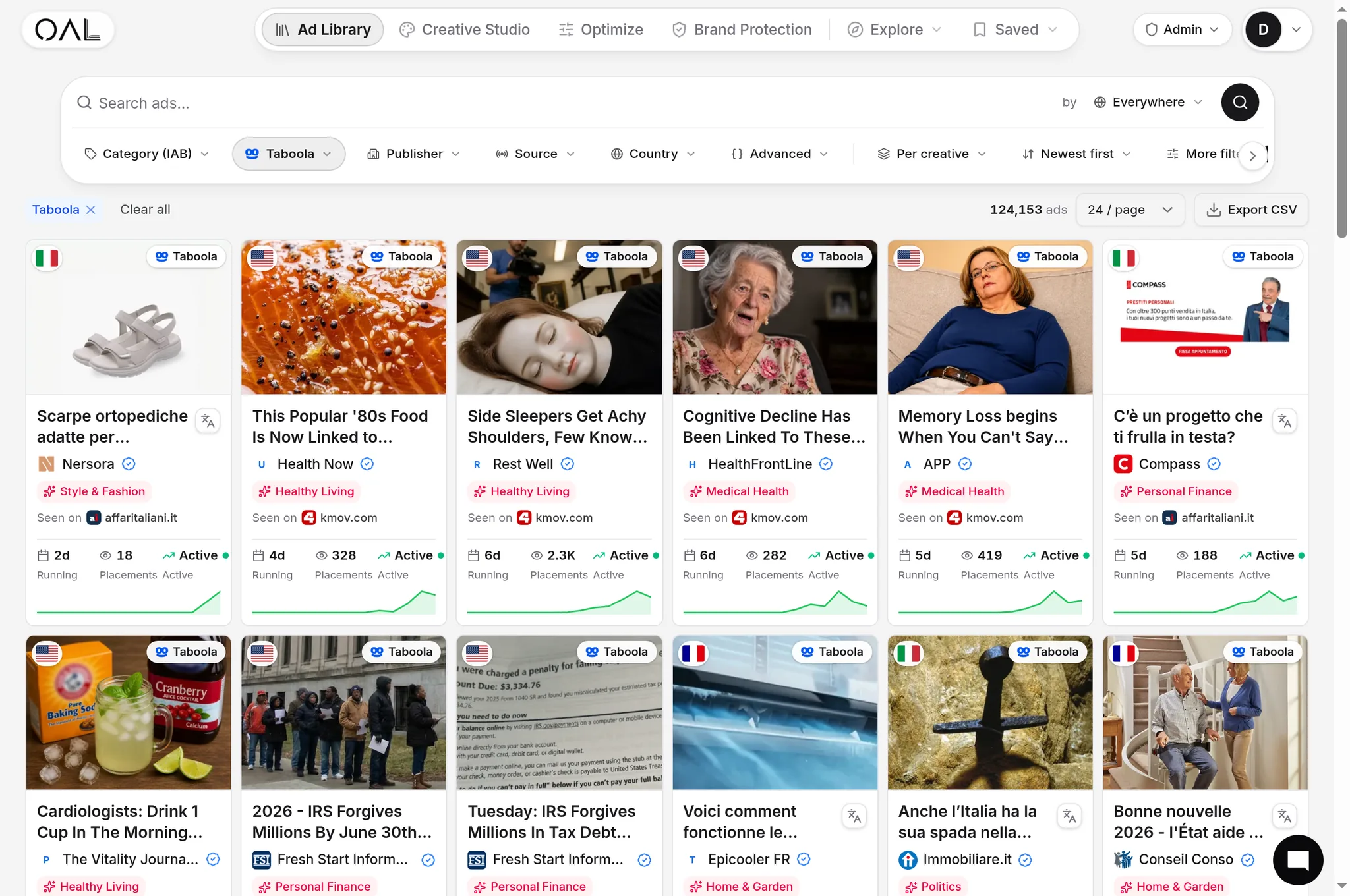
Busca "ejemplos de publicidad nativa" y obtendrás las mismas maquetas recicladas cada vez. Una publicación patrocinada falsa de BuzzFeed de 2016. Una captura de pantalla de una pieza del estudio de marca de The New York Times. Tal vez un gráfico de Spotify Wrapped que alguien sacó de una diapositiva de una conferencia. Ilustran el concepto y no te enseñan nada sobre lo que realmente se está ejecutando y convirtiendo ahora mismo.
Esta página es diferente. Cada ejemplo a continuación es una creatividad real que capturamos en vivo de una página de editor, ejecutándose en Taboola, Outbrain o MGID, y etiquetada con tres cosas que la mayoría de las galerías nunca te muestran: el anunciante real detrás del anuncio, la red que lo sirve y cuánto tiempo lleva activo en nuestro índice. Lo actualizamos mensualmente, porque un anuncio nativo que dejó de servirse hace dos años es una pieza de museo, no un archivo de inspiración.
Para contexto sobre la escala: a junio de 2026, el índice de OpenAdLibrary contiene 589.036 creatividades nativas de 25.933 anunciantes en 42 redes, con 5,4 millones de observaciones de anuncios detrás de ellas. Los ejemplos aquí son una pequeña porción seleccionada a mano de eso. Todo lo que ves está fechado y es real.
¿Qué cuenta como un ejemplo de publicidad nativa?#
Un ejemplo de publicidad nativa es cualquier ubicación pagada diseñada para coincidir con la forma y función del contenido que lo rodea, de modo que se lea como parte de la página en lugar de una interrupción. El espécimen clásico es el widget de recomendación de contenido bajo un artículo de noticias: una miniatura, un titular que genera curiosidad. Las publicaciones promocionadas en el feed, los artículos patrocinados y las unidades de display con estilo de contenido también califican. El rasgo definitorio es el camuflaje. Parece editorial. Está etiquetado como pagado.
Aquí hay uno en vivo de nuestra cosecha de junio de 2026 para que sepas exactamente a qué nos referimos.

Observa los movimientos. Una fecha límite. Un número redondo pero vago. Un nombre de marca ("Fresh Start Information") que suena como un servicio público, no como una empresa. Ese anuncio llevaba 13 días consecutivos ejecutándose cuando lo registramos, lo cual en una red de rendimiento es mucho tiempo para seguir pagando por la misma creatividad.
Si quieres la taxonomía completa, los formatos y la historia, el pilar Publicidad Nativa: La Guía Completa Con Ejemplos Reales (2026) lo cubre de principio a fin, y la entrada del glosario Publicidad Nativa te da la versión de un párrafo. Esta página es la galería. La prueba.
Cómo capturamos estos ejemplos#
La mayoría de los "ejemplos" en línea son inventados o raspados una vez y dejados para que se pudran. Los nuestros provienen de una cosecha en vivo del inventario nativo público. Aquí está el método, porque la procedencia es el punto central de una página de ejemplos.
- La captura es en vivo, no histórica. Extraemos creatividades de páginas de editores reales mientras se sirven, a través de Taboola, Outbrain, MGID, Revcontent, Teads, MediaGo, Yahoo y MSN. Cada captura tiene marca de tiempo.
- La imagen es el recurso real, de calidad completa. Almacenamos la creatividad real que sirvió la red, no una captura de pantalla comprimida, por lo que la miniatura que ves es la miniatura que vio el usuario.
- Etiquetamos al anunciante real. Las redes nativas envuelven los clics en seguimiento y cadenas de redireccionamiento, y la marca en el widget suele ser un sitio de arbitraje de contenido, no el anunciante final. Clasificamos la cadena de suministro para revelar quién está pagando realmente.
- Seguimos el clic hasta la página de destino, sin hacer clic en el anuncio en vivo. Resolver el destino (generalmente una página previa o un advertorial) es donde reside la estrategia. Lo rastreamos para que veas el funnel completo, no solo el anzuelo.
El titular te dice el ángulo. La página de destino te dice la oferta. Las galerías que muestran solo la creatividad ocultan la mitad de la estrategia que realmente importa.
Ese último punto separa un activo real de inteligencia competitiva de un tablero de Pinterest. Un titular de curiosidad es fácil de admirar e inútil de copiar si no puedes ver qué está vendiendo.
30 ejemplos de publicidad nativa por red y formato#
En lugar de arrojar 30 miniaturas desconectadas, los ejemplos a continuación están agrupados por red y por la función que está cumpliendo la creatividad. Los patrones se repiten entre anunciantes. Una vez que ves la plantilla, la ves en todas partes.
Ejemplos de Taboola (el widget "alrededor de la web")#
Taboola es la red nativa de web abierta más grande, y la que más has visto incluso si nunca supiste su nombre. El widget, etiquetado como "Around the Web", "Sponsored Stories" o "You May Like", se sitúa al pie de los artículos en editores premium. También es la parte más profunda de nuestro índice por un amplio margen: 157.727 creatividades de Taboola capturadas, más que Outbrain (84.252) y MGID (49.689) combinadas. Para saber cómo funcionan la subasta, las ofertas y la mecánica de Smart Bid detrás de estas ubicaciones, consulta Cómo Funcionan los Anuncios de Taboola: Una Guía Completa para Anunciantes (2026).
La combinación de verticales en Taboola te dice quién vive allí. Nuestras principales categorías en la red, por recuento de creatividades, son Salud (6.048), Finanzas (5.558) y Seguros (4.303). Esa es la tierra natal de la publicidad nativa de rendimiento: suplementos, alivio de impuestos, cuestionarios de seguros de vida. Aquí está la plantilla en su forma más pura.

Ese anuncio de dispositivos auditivos se ejecutó 26 días. El marco "dejar X por este nuevo dispositivo" es uno de los ángulos más duraderos en todo el índice, porque fabrica una tendencia y una comparación en siete palabras. Ejemplos representativos en vivo de Taboola en la cosecha:
- Advertorial de salud "un truco". Una miniatura de primer plano de un vegetal o suplemento con un titular atribuido a un médico, el clic resolviendo en una página previa de advertorial de formato largo para una suscripción a suplementos. La plantilla dominante de publicidad nativa de rendimiento.
- Generación de leads de finanzas personales. Anzuelos de perdón de impuestos y "los adultos mayores pueden calificar" que enlazan a un funnel de beneficios o cuestionario. El anuncio de Fresh Start IRS de arriba es exactamente esto.
- Historia de producto DTC. Una toma de estilo de vida limpia de una marca de colchones, utensilios de cocina o cuidado de la piel que apunta a un artículo con estilo de comparación de marca en lugar de una página de producto dura.
- Comparación de auto / seguros. "Los conductores en [ciudad] están cambiando a..." con un titular con inserción geográfica, aterrizando en un formulario de comparación de tarifas.
- Distribución de contenido de marca. Un editor importante o estudio que utiliza Taboola para sindicar una pieza editorial genuina (el uso del funnel superior de las mismas tuberías). Honda Cars India estaba ejecutando una creatividad limpia del sedán City en Taboola cuando cosechamos por última vez, prueba de que la red no es solo suplementos.
Dos capturas más en vivo que vale la pena estudiar lado a lado, porque muestran la brecha de curiosidad haciendo trabajos diferentes:


El anuncio de medicamentos usa autoridad ("MDs") más una lista retenida ("See the List"). El anuncio solar usa consenso ("Electricians agree") más un bucle abierto ("about 1 thing"). La misma máquina, diferentes palancas. Esa creatividad solar había estado activa 27 días, lo cual está cerca del máximo de lo que observamos.
Debido a que los titulares de Taboola a menudo están dirigidos geográfica y por dispositivo, la misma creatividad puede mostrar una docena de variantes de titular. Puedes navegar por el conjunto en vivo en la página espía de anuncios de Taboola y en la entrada del glosario Taboola.
Ejemplos de Outbrain / Teads#
Outbrain es el rival de toda la vida de Taboola y la red que pionereó el widget de descubrimiento de contenido. En 2025 completó su adquisición de Teads y renombró la empresa matriz a Teads Holding Co. (Nasdaq: TEAD), por lo que verás cada vez más la publicidad nativa de rendimiento de Outbrain y el video premium de Teads vendidos juntos. Las convenciones del widget se asemejan a las de Taboola, pero la combinación de editores y los controles de oferta difieren, como se cubre en Cómo Funciona Outbrain en 2026 (Ahora Parte de Teads): La Guía del Anunciante y ¿Qué es Teads? La Plataforma Outbrain-Teads Explicada (2026).
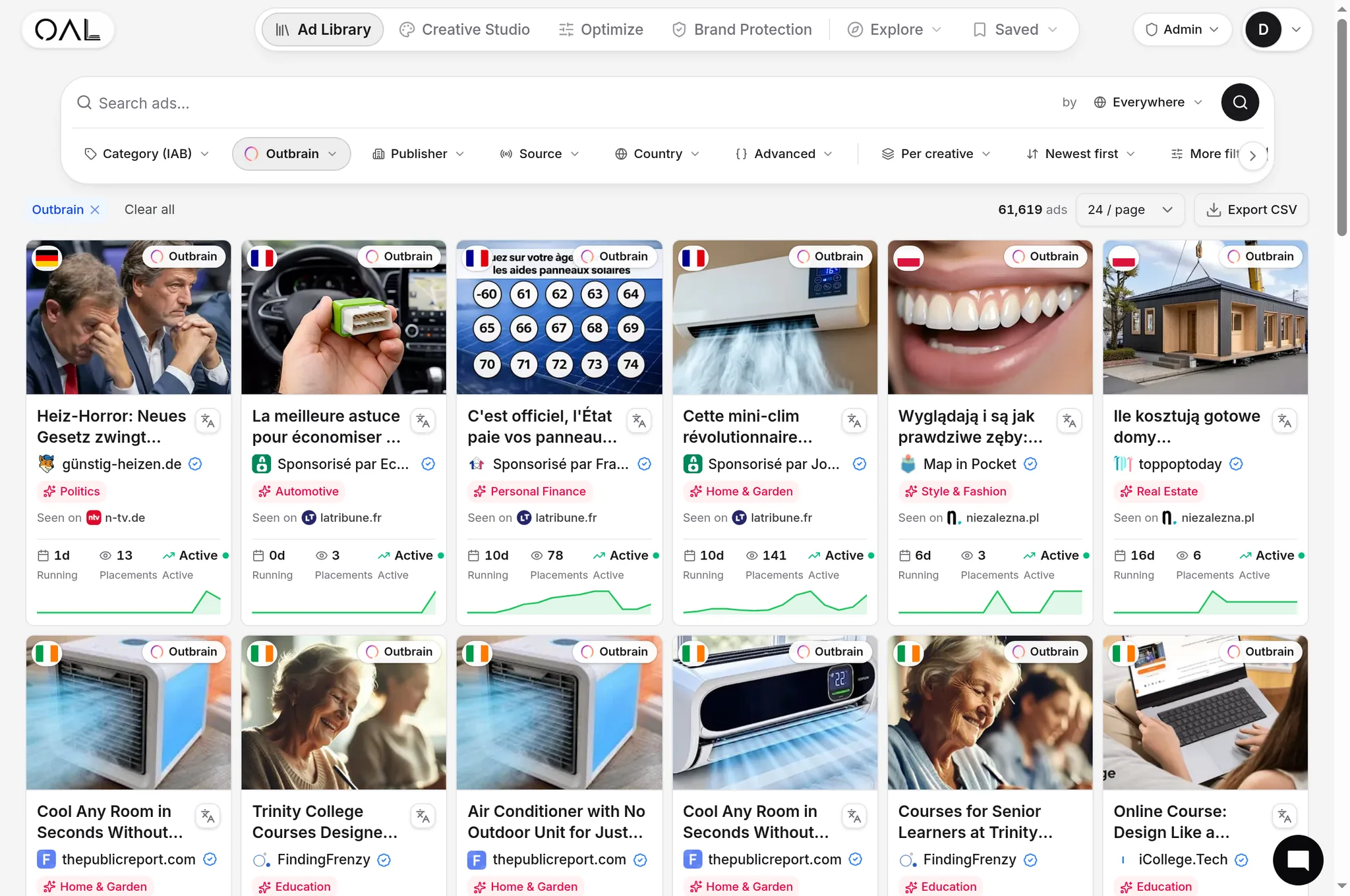
El sesgo vertical es la señal. Donde Taboola lidera con Salud, las tres principales de Outbrain en nuestro índice son Finanzas (2.640 creatividades), Seguros (2.615) y Salud (2.016). Las finanzas y los seguros superan a la multitud de suplementos, lo que encaja con la base de editores ligeramente más premium de Outbrain. La creatividad más longeva que actualmente rastreamos en Outbrain prueba el punto.

SmartAsset es una fintech real y bien financiada, y ese encuadre "Ask a Pro" está haciendo algo inteligente: toma prestado el formato de una columna de consejos, que se lee como servicio en lugar de ventas. Ha mantenido su espacio durante los 28 días completos que nuestro índice puede observar. Ejemplos representativos en vivo de Outbrain:
- Artículo de marca con estilo de sala de redacción. Una marca de consumo reconocible distribuyendo una pieza "5 cosas que no sabías sobre...", el clic aterriza en su propio centro de contenido.
- Liderazgo de pensamiento B2B / SaaS. Más pesado en el inventario premium de Outbrain que en los suplementos. La miniatura es una abstracción limpia o una UI de producto, el destino es un informe bajo registro.
- Unidades de smartfeed de viajes y finanzas. Tarjetas en el feed que se mezclan con el carril de recomendación propio del editor.
- Oferta de afiliados de rendimiento. La misma mecánica de brecha de curiosidad que Taboola, a menudo el mismo anunciante ejecutando ambas redes a la vez (algo que solo notas cuando puedes ver ambas cosechas lado a lado).
- Video outstream de Teads. Una unidad de video de marca inyectada en medio del artículo, la contraparte del funnel superior de los widgets impulsados por clics.
Consulta la entrada del glosario Outbrain para la versión corta.
Ejemplos de MGID#
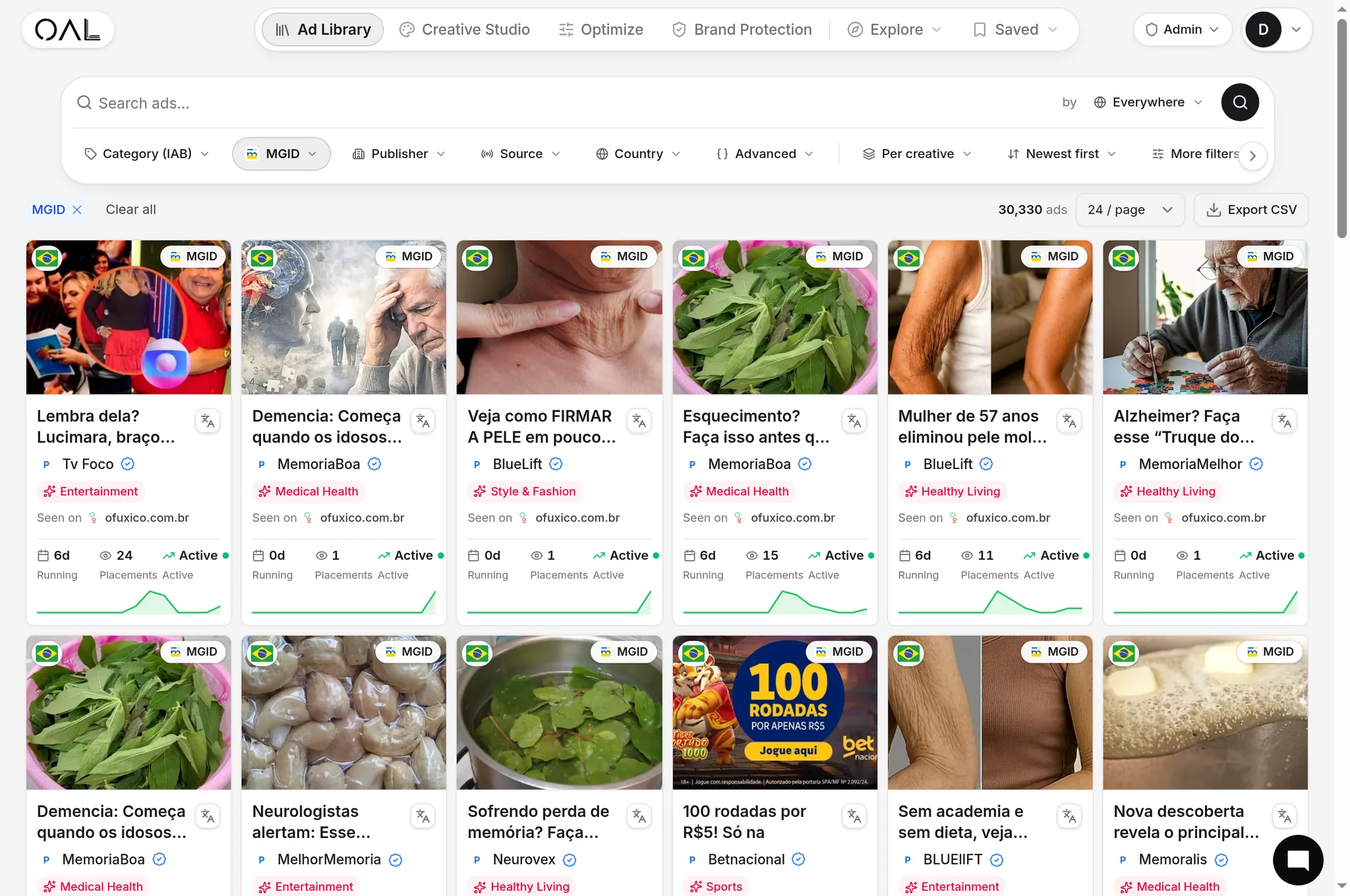
MGID se inclina hacia un nivel diferente de editores y una mezcla más pesada de entretenimiento, juegos y afiliados. Sus widgets son visualmente más ocupados y las ofertas suelen ser más agresivas. Los números respaldan esto claramente: Entretenimiento es la vertical principal de MGID en nuestro índice con 8.904 creatividades, eclipsando su siguiente categoría (Salud, con 615). Esa es una forma completamente diferente a Taboola u Outbrain, donde las finanzas y la salud lideran. Los formatos, la segmentación y el modelo de precios se desglosan en Cómo Funcionan los Anuncios Nativos de MGID: Formatos, Segmentación y Precios Explicados.
El estilo de juegos y cuestionarios que domina este nivel se ve así. Atrapamos el mismo ángulo de juego de ratón "play it for 1 minute" ejecutándose y manteniéndose durante 28 días en una red hermana, lo que te dice que la plantilla es un caballo de batalla probado, no un caso único.

Ejemplos representativos en vivo al estilo MGID:
- Juegos / instalación de aplicaciones. Una miniatura audaz de captura de pantalla del juego con un anzuelo "juega esto por 1 minuto", aterrizando en una tienda de aplicaciones o un juego web. Exactamente el patrón de Combat Siege anterior.
- Funnel de cuestionarios / sorteos. Cebo de compromiso "¿Qué [tipo] eres?" que monetiza a través de una ruta de encuesta. Los funnels de pruebas de IQ están por todas partes en esta categoría en este momento.
- Ofertas de criptomonedas y trading. Alto volumen en la mezcla de MGID, a menudo con afirmaciones sensibles regulatorias, aterrizando en un funnel de registro.
- Listicle de entretenimiento. Galerías de celebridades "dónde están ahora" que son puros juegos de arbitraje.
- E-commerce regional. Widgets de productos con descuento dirigidos a países específicos.
La entrada del glosario MGID cubre la red brevemente.
Revcontent, Yahoo, MSN y la larga cola#
Los ejemplos del 16 al 30 abarcan el resto del ecosistema nativo de web abierta y muestran los mismos patrones reapareciendo bajo un cromo diferente.
16 a 20. Ofertas de rendimiento de Revcontent: funnels de suplementos, financieros y encuestas en una red que se inclina fuertemente hacia la respuesta directa. Consulta Cómo Funciona Revcontent: Guía de la Red de Anuncios Nativos para Anunciantes.
21 a 25. Nativo de Yahoo y MSN (que capturamos bajo Microsoft Audience Network también). Estos aparecen en inventario de portal y adyacente al buzón de entrada y llevan anunciantes de marca ligeramente más reconocidos debido a dónde se ejecutan. Algunas de las creatividades más persistentes en todo nuestro índice se encuentran aquí. Un anuncio de Hidden Hearing "next-gen hearing aids" y una serie de creatividades de cuestionarios My IQ han registrado cada uno los 28 días completos de observación continua que nuestro índice puede registrar.
26 a 30. Nativo programático a través de DSPs: las mismas unidades nativas IAB compradas a través de plataformas del lado de la demanda y colocadas en espacios de editores, donde el "anunciante" en la creatividad puede ser uno de muchos oferentes. Esta es la capa más turbia de atribuir, que es exactamente por qué una canalización de captura de Publicidad Nativa Programática que clasifica la cadena de suministro se justifica.
Qué tienen en común estos ejemplos#
Coloca 30 anuncios nativos en vivo uno al lado del otro y las mecánicas recurrentes saltan a la vista. Esta es la verdadera conclusión: no cualquier creatividad individual, sino la plantilla detrás de ellas.
| Patrón | Cómo se ve | Por qué funciona |
|---|---|---|
| Brecha de curiosidad | El titular retiene la recompensa ("See the List", "1 thing") | Obliga al clic a resolver el bucle abierto |
| Imágenes humanas / específicas | Una persona, una mano, un solo objeto, no un logo | Se lee como editorial, no como un anuncio |
| Encuadre de autoridad | "MDs", "Electricians agree", "Ask a Pro" | Toma prestada credibilidad que la marca aún no ha ganado |
| Inserción geográfica / de dispositivo | Ciudad dinámica, edad, país o dispositivo en la copia | Se siente personalmente relevante, aumenta el CTR |
| Destino advertorial | El clic aterriza en un artículo largo, no en una página de producto | Calienta al visitante antes de la oferta |
Cada una de esas filas aparece en las capturas en vivo anteriores, palabra por palabra. Observa lo que falta en la lista: branding inteligente. La publicidad nativa de rendimiento es casi anti-marca en la creatividad misma. La persuasión está diseñada en la combinación titular-miniatura y la página previa, por lo que el contenido patrocinado en el lado del destino hace gran parte del trabajo pesado.
Los datos verticales dicen lo mismo desde una altitud más alta. En todo el índice completo, las mayores categorías nativas son Finanzas (17.232 creatividades), Seguros (15.629) y Salud (14.895), con Ecommerce (13.872) y Entretenimiento (11.784) cerca detrás. Esos cinco compran más publicidad nativa que nadie, y la compran porque la máquina de brecha-de-curiosidad-hacia-advertorial funciona exactamente en su tipo de oferta.
Cómo usar ejemplos reales en tu propio trabajo#
Una galería solo importa si cambia lo que envías. Tres movimientos concretos.
- Reconstruye ganadores, no novedades. Las creatividades que se han ejecutado por más tiempo son las que vale la pena estudiar, porque la longevidad es el proxy gratuito más cercano que tienes para la rentabilidad. Nuestro índice actualmente abarca hasta unos 28 días de observación continua por creatividad, y los anuncios que están en ese límite (SmartAsset, Hidden Hearing, Combat Siege, los funnels My IQ) son los que hay que diseccionar primero. Separa eso del conocimiento general de la industria sobre "ganadores de 90 días", que es una heurística real pero no algo que hayamos medido aquí. Filtra por duración de ejecución observada antes de copiar cualquier cosa.
- Lee el funnel completo. Captura el titular y la página de destino. Un titular que no puedes vincular a una oferta es media lección.
- Mapea la difusión, no solo la existencia. Un anuncio en un sitio es una prueba. La misma creatividad en 200 editores del mismo anunciante es un ganador que se está escalando, y ese patrón es invisible a menos que tu fuente rastree la amplitud de la ubicación. Hemos registrado 926.259 capturas de páginas de destino precisamente para que puedas ver esa difusión.
Aquí es donde una plataforma abierta de inteligencia publicitaria cambia la economía. Adbeat, AdPlexity, Anstrex y AdSpy cuestan de $80 a $400 al mes y restringen sus bibliotecas. OpenAdLibrary captura la misma clase de creatividades nativas en vivo, con el anunciante real, la red y la página de destino etiquetados, y abre un nivel gratuito (navega 200 anuncios, sin tarjeta) antes de $29.99/mes por acceso completo. Desde allí puedes pasar del estudio a la ejecución: clonar ángulos ganadores en Creative Studio, diseccionar qué hace que una creatividad funcione con Copy DNA, enviar a redes a través de Optimize, y extraer todo programáticamente a través de la API y MCP.
Comienza gratis y navega por la cosecha nativa en vivo tú mismo. Sin maquetas de stock, solo lo que se está ejecutando hoy.
La conclusión#
Los ejemplos estáticos te enseñan la idea de la publicidad nativa. Los ejemplos en vivo, etiquetados y fechados te enseñan la práctica: qué ángulos se están ejecutando, quién está detrás de ellos y cuánto tiempo han mantenido su espacio. Esa es la diferencia entre una ilustración y un activo de inteligencia, y es por eso que esta galería se actualiza mensualmente en lugar de congelarse en 2016.