English
 Español
 Português (Brasil)
 Français
 Deutsch
 Nederlands
 Polski
 Svenska
 Türkçe
 Русский
 日本語
日本語 한국어
한국어 简体中文
简体中文 Tiếng Việt
 Bahasa Indonesia
 繁體中文
繁體中文 Čeština
 Dansk
Dansk Norsk (bokmål)
 Suomi
Suomi Ελληνικά
 Română
 Magyar
 Українська
 ไทย
ไทย हिन्दी
 العربية
 עברית
עבריתCome funzionano gli annunci nativi Yahoo dopo Gemini: spiegazione del Yahoo DSP
Yahoo Gemini non esiste più, ma "annunci nativi Yahoo" continua a confondere gli acquirenti: ecco chi serve realmente gli annunci nel 2026, come acquistarli, dove si colloca MSN e come studiare le creatività live.

"Annunci nativi Yahoo" potrebbe essere il termine più etichettato male nel performance marketing. Gli acquirenti chiedono ancora "placement Gemini". Le agenzie costruiscono ancora deck attorno a una console self-serve spenta anni fa. E metà della confusione deriva dal fatto che gli annunci MSN vengono archiviati sotto "Yahoo" perché i due hanno condiviso risultati di ricerca e accordi sull'inventario per oltre un decennio.
Se gestisci annunci nativi e vuoi il pubblico di Yahoo, l'unica domanda che conta è: cosa serve effettivamente l'annuncio oggi? Perché la superficie di acquisto è cambiata, l'asta è cambiata e il reporting è cambiato. Sbagliare i meccanismi e sprechi un piano media inseguendo una console che non esiste più.
Ecco la reale situazione nel 2026, più come studiare le creatività nativi Yahoo e MSN live invece di indovinare.
Come funziona la pubblicità nativa Yahoo nel 2026#
Gli annunci nativi Yahoo girano su due motori separati. I nativi di tipo raccomandazione (i widget "Around the Web" su Yahoo Finance, News, Sports e Mail) sono alimentati esclusivamente da Taboola con un accordo commerciale trentennale. I nativi programmatici con targeting per audience si acquistano tramite Yahoo DSP, che raggiunge il marketplace nativo premium di Yahoo più l'inventario dell'open exchange. La vecchia piattaforma self-serve Gemini non esiste più.
Questa è la risposta breve. Il resto di questa pagina è il dettaglio che ti serve per agire.
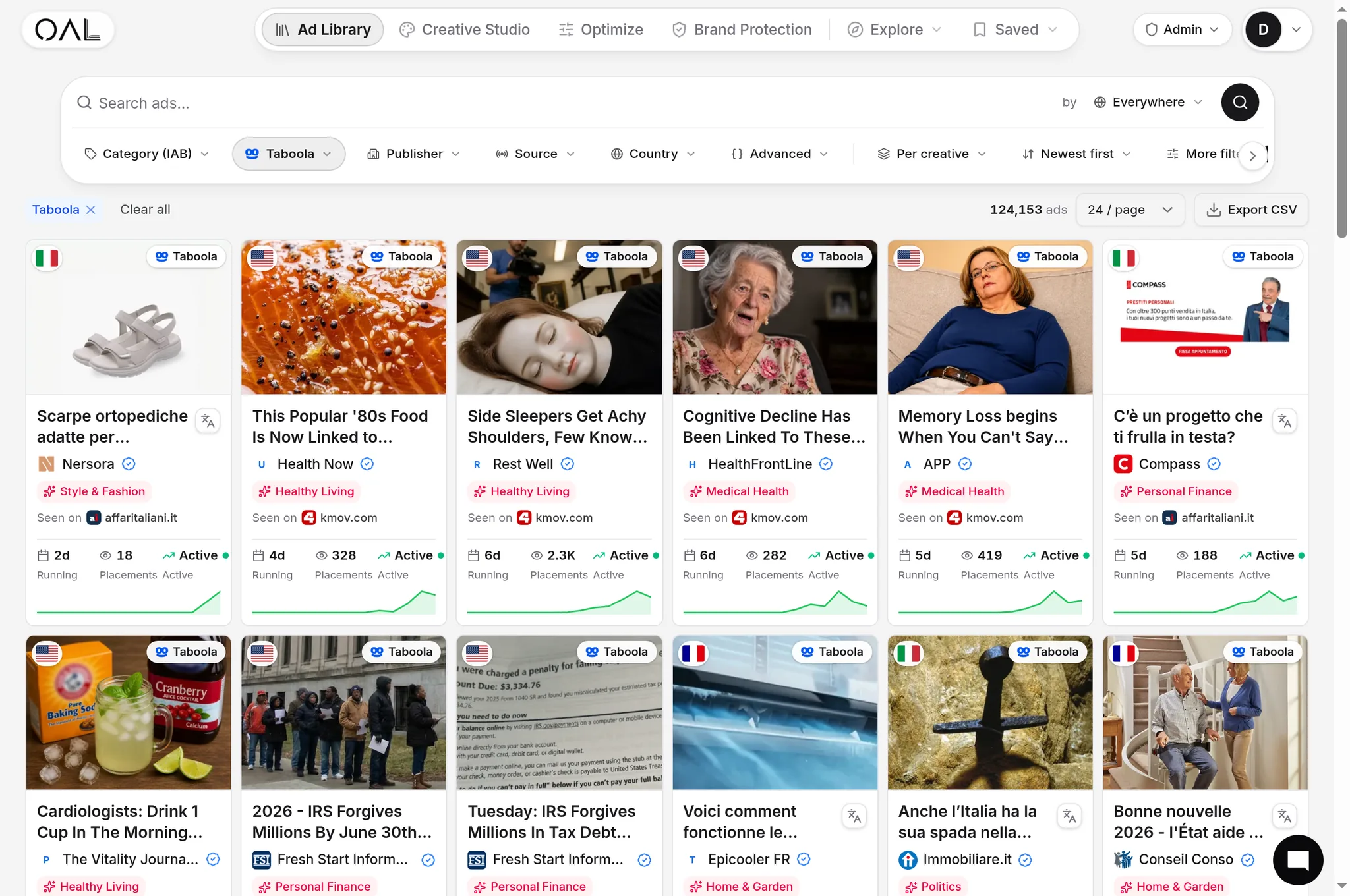
Aiuta vedere la scala dell'offerta in cui stai acquistando. Taboola, il motore dietro l'impronta nativa di Yahoo, rappresenta 157.727 delle creatività live nell'indice di OpenAdLibrary (giugno 2026), la singola rete più grande nei nostri dati. Su tutte le 42 reti che monitoriamo, fa parte di 589.036 creatività catturate da 25.933 advertiser, osservate 5,4 milioni di volte. Gli annunci nativi Yahoo non sono un angolo di nicchia. Sono una fetta del più grande marketplace di discovery sul web aperto.
Cosa è realmente successo a Yahoo Gemini#
Yahoo Gemini è stato lanciato nel 2014 come marketplace unificato per search e nativi. Caricavi le creatività, impostavi le offerte e targettavi le proprietà di Yahoo più una rete di partner in syndication. Per un po' è stata una genuina quarta opzione accanto a Taboola, Outbrain e i motori di ricerca, specialmente per gli acquirenti di affiliazione e direct-response a cui piacevano i click economici e la politica permissiva.
All'inizio del 2023, durante una ristrutturazione aziendale di circa il 20%, Yahoo ha chiuso gradualmente il suo stack ad-tech interno. Ha chiuso il suo supply-side platform e ritirato la piattaforma nativa Gemini. La decisione era strategica: smettere di competere come vendor ad-tech full-stack, concentrarsi sul lato buy side e affidare il business nativo a un partner.
La logica era solida. Invece di mantenere un marketplace nativo a domanda sottile, Yahoo ha collegato il suo enorme pubblico al pool di advertiser di Taboola. Più advertiser che fanno offerte sullo stesso inventario è esattamente ciò di cui i nativi hanno bisogno per monetizzare.
La nostra voce del glossario su Yahoo Gemini / Yahoo Native traccia la cronologia completa se vuoi i dettagli storici. Il takeaway pratico è netto: non c'è "Gemini" a cui accedere. Chiunque insegua ancora quella console insegue un reindirizzamento.
I due modi in cui gli annunci nativi Yahoo vengono serviti oggi#
Dopo Gemini, "annunci nativi Yahoo" si divide in due superfici di acquisto. Confonderle è l'errore più comune che vedo fare agli acquirenti.
1. Taboola alimenta le raccomandazioni native di Yahoo#
Yahoo e Taboola hanno firmato un accordo trentennale in base al quale Taboola alimenta esclusivamente i widget di raccomandazione nativa su tutte le proprietà owned-and-operated di Yahoo in tutto il mondo. È diventato operativo alla fine del 2023, implementato completamente l'anno successivo, e Yahoo ha acquisito una quota significativa in Taboola come parte della struttura.
In termini semplici: le unità "contenuti che potrebbero piacerti" e di raccomandazione a fine articolo su Yahoo Finance, Yahoo News, Yahoo Sports e Yahoo Mail sono placement Taboola. Per eseguire quel classico formato di discovery nativo sul pubblico di Yahoo, lo acquisti come acquisteresti qualsiasi altro inventario Taboola. Tutto nella nostra analisi di come funzionano gli annunci Taboola (il modello di offerta, la policy creativa, la meccanica del widget di annunci nativi) si applica direttamente all'impronta nativa di Yahoo. Yahoo è, in effetti, uno dei publisher premium più grandi di Taboola.
Questo è anche il motivo per cui la thumbnail e il titolo portano l'intera campagna. Ecco una creatività Taboola finance live dal nostro indice, il tipo esatto di unità che gira su Yahoo Finance:

Finance è il verticale dominante nell'intero indice (17.232 creatività tra le reti), ed è anche una delle categorie più pesanti di Taboola, con 5.558 creatività finance e 4.303 in insurance (OpenAdLibrary, giugno 2026). Il verticale principale di Taboola è in realtà health, con 6.048 creatività, il che ti dice qualcosa su chi sta acquistando questo pubblico: offerte di sollievo fiscale, confronto assicurativo e integratori, non awareness di brand di lusso.
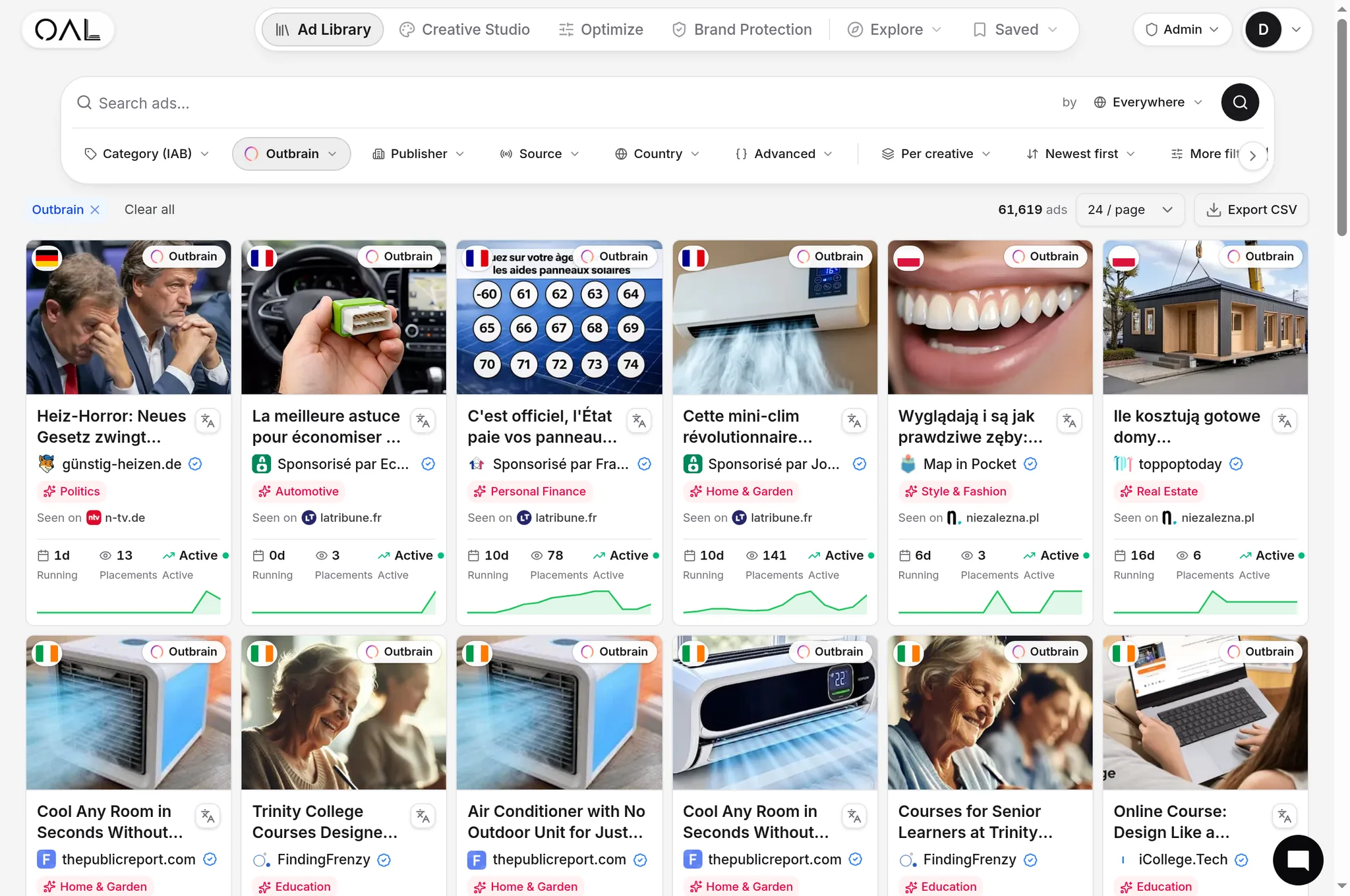
Poiché la stessa offerta spesso gira su tutto il set di discovery contemporaneamente, gli annunci nativi Yahoo ora si trovano in un unico bucket competitivo con Outbrain (ora parte di Teads), MGID e Revcontent. Se stai decidendo dove spendere, la guida fondamentale su pubblicità nativa con esempi reali spiega come leggere l'intero panorama.
2. Yahoo DSP acquista nativi programmaticamente#
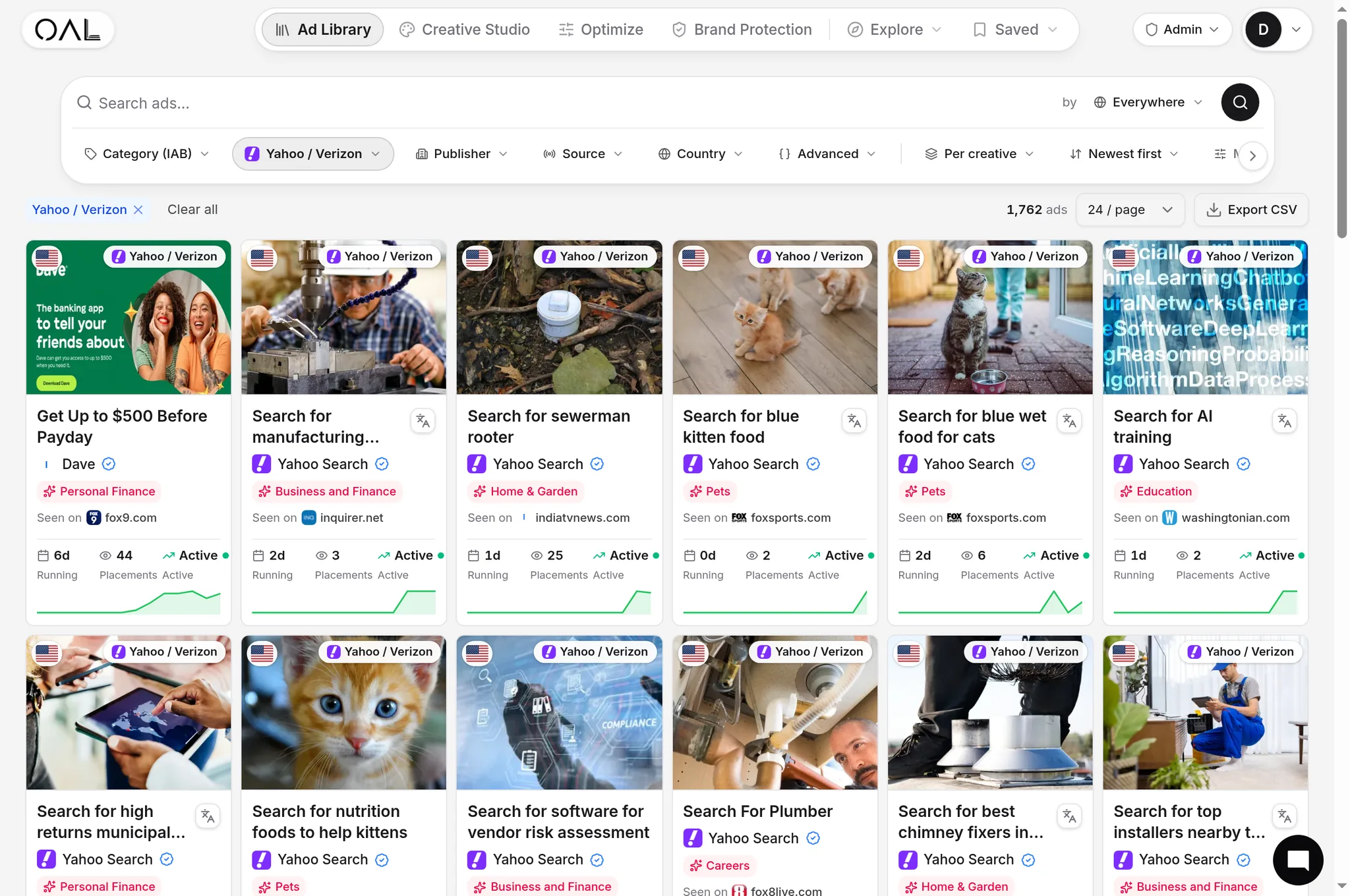
Yahoo DSP è la piattaforma buy-side che Yahoo ha mantenuto e su cui ha puntato. È una demand-side platform omnichannel completa: nativi, display, video, connected TV, audio, DOOH e commerce in un'unica sede. Dà agli advertiser accesso al marketplace nativo premium di Yahoo insieme all'inventario dell'open exchange.
Questa è pubblicità nativa programmatica nel senso stretto. Non stai caricando su uno strumento self-serve di un publisher. Stai facendo offerte in un'asta di annunci nativi con targeting per audience, limiti di frequenza e DCO (ottimizzazione creativa dinamica) che assembla combinazioni di titolo, descrizione e immagine al volo. Si adatta a buyer di brand e mid-funnel che vogliono nativi abbinati a video e CTV più che a un affiliato solista che cerca i click più economici.
Ecco la divisione chiara:
| Taboola (annunci nativi Yahoo) | Yahoo DSP | |
|---|---|---|
| Cosa acquisti | Widget di raccomandazione su proprietà Yahoo + rete di Taboola | Nativi programmatici + display, video, CTV, audio, DOOH |
| Modello di acquisto | Self-serve / gestito, discovery guidato da CPC | DSP omnichannel, basato su asta, audience-first |
| Adatto a | Direct-response, affiliazione, content marketer | Brand, mid-funnel, piani media omnichannel |
| Stile creativo | Unità feed nativa (titolo + thumbnail) | Unità nativa + DCO, più altri formati |
| Reach | Proprietà O&O di Yahoo + publisher Taboola | Marketplace premium Yahoo + open exchange |
La questione MSN, risposta precisa#
Poiché Yahoo e Microsoft hanno condiviso risultati di ricerca e inventario per anni, le persone spesso raggruppano "annunci nativi MSN" sotto "Yahoo". Questo è sbagliato, e la distinzione conta sia per l'acquisto che per la ricerca competitiva.
MSN è una proprietà Microsoft. La maggior parte dell'inventario nativo e display di MSN è venduto da Microsoft Audience Network tramite l'SSP interno Monetize di Microsoft, lo stesso sistema di annunci per audience dietro Outlook, Microsoft Edge e le superfici di giochi casuali Microsoft. Questo è un prodotto Microsoft Advertising, non Yahoo.
Puoi vedere quanto è attiva quella rete nei nostri dati. Dei dieci annunci nativi più longevi nell'indice OpenAdLibrary in questo momento, sette sono serviti da Microsoft Audience Network, ciascuno osservato continuamente per 28 giorni. Eccone uno, un annuncio per apparecchi acustici che è stato live per l'intera durata della nostra finestra:

Per contesto, 28 giorni è l'attuale limite di osservazione continua nel nostro indice, non la vera durata dell'annuncio. La leggenda del settore ama parlare di "vincitori di 90 giorni", e quelli esistono, ma ciò che possiamo provare è che questa creatività ha girato ininterrottamente ogni giorno che l'abbiamo monitorata. Questo è di per sé un forte segnale di durata. Un annuncio che un advertiser si rifiuta di spegnere di solito è uno che si ripaga da solo.
Dove si toccano effettivamente Yahoo e Microsoft? Solo a livello di exchange. Una demand-side platform, incluso Yahoo DSP, può fare offerte sugli impression MSN che Microsoft espone sull'open exchange. Quindi un dato annuncio nativo su MSN potrebbe essere acquistato tramite Microsoft Audience Network, o vinto da un DSP che fa offerte su inventario aperto. Ma "annunci nativi MSN" come canale di vendita appartiene a Microsoft. Se un vendor offre di "posizionare i tuoi annunci Yahoo su MSN", chiedigli di nominare la piattaforma esatta e il percorso di supply. La risposta ti dice se comprendono lo stack o stanno indovinando.
Il modello mentale più pulito:
- Annunci nativi Yahoo = widget alimentati da Taboola su proprietà O&O di Yahoo, più nativi programmatici tramite Yahoo DSP.
- Annunci nativi MSN = Microsoft Audience Network / Monetize SSP, raggiungibili in parte dai DSP sull'open exchange.
Formati, limiti e come appare un'unità nativa Yahoo#
Qualunque percorso tu scelga, la creatività stessa è riconoscibile. Un'unità nativa Yahoo standard è costruita da un piccolo insieme di parti:
- Titolo: una riga breve e incisiva, circa 50 caratteri.
- Descrizione: una o due frasi con una call to action chiara, fino a circa 200 caratteri.
- Nome brand / advertiser: mostrato accanto all'unità.
- Immagine thumbnail: la creatività mobile consigliata è di almeno 200x200 pixel. Immagini di alta qualità e non ingannevoli vincono.
Tramite Yahoo DSP puoi aggiungere DCO sopra, lasciando che la piattaforma testi automaticamente permutazioni di titolo, descrizione e immagine. Tramite Taboola ottieni il trattamento completo del widget di raccomandazione che si fonde nel feed di articoli. In ogni caso, la creatività è l'unica vera leva. Nel discovery della pubblicità nativa, la thumbnail e il titolo fanno quasi tutto il lavoro, e un piccolo cambio di immagine può spostare il click-through più di qualsiasi modifica di targeting.
La formula vincente raramente è sottile. Titoli con curiosity gap, framing "esperti/medici concordano" e un beneficio che devi cliccare per capire. Ecco una creatività health che fa esattamente questo:

Health e insurance sono al secondo e terzo posto nell'indice complessivo (14.895 e 15.629 creatività), subito dopo finance, e gli schemi dei titoli si ripetono in tutti e tre. Dopo averne guardate qualche centinaio, puoi prevedere la struttura prima di leggere le parole.
Targeting e misurazione#
La proposta di Yahoo DSP si basa sull'identità e sui dati first-party del vasto pubblico loggato di Yahoo su mail, finance, sports e news. Targettizzi per segmenti di audience, dati demografici, segnali contestuali e dati comportamentali, con i controlli di frequenza e pacing di un DSP moderno. Sul lato Taboola, il targeting si affida al motore predittivo e ai segnali contestuali della rete di raccomandazione, ottimizzato verso le conversioni che segnali tramite pixel o eventi server-side.
Per la misurazione, entrambi riportano click, conversioni e spesa, ma l'unità di analisi differisce. Su Taboola ottimizzi a livello di campagna, sito e creatività, come qualsiasi acquisto di discovery. Sul DSP ottieni reporting cross-channel a livello di audience che lega i nativi al resto del piano media. Se esegui nativi insieme a Outbrain/Teads, vale la pena leggere la spiegazione della piattaforma Teads per confrontare le filosofie di misurazione tra le reti di discovery.
Come studiare le creatività nativi Yahoo e MSN live#
Ecco la parte che l'intelligence competitiva raramente risolve: gli annunci nativi sono personalizzati ed effimeri. L'unità che vedi su Yahoo Finance è targettizzata a te, nella tua geo, sul tuo dispositivo, in quel momento. Aggiorna ed è sparita. Non puoi reverse-engineerare la strategia nativa di un competitor su Yahoo o MSN navigando manualmente. Dovresti essere migliaia di persone in dozzine di paesi nello stesso istante.
Questo è il divario che OpenAdLibrary è stato creato per colmare. Cattura continuamente annunci nativi pubblici live su Yahoo, MSN, Taboola, Outbrain, MGID, Revcontent, Teads e altri, e fa cose che uno screenshot non può:
- Cattura l'immagine creativa reale in piena qualità, non un ritaglio sfocato, così puoi studiare l'esatta thumbnail e il titolo che funzionano.
- Etichetta la supply chain ad-tech dietro ogni impression, quale rete e SSP l'hanno effettivamente servita, così la domanda "è Yahoo o Microsoft?" si risponde da sola.
- Segue il click alla landing page senza toccare l'annuncio live, rivelando il vero advertiser e il funnel dietro l'unità.
- Fa emergere segnali di longevità e diffusione, così una creatività che ha girato per settimane su molti placement (come quell'annuncio Hidden Hearing di 28 giorni) si segnala come un vincitore da modellare.
Eccone un altro, un'offerta insurance geo-targettizzata all'Australia, il tipo di acquisto localizzato su cui non ti imbatteresti mai da un singolo desktop USA:

Da lì, strumenti come Copy DNA, Creative Studio e l'area di lavoro Optimize trasformano l'osservazione in azione, e un'API più un endpoint MCP ti permettono di estrarre gli stessi dati nel tuo stack. È un'alternativa aperta e accessibile agli incumbent da $80 a $400/mese: sfoglia 200 annunci gratuitamente, nessuna carta richiesta.
Inizia gratuitamente e visualizza le creatività nativi Yahoo e MSN live per vedere chi sta effettivamente acquistando quel pubblico oggi.
La conclusione#
Gli annunci nativi Yahoo non sono morti con Gemini. Hanno cambiato mano. I nativi di raccomandazione sulle proprietà di Yahoo sono di Taboola. I nativi programmatici sono di Yahoo DSP. I nativi MSN sono di Microsoft. Mantieni chiari questi tre confini e le decisioni diventano semplici: scegli la superficie che corrisponde al tuo funnel, costruisci la creatività attorno alla thumbnail e al titolo, e guarda cosa stanno eseguendo i competitor live prima di impegnare un dollaro."