English
 Español
 Français
 Deutsch
 Italiano
 Nederlands
 Polski
 Svenska
 Türkçe
 Русский
 日本語
日本語 한국어
한국어 简体中文
简体中文 Tiếng Việt
 Bahasa Indonesia
 繁體中文
繁體中文 Čeština
 Dansk
Dansk Norsk (bokmål)
 Suomi
Suomi Ελληνικά
 Română
 Magyar
 Українська
 ไทย
ไทย हिन्दी
 العربية
 עברית
עבריתTaboola vs Google Ads: Qual Se Adapta ao Seu Funil em 2026?
O Google Ads captura demanda; o Taboola a cria. Veja como as duas plataformas diferem em custo, criativo e adequação ao funil — e um playbook de sequenciamento para rodar ambas sem desperdiçar orçamento.

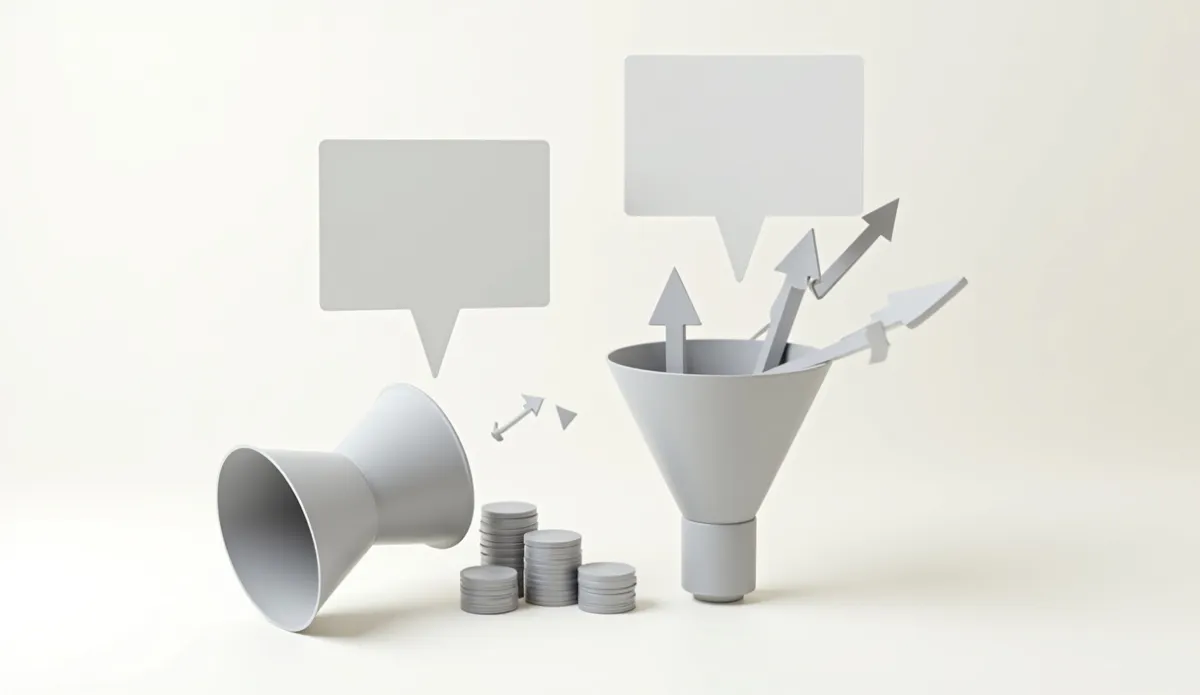
Taboola e Google Ads não são intercambiáveis — eles compram momentos diferentes. O Google Ads captura demanda existente: alguém digita um problema ou um produto em uma caixa de busca e você dá lances para ser a resposta. O Taboola cria demanda: seu anúncio interrompe alguém lendo um artigo de notícias que não estava pensando em você. Se seus compradores buscam ativamente pelo que você vende, o Google vence em intenção sempre. Se a busca está esgotada, cara demais, ou sua oferta precisa de uma história antes que alguém a busque, o Taboola oferece alcance barato e escalável — mas apenas através de funis baseados em conteúdo construídos para tráfego frio. A maioria das contas maduras acaba rodando ambos, em diferentes estágios do funil.
Duas plataformas, dois momentos de atenção#
O produto principal do Google Ads é a busca: alguém digita "melhor mesa para trabalhar em pé" ou "cotação de seguro de carro" e os anunciantes dão lances para aparecer como a resposta. A intenção é explícita, o leilão é orientado por palavras-chave, e o clique chega quente. O Google também vende inventário de Display, YouTube e Performance Max, mas a intenção de busca é algo que você não pode comprar em nenhum outro lugar — e é pelo que você paga um prêmio.
O Taboola vende atenção em um momento diferente. Seus posicionamentos são widgets de anúncio nativo — os feeds "patrocinados" abaixo e dentro de artigos em milhares de sites de publishers. A pessoa vendo seu anúncio está lendo conteúdo de notícias ou lifestyle e não estava procurando por você. Seu criativo tem que fabricar o interesse que um buscador do Google já tem. (Para a mecânica completa — posicionamentos, lances, segmentação — veja nosso guia sobre como funcionam os anúncios do Taboola.)
Essa única diferença — captura de demanda versus criação de demanda — impulsiona toda diferença prática a jusante: custo, criativo, landing pages, medição e escala.
Cara a cara: as diferenças práticas#
| Dimensão | Google Ads (Busca) | Taboola |
|---|---|---|
| Intenção do usuário | Explícita — eles buscaram por isso | Latente — eles estavam lendo outra coisa |
| Primitiva de segmentação | Palavras-chave mais sinais de público | Contexto do publisher, geolocalização, dispositivo, públicos |
| Unidade criativa | Anúncio de texto (anúncios de busca responsivos) | Imagem em miniatura mais headline |
| Estágio do funil | Fundo e meio | Topo e meio |
| Landing page que funciona | Página de produto ou oferta | Advertorial ou pre-lander, depois a oferta |
| Taxa de conversão | Maior (intenção quente) | Menor (interrupção fria) |
| Teto de escala | Limitado pelo volume de busca | Efetivamente ilimitado; a qualidade varia |
| Habilidade principal | Pesquisa de palavras-chave, Quality Score | Teste de criativos, curadoria de publishers |
A linha de escala merece ênfase. O volume de busca para suas palavras-chave exatas é finito; uma vez que você as domina, orçamento extra compra cliques com retornos decrescentes. O inventário nativo é ordens de magnitude maior — a restrição vinculante não é quantas impressões existem, mas quantas convertem lucrativamente no estado atual do seu funil.
O que cada um custa — honestamente#
CPCs de busca em verticais comerciais competitivas — seguros, jurídico, finanças — são famosamente caros; essa pressão é exatamente por que anunciantes orientados por história continuam migrando orçamento para nativo. No Taboola, compradores de mídia costumam relatar CPCs Tier-1 em desktop de aproximadamente $0,20 a $0,90, com mobile frequentemente mais barato. Trate esses como intervalos não oficiais, relatados por profissionais: sua vertical, geolocalização e qualidade do criativo vão movê-los bastante. Nossos benchmarks de CPC para anúncios nativos detalham o que os compradores relatam por rede, e quanto custam os anúncios nativos cobre o orçamento de funil completo.
A armadilha é comparar o CPC bruto entre as duas plataformas. Um clique no Taboola a uma fração de um clique do Google não é automaticamente uma aquisição mais barata: o clique nativo é mais frio, converte a uma taxa mais baixa e geralmente precisa de um passo extra no funil. Compare o custo por aquisição após o funil, nunca o custo por clique antes dele.
A lacuna criativa: palavras-chave versus histórias#
Vencer na busca do Google é uma disciplina de correspondência de mensagem: espelhe a consulta, supere a barra do Quality Score, envie o clique para uma página que responda exatamente o que foi perguntado. O trabalho criativo é principalmente verbal e estrutural.
Vencer no Taboola é uma disciplina editorial. Sua unidade é uma miniatura e um headline que desperta curiosidade, competindo contra manchetes de notícias reais pelo próximo clique do leitor. O playbook dominante é o funil de advertorial: o anúncio parece uma história, o pre-lander vende o mecanismo, a página de oferta fecha. A arte do headline importa o suficiente para que cataloguemos as fórmulas recorrentes em headlines de anúncios nativos que geram cliques.
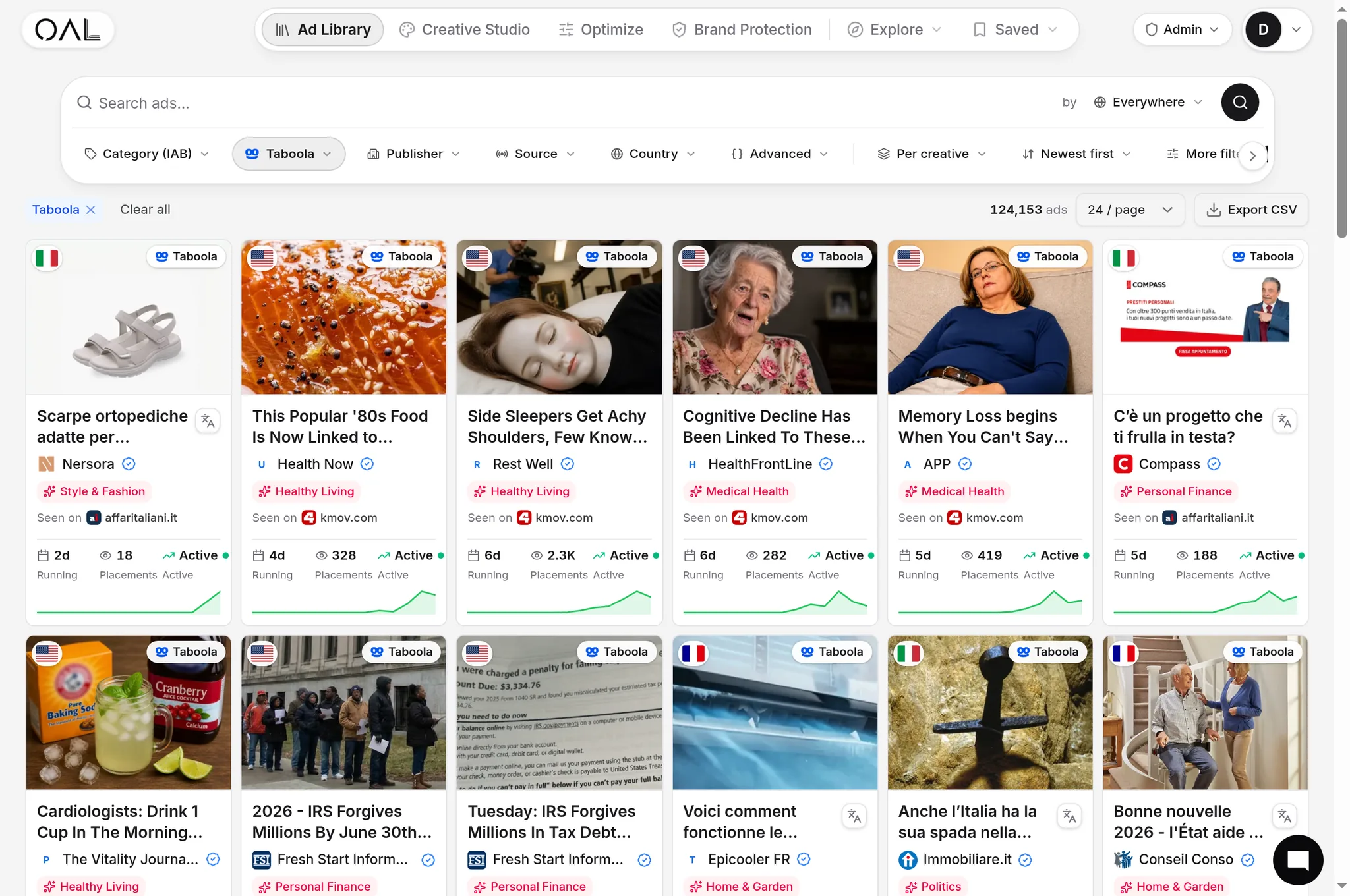
A mistura vertical mostra quais ofertas prosperam nesse formato. No índice do OpenAdLibrary de mais de 206.000 criativos ativos do Taboola (junho de 2026), as verticais classificadas maiores são saúde (11.982 criativos), finanças (8.200) e seguros (7.422) — categorias onde uma história ("o mecanismo por trás do produto", "a mudança de regra que afeta você") vende mais que uma ficha técnica.
Onde cada um se encaixa no seu funil#
A maneira sensata de manter ambas as plataformas é por estágio do funil, não um ou outro:
- Busca do Google = captura. Possua seus termos de marca e as palavras-chave comerciais de alta intenção que você pode pagar. Este é seu piso, e ele defende a receita que você já conquistou.
- Taboola = criação. Distribua conteúdo orientado por história para públicos frios em escala, alimente o meio do funil e gere buscas de marca que suas campanhas de busca então capturam.
- O remarketing conecta os dois. O tráfego nativo que leu seu advertorial mas não comprou é um público quente para busca, social e remarketing nativo.
Um padrão que compradores experientes observam: quando uma campanha nativa escala, as impressões de busca de marca no Google tendem a aumentar em dias. Se você rodar ambos, verá a assistência do nativo no seu relatório de termos de busca muito antes de um painel de último clique lhe dar crédito.
Medição: o último clique favorece o Google#
A atribuição merece seu próprio aviso. A busca do Google fica no final da jornada, então modelos de último clique dão a ela crédito pela demanda que outra coisa criou. O Taboola fica no início, então os mesmos modelos o subestimam sistematicamente. Se você avaliar um teste nativo puramente pelo ROAS de último clique nas primeiras duas semanas, quase sempre o matará — às vezes corretamente, frequentemente não. Observe o CPA combinado, o aumento de busca de marca e a taxa de novos clientes junto com os números reportados pela plataforma antes de decidir.
Escolha o Google Ads se…#
- Seus compradores já buscam pelo problema que você resolve, e os CPCs são acessíveis nas suas margens.
- Você precisa de conversões esta semana, não após uma fase de teste criativo.
- Seus recursos criativos são limitados — a busca exige trabalho com palavras-chave, não um fluxo constante de novas imagens e advertoriais.
- Você vende contra intenção de comparação explícita: cotações, preços, "melhor X para Y".
Escolha o Taboola se…#
- A busca pelos seus termos está esgotada ou cara demais e você precisa de uma nova fonte de escala.
- Sua oferta se beneficia de explicação ou história — saúde, produtos para casa, consultoria financeira, ecommerce de descoberta — em vez de comparação de especificações.
- Você pode produzir e testar criativos em volume e construir funis de pre-lander para tráfego frio.
- Você mede por CPA e LTV com alguma paciência, não por ROAS na mesma sessão.
O playbook de sequenciamento se você rodar ambos#
- Garanta a captura primeiro. Termos de marca e busca não-marca comprovadamente lucrativa. Nunca financie tráfego frio enquanto deixa buscas quentes para concorrentes.
- Pesquise o lado nativo antes de gastar. Estude o que já roda na sua categoria no Taboola — quais anunciantes, quais ângulos e quais anúncios sobreviveram por semanas. A longevidade do anúncio é o proxy público mais próximo de "isso é lucrativo". Você pode navegar no corpus ativo por anunciante, vertical e geolocalização com a ferramenta Taboola do OpenAdLibrary.
- Construa o funil para tráfego frio. Um pre-lander de advertorial ou listagem, depois a oferta. Enviar cliques do Taboola para uma landing page otimizada para busca é a maneira mais comum de concluir, erroneamente, que "o Taboola não funciona".
- Lance com um lote de criativos, não um criativo. Múltiplos ângulos e miniaturas; espere que o vencedor o surpreenda e que a maioria do lote perca.
- Leia os efeitos cross-channel. Volume de busca de marca, tráfego direto, crescimento do pool de remarketing — a contribuição do nativo aparece lá primeiro.
Se você está pesando o Taboola contra outra rede nativa em vez de contra a busca, veja Taboola vs Outbrain. E quem anuncia no Taboola é a maneira mais rápida de verificar se negócios como o seu já estão comprometidos com a plataforma — o sinal único mais forte de que sua categoria pode funcionar lá.