English
 Español
 Português (Brasil)
 Français
 Deutsch
 Italiano
 Polski
 Svenska
 Türkçe
 Русский
 日本語
日本語 한국어
한국어 简体中文
简体中文 Tiếng Việt
 Bahasa Indonesia
 繁體中文
繁體中文 Čeština
 Dansk
Dansk Norsk (bokmål)
 Suomi
Suomi Ελληνικά
 Română
 Magyar
 Українська
 ไทย
ไทย हिन्दी
 العربية
 עברית
עבריתTaboola vs Google Display Network: Waar Moet het Budget Naartoe?
GDN is de breedste goedkope-reikwijdte-machine in adverteren; Taboola is een native feed die advertorial-funnels ondersteunt die banners niet kunnen. Een praktijkgericht kader — ondersteund door live advertentiedata — om te beslissen welke taak je aan elk kanaal geeft.


Taboola en het Google Display Network lossen verschillende problemen op, en de budgetverdeling volgt daaruit. GDN is de breedste goedkope-reikwijdte-machine in adverteren — banner- en responsive display-advertenties op miljoenen AdSense-sites en -apps, geautomatiseerd door Google's biedingen en aangesloten op de Google Ads-stack die je al gebruikt. Taboola is een native netwerk: afbeelding-en-koptekst-advertenties in redactionele feeds, aangeklikt door lezers die jouw koptekst kozen, die advertorial-achtige funnels voeden die banners niet kunnen ondersteunen. Direct response met een verhaal te vertellen — gezondheid, financiën, verzekeringen, considered ecommerce — converteert koude traffic over het algemeen beter op Taboola; retargeting, brede awareness en campagnes die leven of sterven op Google's automatisering horen thuis op GDN. De meeste adverteerders die beide goed testen, financieren uiteindelijk beide, voor verschillende taken.
Wat elk kanaal daadwerkelijk is#
Het Google Display Network is display advertising op maximale breedte: je advertenties worden weergegeven als banners, responsive display units en native-styled plaatsingen op de miljoenen websites en apps die met Google monetariseren, plus Google-surfaces zoals Gmail en YouTube. Je koopt het binnen Google Ads, target het met Google's audience- en contextuele machinery, en laat steeds vaker Google's geautomatiseerde biedingen — of Performance Max, dat display bundelt naast elk ander Google-surface — beslissen waar de impressies terechtkomen. Reikwijdte is het product; geen ander netwerk evenaart GDN's voetafdruk. (Voor de basisprincipes van het formaat, zie ons glossarium-item over display advertising.)
Taboola is de grootste van de content-aanbevelingsnetwerken. De eenheid is een thumbnail-afbeelding plus koptekst geplaatst in "aanbevolen voor jou"-feeds onder en in artikelen op zijn gecontracteerde uitgeversnetwerk. De klik is een contentklik: de lezer las een artikel en koos jouw koptekst als het volgende om te lezen. Dat ene gedragsverschil — kiezen om te lezen versus onderbroken worden door een banner — bepaalt alles over hoe het kanaal presteert. De volledige mechanica staan in onze gids over hoe Taboola-advertenties werken.
Head-to-head vergelijking#
| Taboola | Google Display Network | |
|---|---|---|
| Advertentieformaat | Afbeelding + koptekst in redactionele feeds | Banners, responsive display, native-styled units |
| Reikwijdte | Duizenden gecontracteerde uitgevers | Miljoenen AdSense-sites en -apps + Google-surfaces |
| Klikpsychologie | Lezer kiest jouw koptekst als content | Advertentie onderbreekt de pagina; bannerblindheid is de vijand |
| Targeting | Geo/apparaat/OS, uitgeverscontext, retargeting, platform-audiences | In-market, affinity, custom audiences, keywords/onderwerpen/plaatsingen, remarketing |
| Bieden | CPC met SmartBid-optimalisatie | Smart bidding (tCPA, tROAS, max conversions), CPC/CPM |
| Funnel-fit | Advertorials, pre-landers, story-driven DR | Retargeting, awareness, directe aanbiedingen met bestaande intentie |
| Automatisering | Matig — hands-on buying wordt beloond | Extreem — Performance Max is een black box by design |
| Transparantie | Geen officiële advertentiebibliotheek | Google Ads Transparency Center (creatives, niet plaatsingen) |
Aandacht en intentie: de feed-klik versus de banner-impressie#
Banner display draagt al twee decennia dezelfde last: gebruikers hebben zichzelf getraind er niet naar te kijken. Adverteerders compenseren met volume — GDN-impressies zijn buitengewoon goedkoop — en met retargeting, waar de advertentie relevant is omdat de gebruiker het merk al kent. Waar GDN schittert, is precies daar: voor de ogen blijven van mensen die je site bezochten, en enorme goedkope reikwijdte kopen wanneer awareness zelf het doel is.
De native feed-klik is een ander object. Een lezer die op een Taboola-koptekst tikt, heeft gekozen dat verhaal te lezen, daarom verdraagt native traffic — sterker nog, beloont het — een long-form advertorial tussen de advertentie en het aanbod. De klassieke native funnel (feed-ad → pre-lander → aanbodpagina) converteert koude audiences die zouden afhaken bij hetzelfde aanbod achter een bannerklik. Deze funnel werkt structureel niet op GDN: een bannerklik draagt geen leesintentie, dus een artikel tussen klik en aanbod plaatsen voegt meestal gewoon een afhaakstap toe.
Dat is de schoonste budgetheuristiek in deze vergelijking. Als je aanbod uitleg nodig heeft — een mechanisme, een verhaal, een eligibility pitch — is de native feed de natuurlijke habitat, en onze bibliotheek met live native advertising voorbeelden laat zien hoe adverteerders die pitches daadwerkelijk structureren. Als je aanbod herinnerd moet worden — je wilt aanwezig zijn wanneer een al warme gebruiker klaar is — is GDN-retargeting de goedkoopste manier om dat op schaal te doen.
Targeting en automatisering#
GDN's targeting is Google's data. In-market en affinity audiences gebouwd uit zoek- en browsegedrag, custom audiences gevuld met keywords en URL's, demografische lagen, contextuele targeting op keyword, onderwerp of handmatig gekozen plaatsing, en remarketing lists — alles stuurbaar door smart bidding naar een target CPA of ROAS. De richting is automatisering: Performance Max neemt budget en creative assets en verdeelt ze over display, search, YouTube, Gmail en Maps met beperkte per-kanaal controle. Als het werkt, werkt het zonder operator-inspanning; als het niet werkt, is diagnose moeilijk omdat plaatsingsniveau-zichtbaarheid bewust grof is.
Taboola's targeting is context en platformdata. Geo, apparaat, OS, uitgeversniveau-context, Taboola's eigen audience-segmenten en je retargeting lists. SmartBid automatiseert biedaanpassingen richting conversies, maar het platform beloont nog steeds handmatig vakmanschap: per-site bid laddering, uitgevers-whitelists en -blacklists, day-parting, agressieve creative rotatie. Er is geen Taboola-equivalent van Performance Max — jij bent de automatisering.
De praktische conclusie: GDN's plafond met een vaardige operator en GDN's vloer met een luie liggen dichter bij elkaar, omdat Google's machine het meeste werk doet. Taboola's spreiding is groter — vaardige buyers halen resultaten die casual buyers nooit zien, daarom heeft het netwerk een reputatie voor het verbranden van toeristen en het belonen van professionals.
Creative vereisten#
GDN-creative is asset-gebaseerd: je levert kopteksten, beschrijvingen, afbeeldingen en logo's, en responsive display units assembleren zichzelf per plaatsing. Testen betekent assets wisselen en Google ze laten mixen; het vakmanschapsplafond is reëel maar laag. Vermoeidheid wordt grotendeels beheerd door de rotatie van het systeem.
Taboola-creative is het hele spel. Eén afbeelding, één koptekst, concurrerend in een feed tegen professionele direct-response copy — het verschil tussen een verliezende en winnende campagne is meestal de angle, niet de targeting. Winnende buyers onderhouden een koptekst-pijplijn, testen wekelijks angles en bestuderen wat spend over het netwerk volhoudt. Twee bronnen als je nieuw bent in die discipline: onze analyse van native ad koptekstformules en echte Taboola advertentievoorbeelden met teardowns van waarom elk werkt.
Deze asymmetrie beïnvloedt ook teamkosten. Een GDN-retargetingprogramma kan maandenlang winstgevend idle met occasionele asset-refreshes. Een Taboola-programma zonder doorlopende creative-investering vervalt — budgeteer voor iteratie, niet alleen media.
Kosten: hoe de twee kanalen prijzen#
Geen precieze cross-network cijfers overleven contact met de realiteit — kosten bewegen per geo, vertical, seizoensgebondenheid en je eigen funnel — dus kalibreer met het kwalitatieve beeld dat practitioners consistent melden:
- GDN-kliks zijn doorgaans de goedkoopste in mainstream advertising. Display CPC's lopen vaak op een fractie van search CPC's voor dezelfde adverteerder; brede awareness display-buys worden vaak per mille geprijsd tegen zeer lage CPM's. Klikkwaliteit is de trade-off: veel van het volume krijgt weinig aandacht.
- Taboola-kliks prijzen boven display, onder search. Media buyers melden vaak Tier-1 desktop CPC's van ongeveer $0,20 tot $0,90, met gereguleerde verticals daar boven en mobiel daar onder. De klik draagt leesintentie, daar betaal je de premie voor.
- De vergelijking die ertoe doet is CPA na de funnel. Goedkope GDN-kliks die afhaken kosten meer dan duurdere feed-kliks die een pre-lander lezen en converteren. Voer de berekening uit op kosten per gekwalificeerde actie, nooit per klik.
Ons artikel over native ads CPC benchmarks behandelt native klikprijzing dieper, en hoeveel native ads kosten loopt door volledige campagnebudgettering inclusief testreserves.
Transparantie en concurrentieonderzoek#
De twee kanalen verschillen scherp in hoe onderzoekbaar ze zijn. Google beheert het Google Ads Transparency Center, waarmee je de creatives van een geverifieerde adverteerder kunt opzoeken — nuttig, maar het toont je advertenties, niet plaatsingen, funnels of looptijd, dus je kunt niet zien waar het display-budget van een concurrent daadwerkelijk landt of wat er na de klik gebeurt.
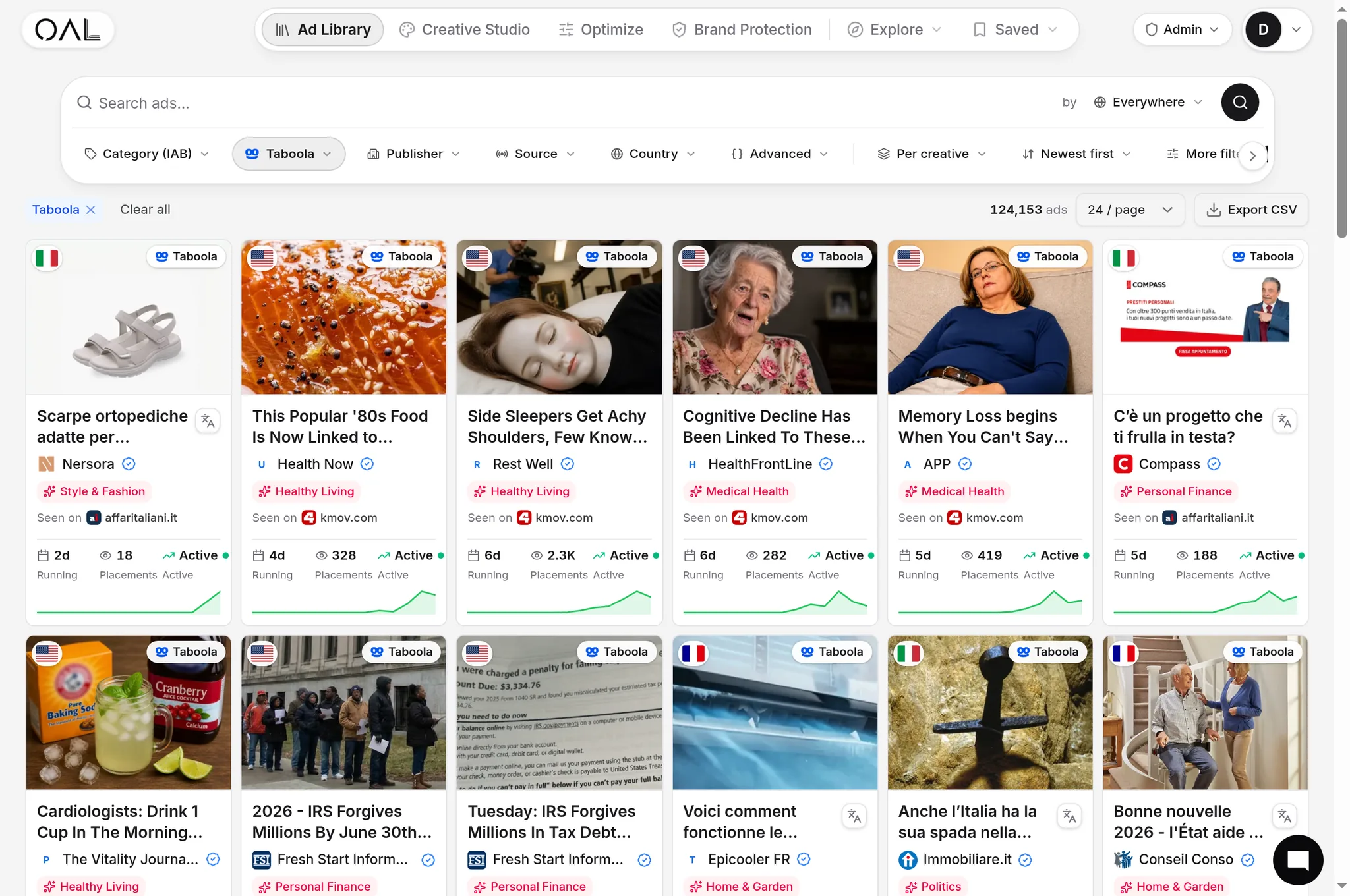
Taboola publiceert helemaal geen officiële bibliotheek. Onafhankelijke capture vult het gat: OpenAdLibrary's index volgt 206.000+ live Taboola-creatives (juni 2026) met de adverteerder achter elke advertentie, hoe lang deze al draait, de geo's en apparaten waarop deze is vastgelegd, en de getraceerde landingspagina achter de klik. Blader erdoor op /spy/taboola. Voor budgetverdeelbeslissingen is dit onevenredig nuttig op één specifieke manier: voordat je je aan de native kant verbindt, kun je verifiëren dat adverteerders met jouw exacte aanbodtype aanhoudende Taboola-spend draaien — en aanhoudende spend is het sterkste publieke signaal dat een kanaal betaalt. Niets vergelijkbaars bestaat om de GDN-prestaties van een concurrent te verifiëren.
Meting: automatisering's black box versus het hands-on grootboek#
Hoe je zult weten welk kanaal werkt, verschilt genoeg om de budgetbeslissing zelf te beïnvloeden.
GDN-meting erft de Google Ads-stack: conversietracking of GA4-imports, view-through conversions standaard meegeteld in display-rapportage, en smart bidding dat optimaliseert tegen welke conversiedefinitie je ook invoert. Twee gewoontes beschermen je. Ten eerste, scheid click-through van view-through conversions voordat je prestaties beoordeelt — display's gerapporteerde cijfers zijn mooier wanneer view-through is gemengd, aangezien veel "converters" toch zouden hebben gekocht na niets meer dan een impressie die ze nooit opmerkten. Ten tweede, in Performance Max, sta erop op de plaatsings- en kanaalbreakdowns die beschikbaar zijn in plaats van de topline — display-inventory binnen PMax kan budget opnemen tegen lage incrementele waarde terwijl search binnen dezelfde campagne het echte werk doet.
Taboola-meting is handmatiger en eerlijker standaard: CPC-prijzen betekent dat elke dollar mapt naar een klik die je kunt traceren, en de per-uitgever-rapportage van het platform toont precies welke sites conversies opleveren. Het werk ligt bij jou — voer conversies terug via pixel of server-side postback, en snoei. Verwacht een lange staart: een groot deel van de uitgevers zal spenden zonder te converteren, en de discipline om ze wekelijks te verwijderen is waar Taboola-accounts worden gewonnen. Het voordeel van die arbeid is diagnoseerbaarheid; wanneer prestaties bewegen, kun je meestal zien welke uitgever, geo of creative bewoog, zonder gemodelleerde attributie in de weg.
Attributievensters verdienen een laatste woord: native-kliks converteren met langere vertragingen dan retargeting-kliks, omdat de audience kouder is en vaak je merk voor het eerst ontmoet midden in een artikel. Beoordeel een Taboola-test op minstens een paar weken gerijpte conversies, niet eenzelfde-dag-dashboard — en houd GDN-retargeting aan de tegenovergestelde standaard, aangezien het intentie oogst die al bestond.
Veelgemaakte budgetverdelingsfouten#
- Taboola testen met GDN-creative. Responsive display assets gerecycled als native thumbnails verliezen bijna altijd van speciaal geschreven koptekst-afbeelding-paren. Budgeteer creative werk voor de native test of sla de test over.
- Native-kliks naar een display-landingspagina sturen. Een pagina gebouwd voor warme retargeting-traffic zal koude feed-kliks laten wegvloeien. De advertorial-stap is geen optionele decoratie; het is het mechanisme.
- Performance Max de vergelijking laten cannibaliseren. Als PMax naast een display-test draait, stroomt budget ondoorzichtig tussen surfaces en kun je niet isoleren wat display-reikwijdte bijdroeg. Structureer schone experimenten voordat je kanaalconclusies trekt.
- CPC's vergelijken in plaats van CPA's. GDN wint elke CPC-vergelijking en verliest veel CPA-vergelijkingen op koude traffic. De klikprijzen meten verschillende producten.
- De winnaar opschalen en de infrastructuur uithongeren. Retargeting-reikwijdte op GDN en koude-traffic-acquisitie op Taboola zijn complementen. Buyers die het hele budget verplaatsen naar wat de vorige maand beter presteerde, ontdekken meestal duur waarom beide bestonden.
Waar moet het budget naartoe?#
Een beslissingskader dat standhoudt in de praktijk:
- Koude-traffic direct response met een verhaal (gezondheid, financiën, verzekeringen, home services, considered ecommerce): leid met Taboola. De advertorial-funnel is de native kracht van het kanaal, en de verticale data ondersteunt het — gezondheid (11.982 live creatives), financiën (8.200) en verzekeringen (7.422) zijn Taboola's drie grootste geclassificeerde verticals in onze juni 2026-index. Daar zit de bewezen, vernieuwende spend.
- Retargeting van warme audiences: leid met GDN. Goedkoopste betrouwbare frequentie tegen mensen die je al kennen; native retargeting bestaat maar verslaat het zelden op kosten.
- Brede awareness met een beperkt budget: GDN (of zijn video-neven). Feed-kliks zijn verspild aan impressions-first doelen.
- Search-constrained scaling: als search alle bestaande vraag vangt en je vraag moet creëren, is dat een native taak — banners creëren zelden nieuwe intentie, kopteksten kunnen dat wel.
- Teamcapaciteit: niemand om wekelijks creative te schrijven en te roteren? GDN's automatisering degradeert eleganter dan een onbeheerd Taboola-account. Omgekeerd wordt een sterk creatief team onderbenut op responsive display assets.
Voor een typische DTC of lead-gen adverteerder die al search en social verzadigt, is een veelvoorkomend patroon GDN-retargeting als permanente infrastructuur (bescheiden, stabiel budget) plus Taboola als de groeiexperiment (testbudget met een echte creative-pijplijn erachter, alleen opgeschaald op bewezen CPA). Adverteerders in Taboola's dominante verticals draaien dat vaak in de tijd om — de advertorial-funnel wordt de primaire koude-traffic-engine en display krimpt tot een retargeting-utility — terwijl visuele-impulse ecommerce-merken vaak het tegenovergestelde concluderen en native als een kleine satelliet houden. Beide eindpunten zijn rationeel; ze reflecteren het aanbod, niet de abstracte kwaliteit van de kanalen.
Ze houden op rivalen te zijn op het moment dat je ze verschillende taken toewijst — de fout is om welk kanaal dan ook te vragen het werk van de ander te doen.