
 English
 Español
 Português (Brasil)
 Français
 Deutsch
 Italiano
 Polski
 Svenska
 Türkçe
 Русский
 日本語
日本語 한국어
한국어 简体中文
简体中文 Tiếng Việt
 Bahasa Indonesia
 繁體中文
繁體中文 Čeština
 Dansk
Dansk Norsk (bokmål)
 Suomi
Suomi Ελληνικά
 Română
 Magyar
 Українська
 ไทย
ไทย हिन्दी
 العربية
 עברית
עבריתOutbrain Campagne-optimalisatie: Een praktijkgerichte handleiding
Een onafhankelijke handleiding voor Outbrain optimalisatie: platform splits, headline tests, sectie-opschoning en conversiebiedingen — geïllustreerd met live, langlopende Outbrain creaties.


Outbrain campagne-optimalisatie draait op vier hefbomen: campagnestructuur gesplitst per platform en geo, continue headline tests, uitgeverssectie-opschoning, en een biedstrategie die evolueert van handmatige CPC naar conversie-gebaseerde automatisering naarmate data zich opstapelt. De handleiding lijkt op die van Taboola, maar het inventory is anders: Outbrain — gefuseerd met Teads in 2025 en nu opererend onder de naam Teads — neigt naar premium redactionele placements, en het publiek beloont een meer ingetogen creatieve toon. Deze gids behandelt de hefbomen in volgorde van impact, met live voorbeelden uit de 108.000+ Outbrain creaties in de index van OpenAdLibrary (juli 2026).
Ken het inventory dat je optimaliseert#
Outbrain bouwde zijn netwerk op langdurige relaties met premium uitgevers, en zelfs na de fusie weerspiegelt de aankoopervaring die erfenis. De mechanica van formaten, targeting en accountinstellingen worden behandeld in hoe Outbrain werkt, en het corporate achtergrondverhaal in de Outbrain-Teads fusie uitleg. Drie eigenschappen van het inventory bepalen alles hieronder:
- Redactionele context. Lezers arriveren midden in een artikel, in een ontspannen modus. Nieuwsgierigheid en autoriteit werken hier vaak beter dan harde verkoopdruk, meer dan op mid-tier native netwerken.
- Prijsband. Premium placements hebben een bijpassende prijs; de kostenvergelijking met de belangrijkste rivaal staat in Taboola vs Outbrain.
- Competitieve verticals. In de geclassificeerde Outbrain corpus van onze index leiden verzekeringen (4.345 live creaties), financiën (3.990) en gezondheid (3.102) — gereguleerde, hoog-LTV categorieën waar creatieve differentiatie vaker wint dan brute biedkracht.
Structuur: splits platforms en geo's voordat je uitgeeft#
De discipline is identiek aan elk native netwerk, en overslaan kost hetzelfde:
- Één platform per campagne. Desktop, smartphone en tablet hebben verschillende CPC's, CTR's en conversiegedrag. Een gemengde campagne levert rapporten op waar je niets mee kunt.
- Geo-groepering op tier en taal. Laat nooit goedkope kliks uit lage-kosten geo's een Tier-1 test uithongeren. Eén campagne per prijsband, en splits elke geo die het budget domineert.
- Één funnel en één conversiedoel per campagne. Definieer het conversie-evenement voor de lancering, en geef de campagne één primair evenement om naartoe te optimaliseren.
Een praktische opmerking: de consolefuncties, biedcontroles en campagne-instellingen van Outbrain zijn blijven evolueren tijdens de fusieperiode. Verifieer structurele zaken altijd aan de hand van de officiële adverteerdersdocumentatie in plaats van screenshots in oude blogposts.
Headlines dragen Outbrain creaties#
Op feed-stijl placements doet de headline het meeste overtuigingswerk, en het platform van Outbrain is al lang gebouwd rond het testen van meerdere headline varianten en het verschuiven van delivery naar de beste presteerders. Praktijken die standhouden:
- Draai vier tot acht actieve varianten verdeeld over twee of drie verschillende invalshoeken per campagne. Het aantal varianten is hier belangrijker dan op beeldgedreven kanalen.
- Haal bewezen patronen op in plaats van vanaf nul te bedenken. De headline structuren die terugkeren in winnende native advertenties worden uit elkaar gehaald in 12 native headline formules.
- Sluit aan bij de toon van de placement. De langlopers in onze Outbrain corpus zijn kalm, specifiek en nieuwsgierigheid-gedreven in plaats van schreeuwerig. Een beauty advertorial van The Skin Mag ("Moisturizer Won't Tighten Skin! Use This Household Item Instead") houdt 30 dagen stand; corporate-content stukken van SPECTRA by MHI over methaan en afval-naar-energie draaien 34 dagen. Verschillende adverteerders, dezelfde ingetogenheid.
- Roteer voor verval. Creatieve vermoeidheid arriveert op Outbrain precies zoals overal: CTR zakt bij constante bids. Vervang vermoeide varianten door nieuwe uitvoeringen van de invalshoek die zijn waarde bewees.
Beoordeel elke variant op downstream conversie, niet alleen op CTR — een headline die de verkeerde lezer aantrekt is een belasting, geen winst.
Uitgever- en sectie-optimalisatie#
Outbrain rapporteert prestaties per uitgever en sectie, en de spreiding is groot: een paar secties zullen stilletjes budget verbruiken zonder te converteren terwijl andere de campagne dragen. De loop:
- Bekijk het per-sectie rapport wekelijks zodra uitgaven het rechtvaardigen.
- Blokkeer secties die een veelvoud van je target CPA hebben uitgegeven zonder resultaat. Twee tot drie keer het target is de gebruikelijke vuistregel; houd vast aan de steekproefgrootte voordat je handelt.
- Bied omlaag op het marginale, bied omhoog op het bewezen. Waar per-sectie biedaanpassing beschikbaar is, gebruik die voordat je naar blokkades grijpt — blokkades zijn bot en permanent totdat je ze ongedaan maakt.
- Bescherm ontdekking. Te vroeg te veel blokkeren doodt het bereik. Snoei op basis van bewijs, niet op gevoel, en houd een deel van de delivery beschikbaar om nieuwe secties te verkennen.
Bieden: handmatige CPC, daarna de sleutels overdragen#
Start met handmatige CPC in de buurt van het midden van de realistische bandbreedte voor jouw vertical. Er bestaat geen officiële tarievenlijst; op premium native inventory melden mediabuyers vaak Tier-1 desktop CPC's ruwweg in het bereik van $0,30 tot $1,00, met mobiel lager — beschouw dit strikt als een startpunt, want vertical en geo bepalen het echte getal.
Outbrain biedt conversie-gerichte geautomatiseerd bieden. Dezelfde regel geldt als op elk netwerk: automatisering is alleen zo goed als het conversievolume dat het voedt. Blijf handmatig terwijl je secties en creaties opschoont; geef een campagne over aan geautomatiseerd bieden zodra conversies consistent binnenkomen; verwacht een kalibratiedip; en evalueer over weken. Houd handmatige biedaanpassingen klein — stappen van 10–15% met ademruimte ertussen.
Voer de bidder schone conversiedata#
Alles in de vorige sectie gaat ervan uit dat het conversiesignaal zelf betrouwbaar is, en dat is waar campagnes stilletjes misgaan:
- Optimaliseer naar een evenement met volume. Als aankopen zeldzaam zijn, richt de campagne dan op een gekwalificeerd upstream evenement — een lead, een geboekte afspraak, een toevoegen-aan-winkelwagen — en houd de aankoop-economie in je eigen spreadsheet. Een geautomatiseerde bidder die een handvol conversies per week krijgt, heeft niets om van te leren en zal zich daarnaar gedragen.
- Één primaire conversie per campagne. Meerdere geoptimaliseerde evenementen op één campagne stapelen vervaagt het signaal en maakt de beslissingen van de bidder onmogelijk te auditen.
- Instrumenteer het midden van de funnel. Ad CTR bewijst de haak; pre-lander doorklik bewijst het verhaal; conversie bewijst het aanbod. Wanneer de prestaties verslappen, vertelt die driedeling welk van de drie taken je moet repareren — en bespaart je het herschrijven van headlines wanneer het echte lek op de landingspagina zit.
Verifieer dat de pixel of postback vuurt voordat je serieus uitgeeft. Een dag testconversies is goedkoper dan twee weken optimalisatiebeslissingen gebaseerd op een kapot signaal.
Live Outbrain advertenties die de moeite waard zijn om te bestuderen#
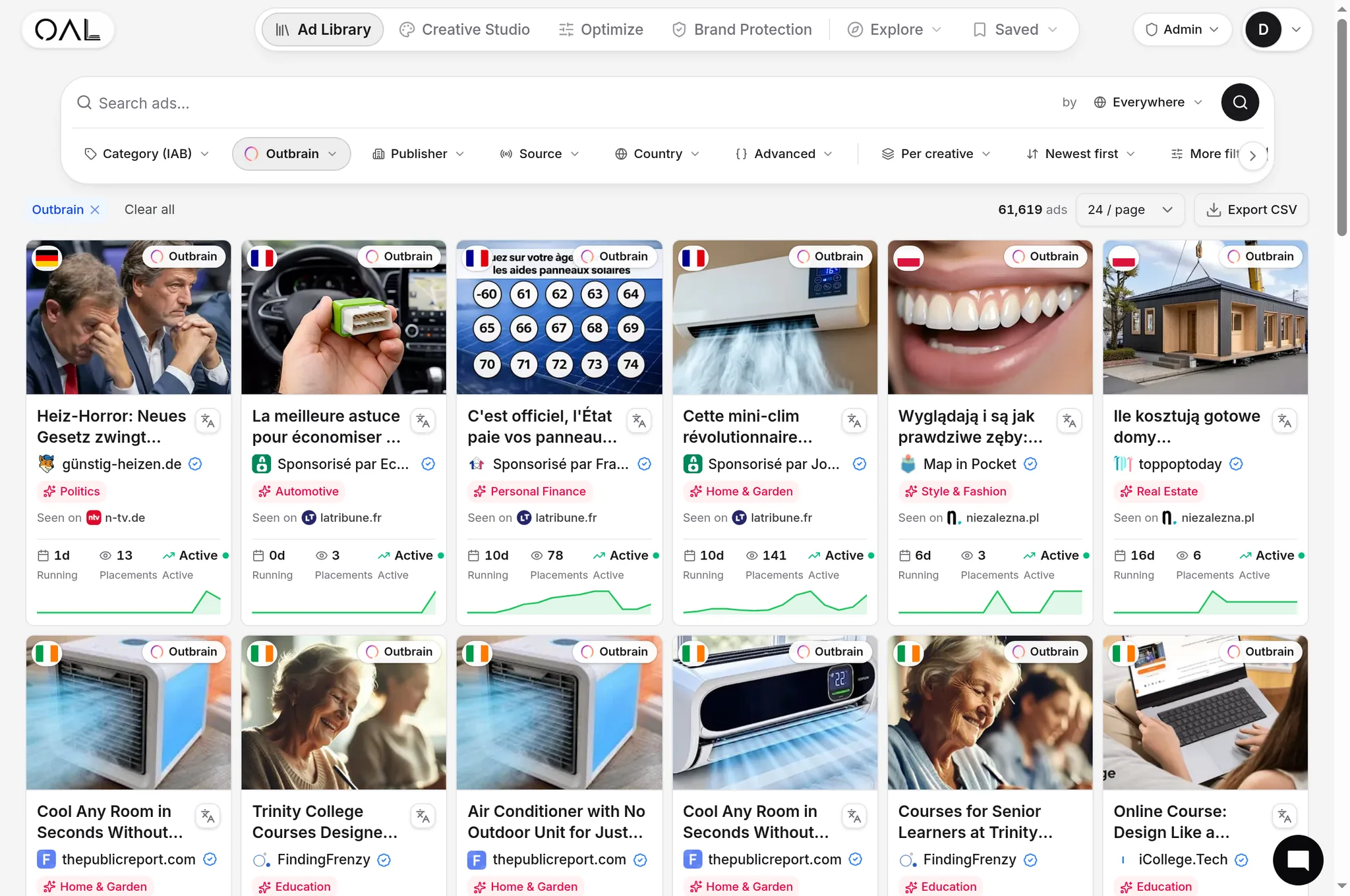
Langdurigheid is het enige publieke prestatie-signaal op een netwerk zonder officiële advertentiebibliotheek — een adverteerder die een maand lang blijft betalen per klik vertelt je iets. De logica wordt uitgelegd in waarom ad-langdurigheid het winnende signaal is. Een voorbeeld van wat er momenteel overleeft op Outbrain, uit de index:
| Adverteerder | Invalshoek | Dagen actief |
|---|---|---|
| Novelodge | Verhaal-stijl nieuwsgierigheidscontent ("Man Helps Hitchhiking Girl…") | 35 |
| SPECTRA by MHI | Corporate branded content over klimaattech | 34 |
| The Skin Mag | Beauty advertorial, household-item haak | 30 |
| Tech-tips lead gen | "Turn off ads (Android users)" utility haak | 26 |
| Health Weekly | Cardioloog autoriteitsfiguur gezondheidsinvalshoek | 22 |
De mix is de les: branded content, affiliate advertorials en utility lead-gen houden allemaal maandenlange runs vol wanneer invalshoek, funnel en sectie-targeting op één lijn zitten. Blader door de volledige corpus in de Outbrain advertentiebibliotheek, of haal de live advertenties, landingspagina's en looptijden van een specifieke concurrent op met OpenAdLibrary's Outbrain spy tool — de onderzoeksworkflow staat beschreven in de Outbrain ad spy gids.
Een cadans die zich opstapelt#
- Week één: dagelijkse controles, minimale actie. Laat data zich opstapelen.
- Wekelijks: sectierapport → blokkades en aanpassingen; creatieve review → schrap vermoeide varianten, plan nieuwe uitvoeringen; kleine biedduwtjes waar de marge dat zegt.
- Maandelijks: concurrentiescan — nieuwe invalshoeken in jouw vertical, concurrentenfunnels, welke van je eigen advertenties de 30 dagen hebben overschreden.
- Per kwartaal: funnel audit. Als de ad CTR standhoudt maar conversie over campagnes heen zakt, leeft het probleem op de landingspagina, niet in de console.
Geen van deze stappen is op zichzelf slim. Samen uitgevoerd, zonder overgeslagen weken, maken ze het verschil tussen de adverteerders wiens advertenties in vijf dagen verdwijnen en degenen die een maand later nog zichtbaar zijn in de index.