English
 Español
 Português (Brasil)
 Français
 Deutsch
 Italiano
 Polski
 Svenska
 Türkçe
 Русский
 日本語
日本語 한국어
한국어 简体中文
简体中文 Tiếng Việt
 Bahasa Indonesia
 繁體中文
繁體中文 Čeština
 Dansk
Dansk Norsk (bokmål)
 Suomi
Suomi Ελληνικά
 Română
 Magyar
 Українська
 ไทย
ไทย हिन्दी
 العربية
 עברית
עבריתWerd Outbrain Teads? De Fusie Uitgelegd
Outbrain kocht Teads, nam vervolgens de naam en Nasdaq-ticker over, en onze live capture-data laat zien dat de Outbrain-engine nog steeds bijna al het volume bedient.

Als je onlangs naar "Outbrain" zocht en naar een Teads-pagina werd doorgestuurd, is je browser niet kapot. Outbrain en Teads zijn nu één bedrijf, en dat bedrijf heet Teads. De deal voegde twee van de grootste namen in native en outstream video op het open web samen, en liet een rommel achter van half bijgewerkte logo's, verouderde helpdocumenten en adserver-identifiers die nog steeds "Outbrain" zeggen. Dit is wat er daadwerkelijk gebeurde, in volgorde, en wat live vastgelegde inventory je vertelt over het netwerk zoals het er in 2026 voor staat.
Werd Outbrain Teads?#
Ja, met één nuance die het waard is om te begrijpen. Outbrain nam Teads over in een deal die op 3 februari 2025 werd afgerond, en het gecombineerde bedrijf behield de naam Teads. In juni 2025 hernoemde het moederbedrijf zichzelf van Outbrain Inc. naar Teads Holding Co. en wisselde het zijn Nasdaq-ticker van OB naar TEAD. Outbrain was de koper. Teads is het merk dat overbleef.
Dat is het enige feit dat de meeste mensen verkeerd om hebben. De overnemer nam de naam van het doelwit over. De Outbrain-schil schreef de cheque; het Teads-logo staat nog steeds op de deur.
De tijdlijn, in gewone taal#
Dit was niet één aankondiging. Het speelde zich af over ongeveer tien maanden, en elke fase betekende iets anders voor adverteerders en publishers.
| Datum | Gebeurtenis | Wat het betekende |
|---|---|---|
| Augustus 2024 | Fusie aangekondigd | Outbrain stemde in met de overname van Teads voor ongeveer $900M ($625M cash plus ~43,75M aandelen) |
| 3 februari 2025 | Deal afgerond | Gecombineerd bedrijf begon te opereren onder het Teads-merk |
| Begin 2025 | Integratie | ~200 banen wereldwijd geschrapt; producten en salesteams geconsolideerd |
| 10 juni 2025 | Corporate rebranding | Outbrain Inc. werd Teads Holding Co.; ticker veranderde van OB naar TEAD |
De strategische lezing is simpel. Outbrain bezat performance en de aanbevelingsfeed onder artikelen. Teads bezat outstream video en upper-funnel brandbudgetten op premium publishers. Voeg ze samen en je krijgt het "end-to-end" platform dat het bedrijf nu promoot, van awareness tot conversie, via web, mobiel en connected TV.
De merkkeuze vertelt je wie ze als klant willen. Teads had meer gewicht bij premium publishers en mediabuyers aan de brandkant. De aanbevelingswidget had, terecht of onterecht, een imagoprobleem. Outstream video niet. Dus de naam die bleef hangen was degene die deuren opent bij brandgeld.
Hoe groot is het gecombineerde bedrijf#
De gefuseerde entiteit is een van de grootste onafhankelijke spelers op het open internet, en die schaal is de hele pitch. Het "open internet" frame is een bewust tegenwicht voor Google, Meta en Amazon. Bij de afronding rapporteerde het bedrijf:
- Ongeveer $1,7 miljard aan gecombineerde ad-uitgaven voor FY24
- Bereik van ongeveer 2,2 miljard consumenten
- Meer dan 10.000 publishers en ongeveer 20.000 adverteerders
- Ongeveer 2.000 werknemers na de ~200-banen reductie
Voor waar dit staat in het bredere veld, onze gids voor native advertising brengt de volledige set supply-side en demand-side spelers in kaart.
Wat de live inventory daadwerkelijk laat zien#
Dit is het deel dat de persberichten overslaan. Op het open web doen de Outbrain-pijpleidingen nog steeds het zware werk, en de cijfers liggen niet dicht bij elkaar.
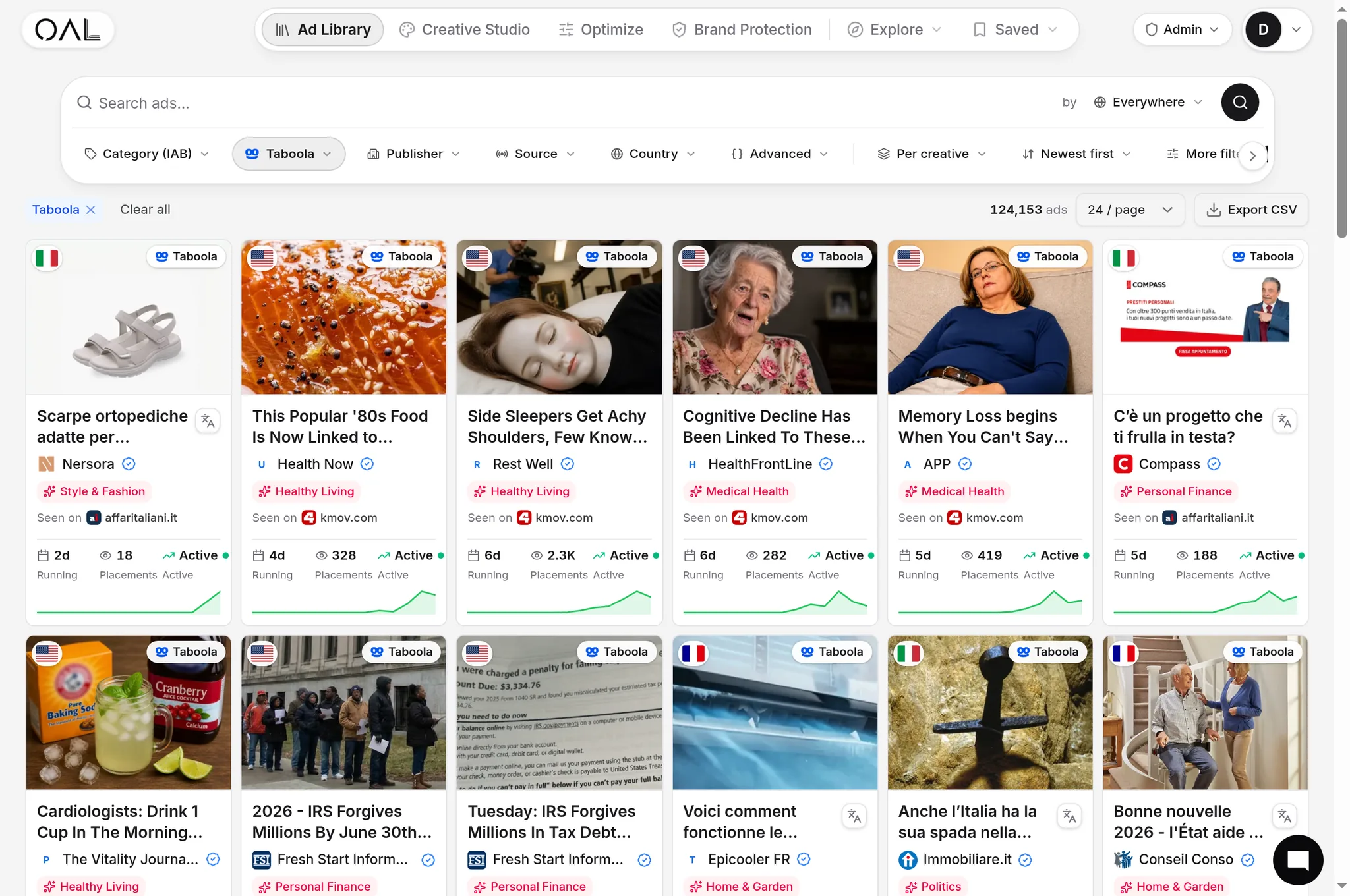
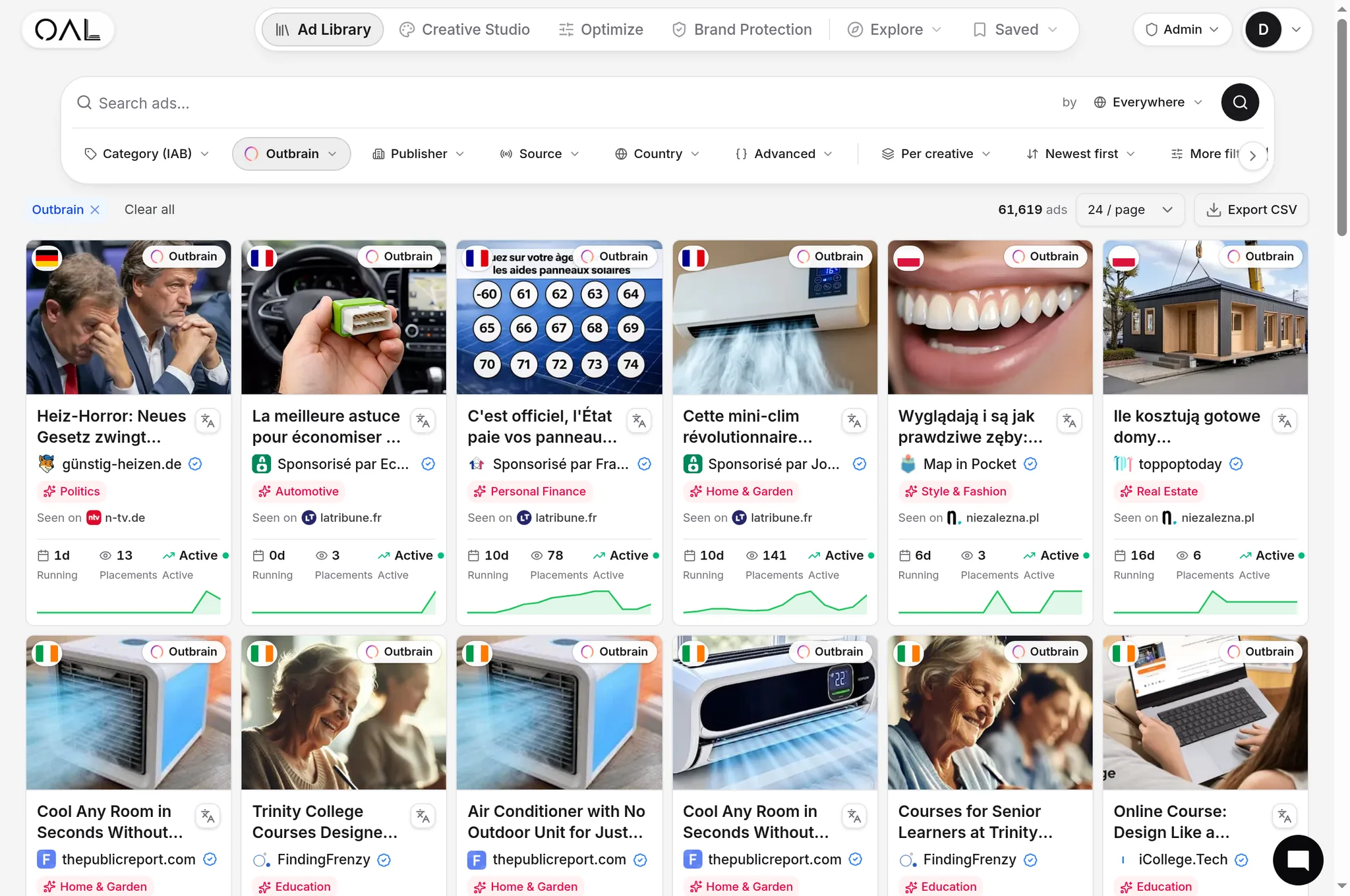
We leggen continu live publieke native ads vast. Vanaf juni 2026 bevat OpenAdLibrary 84.252 creatives getagd aan Outbrain, tegen slechts 55 getagd aan Teads. Dat verschil is geen meetfout. Het weerspiegelt wat het netwerk is: een aanbevelingsfeed-business in de kern, met outstream video er bovenop. De "Outbrain" supply-identiteit is nog steeds overal omdat daar het volume zit.
Wat erop draait, neigt precies naar waar je zou verwachten voor een feed-netwerk. De top verticals van Outbrain in onze index zijn Financiën (2.640 creatives), Verzekeringen (2.615), Gezondheid (2.016), Ecommerce (1.479) en Software (1.197). Dat is de klassieke native demand-stack: lead-gen aanbiedingen, supplementen-hoeken en clickbait curiosity gaps.

Die olijfolie-unit is het native genre in één frame: een vage autoriteitsfiguur, een persoonlijke-onthulling-hook en een payoff die wordt achtergehouden tot de klik. Hij liep al 16 dagen toen we hem vastlegden. Het Teads-gemerkte deel van hetzelfde netwerk ziet er compleet anders uit. De handvol creatives neigt naar Reizen (9), Ecommerce (6) en Voeding & Drank (1), de upper-funnel brand verticals die de fusie moest binnenbrengen. Andere inventory, andere koper, zelfde moederbedrijf.
Wat er daadwerkelijk veranderde voor adverteerders#
Als je Outbrain-campagnes draaide, was de dagelijkse impact veel kleiner dan de corporate krantenkoppen deden vermoeden. Dit was een consolidatie, geen stopzetting.
- Je campagnes bleven draaien. De Amplify-aanbevelingsfeed en het publisher-netwerk van Outbrain gingen rechtstreeks door de transitie heen. Uitgaven werden gemigreerd naar het gecombineerde platform in plaats van afgesloten.
- Het productoppervlak werd geünificeerd. Twee verkoopbewegingen werden één. Adverteerders kopen nu één platform dat de voorspellende performancetech van Outbrain combineert met de video- en branding-inventory van Teads.
- De branding veranderde. Dashboards, contracten en e-mailhandtekeningen van vertegenwoordigers gingen naar Teads. Onder de motorkap doet veel van de optimalisatie-engine van Outbrain nog steeds het werk.
- De pitch schoof op naar up-funnel. Waar Outbrain kliks en conversies verkocht, duwt het gecombineerde bedrijf harder op full-funnel resultaten, CTV en brand metrics. Dat is de erfenis van Teads die spreekt.
Voor een huidige operationele walkthrough behandelt onze gids over hoe Outbrain werkt in 2026 (nu onderdeel van Teads) de live formats en het aankoopproces, en onze uitleg over wat Teads is behandelt het gecombineerde platform van begin tot eind.
Wat het betekent voor publishers en brand safety#
Consolidatie snijdt aan twee kanten. Publishers krijgen één grotere demand-partner, wat monetisatie kan vereenvoudigen en fill rates kan verhogen. Maar minder onafhankelijke netwerken betekent ook minder plekken om je inkomsten te spreiden, en een grotere gecombineerde entiteit maakt brand safety governance belangrijker. Wanneer één platform aanbevelingswidgets, outstream video en CTV bedient op duizenden premium sites, verspreidt één beleidsbeslissing zich snel en breed.
Voor adverteerders is de keerzijde brand protection die de andere kant op werkt: opletten voor concurrenten en affiliates die kopieer-creatives of misleidende pre-landers pushen onder de vlag van het netwerk. Een gefuseerde supply chain verwijdert dat risico niet. Het concentreert het. En het agressieve uiteinde van de native demand is nergens heen gegaan, zoals deze vastgelegde financiële hoek laat zien.

Hoe je kunt zien met wie je vandaag echt te maken hebt#
Omdat de rebranding recent en ongelijkmatig is, lopen de identifiers achter op de branding. Dit is waar de meeste verouderde gidsen stuklopen, en waar live data geheugen verslaat.
- Adserver- en tracker-domeinen verwijzen nog steeds naar Outbrain, zelfs wanneer de aankoopinterface Teads zegt. De supply chain hernoemt zichzelf niet van de ene op de andere dag, en onze capture-aantallen bewijzen het.
- Creatives in het wild mixen nog steeds legacy Outbrain-widgetstyling met nieuwere Teads outstream-units.
- Landing-page redirects die via het netwerk worden gerouteerd, onthullen welke adverteerder daadwerkelijk achter een placement zit, ongeacht welk merk op het dashboard staat.
Dit is precies het gat dat een ad-transparantietool dicht. Bij OpenAdLibrary leggen we live publieke native ads vast over Outbrain, Teads, Taboola, MGID, Revcontent en meer, slaan we de echte creative-afbeelding op in volledige kwaliteit, classificeren we de ad-tech supply chain achter elke placement en volgen we de klik door naar de landing page van de adverteerder, allemaal zonder op live ads te klikken. Het resultaat is actuele grondwaarheid: wie adverteert, onder welke netwerkidentiteit, en hoe lang elke creative al draait. Over het hele platform komt dat neer op 589.036 creatives, 25.933 adverteerders en meer dan 5,4 miljoen ad-observaties vanaf juni 2026.

Die Peugeot-unit is het zeldzamere type op dit netwerk: een bekende merknaam, schone creative, duidelijk gesponsord, 16 dagen in zijn run. Het is het soort upper-funnel demand waar de Teads-kant van het huis voor gebouwd is, zittend in dezelfde supply als de buikvet-advertentie hierboven.
Hoe lang draaien deze advertenties daadwerkelijk#
Lange levensduur is de schoonste proxy voor een winnaar, omdat niemand blijft betalen om een creative te serveren die geld verliest. Onze index beslaat momenteel tot ongeveer 28 dagen aan continue observatie per creative, en de ads die die limiet halen vertellen je wat het netwerk beloont.
Op Outbrain specifiek behoren de 28-daagse overlevers in onze data tot SmartAsset's "Ask a Pro: How Can I Avoid Paying Taxes on IRA Withdrawals?" (Financiën), Combat Siege's "The most realistic game 2025. If you own a mouse, play it for 1 minute" (Gaming) en een Cleverst-pets-hoek over wat de likjes van je hond echt betekenen. Curiosity-gap financiën, mobiele gaming en huisdierentrivia, allemaal bewezen genoeg om wekenlang te blijven kopen.

Eén kanttekening die duidelijk gesteld moet worden: 28 dagen is de huidige spanwijdte van ons continue observatievenster, niet de levensduur van de campagne. De industrie-mythe over "90-day winners" bestaat, maar het is niet onze meting. Wat we kunnen verifiëren is dat deze specifieke creatives minstens vier weken achter elkaar bleven draaien, wat een sterk signaal is in een markt waar de meeste native creatives binnen dagen uitbranden.
Hoe het gefuseerde netwerk zich verhoudt tot zijn concurrenten#
Teads (het gefuseerde bedrijf) is niet de enige speler in native. Als je je mediamix opnieuw beoordeelt na de consolidatie, helpt het om het netwerk tegen het veld af te zetten:
- Taboola is het grootste standalone aanbevelingsnetwerk en de aartsrivaal van Outbrain. De fusie laat Taboola waarschijnlijk over als de laatste pure-play reus van het feed-model.
- MGID concurreert op performance en internationaal bereik, vaak tegen lagere instapkosten.
- Revcontent speelt in op publisher-kwaliteit en direct-deal flexibiliteit voor performance-buyers.
De eerlijke conclusie: de fusie haalde een van de twee uitwisselbare aanbevelingsreuzen van de shortlist van de koper en verving het door een breder, video-zwaar, brand-vriendelijk platform. Of dat een upgrade is, hangt volledig af van je uitgaven. Als ze naar performance neigen, koop je de oude Outbrain-engine. Als ze naar branding en CTV neigen, koop je wat Teads aan tafel bracht.
De bottom line#
Outbrain werd Teads, met een asterisk. Outbrain kocht Teads, nam vervolgens de naam, de ticker en steeds meer de marktpositionering over. De advertentiemachinerie die je kende als Outbrain draait nog steeds, nu binnen een groter bedrijf dat rechtstreeks gericht is op brand- en videobudgetten op het open internet. En onze capture-aantallen (84.252 Outbrain creatives versus 55 Teads) maken de praktische realiteit duidelijk: op het open web is de Outbrain-engine nog steeds waar het volume zit.
De schoonste manier om dit te verifiëren is niet een persbericht of een jaaroud blogbericht. Het is kijken naar wat het netwerk nu serveert. Je kunt de live inventory van het netwerk bekijken op onze Outbrain ad spy pagina, en dezelfde data voedt Creative Studio, Optimize, Copy DNA en onze API en MCP voor teams die het programmatisch willen.
Start gratis en bekijk live Outbrain- en Teads-inventory, traceer elke advertentie naar de echte adverteerder en landing page, en zie welke creatives daadwerkelijk winnen. Geen creditcard nodig voor je eerste 200 ads.