English
 Español
 Português (Brasil)
 Français
 Deutsch
 Nederlands
 Polski
 Svenska
 Türkçe
 Русский
 日本語
日本語 한국어
한국어 简体中文
简体中文 Tiếng Việt
 Bahasa Indonesia
 繁體中文
繁體中文 Čeština
 Dansk
Dansk Norsk (bokmål)
 Suomi
Suomi Ελληνικά
 Română
 Magyar
 Українська
 ไทย
ไทย हिन्दी
 العربية
 עברית
עבריתMGID vs Taboola: Quale Rete Nativa Vince per il Tuo Budget?
MGID ti permette di testare da $100; Taboola ha realisticamente bisogno di ~$300/giorno per superare la sua fase di apprendimento, e il nostro indice di cattura mostra che Taboola esegue tre volte i creative di MGID.

MGID e Taboola eseguono lo stesso tipo di annuncio: il widget "consigliato per te" fissato in fondo a un articolo di notizie. È qui che finisce la somiglianza. Taboola è la rete premium e brand-safe con un inventario di publisher che la maggior parte degli affiliate non toccherà mai. MGID è più economica, più lasca e costruita per gli acquirenti performance che vogliono testare un'angolazione senza bruciare prima il budget di un mese. Sceglierne una non riguarda quale sia "migliore". Riguarda quale corrisponde al tuo budget, alla tua offerta e alle geo che vuoi effettivamente acquistare.
Questo confronto si basa su tre cose: costi d'ingresso reali, copertura geografica osservata e il mix di advertiser che ciascuna rete ospita effettivamente nel nostro indice. Catturiamo annunci nativi live tutto il giorno, quindi invece di ripetere i deck dei vendor, posso mostrarti cosa sta effettivamente girando. Se vuoi prima il quadro completo, il nostro pilastro sulle migliori reti di annunci nativi nel 2026 classifica la categoria per volume reale di annunci.
MGID vs Taboola a colpo d'occhio#
MGID è la porta d'ingresso più economica. Un deposito minimo di $100 ti dà una campagna live. Il self-serve di Taboola tecnicamente si apre a cifre più basse, ma realisticamente hai bisogno di circa $300/giorno per spingere una campagna performance fuori dalla sua fase di apprendimento. Taboola vince sulla copertura premium e sulla brand safety, specialmente dopo l'accordo con Yahoo. MGID vince sui test economici e su una coda di approvazione più indulgente. Testa su MGID, scala le offerte mainstream su Taboola.
Un numero inquadra l'intero confronto. Tra i 589.000+ creative che abbiamo catturato (indice OpenAdLibrary, giugno 2026), Taboola ne rappresenta 157.727. MGID ne rappresenta 49.689. Taboola ha un'impronta catturata circa tre volte maggiore. Se vuoi sapere dove vivono il volume e la concorrenza, quel rapporto è la tua prima risposta.
| Fattore | MGID | Taboola |
|---|---|---|
| Minimo per iniziare | Deposito $100 | ~$10/giorno self-serve; ~$50/giorno per dati utili |
| Budget di test realistico | $500 a $1.500 | $300/giorno per uscire dalla fase di apprendimento |
| Copertura dichiarata | 850M utenti unici mensili, 200+ paesi | ~600M utenti giornalieri più ~900M utenti mensili Yahoo |
| Numero di publisher | Oltre 32.000 siti | Publisher premium più proprietà Yahoo |
| Creative catturati (nostro indice) | 49.689 | 157.727 |
| Severità approvazione | Più lasca | Politica sui contenuti più severa |
| Piattaforma / motore | Dashboard self-serve | Realize / Realize+ (AI agentica) |
Entrambe sono reti di annunci nativi nel senso classico. Spingono la pubblicità nativa attraverso i widget di raccomandazione che scorri sotto gli articoli di notizie. L'impianto è quasi identico. L'economia e le popolazioni di advertiser non lo sono.
Costo d'ingresso: dove va il tuo budget per primo#
Questa è la linea più chiara tra loro, e quella che senti il primo giorno.
MGID ha un deposito minimo di $100, e puoi lanciare una campagna reale su quel saldo. La maggior parte degli acquirenti esperti budgetta $500 a $1.500 per un test che significhi effettivamente qualcosa, abbastanza per eseguire diverse angolazioni e costruire blacklist e whitelist dai dati. Un account manager dedicato di solito appare una volta che sei intorno ai $1.000. Il basso limite è l'intero punto. Puoi validare un'offerta e alcuni creative prima di impegnare soldi veri.
Taboola è cablata diversamente. Le campagne self-serve possono tecnicamente girare intorno a $10/giorno, ma la piattaforma stessa raccomanda un budget giornaliero minimo intorno a $50 per un'ottimizzazione statisticamente significativa, e la maggior parte delle campagne performance necessita di circa $300/giorno per superare la "fase di apprendimento" del machine learning. La guida di Taboola stessa punta a un budget giornaliero di circa 10x il tuo CPA target. Quindi il minimo dichiarato sembra minuscolo, ma il minimo effettivo per far funzionare l'algoritmo è molto più alto di quello di MGID.
Il costo d'ingresso reale non è il deposito minimo. È la spesa richiesta prima che l'algoritmo ti consegni performance stabili e ottimizzabili. Su quella misura, MGID è drammaticamente più economica da testare, e Taboola è costruita per acquirenti che possono alimentare la fase di apprendimento fin dal primo giorno.
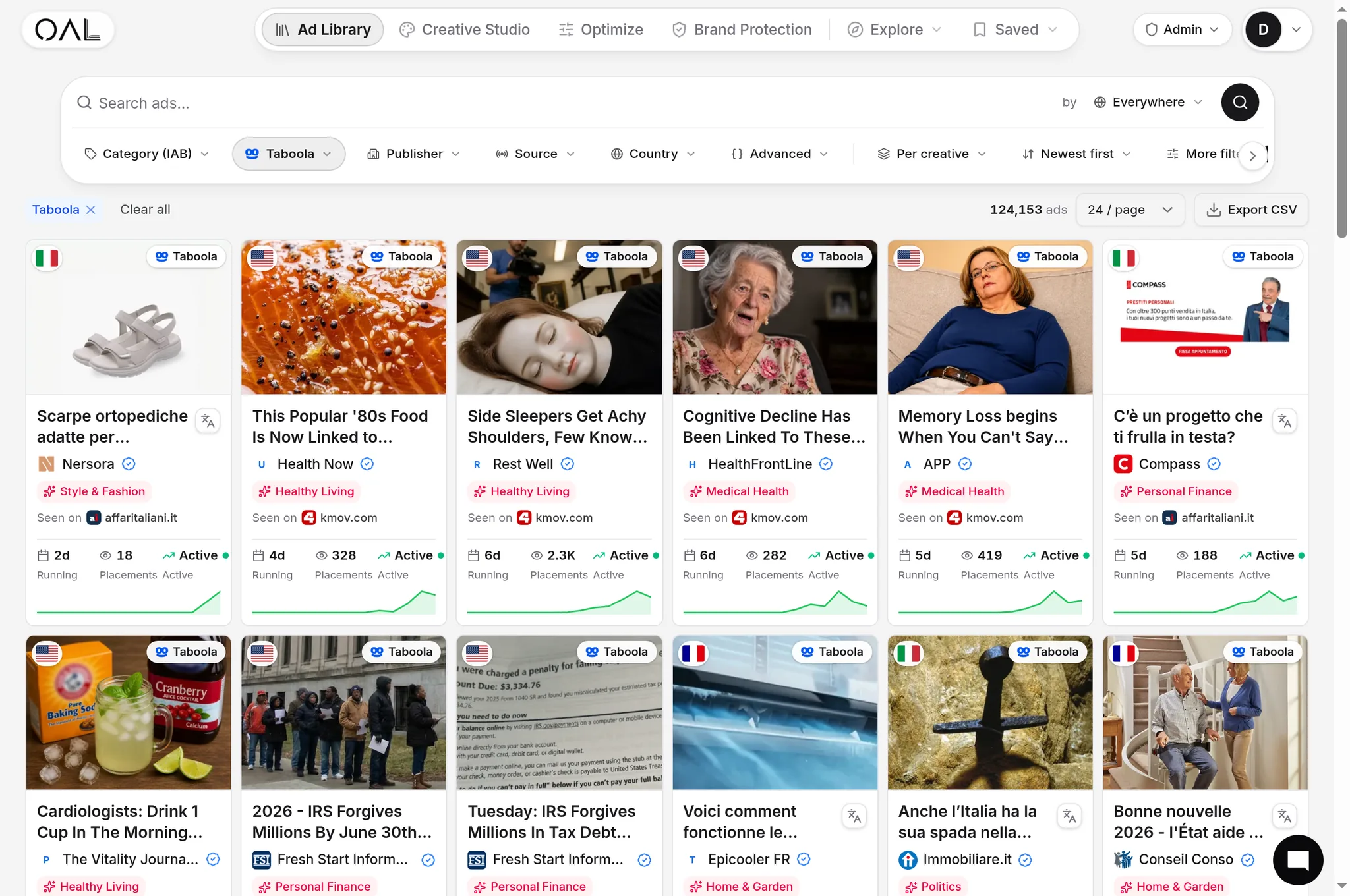
Ecco come si presenta in pratica il pane quotidiano di Taboola: un'offerta finance che insegue una scadenza fiscale, il tipo di creative vicino al click-bait che stampa soldi nel verticale giusto.

Per una scomposizione completa di ciò che effettivamente paghi per click e per test su ciascuna piattaforma, vedi la nostra guida al budget dei costi degli annunci nativi e i benchmark CPC nativi per il 2026.
Copertura geografica e impronta del pubblico#
Entrambe le reti sono genuinamente globali. Sono forti in posti diversi.
Taboola propende per il premium ed è pesantemente orientata verso publisher occidentali. La sua partnership trentennale con Yahoo mette quasi 900 milioni di utenti mensili Yahoo in cima a un'impronta esistente di circa 600 milioni di utenti attivi giornalieri su principali publisher di notizie, lifestyle e salute. Se la tua offerta ha bisogno di traffico tier-1 (USA, UK, Canada, Australia, Europa occidentale) posizionato accanto a contenuti editoriali mainstream, la qualità dell'inventario di Taboola è difficile da battere. Lo vedi nella diffusione di ciò che catturiamo lì: lead-gen assicurativo sulla vita in AU, lancio auto in India, offerte di miglioramento casa e solari negli USA corrono tutte fianco a fianco.

MGID dichiara 850 milioni di utenti unici mensili su oltre 32.000 siti publisher in 200+ paesi e 70+ lingue. La sua forza relativa si manifesta in un mix geografico più ampio. Accanto a USA e UK, MGID porta un volume significativo in Vietnam, India, Indonesia, Messico e Italia. Se targettizzi mercati emergenti o esegui angolazioni di geo-arbitraggio, quella diffusione è un vantaggio. Quei pubblici sono più economici e meno saturi dei posizionamenti tier-1 di Taboola.
Il takeaway pratico: se la tua offerta converte su traffico mainstream tier-1, la copertura premium di Taboola merita il suo costo. Se stai cacciando click più economici in geo di secondo e terzo livello, MGID ti dà più spazio per trovare sacche profittevoli. Questa è la stessa dinamica che analizziamo in MGID vs Revcontent, dove due reti di medio livello si contendono esattamente queste geo dei mercati emergenti.
Mix di advertiser: chi pubblica effettivamente dove#
Le cifre di copertura non ti dicono cosa converte. Il mix di advertiser sì, ed è qui che i nostri dati contraddicono silenziosamente la storia standard.
La linea popolare è che MGID è la rete nutra-dating-gambling e Taboola è la rete brand pulita. I dati di cattura dicono che il quadro è più confuso. Su Taboola, i verticali più pesanti nel nostro indice sono Health (6.048 creative catturati), Finance (5.558), Insurance (4.303), Ecommerce (3.330), Home and Garden (2.630) e Software (2.206). Questa è una formazione mainstream, regolamentata, pesantemente lead-gen, esattamente ciò che ti aspetteresti da una rete premium. Ma "Health" su Taboola significa ancora un flusso di creative di integratori, apparecchi acustici e salute cerebrale che sembrano aggressivi tanto quanto qualsiasi cosa su una rete più economica.

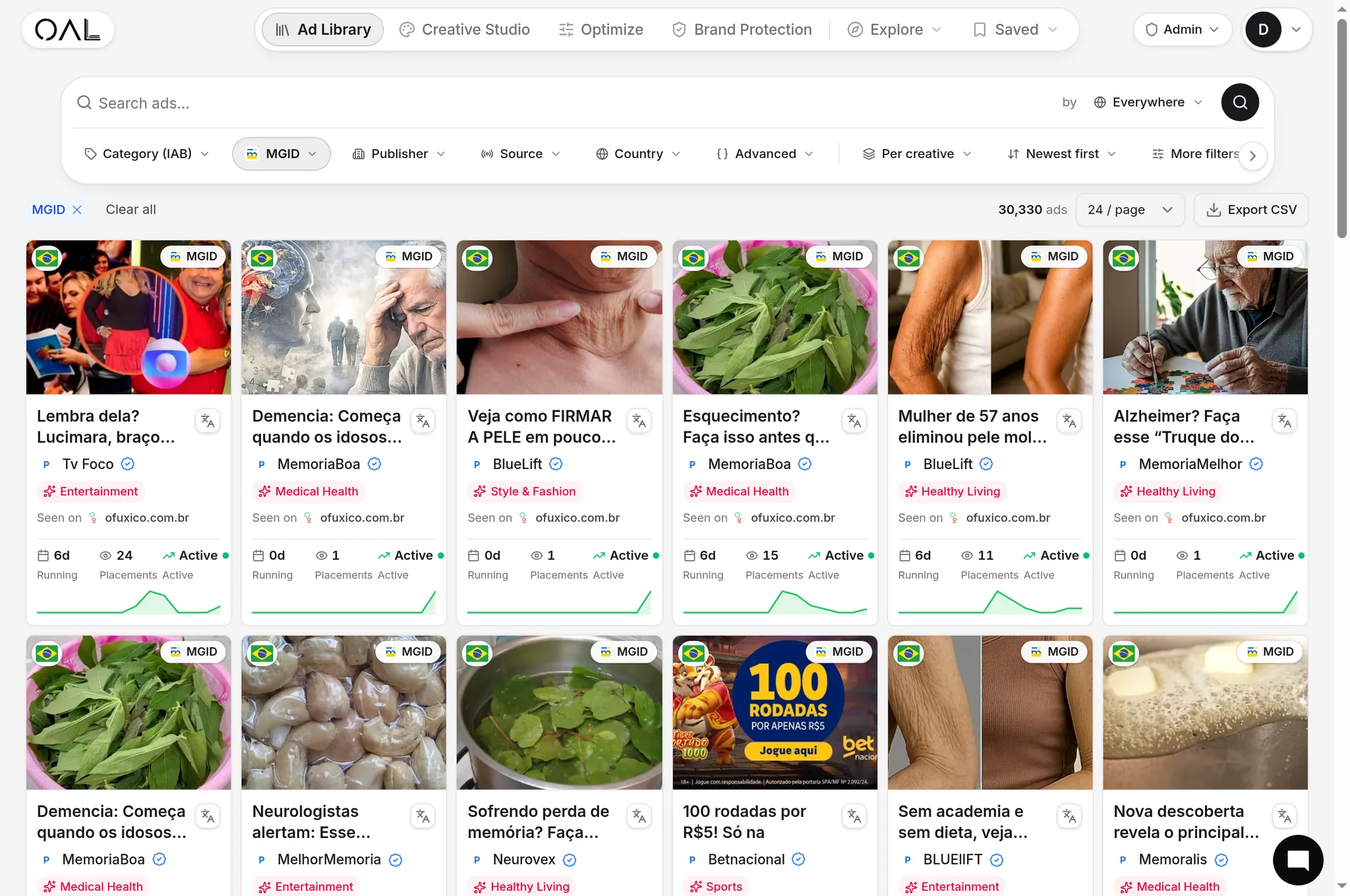
MGID è dove c'è la sorpresa. Il verticale singolo più grande catturato per MGID nel nostro indice è Entertainment, con 8.904 creative, molto più avanti del suo volume Health (615). Questo si allinea con la reputazione di MGID per contenuti di gaming, quiz, test del QI e "non crederai a cosa è successo dopo", più che con la sua reputazione per il nutra. Il volume nutra e dating è reale, ma se conosci MGID solo dal folklore dei forum, la tendenza entertainment vale la pena considerarla prima di assumere che il tuo verticale sia ben rappresentato lì.
Per contestualizzare l'intero campo, i verticali più catturati in tutte le reti che tracciamo sono Finance (17.232 creative), Insurance (15.629), Health (14.895) ed Ecommerce (13.872), in quell'ordine (indice OpenAdLibrary, giugno 2026). Il nativo è prima di tutto un mezzo direct-response, e le catture lo rendono ovvio. Ecco il tipo di creative sulla salute cerebrale che domina la colonna Health:

Taboola applica effettivamente una politica sui contenuti più severa sulla carta, e la sua piattaforma Realize (più il nuovo livello agentico Realize+) è costruita attorno all'ottimizzazione basata sui risultati per gli advertiser che possono fornire dati di conversione. Questo favorisce acquirenti conformi e ben capitalizzati rispetto ad affiliate agguerriti che testano angolazioni rischiose. La coda di approvazione più lasca di MGID è genuinamente più facile per il direct response grey-hat. Solo, non dare per scontato che Taboola sia impeccabilmente pulita o che MGID sia piena di nutra da un muro all'altro. Le catture dicono che entrambe le reti portano più sovrapposizione di quanto le loro reputazioni suggeriscano.
Non indovinare il mix di advertiser, verificalo#
Le cifre di copertura pubbliche descrivono la rete media. Non ti dicono quali advertiser sono live nel tuo verticale e nella tua geo questa settimana. Quel divario è dove i budget nativi perdono: gli acquirenti scelgono una rete per reputazione, poi scoprono che la loro nicchia esiste a malapena su di essa.
È qui che i dati live di trasparenza pubblicitaria cambiano la chiamata. OpenAdLibrary cattura annunci nativi reali mentre vengono eseguiti su Taboola, MGID, i loro pari di medio livello e il resto dell'ecosistema programmatic nativo. Per ogni annuncio catturato fa tre cose che una brochure del vendor non può:
- Identifica il vero advertiser dietro il creative, non solo la rete affiliate o il tracker.
- Segue il click verso la landing page (senza cliccare su annunci live), così vedi l'offerta effettiva, il pre-lander e il funnel.
- Traccia longevità e diffusione, da quanto tempo un annuncio è attivo e quanto è ampiamente distribuito, che è il proxy pubblico più vicino per "questo sta funzionando".
Una parola sulla longevità, perché è facile esagerare. Il folklore affiliate ama il "vincitore di 90 giorni". Questo è folklore del settore, non la nostra scoperta. Ciò che possiamo effettivamente osservare è il tempo di esecuzione continuo all'interno della nostra finestra di cattura, che attualmente arriva a circa 28 giorni per creative. Il punto non è il numero assoluto. È il segnale relativo: un annuncio nativo che è stato live per 26 o 27 giorni consecutivi sta quasi certamente pagando per sé stesso, perché nessuno continua a perdere soldi davanti a un paywall per un mese. L'annuncio Nebroo per apparecchi acustici sopra (26 giorni) e questa offerta di batterie solari (27 giorni) sono esattamente il tipo di sopravvissuti che vale la pena reverse-engineerare.

Quindi puoi rispondere alle domande che guidano effettivamente il ROI. Gli advertiser health sono più pesanti su Taboola o MGID negli USA in questo momento? Quali offerte finance sono attive da più di tre settimane? Quali landing page stanno usando i top advertiser di Taboola? Sfoglia i dati live sulla pagina spia annunci Taboola, poi confrontali con la copertura MGID per vedere quale rete porta effettivamente la tua concorrenza.
La stessa logica di verifica-prima-di-impegnarsi attraversa ogni confronto nativo che trattiamo, incluso Taboola vs Outbrain e Revcontent vs Taboola. La rete che si descrive meglio raramente è quella che porta meglio la tua offerta.
Quindi quale rete vince per il tuo budget?#
Non c'è un singolo vincitore. C'è un vincitore per la tua situazione.
- Inizia con MGID se hai un piccolo budget di test ($100 a $1.500), gestisci offerte affiliate o direct-response aggressive, o targettizzi geo di mercati emergenti dove click più economici ti permettono di trovare profitto. Il basso costo d'ingresso e l'approvazione più lasca la rendono il terreno di apprendimento migliore. Controlla solo che il tuo verticale abbia effettivamente profondità lì prima, poiché il mix catturato propende più verso entertainment e gaming di quanto la maggior parte si aspetti.
- Inizia con Taboola se puoi finanziare circa $300/giorno per campagna, stai promuovendo un brand mainstream, ecommerce o un'offerta lead-gen conforme, e vuoi un posizionamento premium tier-1 accanto a contenuti editoriali di qualità. Il suo motore Realize e la copertura su scala Yahoo premiano gli acquirenti che possono alimentarlo con dati di conversione, e con 157.727 creative catturati è dove vive la maggior parte della concorrenza nativa.
- Esegui entrambe se la tua offerta ha gambe. Molti acquirenti esperti validano economicamente su MGID, poi trasferiscono creative e landing page collaudate su Taboola per la scala del traffico premium. Le reti non si escludono a vicenda. Sono fasi di un funnel.
Qualunque sia la tua inclinazione, decidi su prove, non sulla reputazione. Estrai il mix live di advertiser per il tuo verticale e geo, guarda quali offerte hanno una longevità reale e studia le landing page che stanno già vincendo prima di spendere un dollaro. Inizia gratuitamente e sfoglia 200 annunci nativi live senza richiedere carta, poi decidi quale rete porta effettivamente la tua concorrenza.