
 English
 Português (Brasil)
 Français
 Deutsch
 Italiano
 Nederlands
 Polski
 Svenska
 Türkçe
 Русский
 日本語
日本語 한국어
한국어 简体中文
简体中文 Tiếng Việt
 Bahasa Indonesia
 繁體中文
繁體中文 Čeština
 Dansk
Dansk Norsk (bokmål)
 Suomi
Suomi Ελληνικά
 Română
 Magyar
 Українська
 ไทย
ไทย हिन्दी
 العربية
 עברית
עבריתOutbrain Ad Spy: Encuentra y Analiza Anuncios de Competidores en Outbrain (Teads)
La fusión con Teads eliminó los datos competitivos por creatividad de Outbrain, así que aquí está cómo capturar anuncios en vivo de Outbrain/Teads desde las páginas de los publishers: encuentra creatividades de rivales, rastrea cada clic hasta su landing page y lee la longevidad en lugar de cifras de gasto falsas.

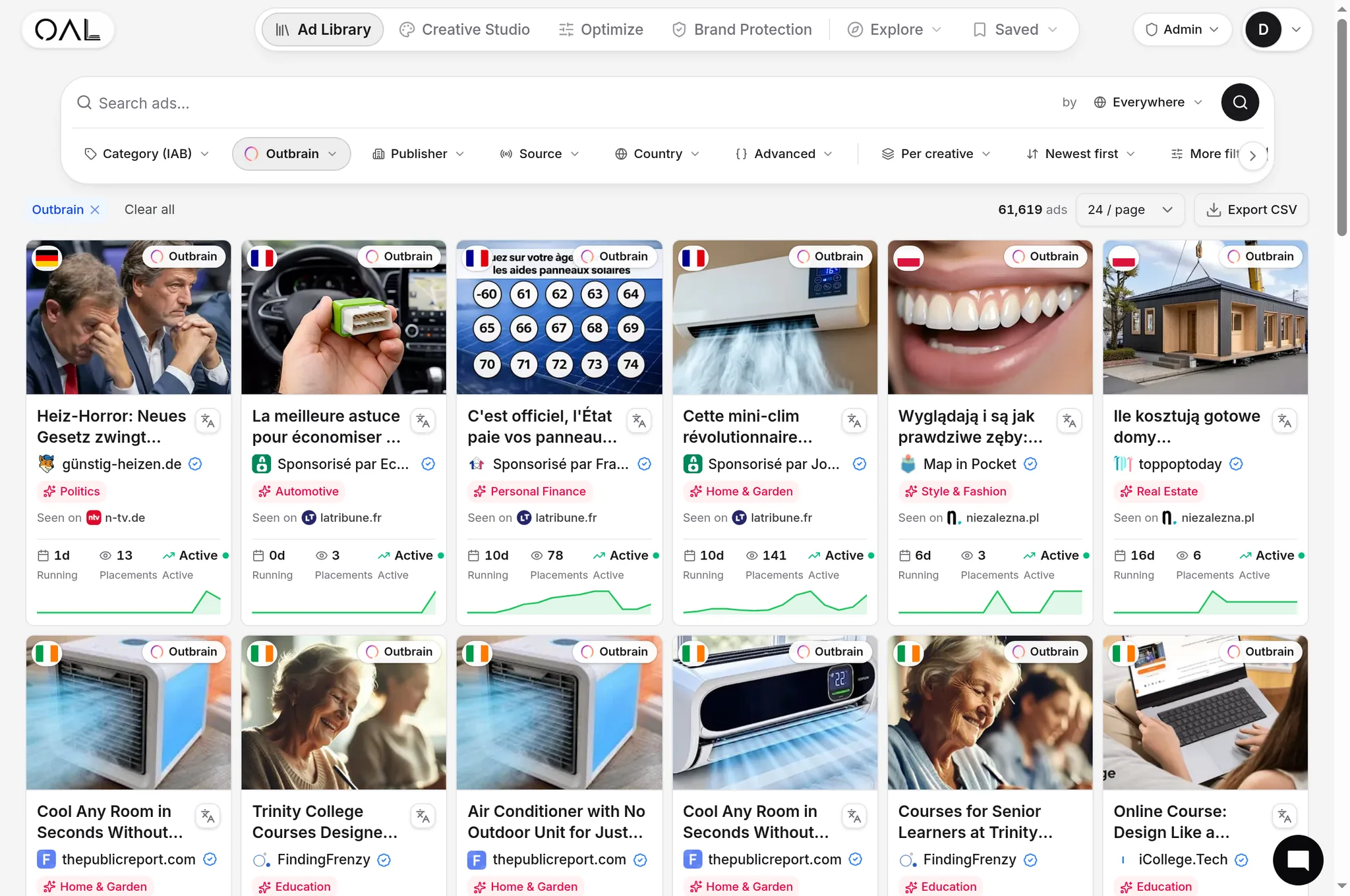
El espionaje de anuncios de Outbrain solía ser fácil. Abrías una herramienta competitiva, escribías un anunciante y obtenías un muro de sus titulares, miniaturas y fechas aproximadas de ejecución. Ese mundo se acabó. Outbrain compró Teads y cerró la operación en febrero de 2025. Outbrain fue el comprador, pero la compañía fusionada mantuvo la marca más fuerte de Teads y movió su ticker bursátil de OB a TEAD. En algún lugar de esa transición, los dashboards y superficies que solían filtrar señales competitivas por creatividad dejaron silenciosamente de exponerlas. Los widgets nativos que aún ves en sitios de noticias y finanzas son ahora una parte de una cadena de suministro mucho más grande de Teads que también transporta video outstream y CTV.
Así que espiar Outbrain es más difícil que hace dos años. No es imposible. Los anuncios siguen siendo públicos. Se renderizan en páginas reales de publishers, frente a lectores reales, cada minuto del día. El truco es que dejas de pedirle los datos a Outbrain. Capturas los anuncios donde realmente viven y reconstruyes la inteligencia tú mismo. Esta es la guía práctica para hacerlo en 2026.
Para contexto sobre la escala con la que trabajamos: el índice de OpenAdLibrary contiene 84,252 creatividades de Outbrain, parte de 589,036 creatividades totales en 42 redes, vinculadas a 25,933 anunciantes y 926,259 landing pages capturadas (índice de OpenAdLibrary, junio de 2026). Nada de eso vino de un feed de la red. Todo fue capturado desde páginas de publishers.
Qué significa realmente "espionaje de anuncios de Outbrain" en 2026#
Una herramienta de espionaje de anuncios de Outbrain encuentra los anuncios nativos que los competidores están ejecutando en la red Outbrain/Teads, captura la creatividad y el titular reales y rastrea a dónde envía cada anuncio al usuario. Outbrain no publica ninguna biblioteca de anuncios pública, y la plataforma fusionada de Teads ya no muestra métricas competitivas por creatividad. El único método confiable que queda es la captura por terceros de placements en vivo directamente desde páginas de publishers.
Tres distinciones cambian lo que puedes y no puedes aprender:
- Los anuncios son públicos; las métricas son privadas. Cualquiera puede ver una creatividad de Outbrain cargando la página en la que se ejecuta. Nadie fuera de la cuenta del anunciante puede ver su gasto real, CPC o tasa de conversión. Cualquier herramienta que afirme el gasto exacto de un competidor está estimando. Trata esos números como ficción.
- La etiqueta rara vez es el anunciante. Los anuncios nativos funcionan con desvío. La marca mostrada en una creatividad suele ser un publisher de arbitraje de contenido o una etiqueta vaga de "patrocinado por", mientras que el clic pasa por dominios de redirección antes de aterrizar en la oferta real.
- Outbrain es ahora inventario de Teads. Cuando investigas anuncios de Outbrain, estás viendo placements nativos dentro del ecosistema Teads. La técnica de captura es idéntica. Solo no te sorprendas cuando la clasificación de la cadena de suministro muestre infraestructura de Teads debajo.
Así es como se ve un placement real de Outbrain una vez que lo capturas. La marca en la tarjeta es un nombre de publisher, no la compañía que financia la campaña:

Por qué el enfoque antiguo se rompió#
Durante años, el flujo de trabajo competitivo estándar dependía de lo que las redes elegían revelar. Las interfaces antiguas de Outbrain, más algunas herramientas de espionaje heredadas que las raspaban, daban a los compradores una vista útil de las creatividades rivales. La fusión con Teads colapsó eso. La consolidación casi siempre reduce la transparencia pública: menos dashboards separados, acceso API más restringido y un incentivo claro para mantener las señales de rendimiento del inventario combinado internamente.
El anuncio que ha estado en vivo durante semanas en docenas de publishers no tiene suerte. Es el que se paga por sí mismo. La longevidad es lo más cercano a una señal pública de ganancia que tiene la publicidad nativa.
La conclusión práctica: si tu proceso competitivo aún depende de que una red te entregue datos de creatividades, tiene una fecha de caducidad. El movimiento duradero es tratar la web abierta como tu conjunto de datos y capturar anuncios desde el lado de la oferta, las páginas de los publishers, donde ninguna fusión puede apagarlos.
Un flujo de trabajo del lado de la captura que sobrevive a los cambios de plataforma#
Aquí está el flujo de trabajo que usamos, replanteado para que puedas ejecutarlo con cualquier herramienta seria de inteligencia nativa. El principio: observa los mismos anuncios que vería un usuario real en una geo dada, luego enriquécelos.
- Captura placements en vivo, no le preguntes a la red. Los anuncios que quieres se están renderizando ahora mismo en sitios premium. Una herramienta del lado de la captura carga esas páginas desde geografías reales y registra la creatividad nativa en calidad completa, la imagen real, el titular, el contexto del placement, en lugar de depender de un feed de Outbrain que puede estar limitado o sanitizado.
- Resuelve al anunciante real. Toma la marca superficial con cautela. El paso valioso es clasificar la cadena de suministro de ad-tech detrás de la creatividad y seguir el clic a través de sus redirecciones hasta la landing page final. Así es como aprendes que "HealthLiving Daily" es realmente un anunciante de suplementos ejecutando un pre-lander de cuestionario.
- Lee la longevidad y la distribución. Un solo avistamiento te dice casi nada. La señal vive en la serie temporal: cuántos días ha permanecido en vivo una creatividad y en cuántos publishers distintos aparece. Los anuncios que persisten y se distribuyen están siendo financiados porque convierten.
- Extrae la landing page y el pre-lander. La creatividad es el anzuelo. El dinero se gana en la página después del clic. Capturar la landing page, incluyendo cualquier pre-lander de estilo advertorial o cuestionario, te muestra el funnel completo, no solo la miniatura.
- Descompone los ganadores. Una vez que has aislado anuncios que sobreviven, divídelos en partes reutilizables: ángulo, fórmula del titular, estilo de miniatura, oferta y estructura del funnel. Eso es lo que realmente trasladas a tus propias pruebas.
Este es exactamente el modelo en el que está construido OpenAdLibrary. Captura anuncios nativos públicos en vivo en Outbrain/Teads y las otras redes principales, almacena la imagen creativa real en calidad completa, clasifica la cadena de suministro y sigue cada clic hasta la landing page del anunciante, sin hacer clic nunca en anuncios en vivo. Sus informes por creatividad de Outbrain fueron específicamente diseñados para restaurar la granularidad que los dashboards de anunciantes dejaron de exponer después de la transición a Teads.
Dónde se concentra realmente el volumen de Outbrain#
Si quieres saber dónde dirigir tu investigación, sigue los conteos de creatividades. En Outbrain específicamente, finanzas lidera con 2,640 creatividades capturadas, seguros está justo detrás con 2,615, luego salud con 2,016, ecommerce con 1,479, software con 1,197 y hogar y jardín con 1,091 (índice de OpenAdLibrary, junio de 2026). Esa orden no es aleatoria. Esos son los verticales donde las matemáticas del tráfico nativo premium funcionan, así que ahí es donde la competencia es más densa y la iteración creativa es más rápida.
Salud es la categoría más ruidosa en la tarjeta misma. Los titulares se vuelven directos porque la curiosidad y un poco de alarma son lo que ganan el clic:


Alejándose al índice completo, el ranking se mantiene en todas las redes: finanzas (17,232 creatividades), seguros (15,629), salud (14,895) y ecommerce (13,872) son los cuatro verticales más pesados en general, con entretenimiento, software y viajes cerca detrás (índice de OpenAdLibrary, junio de 2026). Si vendes en cualquiera de esos, estás compitiendo en las salas más concurridas de lo nativo, que es precisamente por qué necesitas ver lo que ya sobrevive ahí.
Lo que puedes y no puedes aprender#
Establecer expectativas honestamente es parte de hacer esto bien. Aquí está la línea entre la señal real y capturable y los números en los que nunca deberías confiar de ninguna herramienta de espionaje.
| Señal | ¿Puedes obtenerla? | Cómo leerla |
|---|---|---|
| Gasto exacto del competidor | No | Privado de su cuenta; las "estimaciones" son conjeturas |
| CPC / CPM exacto pagado | No | Específico de la subasta y privado |
| Creatividades y titulares en vivo | Sí | Capturados directamente desde páginas de publishers |
| Anunciante real detrás del anuncio | Sí | Mediante clasificación de cadena de suministro + rastreo del clic |
| Landing page y pre-lander | Sí | Capturado siguiendo el clic |
| Longevidad creativa (días en vivo) | Sí (proxy) | Señal pública más fuerte de ganador |
| Distribución en publishers | Sí (proxy) | Amplia distribución = campaña escalada y funcionando |
| Pistas de geo y targeting por dispositivo | Parcial | Inferido desde dónde/cómo se renderiza un anuncio |
La conclusión: deja de buscar un número de gasto falso y empieza a leer la longevidad y la distribución. Esos dos proxies, capturados con precisión, dirigirán tu presupuesto mejor que cualquier estimación de dashboard.
Una nota de honestidad sobre la longevidad, porque muchas herramientas la falsean. La sabiduría popular de la industria ama hablar de "ganadores de 90 días". Eso es folclore general, no algo que nuestro índice afirme. Nuestra ventana de observación continua actualmente abarca hasta unos 28 días por creatividad, así que cuando decimos que una creatividad es un probable ganador, queremos decir que realmente la hemos visto permanecer en vivo durante esa ventana. Los anuncios de más larga duración que estamos rastreando ahora mismo, piezas de finanzas como "Ask a Pro: How Can I Avoid Paying Taxes on IRA Withdrawals?" de SmartAsset en Outbrain, están en 28 días observados (índice de OpenAdLibrary, junio de 2026). Lee "días observados en vivo", no afirmaciones inventadas de varios meses.
Cómo difiere el espionaje de Outbrain de las otras redes nativas#
El inventario de Outbrain/Teads se inclina hacia publishers premium y seguros para marcas: propiedades principales de noticias, finanzas y estilo de vida. Eso moldea lo que gana. Las creatividades se inclinan hacia lo editorial y orientado a la curiosidad en lugar del estilo más agresivo y de alto volumen que prospera en redes más agresivas. Aún ves clickbait, pero está disfrazado. Una promoción de auto se ejecuta como un placement de marca patrocinado, no como una oferta estridente:

Si asignas presupuesto en múltiples fuentes, estudia una al lado de la otra en lugar de asumir que un ganador se traslada limpiamente entre ellas. Nuestro pilar sobre las mejores redes de anuncios nativos en 2026, clasificadas por volumen real de anuncios mapea dónde se concentran realmente el inventario y los anunciantes. Si tu decisión es específicamente Outbrain versus su rival más grande, la comparación respaldada por datos Taboola vs Outbrain, actualizada para la era Teads, desglosa el alcance, la mezcla de anunciantes y dónde difieren genuinamente las creatividades de cada plataforma. Y si tu presupuesto es más de nivel medio, la comparación MGID vs Revcontent cubre las redes donde los CPC más bajos y el inventario más flexible a menudo producen una iteración creativa más rápida que vale la pena imitar.
Un ejemplo concreto#
Digamos que vendes un boletín de finanzas y quieres saber qué está funcionando en el espacio en Outbrain. Una búsqueda del lado de la captura muestra una creatividad, miniatura de gráfico simple, titular como "The boring stock quietly up 240%," que ha estado en vivo durante varias semanas en una docena de publishers de finanzas. Finanzas es el vertical más grande de Outbrain en nuestro índice, así que no te faltarán comparables. Esa persistencia sola la marca como un probable ganador.
Ahora rastréala. La marca visible es un sitio de contenido genérico, pero el clic pasa por dos dominios de redirección a un pre-lander advertorial que enmarca una selección de acciones única, luego canaliza a una página de suscripción. Ahora conoces el ángulo (contracorriente y orientado a la curiosidad), el funnel (advertorial luego suscripción), la estructura de la oferta y aproximadamente las geos donde se sirve. Nada de eso vino de Outbrain. Todo vino de capturar el anuncio donde vive y seguir el clic. Y es directamente accionable para tu próxima prueba.
Dónde encaja esto en tu stack#
El espionaje de anuncios no es todo el trabajo. Es la entrada. Una vez que has aislado creatividades duraderas de Outbrain/Teads y las has descompuesto, el valor está en la velocidad de ejecución: convertir un ganador capturado en una variante probada propia, luego observar si tu versión empieza a mostrar la misma longevidad. Emparejar inteligencia del lado de la captura con producción y optimización creativa (los flujos de trabajo de Creative Studio, Optimize y Copy DNA) cierra ese ciclo, y una capa de API y MCP te permite conectar los mismos datos en tus propios dashboards.
También ayuda fundamentar tus lecturas en la realidad de costos. Saber que una creatividad sobrevivió varias semanas significa más una vez que entiendes lo que realmente cuesta comprar tráfico nativo. Nuestra guía de presupuesto para anuncios nativos 2026 cubre los rangos de CPC y mínimos que enfrentarás en Outbrain/Teads, para que puedas juzgar si la persistencia de un competidor implica un presupuesto que puedes igualar.
La conclusión#
La fusión con Teads no mató el espionaje de anuncios de Outbrain. Mató la versión perezosa que dependía de que la red ofreciera datos voluntariamente. Los anuncios siguen siendo públicos. Solo los capturas desde el lado de la oferta, resuelves al anunciante real y lees la longevidad y la distribución en lugar de cifras de gasto imaginarias. Haz eso y posiblemente obtengas una mejor vista que la que te daban los dashboards antiguos, porque estás viendo el funnel completo que construyó un competidor, no una lista sanitizada de creatividades.
Esa es toda la premisa detrás de OpenAdLibrary como una herramienta de espionaje de anuncios de Outbrain: inteligencia nativa abierta y asequible, el anunciante real, la landing page rastreada y las señales de longevidad, sin las etiquetas de precio de $80 a $400 por mes de los incumbentes heredados. Comienza gratis y navega por 200 anuncios nativos en vivo, sin tarjeta requerida.