English
 Español
 Português (Brasil)
 Français
 Deutsch
 Italiano
 Nederlands
 Svenska
 Türkçe
 Русский
 日本語
日本語 한국어
한국어 简体中文
简体中文 Tiếng Việt
 Bahasa Indonesia
 繁體中文
繁體中文 Čeština
 Dansk
Dansk Norsk (bokmål)
 Suomi
Suomi Ελληνικά
 Română
 Magyar
 Українська
 ไทย
ไทย हिन्दी
 العربية
 עברית
עבריתJak obniżyć CPC w Taboola bez utraty wolumenu
Obniżenie stawek w Taboola głodzi dostawy. Dźwignie, które faktycznie obniżają CPC: CTR kreacji, chirurgiczne cięcia na poziomie witryn, uczciwe podziały kampanii oraz Smart Bid zasilony rzeczywistymi danymi konwersji.


Najszybszym sposobem na obniżenie CPC w Taboola jest podniesienie CTR, ponieważ aukcja wycenia kliknięcia na podstawie oczekiwanego zysku wydawcy — Twoja stawka pomnożona przez oczekiwany wskaźnik klikalności. Kreacja, która generuje dwa razy więcej kliknięć, może utrzymać to samo miejsce przy znacząco niższej stawce. Brutalne cięcie stawki bazowej, pierwsza rzecz, którą próbuje większość kupujących, głównie głodzi dostawy: tracisz premiowe miejsca, a zatrzymujesz śmieci. Sprawdzony plan działania przebiega w kolejności: najpierw popraw CTR kreacji, następnie tnij koszty chirurgicznie za pomocą korekt stawek i blokad na poziomie wydawcy, po trzecie dziel kampanie, aby aukcja mogła uczciwie wyceniać segmenty, i dopiero wtedy przekaż wycenę Smart Bid z rzeczywistymi danymi konwersji. Dziewięć dźwigni, uporządkowanych według wpływu.
Dlaczego cięcie stawki bazowej daje odwrotny efekt#
Twoja stawka CPC w Taboola to pułap tego, co zapłacisz, ale dostawy są alokowane według zysku: wydawcy są płaceni za kliknięcie, więc aukcja faworyzuje reklamy, które im to pewnie zapewniają. Obniż stawkę o 40%, a sieć nie da Ci tego samego ruchu taniej — przekieruje Twoje dostawy na miejsca, których nikt inny nie chce. Wolumen załamuje się, a pozostałe kliknięcia często gorzej konwertują. Kupujący odczytują wtedy spadający wolumen jako "Taboola nie skaluje się", podczas gdy prawdziwa historia jest taka, że wycenili się poza dobre feedy, pozostając w zasięgu tych złych.
Obniżenie CPC bez zabicia wolumenu oznacza uczynienie Twoich kliknięć tańszymi do wygrania, a nie tylko oferowanie mniej za nie.
Zdiagnozuj, zanim zoptymalizujesz#
Zanim pociągniesz za jakąkolwiek dźwignię, rozbij zgłaszane CPC na jego rzeczywiste składniki: które witryny, które urządzenia, które regiony i które kreacje generują drogie kliknięcia. CPC na poziomie konta to średnia z drastycznie różnych rynków, a średnie ukrywają rozwiązanie. W większości kont, które widzieliśmy u kupujących, mniejszość miejsc generuje większość marnowanych wydatków — uśredniona liczba wygląda przeciętnie, podczas gdy połowa kampanii jest w porządku. Najpierw pobierz raport witryn, podział na urządzenia i liczby per kreacja; każda dźwignia poniżej celuje w jeden z tych składników, a wiedza, który składnik jest zawyżony, mówi Ci, które dźwignie pociągnąć najpierw.
Dźwignie 1–3: CTR kreacji to prawdziwa cena Twojego kliknięcia#
1. Przepisz nagłówki, zanim dotkniesz stawek. Ponieważ zysk = stawka × CTR, kreacja z CTR 0,4% może zapłacić połowę stawki konkurenta z 0,2% za równoważne miejsce. Efekt kumulacyjny jest ogromny. Formuły nagłówków, które konsekwentnie zdobywają kliknięcia w natywach — odkrycie w pierwszej osobie, konkretne ostrzeżenia, ujawnienie mechanizmu — są skatalogowane z żywymi przykładami w nagłówkach reklam natywnych, które zdobywają kliknięcia.
2. Testuj miniatury jako oddzielną zmienną. Obraz jest przetwarzany przed nagłówkiem i decyduje, czy nagłówek w ogóle zostanie przeczytany. Ujęcia produktu w kontekście i zbliżenia z czytelnymi emocjami rutynowo pokonują studio renders na feedach; najlepsze praktyki kreacji reklam natywnych obejmują te wzorce.
3. Rotuj przed zmęczeniem, nie po. CTR każdej kreacji spada w miarę nasycania jej odbiorców, a wraz ze spadkiem CTR rośnie Twoja efektywna cena, nawet przy niezmienionej stawce. Obserwuj trend, nie poziom, i planuj wymiany wcześnie — mechanika zmęczenia jest omówiona w zmęczeniu kreacji.
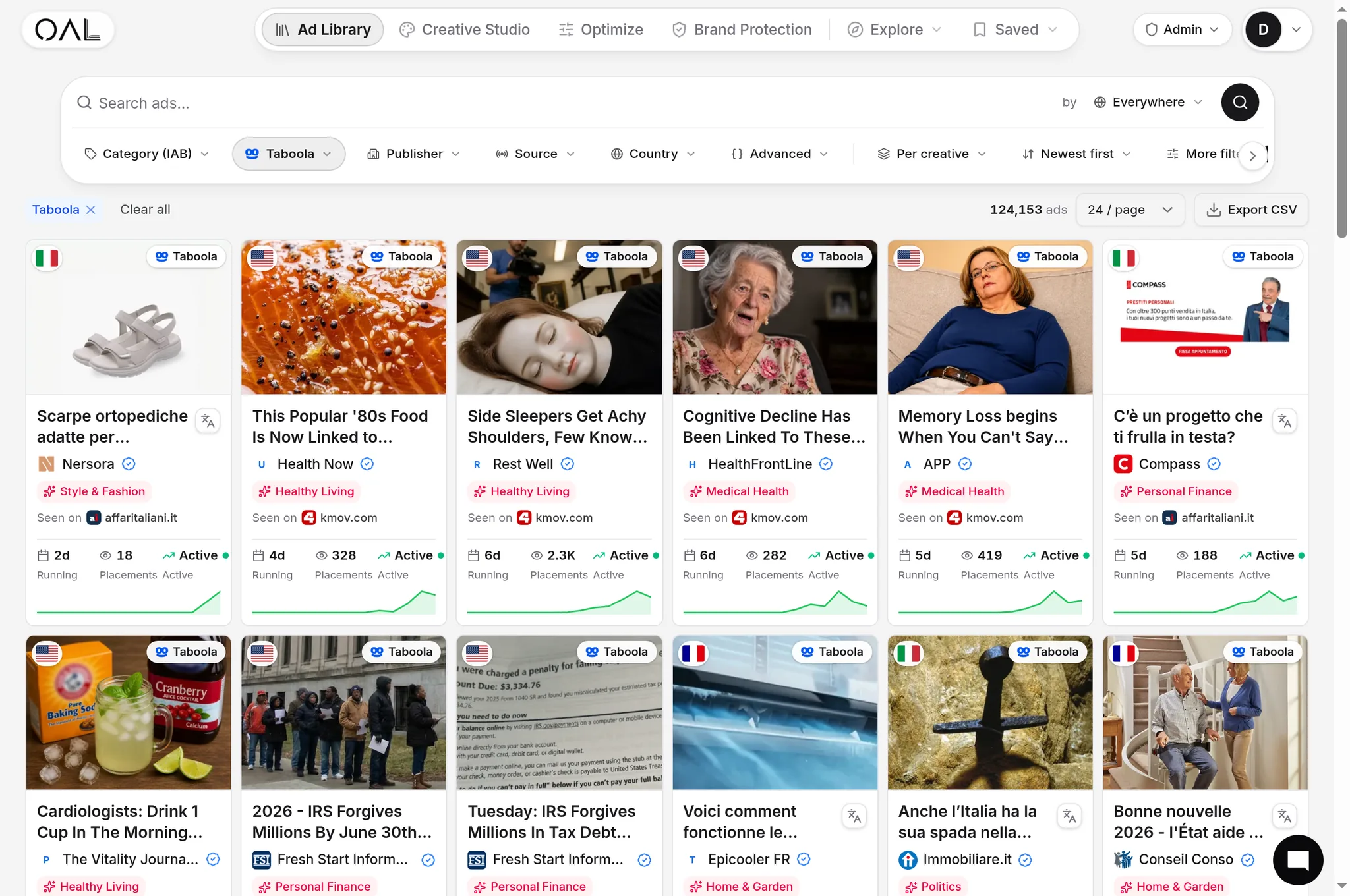
Skrót badawczy dla wszystkich trzech: przeanalizuj kreacje konkurentów w Twojej branży, które przetrwały 30+ dni. W sieci CPC długowieczność jest najbliższym publicznym sygnałem opłacalnej ekonomiki kliknięć — to właśnie wzorce nagłówków i miniaturek, które już udowodniły, że zdobywają tanie kliknięcia. Indeks OpenAdLibrary śledzi daty pierwszego i ostatniego widzenia ponad 206 000 aktywnych kreacji Taboola (czerwiec 2026); przefiltruj swoją branżę w narzędziu badawczym Taboola i wydobądź przetrwałe.
Dźwignie 4–6: tnij wydatki chirurgicznie, nie globalnie#
4. Obniżaj stawki wydawcom zamiast kampanii. Taboola udostępnia korekty stawek per witryna. Pobieraj raport witryn co tydzień, sortuj według wydatków i obniżaj stawki na witrynach konwertujących poniżej celu, zamiast obniżać stawkę kampanii, która karze również Twoich zwycięzców. Identyfikator na poziomie witryny jest tu jednostką optymalizacji — traktuj każde miejsce jako swój własny mały rynek z własną ekonomiką.
5. Zablokuj strukturalnych przegranych. Niektóre miejsca nigdy nie zadziałają dla Twojej oferty, niezależnie od stawki: zła publiczność, śmieciowe zaangażowanie, niekompatybilny kontekst. Zablokowanie ich podnosi ogólny współczynnik konwersji konta, co przekłada się na to, na jaką stawkę możesz sobie pozwolić wszędzie indziej. Mechanika list blokowania i zezwoleń jest podsumowana w targetowaniu whitelist vs blacklist.
6. Awansuj zwycięzców do kampanii whitelist. Gdy stabilny zestaw witryn konwertuje, sklonuj je do kampanii tylko z whitelistą, z stawkami ustawionymi na ich sprawdzoną ekonomikę, i utrzymuj kampanię odkrywczą działającą taniej i szerzej w tle. W efekcie płacisz ceny premium tylko tam, gdzie premium jest zasłużone — a zadanie kampanii odkrywczej cicho przesuwa się z dostarczania wolumenu na przesłuchiwanie nowych miejsc do awansu.
Dźwignie 7–8: dziel, aby aukcja mogła uczciwie wyceniać#
7. Oddziel desktop i mobile. Dynamika CPC, CTR i zachowania konwersyjne różnią się w zależności od urządzenia; kampania łącząca ukrywa, która strona subsydiuje drugą, a łączna stawka z definicji przepłaca za jeden segment. Podziel je i licytuj każdy na podstawie jego własnych liczb.
8. Dziel regiony według ekonomiki, nie geografii. Rynki Tier-1 wyceniane są bardzo inaczej niż Tier-2 i Tier-3 — zgrupowanie ich pod jedną stawką oznacza przepłacanie za tanie regiony lub głodzenie drogich. Grupuj rynki o podobnych stosunkach CPC do wartości; standardowa segmentacja jest omówiona w poziomach geograficznych (geo tiers). Dayparting również należy do tej dźwigni: jeśli konwersje skupiają się w określonych godzinach, koncentracja budżetu tam kupuje te same konwersje z mniejszym marnotrawstwem.
Dźwignia 9: pozwól Smart Bid przelicytować per wyświetlenie — gdy ma dane#
Tryby Smart Bid Taboola cieniują Twoją stawkę wyświetlenie po wyświetleniu względem przewidywanej szansy konwersji — licytując w górę w aukcjach prawdopodobnych do konwersji i w dół w pozostałych. To dokładnie chirurgiczne przelicytowanie, które dźwignie 4–8 przybliżają ręcznie, co czyni je właściwym stanem końcowym — ale tylko wtedy, gdy płyną rzeczywiste dane konwersji. Zasilony zbyt małą liczbą konwersji, automatyczne licytowanie optymalizuje szum. Praktyczna sekwencja: uruchamiaj stałe stawki, aż konwersje zgromadzą się w dziesiątki tygodniowo na kampanię (kupujący powszechnie traktują to jako minimum; sprawdź aktualną dokumentację Taboola dla jej własnych minimów), zweryfikuj, czy Twój postback lub piksel działa na konwersji, która ma znaczenie komercyjne, następnie przełącz i daj algorytmowi okno na naukę przed oceną.
Szczegóły konfiguracji kampanii, podłączenia konwersji i konfiguracji stawek znajdują się w jak reklamować się na Taboola, a własne centrum pomocy Taboola dokumentuje aktualne tryby Smart Bid i minimalne stawki według rynku.
Jak powinno wyglądać "tanie"#
Dla kalibracji, nie jako dogmat: media buyerzy powszechnie raportują CPC na desktopie Taboola w Tier-1 w przybliżeniu od 0,20 do 0,90 USD, przy czym mobile jest często znacząco tańszy, a regiony Tier-2/3 jeszcze niższe — nieoficjalne zakresy, które przesuwają branża, konkurencja i jakość kreacji. Kontekst między sieciami znajduje się w naszych benchmarkach CPC reklam natywnych. Uczciwym celem nie jest liczba, ale relacja: CPC na tyle niskie, że CPC podzielone przez współczynnik konwersji lejka mieści się w Twoim dopuszczalnym koszcie pozyskania. Kliknięcie za 0,30 USD, które nigdy nie konwertuje, jest droższe niż kliknięcie za 0,70 USD, które konwertuje.
Tygodniowa rutyna, która utrzymuje CPC w dryfie w dół#
- Poniedziałek — raport witryn. Sortuj według wydatków; obniżaj stawki lub blokuj miejsca poniżej celu; awansuj konsekwentnych konwerterów w stronę whitelisty.
- Środek tygodnia — przegląd kreacji. Porównuj trendy CTR per kreacja per urządzenie; planuj wymiany dla wszystkiego, co spada; uruchamiaj jeden nowy pomysł przeciwko aktualnemu.
- Piątek — audyt segmentów. Sprawdź podziały na urządzenia i regiony pod kątem dryfu; zweryfikuj, czy kampanie Smart Bid są nadal zasilane czystymi danymi konwersji; zanotuj swoje uśrednione CPC i koszt pozyskania tydzień do tygodnia.
Prowadź prosty dziennik zmian obok rutyny — data, pociągnięta dźwignia, oczekiwany efekt. CPC zmienia się z wielu powodów (sezonowość, wejścia konkurentów, zmęczenie kreacji), a bez dziennika przypiszesz zasługi lub winę niewłaściwej zmianie.
Żaden z tych kroków nie jest dramatyczny. Skumulowane przez sześć tygodni, rutynowo produkują duże cięcia w efektywnym koszcie pozyskania bez klifu wolumenu, który powoduje brutalne obniżenie stawki — ponieważ każdy z nich obniża cenę wygrywania dobrych miejsc, zamiast wycofywać się do złych.