 English
 Español
 Português (Brasil)
 Français
 Deutsch
 Italiano
 Polski
 Svenska
 Türkçe
 Русский
 日本語
日本語 한국어
한국어 简体中文
简体中文 Tiếng Việt
 Bahasa Indonesia
 繁體中文
繁體中文 Čeština
 Dansk
Dansk Norsk (bokmål)
 Suomi
Suomi Ελληνικά
 Română
 Magyar
 Українська
 ไทย
ไทย हिन्दी
 العربية
 עברית
עבריתHoe je je Taboola CPC verlaagt zonder volume te doden
Je Taboola-bod verlagen verhongert je levering. De hefbomen die CPC echt verlagen: creatieve CTR, chirurgische site-specifieke verlagingen, eerlijke campagne-splitsingen en Smart Bid gevoed met echte conversiedata.


De snelste manier om je Taboola CPC te verlagen is je CTR te verhogen, omdat de veiling klikken prijst op basis van verwachte uitgeversopbrengst — je bod maal je verwachte klikfrequentie. Een creatieve die twee keer zoveel kliks oplevert, kan dezelfde plaatsing behouden tegen een aanzienlijk lager bod. Je basisbod drastisch verlagen, wat de meeste buyers eerst proberen, verhongert vooral de levering: je verliest de premium plaatsingen en houdt het afval over. Het playbook dat werkt, loopt in volgorde: verbeter eerst de creatieve CTR, snijd kosten chirurgisch met uitgeversspecifieke biedaanpassingen en blokkeringen als tweede, splits campagnes zodat de veiling segmenten eerlijk kan prijzen als derde, en geef de prijszetting pas daarna over aan Smart Bid met echte conversiedata. Negen hefbomen, geordend op impact.
Waarom het verlagen van je basisbod averechts werkt#
Je CPC-bod op Taboola is een plafond voor wat je wilt betalen, maar levering wordt toegewezen op basis van opbrengst: uitgevers worden per klik betaald, dus de veeling bevoordeelt advertenties die hen betrouwbaar opleveren. Verlaag je bod met 40% en het netwerk geeft je niet hetzelfde verkeer goedkoper — het herverdeelt je levering naar plaatsingen die niemand anders wil. Volume stort in, en de resterende klikken converteren vaak slechter. Buyers lezen het dalende volume dan als "Taboola schaalt niet", terwijl het echte verhaal is dat ze zichzelf uit de goede feeds hebben geprijsd terwijl ze betaalbaar bleven voor de slechte.
CPC verlagen zonder volume te doden betekent je klikken goedkoper maken om te winnen, niet alleen minder bieden ervoor.
Diagnosticeer voordat je optimaliseert#
Voordat je aan een hefboom trekt, splits je gerapporteerde CPC in zijn echte componenten: welke sites, welke devices, welke geografieën en welke creatieven produceren de dure klikken. Een accountniveau CPC is een gemiddelde over sterk verschillende markten, en gemiddelden verbergen de oplossing. In de meeste accounts die we van buyers hebben gezien, produceert een minderheid van de plaatsingen het merendeel van de verspilde uitgaven — het gemengde getal ziet er matig uit terwijl de helft van de campagne eigenlijk prima is. Haal eerst het site-rapport, de device-splitsing en de per-creatieve cijfers op; elke hefboom hieronder richt zich specifiek op één van die componenten, en weten welke component is opgeblazen vertelt je aan welke hefbomen je eerst moet trekken.
Hefbomen 1–3: creatieve CTR is de echte prijs van je klik#
1. Herschrijf headlines voordat je aan biedingen komt. Omdat opbrengst = bod × CTR, kan een creatieve met 0,4% CTR de helft van het bod betalen van een concurrent met 0,2% voor een gelijkwaardige plaatsing. Het samengestelde effect is enorm. De headline-formules die consequent native kliks opleveren — eerste-persoonsontdekking, specifieke waarschuwingen, mechanisme-onthullingen — zijn gecatalogiseerd met live voorbeelden in native ad headlines die kliks genereren.
2. Test thumbnails als een aparte variabele. De afbeelding wordt verwerkt vóór de headline en beslist of de headline überhaupt wordt gelezen. In-situ productfoto's en close-ups met leesbare emotie verslaan routinematig studio-renders op feeds; best practices voor native ad creatives behandelt de patronen.
3. Roteer voor vermoeidheid, niet erna. De CTR van elke creatieve vervalt naarmate zijn publiek verzadigd raakt, en naarmate CTR vervalt stijgt je effectieve prijs zelfs bij een ongewijzigd bod. Houd trend in de gaten, niet niveau, en plan vervangingen vroegtijdig — de vervalmechanica wordt behandeld onder creative fatigue.
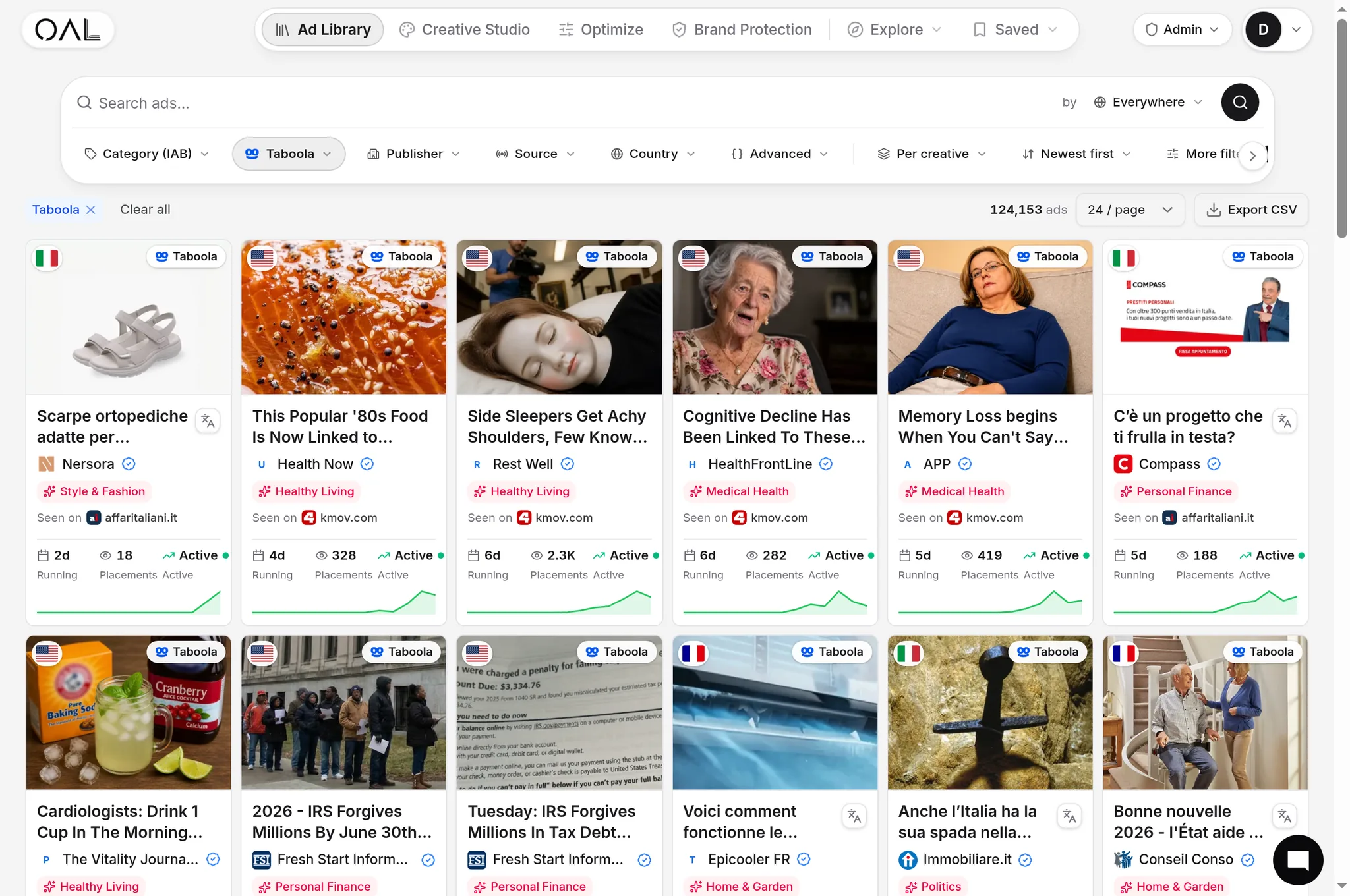
Een onderzoeksshortcut voor alle drie: bestudeer concurrentie-creatieven in je branche die 30+ dagen hebben overleefd. Op een CPC-netwerk is longevity het dichtstbijzijnde publieke signaal van winstgevende klik-economie — dat zijn de headline- en thumbnail-patronen die al bewezen zijn goedkope klikken op te leveren. De index van OpenAdLibrary volgt eerste-gezien en laatste-gezien datums over 206.000+ live Taboola creatieven (juni 2026); filter je branche in de Taboola-onderzoeks tool en ontgin de overlevers.
Hefbomen 4–6: snijd uitgaven chirurgisch, niet globaal#
4. Bied uitgevers omlaag in plaats van de campagne. Taboola stelt per-site biedaanpassingen bloot. Haal je site-rapport wekelijks op, sorteer op uitgaven, en verlaag biedingen op de sites die onder het doel converteren in plaats van het campagnebod te verlagen dat ook je winnaars straft. De site-specifieke identifier is hier de eenheid van optimalisatie — behandel elke plaatsing als zijn eigen kleine markt met zijn eigen economie.
5. Blokkeer de structurele verliezers. Sommige plaatsingen zullen nooit werken voor je aanbod, ongeacht het bod: verkeerd publiek, troep-engagement, incompatibele context. Ze blokkeren verhoogt je account-brede conversieratio, wat terugvoert naar wat je je overal anders kunt veroorloven te bieden. De mechanica van block- en allow-lists wordt samengevat in whitelist vs blacklist targeting.
6. Promoveer winnaars naar een whitelist-campagne. Zodra een stabiele set sites converteert, kloon ze naar een whitelist-only campagne met biedingen ingesteld op hun bewezen economie, en laat de ontdekkingscampagne goedkoper en breder achter ze lopen. Je betaalt uiteindelijk premium prijzen alleen waar premium wordt verdiend — en de taak van de ontdekkingscampagne verschuift stilletjes van volume leveren naar nieuwe plaatsingen auditeren voor promotie.
Hefbomen 7–8: splits zodat de veiling eerlijk kan prijzen#
7. Scheid desktop en mobile. CPC-dynamiek, CTR en conversiegedrag verschillen allemaal per device; een gemengde campagne verbergt welke kant de andere subsidieert, en een gemengd bod betaalt één segment per definitie te veel. Splits ze en bied elk op zijn eigen cijfers.
8. Splits geografieën op economie, niet geografie. Tier-1 markten prijzen heel anders dan Tier-2 en Tier-3 — ze groeperen onder één bod betekent te veel betalen voor de goedkope geografieën of de dure verhongeren. Groepeer markten met vergelijkbare CPC-naar-waarde-ratio's; de standaardsegmentatie wordt behandeld in geo tiers. Dayparting hoort ook bij deze hefboom: als conversies zich in bepaalde uren clusteren, concentreert budget daar dezelfde conversies kopen met minder verspilling.
Hefboom 9: laat Smart Bid per impressie herprijzen — zodra het data heeft#
De Smart Bid-modi van Taboola schaduwen je bod impressie-voor-impressie tegen voorspelde conversiekans — biedingen verhogen op de veilingen die waarschijnlijk converteren en verlagen op de rest. Dat is precies de chirurgische herprijzing die hefbomen 4–8 handmatig benaderen, wat het de juiste eindstatus maakt — maar alleen zodra echte conversiedata stroomt. Met te weinig conversies gevoed, optimaliseert automated bidding ruis. Praktische volgorde: gebruik vaste biedingen totdat conversies zich opstapelen tot tientallen per week per campagne (buyers behandelen dat vaak als de ondergrens; check Taboola's huidige documentatie voor zijn eigen minimums), verifieer dat je postback of pixel afvuurt op de conversie die commercieel ertoe doet, schakel dan over en geef het algoritme een leerperiode voordat je het beoordeelt.
Details van campagne-instellingen, conversie-aansluiting en biedconfiguratie staan in hoe adverteren op Taboola, en Taboola's eigen help center documenteert huidige Smart Bid-modi en minimumbiedingen per markt.
Hoe "goedkoop" eruit zou moeten zien#
Voor kalibratie, niet als evangelie: mediabuyers melden vaak Tier-1 desktop Taboola CPC's van ongeveer $0,20 tot $0,90, waarbij mobile vaak materieel goedkoper is en Tier-2/3 geografieën nog lager — niet-officiële ranges die branche, concurrentie en creatieve kwaliteit allemaal verschuiven. Cross-netwerk context staat in onze native ads CPC benchmarks. Het eerlijke doel is niet een getal maar een relatie: CPC laag genoeg dat CPC gedeeld door funnel conversieratio je toegestane kosten per acquisitie ruimschoots haalt. Een $0,30 klik die nooit converteert is duurder dan een $0,70 klik die dat wel doet.
De wekelijkse routine die CPC naar beneden laat drijven#
- Maandag — site-rapport. Sorteer op uitgaven; verlaag bod of blokkeer plaatsingen onder doel; promoot consistente converters richting de whitelist.
- Halverwege de week — creatieve review. Vergelijk CTR-trends per creatieve per device; plan vervangingen voor alles wat vervalt; lanceer één nieuwe invalshoek tegen de zittende.
- Vrijdag — segmentaudit. Controleer device- en geo-splitsingen op drift; verifieer dat Smart Bid-campagnes nog steeds schone conversiedata krijgen; noteer je gemengde CPC en kosten per acquisitie week-op-week.
Houd een eenvoudig wijzigingslogboek naast de routine — datum, hefboom getrokken, verwacht effect. CPC beweegt om vele redenen (seizoensinvloeden, concurrentie-toetredingen, creatief verval), en zonder een logboek geef je de verkeerde verandering de eer of schuld.
Geen van deze stappen is dramatisch. Samengesteld over zes weken produceren ze routinematig grote verlagingen in effectieve acquisitiekosten zonder de volume-afgrond die een botte biedverlaging veroorzaakt — omdat elk ervan de prijs van het winnen van goede plaatsingen verlaagt in plaats van terug te trekken naar slechte.