
 English
 Español
 Português (Brasil)
 Français
 Deutsch
 Nederlands
 Polski
 Svenska
 Türkçe
 Русский
 日本語
日本語 한국어
한국어 简体中文
简体中文 Tiếng Việt
 Bahasa Indonesia
 繁體中文
繁體中文 Čeština
 Dansk
Dansk Norsk (bokmål)
 Suomi
Suomi Ελληνικά
 Română
 Magyar
 Українська
 ไทย
ไทย हिन्दी
 العربية
 עברית
עבריתCome Scoprire Quali Annunci Sta Pubblicando il Tuo Concorrente (Passo per Passo)
Una guida pratica per trovare gli annunci che un concorrente sta attivamente pubblicando: cerca per brand o dominio per individuare creatività native live, le reti pubblicitarie dietro di esse e la landing page a cui ogni annuncio punta, oltre a capire esattamente dove Meta e TikTok non offrono visibilità.


Puoi scoprire quali annunci sta pubblicando un concorrente in circa dieci minuti. Non guardando il loro sito web e indovinando. Ma leggendo gli annunci che hanno già messo in pubblico, sulle pagine degli editori, negli archivi di trasparenza e nei feed native dove va la maggior parte della spesa.
Il problema è che "i loro annunci" sono sparsi in una dozzina di posti: la libreria di Meta, il centro trasparenza di Google, l'archivio commerciale di TikTok e i posizionamenti native sui siti degli editori che nessuna singola libreria di piattaforma copre bene. Questa guida illustra un metodo incentrato su dominio e brand che recupera le creatività live di un concorrente, le reti su cui acquista e la landing page dietro ogni annuncio. Ti dice anche esattamente dove Meta e TikTok non offrono visibilità, perché è lì che la maggior parte delle persone perde un pomeriggio.
Scrivo questo per i professionisti: media buyer, affiliati, analisti di marketing che vogliono segnali, non un tour delle funzionalità. Se sei nuovo alla disciplina più ampia, l'articolo principale Come Spiare gli Annunci dei Concorrenti nel 2026 (Native, Display & Social) inquadra l'intero panorama. Questa è la guida pratica di ricerca che si trova alla sua base.
Per dare un'idea della scala: l'indice di OpenAdLibrary contiene attualmente 589.036 creatività catturate da 25.933 inserzionisti su 42 reti, con 926.259 catture di landing page dietro di esse (indice OpenAdLibrary, giugno 2026). Questo ultimo numero è più importante del conteggio delle creatività, e spiegherò perché.
Il modo più veloce per trovare gli annunci di un concorrente#
Per scoprire quali annunci sta pubblicando un concorrente, cerca per il suo dominio principale (ad esempio, brand.com) o per il nome del brand all'interno di uno strumento di trasparenza pubblicitaria. La ricerca per dominio è la più affidabile delle due. Restituisce ogni creatività catturata il cui clic risolve su quel sito, attraverso le reti e persino attraverso gli affiliati, mostrando le creatività live, le reti su cui acquistano e la landing page a cui ogni annuncio punta in una singola vista.
Ecco perché il dominio batte il nome del brand come chiave primaria. Una singola azienda raramente pubblicizza sotto un'unica etichetta ordinata. Gestiscono più account pubblicitari, sotto-brand, promozioni stagionali e campagne gestite da agenzie. Gli affiliati spingono la stessa offerta sotto nomi a cui non avresti mai pensato di cercare. L'unica cosa che condividono tutti è dove atterra il clic. Ancorando la ricerca sulla destinazione, la frammentazione collassa in una singola vista dell'inserzionista.

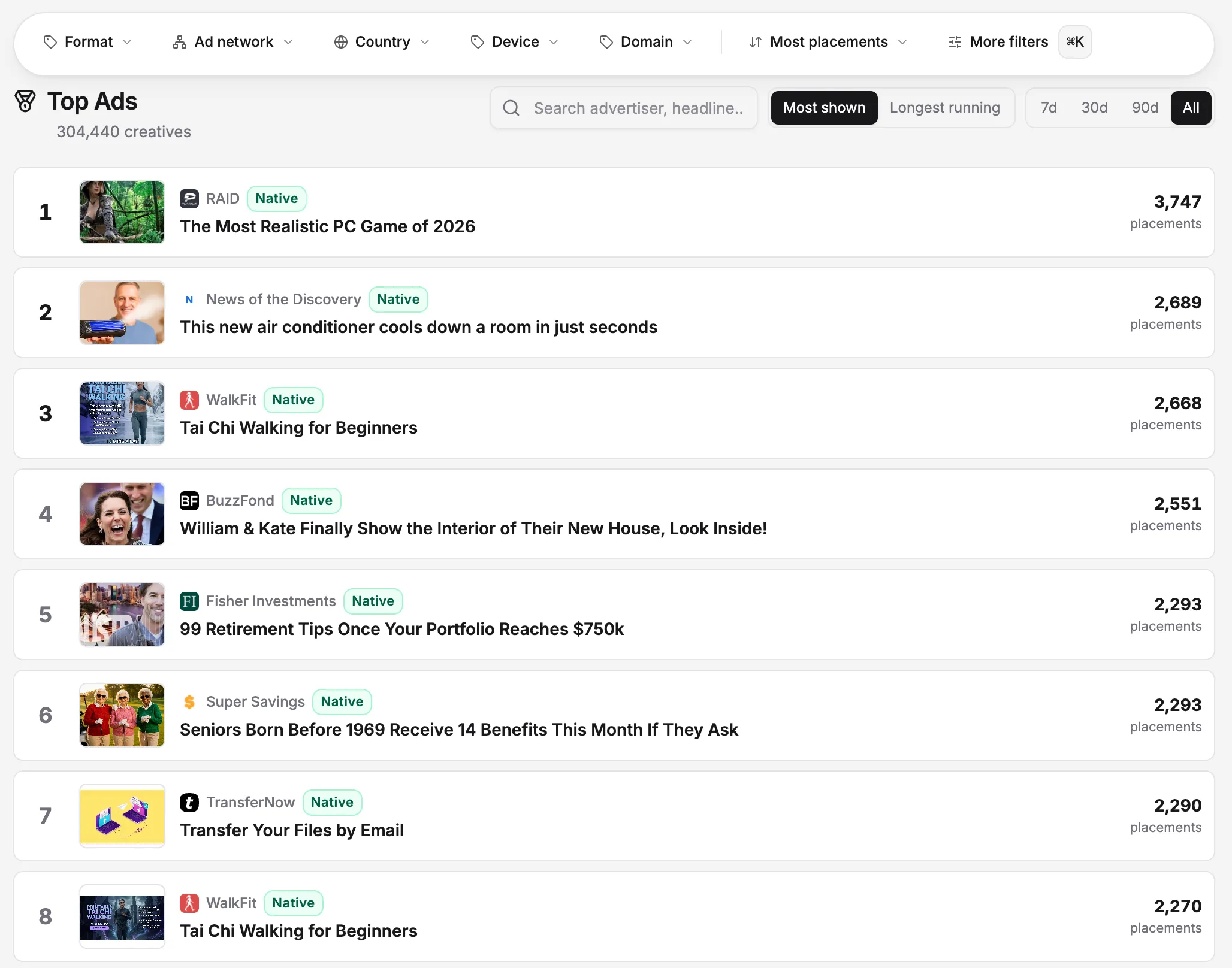
Quell'annuncio sopra è uno reale che abbiamo catturato: un approccio finance in esecuzione da 13 giorni su Taboola sotto "Fresh Start Information." Finance è il singolo verticale più grande nell'indice, 17.232 creatività, appena davanti a assicurazioni (15.629) e salute (14.895). Se competi in uno di questi, i tuoi rivali stanno quasi certamente facendo native advertising, e molto.
Passo 1: Decidi cosa significa "concorrente" per questa ricerca#
Prima di digitare qualsiasi cosa, sii specifico su quali annunci vuoi effettivamente vedere. Ci sono tre definizioni utili, e restituiscono risultati molto diversi.
- Il brand stesso. Le campagne di proprietà e gestite direttamente dall'azienda. Cerca il nome del brand principale e il dominio di primo livello.
- L'offerta. Un prodotto specifico, integratore, corso o SKU. Cerca il dominio della landing page del prodotto o l'affermazione distintiva dell'offerta. Questo intercetta affiliati e rivenditori, non solo il brand.
- La categoria. Tutti coloro che pubblicano annunci in una nicchia. Cerca un editore, una rete o un approccio ricorrente ("apparecchi acustici", "test del QI") piuttosto che un singolo brand.
La maggior parte delle persone inizia a livello di brand e si ferma lì, perdendo silenziosamente gli affiliati e le agenzie che guidano il volume reale. Se il tuo obiettivo è comprendere un funnel e non solo ammirare un logo, cerca l'offerta.
Passo 2: Cerca per brand e per dominio (fai entrambe)#
Esegui due ricerche e confronta le differenze.
- Ricerca per brand. Digita il nome del concorrente. Intuitiva, cattura le loro campagne di proprietà, ma rumorosa. Otterrai inserzionisti non correlati che menzionano il brand, più lacune dove l'inserzionista utilizza un nome visualizzato non ovvio.
- Ricerca per dominio. Inserisci il dominio principale. In OpenAdLibrary il clic su ogni annuncio catturato viene seguito fino alla sua destinazione, quindi una ricerca per dominio restituisce creatività il cui traffico atterra effettivamente su quel sito, incluse quelle in esecuzione sotto nomi di inserzionista non familiari. Questa è la ricerca che trova ciò che la ricerca per brand manca.
Il divario tra le due liste è di per sé una scoperta. Le creatività che compaiono sotto il dominio ma non sotto il brand sono solitamente affiliati, partner white-label o account pubblicitari alternativi. Questa è esattamente l'attività che una ricerca solo per brand nasconde. Per le peculiarità specifiche delle reti, vedi Come Spiare gli Annunci Native dei Concorrenti (Taboola, Outbrain, MGID).
Tratta l'URL di destinazione come la chiave di collegamento. I nomi visualizzati mentono, gli account pubblicitari si moltiplicano e i brand creano sotto-etichette. La pagina su cui atterra il clic è l'unico campo onesto che collega tutta l'attività pubblicitaria dispersa di un concorrente.
Passo 3: Leggi le creatività, le reti e le destinazioni#
Una singola ricerca per brand o dominio dovrebbe consegnarti quattro livelli di intelligence. Ecco cosa ti dice ciascuno e la decisione che informa.
| Segnale | Cosa mostra | Cosa farne |
|---|---|---|
| La creatività | L'immagine e il titolo effettivi dell'annuncio, catturati a piena qualità | Identificare l'approccio, l'aggancio e lo stile visivo in fase di test |
| La rete | Quale piattaforma l'ha servito (Taboola, Outbrain, MGID, Revcontent, Teads, Yahoo, MSN) | Vedere dove vanno effettivamente il loro budget e l'attenzione del pubblico |
| Longevità e diffusione | Da quanto tempo una creatività è rimasta live e su quanti posizionamenti | Dedurre i vincitori. Gli annunci non rimangono in esecuzione per settimane a meno che non convertano |
| La destinazione | L'esatta landing page o pre-lander a cui il clic risolve | Ingegnerizzare al contrario l'offerta e il funnel, non solo l'annuncio |
Quell'ultima riga è quella che la maggior parte degli strumenti salta, ed è il motivo per cui conserviamo 926.259 catture di landing, non solo creatività. Vedere l'annuncio ti dice cosa stanno dicendo. Vedere la landing page ti dice cosa stanno vendendo e come è costruito il funnel. OpenAdLibrary segue ogni clic fino alla destinazione dell'inserzionista senza cliccare sull'annuncio live, quindi leggi il pre-lander e la pagina dell'offerta senza bruciare il budget dell'inserzionista o inquinare i suoi dati. Il metodo completo per trasformare quella destinazione in un'analisi dettagliata è in Ingegnerizzare al Contrario il Funnel di un Annuncio Native del Concorrente (Dalla Creatività alla Landing Page).

Usa la longevità come filtro per i vincitori#
Le nuove creatività sono rumore. Le creatività che sopravvivono sono segnale. Ordina o scorri in base a quanto tempo ogni annuncio è stato live e su quanti posizionamenti copre. L'annuncio sul dispositivo acustico Nebroo sopra era in esecuzione da 26 giorni quando l'abbiamo catturato. Non è un caso. Gli approcci sugli apparecchi acustici e i test del QI sono tra i sopravvissuti più longevi nel nostro indice. In questo momento, le creatività in esecuzione più a lungo che osserviamo si attestano a circa 28 giorni di osservazione continua, che è l'attuale durata del nostro indice per creatività, e i brand che mantengono quel limite includono Hidden Hearing ("Try next-gen hearing aids"), SmartAsset ("Ask a Pro: How Can I Avoid Paying Taxes on IRA Withdrawals?") e My IQ ("The Best IQ Test 2025").
Una rapida nota di onestà per non confondere due cose diverse. La leggenda degli affiliati sui "vincitori da 90 giorni" è un discorso generale del settore, non qualcosa che abbiamo misurato. Quello che possiamo mostrarti è il tempo di esecuzione continuo osservato, e una creatività ancora live al top di quel range è un vincitore testato che dovresti studiare. Una creatività apparsa ieri è un'ipotesi che l'inserzionista non ha ancora validato. Dedica il tuo tempo di studio ai sopravvissuti.
Passo 4: Sappi dove Meta e TikTok non offrono visibilità#
Questa è la parte che la maggior parte delle guide "trova gli annunci dei concorrenti" salta, ed è dove le persone perdono ore. Le librerie delle piattaforme hanno limiti rigidi per gli annunci commerciali ordinari.
- Libreria Annunci Meta. Costruita per soddisfare la legge sulla trasparenza degli annunci politici, non per aiutare i marketer. Per gli annunci commerciali ordinari (non politici) rivela quasi nulla di utile: nessuna spesa, nessun targeting, nessun dettaglio sul pubblico. Gli annunci commerciali inattivi escono dalla libreria relativamente velocemente, quindi una campagna che il tuo concorrente ha messo in pausa il mese scorso potrebbe semplicemente essere sparita. Meta ha iniziato a mostrare la spesa cumulativa di 12 mesi su un set limitato e in espansione di profili di inserzionisti commerciali, ma la copertura è parziale.
- Libreria dei Contenuti Commerciali TikTok. A partire dal 2026 copre solo gli annunci consegnati agli utenti nello Spazio Economico Europeo, nel Regno Unito e in Svizzera. Una campagna TikTok mirata solo agli USA può essere completamente invisibile lì anche mentre è live.
La conseguenza pratica: affidati solo alle librerie di Meta e TikTok e perderai sistematicamente le campagne solo per gli USA, le creatività recentemente messe in pausa e l'intero ecosistema native e display. Gli strumenti di trasparenza per il native e il display colmano il vuoto perché catturano l'annuncio dove viene effettivamente servito sulla pagina di un editore, invece di dipendere da una piattaforma che lo archivia volontariamente. Usa entrambi. Le librerie delle piattaforme per il social, e uno strumento di spionaggio per annunci native per i canali che non coprono.

Ecco il quadro onesto della copertura in modo da impostare le aspettative correttamente.
| Canale | Fonte migliore | Cosa puoi vedere in modo affidabile |
|---|---|---|
| Native (Taboola, Outbrain, MGID, Revcontent) | Strumento di trasparenza native | Creatività live, reti, destinazioni |
| Google / display | Google Ads Transparency Center + strumenti di spionaggio | Creatività, formati, attività approssimativa |
| Meta (commerciale) | Libreria Annunci Meta | Solo creatività, poco per annunci non politici |
| TikTok (commerciale) | Libreria CCL TikTok | Solo consegna SEE, UK, Svizzera |
Per contesto sul lato native: Taboola da solo rappresenta 157.727 delle nostre creatività catturate, Outbrain 84.252 e MGID 49.689 (indice OpenAdLibrary, giugno 2026). Il mix verticale differisce per rete, il che è di per sé intelligenza. Su Taboola i verticali principali sono salute (6.048 creatività) e finance (5.558). Su Outbrain si ribalta verso finance (2.640) e assicurazioni (2.615). MGID si inclina fortemente verso intrattenimento (8.904), gli approcci sui test del QI e i quiz che probabilmente hai scorso oltre. Se controlli solo una rete, stai vedendo una fetta dell'acquisto.
Passo 5: Salva l'inserzionista, non solo fare screenshot#
Una ricerca occasionale risponde a "cosa stanno pubblicando oggi." Il vero valore è osservare il modello nel tempo. Una volta che hai trovato l'inserzionista o il dominio di un concorrente, salvalo in modo che nuove creatività, nuove reti e annunci terminati emergano automaticamente invece di costringerti a rieseguire le ricerche. La meccanica per costruire quella lista è in Come Costruire una Watchlist dei Concorrenti per il Monitoraggio degli Annunci, e la cadenza per agire su di essa, cosa controllare settimanalmente e cosa ignorare, è in Competitive Intelligence per Media Buyer: Una Routine di Ricerca Settimanale.
Il passaggio dalle ricerche ad hoc a un sistema permanente è ciò che separa la curiosità dal vantaggio. Un ciclo ripetibile, watchlist in ingresso e decisioni in uscita, è delineato da cima a fondo in Costruire un Flusso di Lavoro di Competitive Ad Intelligence (Dalla Watchlist all'Azione).
Un esempio pratico#
Supponi di competere con un brand di integratori per il sonno. Cerca il loro nome del brand e ottieni una manciata di annunci native rifiniti, di proprietà e gestiti direttamente. Utile, ma scarso. Poi cerchi il loro dominio principale e la lista triplica. Gli extra sono creatività di affiliati: advertorial aggressivi "L'ho provato per 30 giorni" in esecuzione su Taboola e MGID, ciascuno che clicca su un pre-lander in formato long-form che non avresti mai trovato dal solo nome del brand.
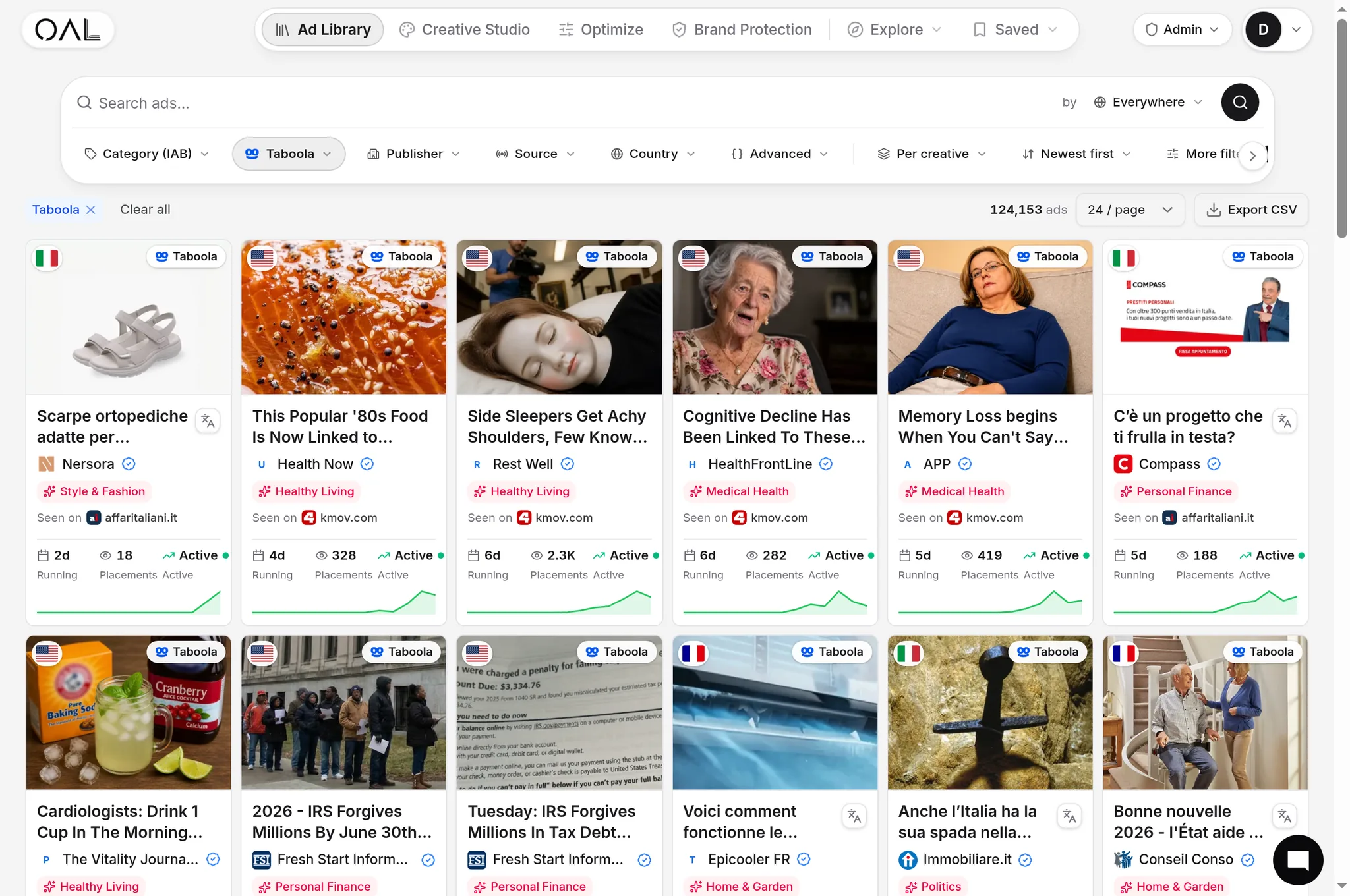
L'approccio qui sotto è il tipo di cosa che pubblicano quegli affiliati. Nota i trucchi di punteggiatura (i caratteri a larghezza zero in "Cognitive") progettati per evitare i filtri delle parole chiave. Questa è una creatività reale catturata, ed è un indizio che dietro c'è un affiliato esperto, non il team interno di un brand.

Da quella singola ricerca per dominio ora sai tre cose che non sapevi prima:
- L'approccio che scala. Il formato advertorial, non le immagini pulite del prodotto del brand, è ciò che gli affiliati continuano a pubblicare, e i dati di longevità lo confermano.
- Le reti. Il budget è concentrato su Taboola e MGID, non sui canali social che avevi ipotizzato.
- Il funnel. Ogni annuncio di affiliato passa attraverso lo stesso template di pre-lander prima della pagina dell'offerta, il che ti dice il meccanismo di conversione.
Niente di tutto ciò proveniva dal marketing del brand stesso. Proveniva dalla lettura della loro intera impronta pubblicitaria, basata sul dominio.
Cosa fare con ciò che trovi#
Trovare gli annunci è il primo passo. La disciplina è agire su pochi segnali ad alta confidenza invece di accumulare screenshot. Un passaggio pratico di interpretazione si presenta così.
- Identifica i sopravvissuti. Le creatività che rimangono in esecuzione a lungo e su larga scala sono validate. Modella la struttura (approccio, formato, offerta), mai gli asset.
- Mappa il funnel. Segui la destinazione fino alla landing page e prendi nota dell'offerta, del prezzo e del meccanismo di conversione.
- Nota il mix di reti. Dove acquistano rivela dove il pubblico sta rispondendo, il che informa la tua strategia di posizionamento.
- Traccia i cambiamenti. Ciò che lanciano e terminano nelle settimane successive ti dice più di qualsiasi singolo istantaneo.
Una parola sul limite etico, perché è importante. Studiare gli annunci pubblici di un concorrente è una legittima competitive intelligence. Copiare la sua creatività, marchi registrati o identità di brand non lo è. Questo entra nel territorio della Sicurezza del Brand e della Protezione del Brand nella Pubblicità e può causarti seri problemi. Impara dalla strategia, costruisci i tuoi asset.
Provalo sul tuo principale concorrente#
Scegli il tuo concorrente più vicino, prendi il suo dominio principale ed esegui entrambe le ricerche. OpenAdLibrary cattura annunci native pubblici live su Taboola, Outbrain, MGID, Revcontent, Teads, MediaGo, Yahoo e MSN, cattura la vera creatività a piena qualità, identifica la supply chain ad-tech dietro ogni posizionamento e segue ogni clic fino alla landing page. È un'alternativa aperta e conveniente ai vecchi strumenti di spionaggio da 80 a 400 dollari al mese. Il livello gratuito ti consente di sfogliare 200 annunci senza carta di credito. Inizia gratuitamente ed esegui la tua prima ricerca per dominio.