English
 Español
 Português (Brasil)
 Français
 Deutsch
 Italiano
 Nederlands
 Polski
 Svenska
 Türkçe
 Русский
 日本語
日本語 한국어
한국어 简体中文
简体中文 Bahasa Indonesia
 繁體中文
繁體中文 Čeština
 Dansk
Dansk Norsk (bokmål)
 Suomi
Suomi Ελληνικά
 Română
 Magyar
 Українська
 ไทย
ไทย हिन्दी
 العربية
 עברית
עבריתTaboola CPC Năm 2026: Chi Phí Thực Tế Theo Thiết Bị, Khu Vực & Ngành Dọc
Taboola không có bảng giá cố định — mỗi nhấp chuột được thanh toán qua đấu giá. Đây là những gì người mua thường báo cáo theo khu vực, thiết bị và ngành dọc, cùng công thức toán học quyết định giá trị một nhấp chuột đối với bạn.


Taboola không có bảng giá. Mỗi nhấp chuột được định giá trong một phiên đấu giá CPC thời gian thực, vì vậy câu hỏi "Taboola tốn bao nhiêu cho mỗi nhấp chuột" không có một đáp án duy nhất — nhưng có một đáp án hữu ích: các nhà mua quảng cáo thường báo cáo CPC trên máy tính Tier-1 dao động từ khoảng $0.20 đến $0.90, nhấp chuột trên di động thường thấp hơn, và các ngành dọc đông đúc như bảo hiểm và tài chính đẩy giá vượt quá đầu trên của khoảng đó. Đây là những con số do người thực hành báo cáo, không phải giá chính thức, và khu vực, tỷ lệ thiết bị, ngành dọc và chất lượng sản phẩm sáng tạo của bạn sẽ tác động rất nhiều đến chúng. Bài viết này phân tích cách phiên đấu giá thiết lập mức giá của bạn, những biến số nào quan trọng nhất, và cách nghiên cứu một thị trường ngách trước khi bạn cam kết ngân sách cho nó.
Cách Taboola định giá một nhấp chuột#
Taboola bán nhấp chuột thông qua một phiên đấu giá thời gian thực: bạn đặt mức giá thầu CPC tối đa cho mỗi chiến dịch, và mỗi khi một widget đề xuất tải trên trang của nhà xuất bản, quảng cáo của bạn sẽ cạnh tranh cho các vị trí hiển thị. Phiên đấu giá không xếp hạng thuần túy dựa trên giá thầu. Taboola mô hình hóa khả năng mỗi sản phẩm sáng tạo kiếm được một nhấp chuột trong ngữ cảnh đó, vì vậy một quảng cáo có mức độ tương tác dự kiến mạnh có thể giành được vị trí so với người đấu giá cao hơn. Mức giá hiệu quả của bạn là một hàm số của cả giá thầu và hiệu suất sáng tạo — đó là lý do tại sao hai nhà quảng cáo trong cùng ngành dọc và khu vực có thể trả CPC khác biệt đáng kể cho khối lượng tương đương.
Hai hệ quả thực tế sau đây:
- CTR là một đòn bẩy định giá, không phải một chỉ số phô trương. Một sản phẩm sáng tạo tăng gấp đôi tỷ lệ nhấp chuột sẽ mua được khoảng gấp đôi phạm vi tiếp cận trên mỗi đô la, bởi vì phiên đấu giá thưởng cho nó bằng sự phân phối rẻ hơn.
- Giá thầu là trần, không phải giá. Bạn thường thanh toán dưới mức giá thầu tối đa của mình. Việc tăng giá thầu chủ yếu mua quyền truy cập vào nhiều vị trí (và tốt hơn) hơn là tăng tuyến tính chi phí của mỗi nhấp chuột.
Taboola cũng cung cấp tính năng đấu giá tự động, điều chỉnh giá thầu cơ sở của bạn lên hoặc xuống cho mỗi lần hiển thị dựa trên khả năng chuyển đổi — xem smart bidding để biết các hệ thống này hoạt động như thế nào. Nó cần có khối lượng chuyển đổi thực tế trước khi phát huy tác dụng; chi tiết hơn bên dưới. Nếu bạn hoàn toàn mới với nền tảng này, cách quảng cáo Taboola hoạt động bao gồm toàn bộ cấu trúc chiến dịch — bài viết này tập trung vào định giá.
Một yếu tố đầu vào nữa mà người mua thường đánh giá thấp: lịch sử. Một chiến dịch mới không có hồ sơ tương tác sẽ được mô hình dự đoán nhấp chuột xử lý một cách thận trọng, điều này thường có nghĩa là bạn phải trả giá gần với mức trần của mình trong khoảng thời gian đầu tiên của lưu lượng truy cập. Giá cả thường ổn định khi hệ thống tích lũy dữ liệu về sản phẩm sáng tạo của bạn — một lý do nữa để đánh giá kênh này sau vài tuần phân phối được tài trợ đầy đủ, không phải sau vài ngày.
Bốn biến số thực sự thiết lập CPC của bạn#
Địa lý#
Không có gì tác động đến CPC native nhiều hơn khu vực địa lý. Các thị trường Tier-1 — Mỹ, Anh, Canada, Úc và Tây Âu — mang lại nhu cầu từ nhà quảng cáo nhiều nhất và mức giá thanh toán cao nhất. Cùng một nhấp chuột ở thị trường Tier-2 hoặc Tier-3 thường chỉ tốn một phần nhỏ so với giá ở Mỹ. Đây là lý do tại sao những người mua có kinh nghiệm báo giá CPC theo từng khu vực, không bao giờ là một con số chung cho toàn nền tảng, và tại sao một số người xác thực một phễu ở thị trường rẻ hơn trước khi trả giá Tier-1 cho nó.
Thiết bị#
Nhấp chuột trên máy tính thường thanh toán cao hơn trên di động, trong khi di động cung cấp khối lượng lớn hơn nhiều. Hai loại này cũng chuyển đổi khác nhau — phiên trên máy tính có xu hướng dài hơn và có chủ đích hơn, di động mang lại nhiều nhấp chuột ngẫu nhiên và ít chú ý hơn. Người mua thường tách chiến dịch theo thiết bị thay vì chạy giá thầu hỗn hợp, bởi vì giá thầu hỗn hợp sẽ trả quá cao cho một thiết bị và làm thiếu hụt thiết bị kia.
Cạnh tranh theo ngành dọc#
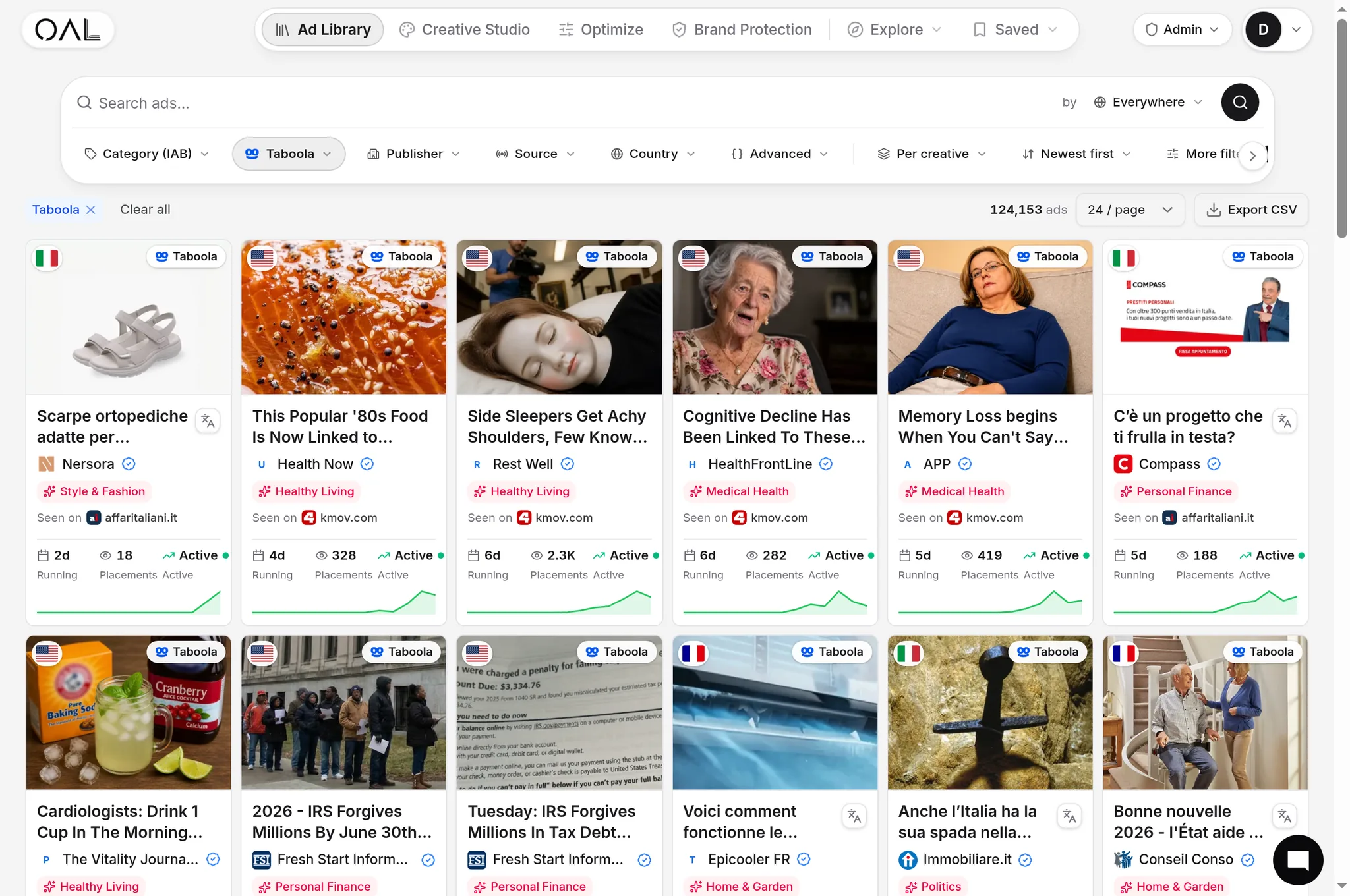
CPC cuối cùng là một hàm số của việc ai khác muốn cùng một lần hiển thị đó. Trong chỉ mục của OpenAdLibrary với hơn 206.000 sản phẩm sáng tạo Taboola đang chạy (tháng 7/2026), sức khỏe là ngành dọc đông đúc nhất với khoảng 12.000 sản phẩm sáng tạo đang chạy được phân loại, tiếp theo là tài chính khoảng 8.200 và bảo hiểm khoảng 7.400. Ba danh mục này là nơi tập trung những người mua hiệu suất có túi tiền sâu nhất, và nơi giá thanh toán chạy nóng nhất. Thương mại điện tử (khoảng 5.200 sản phẩm sáng tạo đang chạy) và nhà cửa & vườn tược (khoảng 4.400) nằm ở phân khúc giữa rẻ hơn. Để xem các khoảng giá được báo cáo trên các mạng lưới, hãy xem so sánh benchmark CPC quảng cáo native.
Lựa chọn vị trí đặt và nhắm mục tiêu#
Lưu lượng truy cập trên toàn mạng lưới rẻ hơn so với danh sách nhà xuất bản cao cấp được tuyển chọn. Đối tượng tái nhắm mục tiêu có giá khác với đối tượng chưa biết đến. Mỗi hạn chế nhắm mục tiêu bạn thêm vào — một khu vực hẹp, một hệ điều hành duy nhất, một danh sách trang web trắng nhỏ — đánh đổi phạm vi tiếp cận lấy sự khan hiếm, và sự khan hiếm tốn nhiều chi phí hơn cho mỗi nhấp chuột.
Các khoảng CPC thường được báo cáo (hãy đọc các lưu ý trước)#
Vì Taboola không công bố giá, mọi con số dưới đây là những gì người thực hành thường báo cáo, không phải mức giá chính thức. Hãy coi chúng như định hướng, không bao giờ là đầu vào cho kế hoạch:
| Phân khúc | Những gì người mua quảng cáo thường báo cáo |
|---|---|
| Máy tính Tier-1 | Khoảng $0.20–$0.90 mỗi nhấp chuột |
| Di động Tier-1 | Thường thấp hơn đáng kể so với máy tính |
| Các ngành dọc cạnh tranh Tier-1 (bảo hiểm, tài chính, pháp lý) | Thường trên $1, đôi khi vài đô la |
| Khu vực Tier-2 | Một phần nhỏ so với giá Tier-1 |
| Khu vực Tier-3 | Xu cho mỗi nhấp chuột, đôi khi chỉ vài xu |
Thị trường ngách, chất lượng sản phẩm sáng tạo và kỷ luật tối ưu hóa của bạn sẽ tác động đến từng hàng. Benchmark duy nhất quan trọng là benchmark bạn tự mua: một bài kiểm tra cấu trúc nhỏ, được theo dõi đúng cách, sẽ cho bạn biết nhiều hơn bất kỳ bảng nào trên internet — bao gồm cả bảng này.
Cũng đáng để hiểu tại sao các con số CPC Taboola được công bố lại phân tán tệ đến vậy. Mọi con số bạn tìm thấy đều là trung bình của hỗn hợp cụ thể về khu vực, thiết bị, vị trí đặt và ngành dọc của ai đó — và các hỗn hợp không bao giờ khớp nhau. Một người mua chạy chiến dịch tạo khách hàng tiềm năng bảo hiểm trên danh sách trang web trắng máy tính cao cấp và một người mua chạy đồ gia dụng thương mại điện tử trên toàn mạng lưới di động đều có thể trung thực báo cáo "CPC Taboola của tôi," và các con số sẽ khác nhau gấp nhiều lần. Sự thiên vị sống sót càng làm lệch hơn: những người mua bỏ cuộc sớm có xu hướng trích dẫn những nhấp chuột đắt đỏ trong giai đoạn học hỏi, trong khi những người kỳ cựu trích dẫn giá trên danh sách trang web trắng đã được tối ưu hóa. Không ai nói dối; và cũng không có con số nào là của bạn.
Phép toán CPC duy nhất quan trọng#
Một CPC không hề rẻ hay đắt khi đứng riêng lẻ — chỉ tương đối so với những gì một nhấp chuột mang lại. Công thức làm việc mà mọi người mua native chạy:
CPC cho phép = CPA mục tiêu × tỷ lệ chuyển đổi dự kiến.
Nếu phễu của bạn chuyển đổi 1% số nhấp chuột và bạn cần CPA $40, bạn có thể trả tối đa $0.40 cho mỗi nhấp chuột. Nếu một trang đích tốt hơn nâng tỷ lệ chuyển đổi lên 2%, CPC cho phép của bạn tăng gấp đôi lên $0.80 — và những vị trí đặt "quá đắt" tuần trước trở nên có lãi. Đây cũng là lý do tại sao việc đuổi theo CPC thấp nhất có thể thường phản tác dụng: những nhấp chuột ở đáy thị trường đến một cách không cân xứng từ các vị trí đặt mà mọi người khác đã chặn. Quảng cáo native tốn bao nhiêu tiền trình bày phiên bản đầy đủ của phép toán lập ngân sách này.
Năm cách để giảm CPC Taboola hiệu quả của bạn#
- Làm việc với sản phẩm sáng tạo trước khi chỉnh giá thầu. Phiên đấu giá trợ cấp cho các quảng cáo hấp dẫn. Các biến thể tiêu đề và hình thu nhỏ mới là cách giảm CPC rẻ nhất có sẵn — việc tăng CTR sẽ nhân lên trên mọi lần hiển thị bạn giành được.
- Tách chiến dịch theo thiết bị và khu vực. Các chiến dịch hỗn hợp che giấu phân khúc nào đang trả quá cao. Hãy tách chúng ra và đấu giá mỗi cái dựa trên phép toán chuyển đổi riêng của nó.
- Cắt tỉa vị trí đặt một cách tàn nhẫn. Sau khi có đủ dữ liệu, hãy chuyển những trang web chiến thắng sang một chiến dịch danh sách trắng và chặn các trang web chỉ nhấp chuột nhưng không bao giờ chuyển đổi. Khối lượng giảm, CPA hiệu quả thường được cải thiện.
- Bật đấu giá tự động chỉ sau khi có chuyển đổi. Các thuật toán đấu giá được đào tạo trên một số ít chuyển đổi sẽ tối ưu hóa theo nhiễu. Hãy cung cấp cho chúng một luồng postback thực tế trước.
- Giảm giá thầu từ từ. Hạ giá thầu của bạn từng bước nhỏ và theo dõi khối lượng. Bạn sẽ thường tìm thấy một điểm thanh toán thấp hơn vẫn giữ được hầu hết các vị trí đặt của mình — và khám phá chính xác những vị trí cao cấp nào bạn đang trả thêm tiền cho.
Nghiên cứu thị trường ngách trước khi bạn đấu giá#
Bạn không thể thấy giá thầu của đối thủ, nhưng bạn có thể thấy thứ tốt nhất tiếp theo: những quảng cáo nào tiếp tục chạy. Một nhà quảng cáo không trả CPC Tier-1 cho cùng một sản phẩm sáng tạo trong năm tuần liên tiếp trừ khi kinh tế học hoạt động — tuổi thọ quảng cáo là tín hiệu sinh lời công khai mạnh nhất trong quảng cáo native. Trong chỉ mục của OpenAdLibrary, một sản phẩm sáng tạo Taboola của nhà quảng cáo chăm sóc thính lực cho thấy 37 ngày quan sát liên tiếp; một nhà quảng cáo nhà cửa & vườn tược cũng cho thấy điều tương tự. Hãy kéo tất cả sản phẩm sáng tạo đang chạy trong ngành dọc và khu vực của bạn qua thư viện quảng cáo Taboola, sắp xếp theo số ngày chạy, và bạn có một bản đồ về những góc độ nào chịu được áp lực CPC thực sự — trước khi bạn tiêu một đô la. Hãy đối chiếu chéo khu vực và thiết bị của những quảng cáo tồn tại: một sản phẩm sáng tạo chỉ chạy trên máy tính ở Mỹ đang nói với bạn chính xác nơi kinh tế học của nó hoạt động, và nơi nào không. Công cụ nghiên cứu Taboola miễn phí là cách nhanh nhất để vào.
Hãy định giá nhấp chuột cuối cùng. Hiểu phiên đấu giá, sửa phép toán phễu của bạn, nghiên cứu ai đang tồn tại trong thị trường ngách của bạn — sau đó CPC bạn trả sẽ trở thành một biến số bạn quản lý, không phải một bí ẩn bạn phải chấp nhận.