English
 Español
 Português (Brasil)
 Français
 Deutsch
 Italiano
 Nederlands
 Polski
 Türkçe
 Русский
 日本語
日本語 한국어
한국어 简体中文
简体中文 Tiếng Việt
 Bahasa Indonesia
 繁體中文
繁體中文 Čeština
 Dansk
Dansk Norsk (bokmål)
 Suomi
Suomi Ελληνικά
 Română
 Magyar
 Українська
 ไทย
ไทย हिन्दी
 العربية
 עברית
עבריתTaboola Annons Avvisad? Policy-Triggers, Lösningar och Suspensionssignaler
Policy-triggrarna bakom de flesta Taboola-avvisningar, lösningen för varje, och hur man skiljer en rutinmässig kreativ avvisning från den kontogranskning som föregår suspension.

Taboola avvisar annonser med en angiven anledning synlig i granskningsstatusen, och de vanligaste triggrarna är förutsägbara: obesatta hälsorelaterade eller finansiella påståenden, före-efter-bilder, rubriker som riktar in sig på personliga attribut, vilseledande rubrik-till-landningssida-felmatchningar, förbjudna kategorier, och landningssidemisslyckanden som en saknad sekretesspolicy eller trasig funktionalitet. De flesta avvisningar går att åtgärda i en återinsändning när du vet vilken policy som triggade. Denna guide kartlägger de vanliga triggrarna till deras lösningar, förklarar vad som granskas utöver det kreativa, och visar hur man skiljer en rutinmässig avvisning från det kontonivå-mönster som föregår suspension.
Hur Taboola-granskning faktiskt fungerar#
Varje annons går igenom granskning innan den visas, och granskningen täcker mer än bilden och rubriken: landningssidan – och eventuella pre-landingsidor däremellan – är en del av insändningen. Tre operativa fakta värda att internalisera:
- Redigeringar utlöser omgranskning. Att ändra ett kreativt eller dess landnings-URL skickar tillbaka annonsen i kön, vilket påverkar lanseringstider.
- Godkännande är inte permanent. Annonser kan granskas om efter godkännande, och policyuppdateringar kan pensionera kreativ som godkändes för månader sedan.
- Anledningen är angiven, inte hemlig. Konsolen visar en avvisningsanledning; lösningen börjar med att läsa den bokstavligt istället för att gissa.
Den auktoritativa policylistan finns i Taboola:s annonsörhjälpcenter, och den förändras – när du är osäker på en specifik regel, kolla den aktuella texten istället för ett forumstråd från tre år sedan. Omgångstid för granskning är vanligtvis några arbetsdagar, men varierar med kövolym; inkludera marginal i lanseringar. Om kontot själv är nytt, täcker Taboola installationsgenomgång checklistan innan lansering.
De vanliga avvisningstriggrarna, och lösningen för varje#
| Trigger | Hur det ser ut | Lösningen |
|---|---|---|
| Obesatta påståenden | "Botar ledvärk på 7 dagar", garanterad avkastning | Formulera om som nyfikenhet eller berättelse; ta bort utlovade resultat du inte kan styrka |
| Före-efter-bilder | Delade bilder av kroppsförvandlingar | Ersätt med bilder på produkt i användning eller livsstilsbilder |
| Målinriktning på personliga attribut | "Om du har diabetes…", "du" + ett hälsotillstånd | Skriv om i tredje person eller som allmänintresseramning |
| Kändis- / varumärkesmissbruk | Underförstådda rekommendationer, varumärkesnamn i kreativet | Ta bort, eller säkra dokumenterade rättigheter först |
| Sensationsbilder | Inzoomade kroppsdelar, chockbilder, äckliga bilder | Dämpa; den lugna versionen konverterar vanligtvis tillräckligt ändå |
| Vilseledande klickväg | Rubrik lovar innehåll som landningssidan saknar | Anpassa löftet med vad sidan faktiskt levererar |
| Förbjudna kategorier | Innehåll på den förbjudna listan | Ingen lösning – försök inte med kringgåenden |
| Landningssidemisslyckanden | Saknad sekretesspolicy eller kontaktinfo, trasiga länkar, auto-nedladdningar, aggressiva popups | Reparera sidan, skicka sedan in igen |
Två mönster förklarar det mesta i tabellen. För det första prissätter nätverket regulatorisk och användar-förtroenderisk – hälsa, ekonomi och identitetsbaserade påståenden är exakt där reklamregulatorer fokuserar. För det andra räknas felmatchning var som helst i klickvägen mot annonsen även när det kreativa i sig ser kompatibelt ut.
Landningssidor och pre-landingsidor granskas också#
Ett rent kreativt kopplat till en icke-kompatibel sida blir fortfarande avvisad. De återkommande sidnivå-triggrarna:
- Advertoriellt avslöjande. Berättande-stilade pre-landingsidor måste kunna identifieras som reklam. I USA är detta inte bara nätverkspolicy – FTC:s regler för advertoriella avslöjanden gäller oavsett vad någon plattform tillåter. Om pre-landingsidor är nytt territorium, börja med vad en pre-landingsida är och bygg den kompatibla versionen från början.
- Funktionella grunder. En riktig sekretesspolicy, fungerande navigering, äkta kontaktinformation, ingen falsk utgångsblockering, inga auto-nedladdningsfiler.
- Fabrikerat socialt bevis. Falska kommentarsfält, påhittade rekommendationer och förfalskade nedräkningstimers är klassiska advertoriella genvägar och klassiska avvisningsorsaker.
- Påståendekontinuitet. Sidan kan inte eskalera förbi vad annonsen lovade in i territorium som kreativgranskaren aldrig såg. Hela vägen är insändningen.
Ett triage-arbetsflöde för när en avvisning landar#
Det produktiva svaret på en avvisning är tråkigt och procedurrelaterat:
- Läs den angivna anledningen bokstavligt. Inte vad du antar att den betyder – vad den säger. "Vilseledande innehåll" och "landningssida icke-kompatibel" är olika problem med olika lösningar.
- Lokalisera överträdelsen i klickvägen. Kreativt, pre-landingsida eller landningssida? Om det kreativa ser rent ut är problemet nästan alltid nedströms – granskare ser hela vägen även när annonsörer bara undersöker annonsen igen.
- Gör en substansiell förändring. Åtgärda det policyn namnger. Kosmetiska redigeringar – byta en bild medan ett förbjudet påstående behålls – slösar en granskningscykel och börjar bygga upp mönstret för återkommande överträdare.
- Skicka in igen en gång, eskalera sedan korrekt. Om en åtgärdad annons avvisas igen av samma anledning, öppna en supportbiljett och fråga vilket element som fortfarande triggar policyn, istället för att skicka in variationer på måfå.
- Logga det. En löpande lista över vad som avvisades, varför, och vad som löste det förvandlar granskning från en spelautom till en checklista. Team som för denna logg slutar upprepa avvisningar inom ett kvartal.
En signal till att läsa: om flera tidigare godkända annonser avvisas samtidigt, är det vanligtvis en policyuppdatering eller en kontonivå-omgranskning, inte fem sammanträffanden – kolla den aktuella policytexten innan du skickar in något igen.
Avvisad vs. suspenderad: läsa allvarlighetsgraden#
En enskild kreativ avvisning är rutin – högvolym native-annonsörer samlar på dem konstant, och fixa-och-skicka-in-igen-loopen är normal drift. Kontonivå-problem ser annorlunda ut, och det är vanligtvis ett mönster annonsören byggt:
Upprepade överträdelser av samma policy, insända utan meningsfulla ändringar, börjar tolkas som avsiktliga.
Att kringgå regler är den klara gränsen. Att visa granskare en annan sida än användarna ser – cloaking – eller byta landningssida efter godkännande är den snabbaste vägen från avvisning till suspension.
Nytt-konto-lösningen misslyckas vanligtvis. Nätverk korrelerar betalningsuppgifter, domäner och affärsidentitet; en suspension som undviks idag tenderar att återvända med mindre möjlighet till överklagande imorgon.
Om du är suspenderad: överklaga via support, var specifik med vad du ändrade, och visa åtgärdande snarare än argumentation. Ett väldokumenterat överklagande överträffar tio indignerade biljetter.
Skriv kompatibla annonser som fortfarande drar CTR#
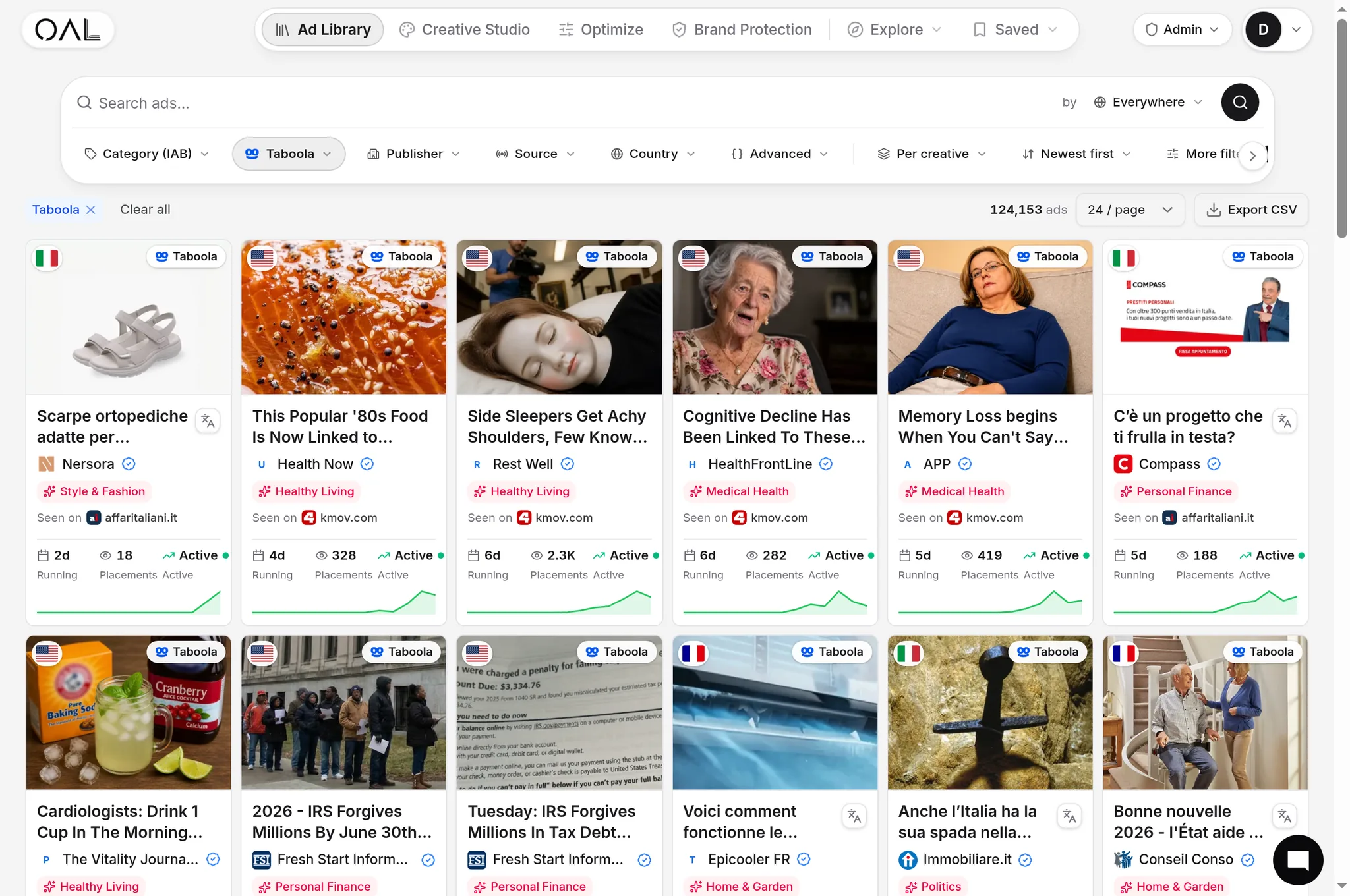
Kompatibilitet är inte motsatsen till prestanda – beviset körs offentligt. Varje liveannons på nätverket är en annons som passerat granskning, vilket gör ett stort index av livekreativ till ett sökbart bibliotek av kompatibilitetsprekendens. Filtrera Taboola-kreativ i din bransch och studera hur långkörande annonsörer formulerar påståenden som förblir godkända i veckor; de annoterade uppdelningarna i 10 live Taboola-annonsexempel visar mönstret i detalj.
Ett liveexempel på hantverket: en hörselhjälpannons från Audika – "Kämpar med att Höra Klart? Upptäck en Enhet som Förvandlar Liv" – har kört i 37 dagar i vårt index. Den namngör problemet, lovar upptäckt snarare än ett medicinskt resultat, och har inget påstående en granskare måste ifrågasätta. Jämför den konstruktionen med "botar tinnitus snabbt"-formuleringen som dör i granskning. Hantverket generaliserar: bästa praxis för native kreativ täcker det utöver kompatibilitet, och om du opererar inom kosttillskott – den strängaste banan – är verkligheten för nutra kompatibilitet guide obligatorisk läsning.
Checklista före insändning#
Innan varje insändning, sextio sekunders kontroll sparar dagar av kötid:
- Rubriken lovar bara vad landningssidan levererar
- Inga resultatpåståenden du inte kan styrka; inga före-efter-bilder
- Inga "du har X tillstånd"-konstruktioner; ingen kändis- eller varumärkesanvändning utan rättigheter
- Pre-landingsida har synligt reklamavslöjande
- Sekretesspolicy, kontaktinfo och navigering alla närvarande och fungerande
- Inga falska rekommendationer, kommentarsfält eller nedräkningstimers
- Landnings-URL slutgiltig – inga efter-godkännande-byten planerade
Avvisningar är feedback med en orsakskod fäst. Annonsörer som behandlar dem som en kompatibilitetssignal att åtgärda systematiskt behåller sina konton i åratal; annonsörer som behandlar dem som ett hinder att runda förlorar kanalen.