English
 Español
 Português (Brasil)
 Français
 Deutsch
 Italiano
 Nederlands
 Polski
 Svenska
 Türkçe
 Русский
 日本語
日本語 한국어
한국어 简体中文
简体中文 Tiếng Việt
 繁體中文
繁體中文 Čeština
 Dansk
Dansk Norsk (bokmål)
 Suomi
Suomi Ελληνικά
 Română
 Magyar
 Українська
 ไทย
ไทย हिन्दी
 العربية
 עברית
עבריתCara Membuat Daftar Pantau Kompetitor untuk Pemantauan Iklan
Daftar pantau hanya berguna jika mengelompokkan kompetitor berdasarkan ancaman dan memberi makan pemantauan berkelanjutan. Inilah cara membuatnya dan menyambungkan setiap pengiklan ke pelacakan dan peringatan iklan native.


Sebagian besar "pemantauan kompetitor" gagal karena satu alasan membosankan: tidak ada daftarnya. Seseorang memeriksa halaman Facebook pesaing sekali, mengambil tangkapan layar iklan, menjatuhkannya di Slack, dan utasnya mati pada hari Selasa. Pemantauan nyata dimulai dengan sekumpulan pengiklan bernama dan bertingkat serta sistem yang mengawasi mereka terlepas dari apakah ada yang ingat untuk melihat. Artefak itu adalah daftar pantau. Buatlah dengan baik dan Anda berhenti bereaksi terhadap kompetitor berbulan-bulan terlambat. Anda mulai melihat langkah berikutnya mereka saat masih dalam tahap uji coba.
Panduan ini adalah lapisan operasional di bawah panduan yang lebih luas di Cara Memata-matai Iklan Kompetitor pada 2026 (Native, Display & Sosial). Pilar itu mencakup seluruh lanskap. Halaman ini adalah daftar pantau itu sendiri: cara menyiapkannya, cara mengelompokkan nama-nama sehingga perhatian Anda tertuju pada yang penting, dan cara menyambungkan setiap pengiklan ke pelacakan dan peringatan berkelanjutan di seluruh jaringan native sehingga pemantauan berjalan sendiri.
Apa sebenarnya daftar pantau iklan kompetitor itu#
Daftar pantau iklan kompetitor adalah daftar terpelihara dari pengiklan spesifik yang Anda pantau secara terus-menerus, diurutkan berdasarkan seberapa besar ancaman yang ditimbulkan masing-masing, dengan setiap nama tersambung ke pelacakan dan peringatan sehingga kreatif baru, kampanye yang ditingkatkan, dan halaman arahan baru muncul secara otomatis. Ini mengubah mata-mata sesekali menjadi sistem peringatan dini yang berdiri. Pencarian satu kali menjadi pemantauan latar belakang.
Kata yang menahan beban adalah terpelihara. Daftar pantau bukanlah hasil penelitian satu kali yang Anda arsipkan dan lupakan. Ini adalah objek hidup yang Anda kelompokkan ulang dan pangkas sesuai jadwal. Dapatkan kebiasaan itu dengan benar dan segalanya bergantung padanya: rutinitas penelitian mingguan, alur kerja tindakan, pembongkaran kreatif.
Untuk skala, saluran native publik lebih besar dari yang kebanyakan orang bayangkan. Indeks OpenAdLibrary saat ini menyimpan 589.000+ kreatif dari sekitar 25.900 pengiklan di 42 jaringan, dengan 926.000+ tangkapan halaman arahan di belakangnya (indeks OpenAdLibrary, Juni 2026). Daftar pantau Anda adalah potongan kecil dan disengaja dari itu. Keahliannya adalah memilih potongan yang tepat dan mengawasinya dengan baik.
Langkah 1: Tentukan apa yang Anda pantau#
Sebelum Anda memberi nama satu kompetitor pun, beri nama sinyalnya. Daftar pantau yang aktif pada setiap perubahan kecil menjadi kebisingan yang Anda latih untuk diabaikan dalam seminggu. Sinyal yang sebenarnya memprediksi langkah kompetitor lebih sempit dari yang diasumsikan orang:
- Kreatif baru. Sudut, pengait, atau gambar baru yang masuk dalam rotasi, terutama yang berbeda dari gaya biasa mereka.
- Peningkatan skala. Kreatif yang sama menyebar ke lebih banyak penempatan, penerbit, dan wilayah geografis dari waktu ke waktu. Penyebaran ditambah keberlanjutan adalah proksi publik terdekat untuk "ini berhasil."
- Halaman arahan atau pre-lander baru. Perubahan dalam pengalaman pasca-klik biasanya menandakan penawaran atau uji coba funnel baru bahkan sebelum kreatif berubah.
- Jaringan baru. Kompetitor yang hanya menjalankan Taboola tiba-tiba muncul di MGID atau Outbrain.
- Kehilangan. Iklan yang sudah lama berjalan menjadi mati, yang sering berarti penawaran rusak atau anggaran dialokasikan ulang.
Tuliskan ini. Mereka menjadi kondisi peringatan yang Anda lampirkan pada setiap nama dalam daftar.
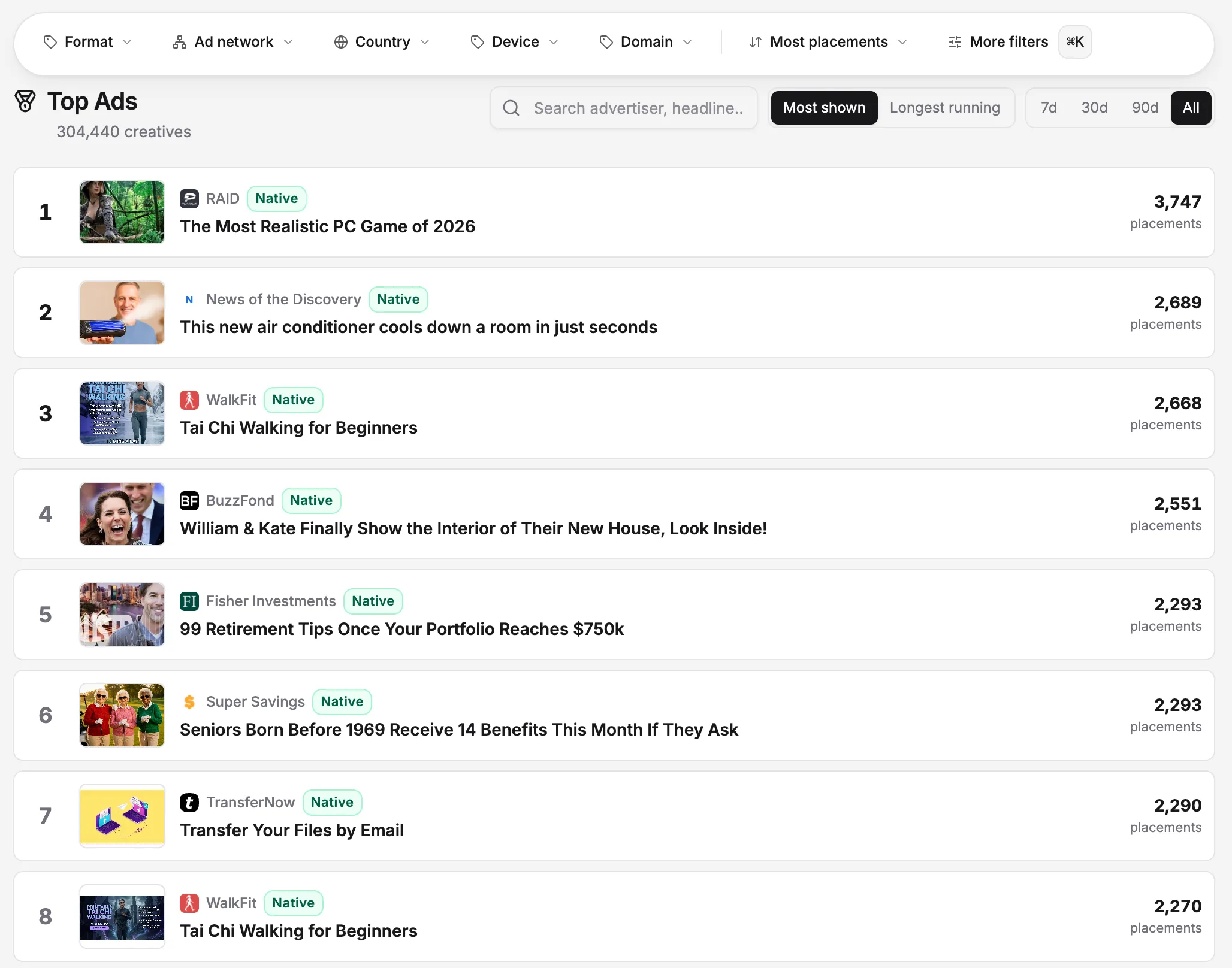
Kata tentang keberlanjutan, karena ini adalah sinyal paling berguna dalam native. Tidak ada yang terus membayar untuk menjalankan iklan yang kalah. Jadi berapa lama iklan benar-benar tayang adalah filter kejujuran yang brutal. Inilah jebakan yang menjebak orang: jumlah hari yang dapat Anda verifikasi dibatasi oleh berapa lama pelacak telah mengawasi. Dalam indeks kami, masa berjalan pengamatan berkelanjutan saat ini mencapai sekitar 28 hari per kreatif. Iklan keuangan SmartAsset ("Ask a Pro: How Can I Avoid Paying Taxes on IRA Withdrawals?") telah diamati tayang selama 28 hari berturut-turut di Outbrain.

Dua puluh delapan hari pengamatan berkelanjutan adalah batas terverifikasi, bukan batas atas. Cerita industri tentang "pemenang 90 hari" adalah naluri yang berguna, tetapi perlakukan sebagai cerita: itu bukan sesuatu yang diukur oleh indeks kami. Yang dapat Anda percayai adalah masa berjalan yang diamati. Urutkan kreatif kompetitor berdasarkan itu dan Anda melihat pemenang terbukti mereka, diurutkan berdasarkan kelangsungan hidup.
Langkah 2: Kelompokkan kompetitor Anda#
Tidak semua pesaing pantas mendapat perhatian yang sama, dan daftar datar diam-diam menghukum Anda karenanya. Anda akhirnya menghabiskan waktu sebanyak pada merek yang tidak akan pernah Anda saingi seperti pada yang memakan pangsa Anda. Urutkan setiap kandidat ke dalam salah satu dari tiga tingkatan.
| Tingkat | Siapa yang termasuk di sini | Frekuensi tinjauan | Apa yang Anda pantau |
|---|---|---|---|
| Langsung | Penawaran sama, audiens sama, jaringan sama. Anda menawar melawan mereka. | Mingguan | Kreatif pemenang baru, peningkatan skala, uji coba halaman arahan, perubahan penawaran |
| Tidak Langsung | Penawaran atau audiens yang berdekatan; tumpang tindih pada beberapa kata kunci atau penempatan | Bulanan | Tren kategori, ide sudut, ekspansi ke jalur Anda |
| Aspirasional | Pengiklan yang lebih besar dan canggih yang ingin Anda pelajari | Bulanan / ad hoc | Struktur funnel, kualitas produksi kreatif, disiplin pengujian |
Kompetitor langsung adalah intinya. Ini adalah tiga hingga tujuh pengiklan yang menjalankan penawaran Anda pada dasarnya ke audiens Anda. Ketika kompetitor langsung menemukan sudut yang menang, Anda merasakannya dalam CPM Anda dalam beberapa minggu. Awasi mereka cukup dekat sehingga Anda dapat menggambarkan kreatif teratas mereka saat ini dari ingatan.
Kompetitor tidak langsung adalah lapisan peringatan dini. Mereka tidak melawan Anda secara langsung hari ini, tetapi mereka memberi tahu Anda ke mana kategori bergeser: sudut baru yang aman secara kepatuhan, pengait musiman, segmen audiens baru. Mereka juga tempat Anda melihat kompetitor langsung masa depan sebelum mereka beralih ke jalur Anda yang persis sama.
Pengiklan aspirasional adalah guru Anda. Operator yang lebih besar dan memiliki sumber daya lebih baik yang funnel dan ritme pengujiannya Anda pelajari untuk mengkalibrasi, bukan untuk meniru. Mengamati bagaimana pengiklan canggih membangun funnel kreatif-ke-halaman-arahan adalah salah satu cara tercepat untuk mempertajam milik Anda sendiri.
Satu alasan lagi untuk mengelompokkan berdasarkan kategori, bukan perasaan: pengeluaran sangat tidak merata di seluruh vertikal. Keuangan memimpin indeks dengan 17.232 kreatif, asuransi menyusul di 15.629, dan kesehatan di 14.895 (indeks OpenAdLibrary, Juni 2026). Jika Anda beroperasi di keuangan atau asuransi, daftar pantau Anda membutuhkan ruang kepala lebih banyak dan ritme yang lebih ketat daripada seseorang di ceruk yang lebih sepi, hanya karena lebih banyak pesaing menguji lebih agresif di sekitar Anda.
Bentuk awal yang praktis: lima hingga tujuh langsung, lima hingga sepuluh tidak langsung, tiga atau empat aspirasional. Tahan keinginan untuk membesar-besarkan. Daftar ketat dan bertingkat berisi lima belas pengiklan yang benar-benar Anda pantau mengalahkan daftar lima puluh yang Anda pindai sekali dan tinggalkan.
Langkah 3: Temukan pengiklan sebenarnya di balik setiap nama#
Di sinilah sebagian besar daftar pantau diam-diam rusak. Anda menambahkan "BrandX" ke daftar, tetapi BrandX menjalankan iklan di bawah tiga domain halaman arahan, dua alias akun iklan, dan templat pelacakan jaringan afiliasi. Di Taboola, kartu mungkin mengatakan hal lain sepenuhnya. Cocokkan berdasarkan nama tampilan dan Anda melewatkan sebagian besar aktivitas mereka.
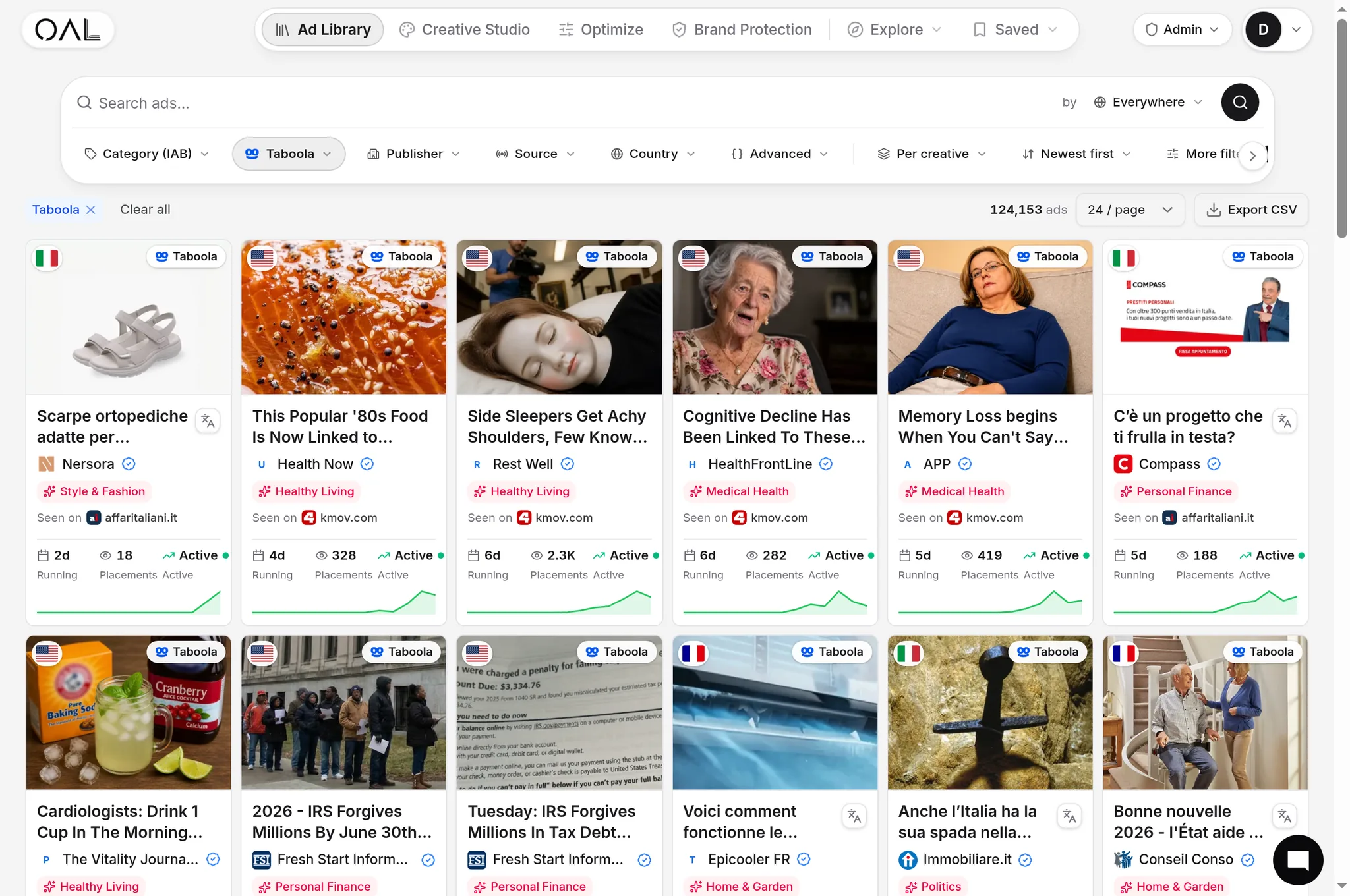
Lihat jenis branding yang sebenarnya dibawa oleh iklan native. Iklan keuangan Taboola yang bertuliskan "2026 - IRS Forgives Millions By June 30th Tax Deadline" berjalan di bawah merek "Fresh Start Information." Iklan kesehatan yang bertuliskan "Americans Are Ditching Hearing Aids for This New Device" berjalan sebagai "Nebroo." Nama-nama pada kartu itu adalah label permukaan, bukan identitas stabil.

Perbaikannya adalah menjangkar setiap entri pada tujuan, bukan label permukaan. Untuk setiap kompetitor, tangkap:
- Domain halaman arahan dan URL pre-lander yang sebenarnya dituju oleh iklan.
- Domain pelacakan dan pengalihan klik dalam rantai pasok. Ini bertahan bahkan ketika kreatif berganti.
- Jaringan tempat mereka berjalan. Jejak kaki kompetitor jarang terbatas pada satu.
Ini persis masalah yang dipecahkan oleh alat mata-mata iklan native yang mengikuti setiap klik hingga ke halaman arahan. Ini mengikat kreatif yang tersebar kembali ke pengiklan sebenarnya yang sama bahkan ketika nama pada kartu berubah antar jaringan. Setelah pemantauan mengunci pada tujuan dan sidik jari rantai pasok alih-alih string nama, kompetitor tidak dapat bersembunyi di balik agensi, alias, atau merek white-label. Mekanisme melakukan ini secara manual ada di Cara Mengetahui Iklan Apa yang Dijalankan Kompetitor Anda. Poin untuk daftar pantau sederhana: rekam pengenal yang tahan lama, bukan yang kosmetik.
Langkah 4: Sambungkan setiap pengiklan ke pelacakan berkelanjutan#
Daftar pantau yang hidup di spreadsheet adalah daftar tugas yang tidak akan Anda lakukan. Tujuannya adalah pemantauan yang berjalan tanpa Anda. Untuk setiap nama, siapkan pencarian tersimpan dan berdiri alih-alih pencarian manual:
- Buat pencarian pengiklan tersimpan untuk setiap entri, dijangkarkan pada pengenal tahan lama dari Langkah 3 (pengiklan, domain arahan, domain pelacakan) daripada satu kata kunci.
- Atur cakupan jaringan ke semua jaringan native sekaligus. Kompetitor jarang bertahan di satu. Dalam indeks kami saja, Taboola membawa 157.727 kreatif, Outbrain 84.252, dan MGID 49.689 (indeks OpenAdLibrary, Juni 2026), dan pengiklan yang sama rutin muncul di lebih dari satu dari mereka, ditambah Revcontent, MediaGo, Yahoo, MSN dan lainnya. Setelah merger Outbrain dan Teads selesai awal 2025, entitas gabungan berada dalam campuran itu juga. Lacak pengiklan di seluruh lanskap, bukan satu feed pada satu waktu. Taktik khusus jaringan ada di Cara Memata-matai Iklan Native Kompetitor (Taboola, Outbrain, MGID).
- Lampirkan kondisi peringatan dari Langkah 1 (kreatif baru, halaman arahan baru, peningkatan skala, jaringan baru) sehingga sistem memberi tahu Anda ketika sesuatu berubah alih-alih menunggu Anda menggulir.
- Sematkan entri bernilai tinggi (tingkat langsung Anda) ke dasbor yang benar-benar Anda buka, sehingga tinjauan mingguan adalah sekilas, bukan investigasi.
Mengapa melacak iklan native publik yang live secara terus-menerus alih-alih mengandalkan perpustakaan iklan yang dijalankan platform? Cakupan. Undang-Undang Layanan Digital UE memaksa repositori iklan ke Platform Online Sangat Besar, yang benar-benar membantu untuk permukaan tersebut. Tetapi web native terbuka (Taboola, Outbrain, MGID dan lainnya) tidak tercakup oleh mandat tersebut. Jika Anda hanya menonton perpustakaan resmi, seluruh saluran native, di mana banyak pengujian respons langsung paling agresif terjadi, adalah titik buta. Menangkap iklan live saat mereka berjalan adalah satu-satunya cara untuk menjaga saluran itu tetap dalam daftar pantau sama sekali.
Langkah 5: Tangkap kreatif dan halaman arahan, bukan hanya judul#
Ketika peringatan aktif, Anda ingin bukti yang dapat dipelajari nanti, bukan tautan yang 404 minggu depan. Kreatif native berganti cepat dan halaman arahan ditukar atau ditarik, jadi pemantauan Anda hanya sebaik yang diawetkan:
- Gambar kreatif asli dengan kualitas penuh, bukan thumbnail. Anda tidak dapat menilai pengait dari potongan yang buram.
- Halaman arahan atau pre-lander sebagaimana muncul, ditangkap dengan mengikuti klik tanpa berinteraksi dengan iklan live, sehingga Anda melihat pengalaman pasca-klik aktual yang terkait dengan kreatif itu.
- Klasifikasi rantai pasok: jaringan mana, penempatan mana, penerbit mana, sehingga Anda dapat membaca penyebaran dan skala.
- Tanggal pertama kali dilihat dan terakhir dilihat, yang merupakan cara keberlanjutan yang diamati (sinyal pemenang terbaik Anda) dihitung sama sekali.
Lihat rentang sudut yang muncul dari satu arsip. Iklan rumah-dan-taman ("Solar home batteries: Electricians agree about 1 thing") telah diamati tayang selama 27 hari di Taboola, menempatkannya tepat di samping batas 28 hari. Di sebelahnya adalah iklan asuransi yang ditujukan untuk pasar yang sama sekali berbeda ("Australians looking for life insurance should read this"), hanya tujuh hari.


Arsip ini adalah yang mengubah daftar pantau dari umpan notifikasi menjadi aset. Enam bulan kreatif tertangkap dari kompetitor langsung, diurutkan berdasarkan masa berjalan yang diamati, adalah peta dari setiap sudut yang telah mereka validasi. Di seluruh indeks, sudah ada 5,4 juta+ pengamatan iklan individu di balik tangkapan tersebut (indeks OpenAdLibrary, Juni 2026), yang membuat tanggal pertama kali dilihat dan terakhir dilihat dapat dipercaya sejak awal.
Langkah 6: Ubah daftar pantau menjadi rutinitas, lalu menjadi tindakan#
Daftar pantau yang tersambung masih membutuhkan ritme manusia. Bangun ritme sederhana di sekitar tingkatan:
- Mingguan (tingkat langsung): pindai untuk kreatif baru dan peningkatan skala. Apa pun yang tayang lebih dari beberapa minggu langsung masuk ke file "sudut terbukti" untuk disalin.
- Bulanan (tidak langsung + aspirasional): cari pergeseran kategori, pendatang baru yang masuk ke jalur Anda, dan pola funnel yang layak dipinjam.
- Kuartalan (seluruh daftar): kelompokkan ulang dan pangkas. Naikkan peringkat kompetitor tidak langsung yang sekarang mengeluarkan lebih banyak dari tingkat langsung Anda, turunkan peringkat merek yang telah mati, dan hapus siapa pun yang telah keluar dari ceruk.
Daftar pantau adalah masukan. Keluarannya adalah keputusan: sudut mana yang akan diuji, penawaran mana yang akan dilawan, kapan mempertahankan penempatan. Serah terima dari pemantauan ke tindakan adalah disiplinnya sendiri, dipetakan di Membangun Alur Kerja Intelijen Iklan Kompetitif (Daftar Pantau ke Tindakan) dan didasarkan pada ide yang lebih luas tentang intelijen kompetitif dalam periklanan. Daftar pantau yang tidak pernah mengubah keputusan hanyalah hobi.
Cara tercepat untuk mendirikannya#
Anda dapat merakit semua ini secara manual: pencarian tersimpan, tangkapan layar, spreadsheet, pengingat kalender. Banyak orang melakukannya. Gesekannya adalah iklan native berganti lebih cepat daripada tangkapan manual dapat mengimbangi, dan menyambungkan jejak kaki satu pengiklan di delapan jaringan secara manual adalah pekerjaan yang benar-benar membosankan yang tidak ada yang bertahan lama.
Platform yang dibangun untuk transparansi iklan meruntuhkan enam langkah itu menjadi beberapa klik: cari pengiklan apa pun di setiap jaringan native utama, lihat merek sebenarnya di balik setiap kartu, ikuti klik ke halaman arahan, baca keberlanjutan dan penyebaran yang diamati sekilas, dan simpan pencarian sehingga pemantauan berjalan terus-menerus. OpenAdLibrary melakukan persis itu sebagai alternatif terbuka dan terjangkau untuk pesaing $80 hingga $400 per bulan. Tingkat gratis memungkinkan Anda menjelajahi 200 iklan tanpa kartu, cukup untuk menyusun daftar pantau pertama Anda sebelum Anda mengeluarkan satu sen pun. Mulai gratis dan kelompokkan kompetitor teratas Anda hari ini.
Namun, disiplin lebih penting daripada alatnya. Beri nama kompetitor Anda. Urutkan berdasarkan ancaman. Jangkar masing-masing pada tujuan sebenarnya. Sambungkan sinyal yang memprediksi langkah. Tinjau pada ritme tetap. Lakukan itu dan Anda berhenti mengetahui apa yang dilakukan kompetitor Anda, dan mulai melihat apa yang akan mereka lakukan.